Around 3 million pilgrims gathered for bathing in Uttar Pradesh during Kartik Purnima
Read more
Aaj Tak
www.aajtak.in

Around 3 million pilgrims gathered for bathing in Uttar Pradesh during Kartik Purnima

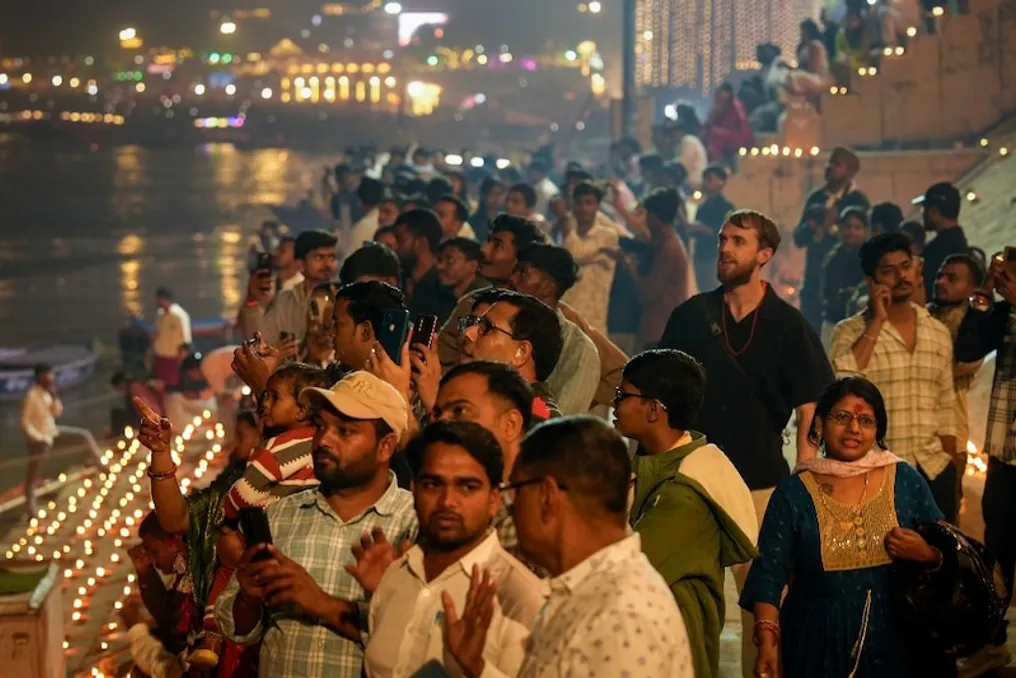
On Tuesday, in observance of Kartik Purnima, a huge crowd of devotees gathered at the main holy sites of Uttar Pradesh. Approximately 3 million pilgrims bathed in sacred rivers and water bodies, from Prayagraj to Kashi and from Ayodhya to Nainisharanya. Crowds of pilgrims began gathering on the banks of the Ganges and Saru since early morning. The shrines filled with shouts of 'Har Har Gange' and 'Jai Shri Ram' after the ablutions, where devotees visited temples, prayed, and made offerings, wishing well-being for their families.

This large crowd, gathered at major religious centers amidst Yogi government efforts to develop holy sites and promote religious tourism, demonstrates the deep faith of the people in religious traditions.

In the holy city of Prayagraj, about 10 lakh pilgrims immersed themselves in the Ganges during Kartik Purnima. The bathing rituals began early in the morning at Sangam and nearby banks. After the ablutions, pilgrims performed worship and made donations. In the religious center of Kashi, around eight lakh pilgrims took a sacred dip in the Ganges. The banks remained crowded from the morning. People offered tributes to the Sun God after bathing and visited temples. In Kashi, associated with the traditions of Diwali, the entire day passed in an atmosphere of celebration.

In Ayodhya, known as Ramnagari, about five lakh pilgrims bathed in the Saru River during Kartik Purnima. Pilgrims started arriving at various banks of the Saru since early morning. After bathing, people visited temples, including the Ram temple, and performed worship. All of Ramnagari appeared reverent due to the chants of 'Jai Shri Ram.'

A significant gathering of pilgrims was also observed in Gadhmukteshwar Hapura, where about three lakh people took a sacred dip in the Ganges. In Dalmau Raibareli, about two lakh pilgrims immersed themselves in the Ganges to worship and make offerings. Similarly, in the mythical shrine of Nainisharanya in Sitapur, about two lakh pilgrims took a sacred bath, participating in religious rites and prayers.
Similar stories

Kartik Purnima: Around 3 million pilgrims visited the banks of the Ganges in Uttar Pradesh; 10 million people immersed themselves in Prayagraj
Read more
www.aajtak.in

Kartik Purnima: Around 3 million pilgrims visited the banks of the Ganges in Uttar Pradesh; 10 million people immersed themselves in Prayagraj

During Kartik Purnima, approximately 3 million pilgrims performed sacred bathing in the Ganges, Sarayu, and other water bodies in Uttar Pradesh. The largest number of people arrived in Prayagraj, and about 1.1 million lamps illuminated 84 banks of Kashi.

On the day of Kartik Purnima, a huge flow of devotees was observed at various holy sites in Uttar Pradesh. Pilgrims gathered on the banks of the Ganges and Sarayu from early morning. Some loudly chanted 'Hara Hara Gange,' while others immersed themselves in the water chanting 'Jai Shri Ram.'

According to statistics, about 3 million pilgrims performed sacred bathing from Kashi to Ayodhya and from Prayagraj to Naimisharanya. Approximately 10 million people immersed themselves in Prayagraj. Meanwhile, 500 thousand pilgrims came to bathe in the Sarayu river in Ayodhya.

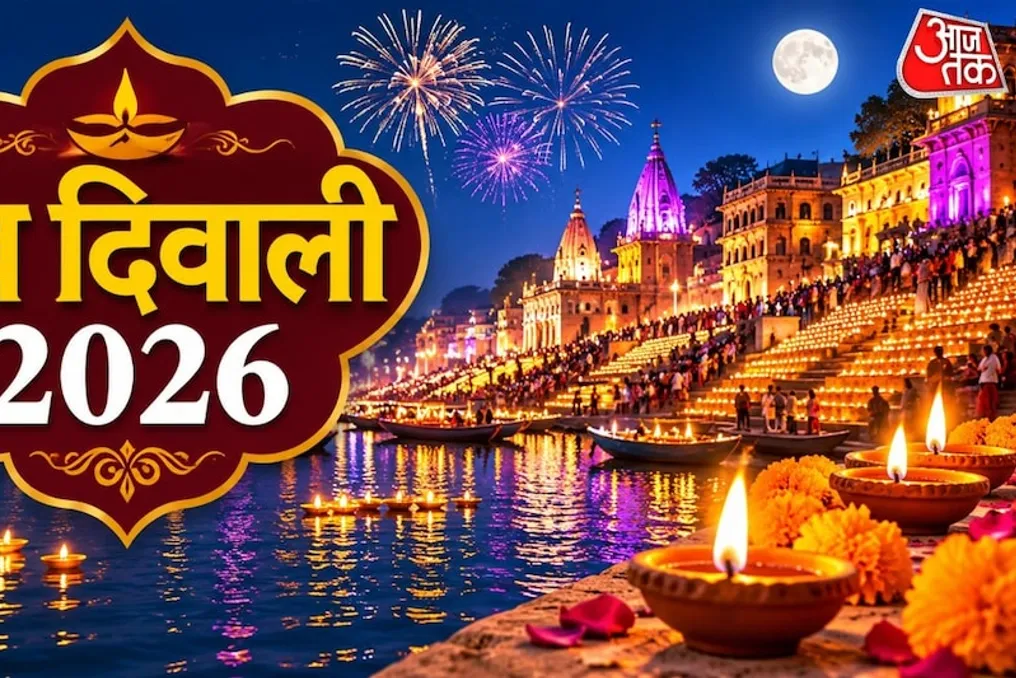
The view of the banks of Kashi on this day was special. About 1.1 million clay lamps decorated 84 banks of Varanasi. In addition to religious events, shows in 3D format and using drones were held on the banks.

Pilgrims started arriving at the banks of the Ganges in Prayagraj from the early morning. It is estimated that about 10 million people performed sacred bathing here. About 800 thousand pilgrims also immersed themselves in the Ganges in Kashi. After bathing, people offered tributes to the Sun God and wished for the well-being of their families. Then, the pilgrims visited the temples of Baba Vishwanath, Baba Kal Bhairav, and Maa Annapurna, where long queues were observed.

In Ayodhya, about 500 thousand people bathed in the Sarayu river. Many pilgrims arrived at the banks early in the morning. After bathing, they performed worship in the temples and prayed to God for family happiness.

The banks of Varanasi were specially decorated for Kartik Purnima. About 1.1 million clay lamps were lit on 84 banks of the city. The light of the lamps on the Ganges bank and the crowd of pilgrims created a special atmosphere. The administration also organized 3D and drone shows and cultural events.

Pilgrims from different parts of the country bathed in the Ganges and visited temples. Sudha Ja, who arrived from Chhattisgarh to Kashi, noted that Yogi's government is doing work to promote Sanatana culture to new heights and highly appreciated the organizational measures. Shivam Chaube, a student of Sanghanandana University, stated that bathing in Kashi during Kartik Purnima has special significance. He added that administrative and police staff were involved in ensuring safety and transportation.

The influence of Kartik Purnima was not limited to Kashi, Prayagraj, and Ayodhya. In Harmukteshwar, Hapur, about 300 thousand pilgrims bathed in the Ganges. In Dalmau, Raebareli, about 200 thousand people immersed themselves in the Ganges. Additionally, about 200 thousand pilgrims participated in bathing and religious rituals at the ancient sanctuary of Naimisharanya, Sitapur.

A large number of pilgrims also arrived in Ballia to bathe in the Ganges. According to district administration data, it was expected that about 1 million people would bathe by noon. Pilgrims were also treated to flower drops by helicopter. After bathing, people visited the temples of Maharshi Bhrigu, Dardar Muni, and Baba Baleshwar Nath.

Furthermore, there were also large crowds of pilgrims on the banks of the Sarayu, Gaghar, Rapti, and small Gandak rivers in Deoria. Many began arriving at the banks of Rewali and Dharahra districts as early as Sunday evening. Accommodation was arranged for them in schools, colleges, guesthouses, and panchayat bhavans.

With the tradition of donations along with bathing

According to religious beliefs, after sacred bathing in a pure river on Kartik Purnima, worshipping gods and making offerings are especially important. According to astrologer Pandit Shri Rama Sharma, it is customary to light lamps and candles before God after bathing and meditating on this day. It is also considered auspicious to donate grains, warm clothes, and other necessary items within the framework of religious beliefs.

Numerous Pilgrims Gather in Prayagraj and Haridwar During Kartik Purnima
Read more
www.aajtak.in

Numerous Pilgrims Gather in Prayagraj and Haridwar During Kartik Purnima

An amazing spectacle of piety was observed in the confluence city of Prayagraj during Kartik Purnima. A huge number of pilgrims gathered early in the morning on various banks of the Ganges and Yamuna, including Balua Ghat. They concluded the monthly Kartik Snan by taking a sacred dip, offering worship, making sacrifices, and presenting offerings to the Sun. On this day, Devi Deepawali and Guru Nanak's Birthday are also celebrated.

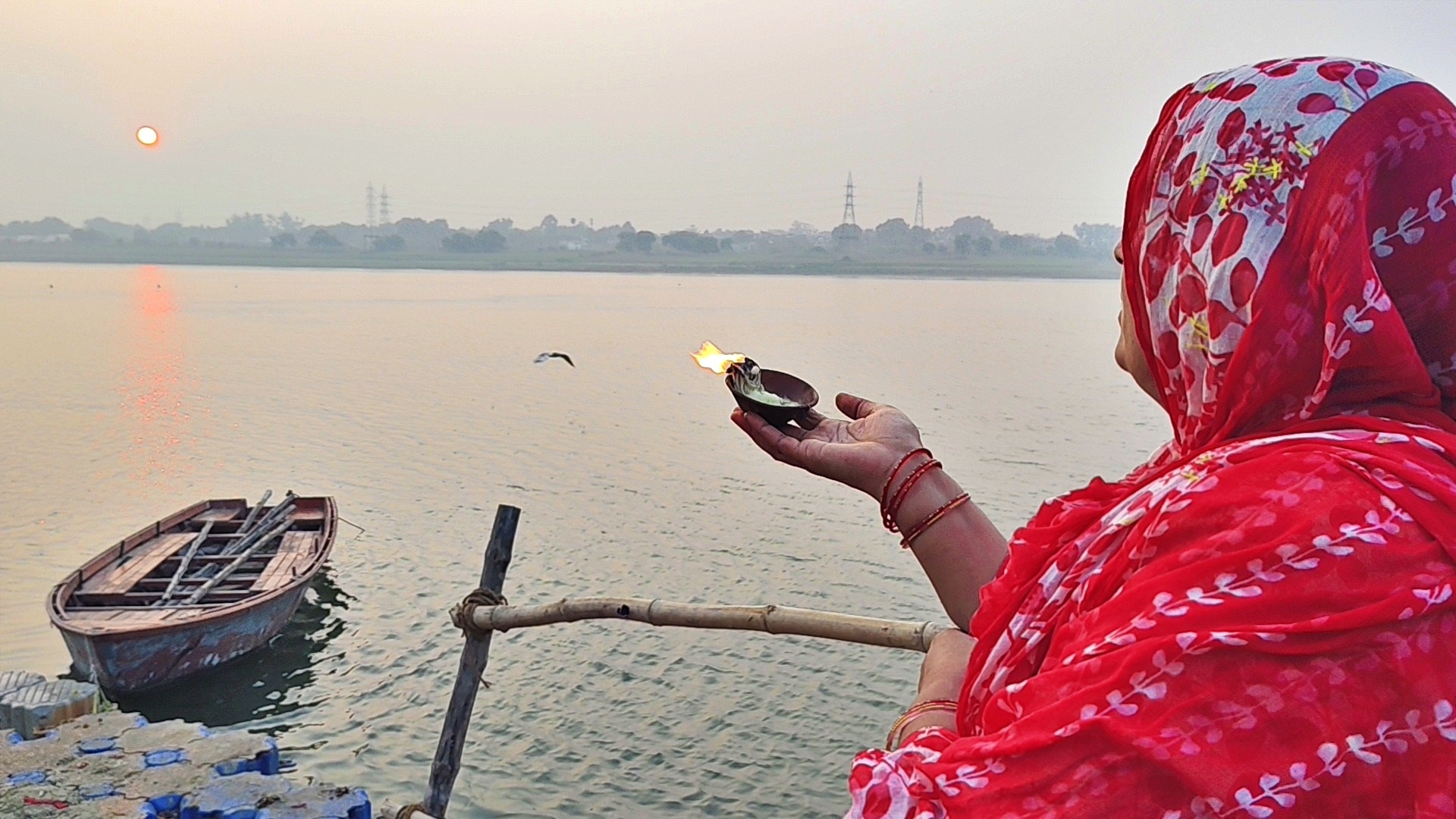
Despite the severe cold, pilgrims began arriving at the banks of the Ganges and Yamuna from the early morning. People were immersing themselves in the water at different ghats, worshipping Lord Vishnu and Lord Shiva, praying for the well-being and prosperity of their families. Pilgrims offered tributes to the Sun god and made donations according to their beliefs.

According to religious beliefs, Kartik Purnima holds special significance. It is believed that on this day, Lord Shiva destroyed Tripurasura, and Lord Vishnu protected the Vedas by taking the form of Matsya Avatar. This is why bathing, sacrificing, and worshipping on this day brings special merit. The ritual of bathing and fasting, which lasted for a whole month in Kartik Maas, concluded today with Purnima.

This day became a confluence of several sacred festivals: Kartik Purnima, Devi Deepawali, and Guru Nanak's Birthday, which generated immense enthusiasm among pilgrims on the banks. A large number of women and families arrived at the ghats early in the morning, observing religious traditions. After bathing in the Yamuna, pilgrims also prayed to God for peace and happiness for their families.

Meanwhile, in Haridwar, millions of pilgrims gathered on the banks of the Ganges on the day of the Kartik Purnima and Devi Deepawali dip, including Har Ki Pauri. Despite the cold, pilgrims had been taking dips in the Ganges since midnight, hoping to earn virtue and liberation. There is a belief that bathing in the holy rivers and offering lights on this day destroys sins and brings the grace of Lord Vishnu and Shiva.

According to astrologer Pandit Manoj Tripathi, on this day, associated with Lord Shiva's destruction of Tripurasura and the joy of the gods, troubles are removed by offering 360 candles, and a path is opened for ancestors. Pilgrims also consider this day a special festival of Lord Vishnu's favorite month and gain spiritual benefits. A police unit was deployed to ensure safety and manage the crowd in the fair area, dividing the zone into 2 superzones, 11 zones, and 30 sectors.

The Significance of Kartik Purnima as Deva Diwali: The Meaning of the 84 Ghats of Kashi and the Mythological Story
Read more
www.aajtak.in

The Significance of Kartik Purnima as Deva Diwali: The Meaning of the 84 Ghats of Kashi and the Mythological Story

This year, the festival of Deva Diwali will be celebrated on November 24th. The Deva Diwali festival in Kashi is not just a celebration of lighting lamps and illuminating ghats; it is closely connected to Lord Shiva, Mother Ganga, the deities, and Vedic traditions. According to beliefs, the 84 ghats of Kashi symbolize the 84 lakh yonis.

These ghats, located along the Ganges River within a radius of about 7 kilometers, are an integral part of the religious and cultural identity of Kashi. Kartik Purnima is called Deva Diwali. It is believed that on this day, the deities descend from the heavens to Kashi and witness the act of offering light on the banks of the Ganges. This is why Deva Diwali is celebrated in Kashi with great reverence and enthusiasm.

The Diya (lamp) is considered a symbol of knowledge, light, and prosperity, and Deva Diwali is rightly called the Diwali of the deities. There is a belief that on this day, the deities come down from the heavens to Kashi to observe the ceremony of offering light on the banks of the Ganges. During this period, special reverence is paid to Lord Vishnu and Mother Ganga. On this day, people take a holy dip in the sacred rivers and then perform ritual worship of Lord Vishnu and Shiva, after which they offer lamps.

The ghats of Kashi have a special connection with Deva Diwali. It is believed that the 84 ghats of Kashi represent the symbol of 84 lakh yonis. These ghats, stretching along the Ganges within approximately 7 kilometers, form the religious and cultural identity of Kashi. Previously, Kashi was known as Anandvan, later its name became Kashi, and then Varanasi. Varanasi is located in the region between the rivers Varuna and Asi, where the Ganges flows in a northward direction (Uttaravahini).

In Kashi, situated on the bank of the Ganges flowing north, the Deva Diwali festival symbolizes the arrival and welcoming of the deities. Therefore, the tradition of offering light at the ghats is observed here with the utmost devotion.

There is an ancient legend explaining the origin of Deva Diwali, related to the destruction of Tripurasura by Lord Shiva. According to this story, Tarakasura had three sons: Tarakaksha, Kamakha, and Vidyunamali. All three underwent a severe ascetic trial and received blessings from Brahma. After this, they built three huge palaces of gold, silver, and iron, which came to be known as the three puras or Tripuras. Influenced by their power and the blessings they received, these three asuras began to inflict suffering on the deities and sages.

The deities, who suffered under the tyranny, appealed to Lord Vishnu, and then all the deities asked Lord Shiva to destroy these asuras. Accepting the deities' request, Lord Shiva destroyed the three cities with a single arrow, killing Tarakaksha, Kamakha, and Vidyunamali. Because of this, Lord Shiva earned the name Tripurantaka. After defeating Tripurasura, the deities performed special worship of Lord Shiva. This event is associated with the festival of Deva Diwali, which symbolizes the victory of Lord Shiva, the joy of the deities, and the establishment of Dharma.

Popular