Aniruddhaacharya explained the nature of the soul and its functions in the human body
Read more
Aaj Tak
www.aajtak.in

Aniruddhaacharya explained the nature of the soul and its functions in the human body

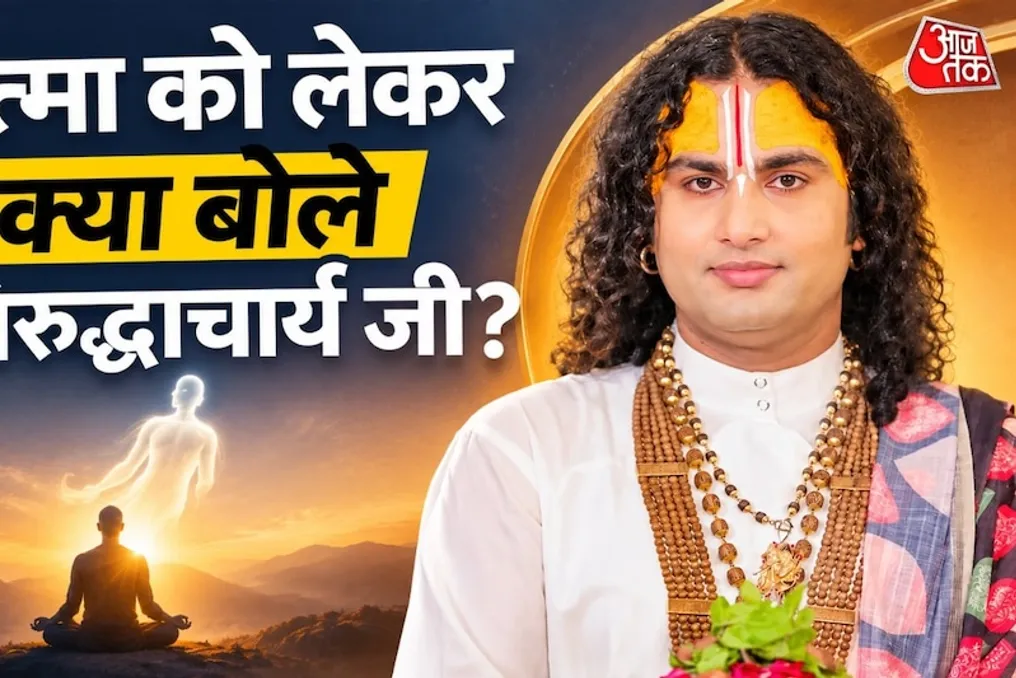
Frequent questions arise about what the soul looks like and what function it performs in the body. These questions can be relevant to any person. The speaker, Aniruddhaacharya, provided answers to these questions using a simple example.

He explained that just as a person's image is reflected in multiple mirrors, a divine particle is present in every living soul in the form of the soul. He then elaborated on his understanding of the soul.

What did Aniruddhaacharya explain about the soul?

To explain the concept of the soul, Aniruddhaacharya used the analogy of a mirror. He noted that when a person stands before a mirror, their image appears in it. In this context, the real person standing before the mirror is called the form, and the image in the mirror is the reflection. If many mirrors are placed in front of one person, their image will be visible in each of them. Despite the multiplicity of images, the person remains singular.

Using this analogy, Aniruddhaacharya explains that the Divine is one, and Its presence in every living soul manifests as the soul. Consequently, the soul of every being is connected to the Divine.

What function does the soul perform in the body?

Next, the role of the soul in our body is addressed. According to Aniruddhaacharya's view, it is the soul that gives life to the body. Because of this, a person is able to see, hear, speak, and feel everything around them. Simply put, our body functions like a machine, and just as a machine requires energy to operate, the body vitally needs the soul.

The eyes, ears, and other parts of the body only function when life is present within them. In spiritual teachings, the soul is considered the basis of this life.

What is the significance of the body without a soul?

Aniruddhaacharya asserts that without a soul, the body becomes lifeless. The soul is the foundation of life in the body. This is why Hinduism considers the soul immortal and the body mortal. That is, the body eventually disappears, but the soul never ceases to exist.

Similar stories

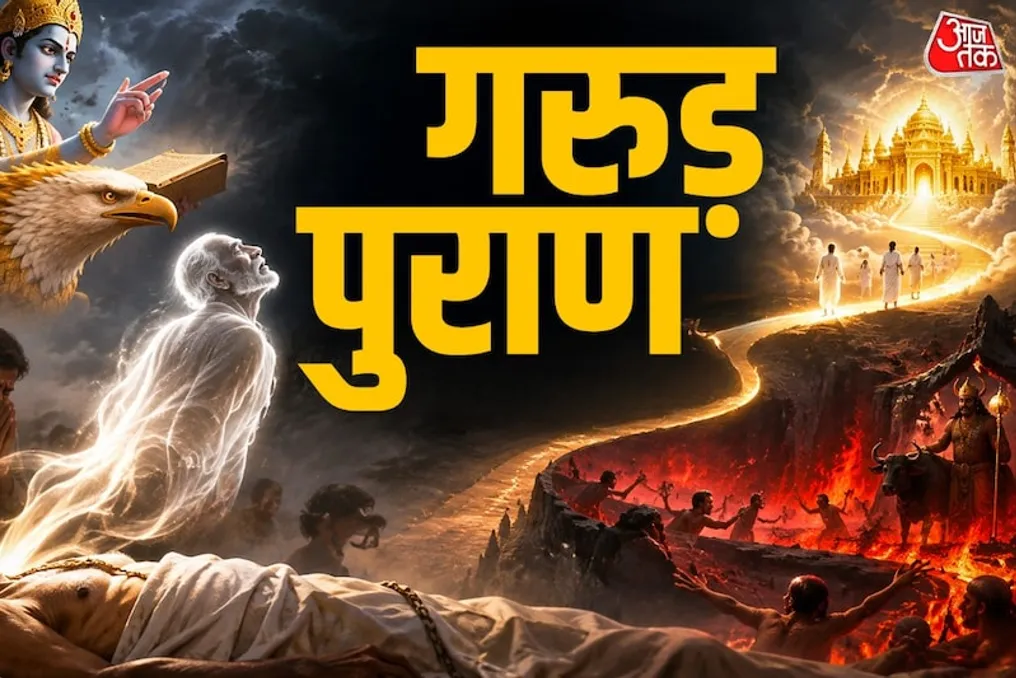
According to the Garuda Purana: After death, the body burns, but the soul takes five things with it
Read more
www.aajtak.in

According to the Garuda Purana: After death, the body burns, but the soul takes five things with it

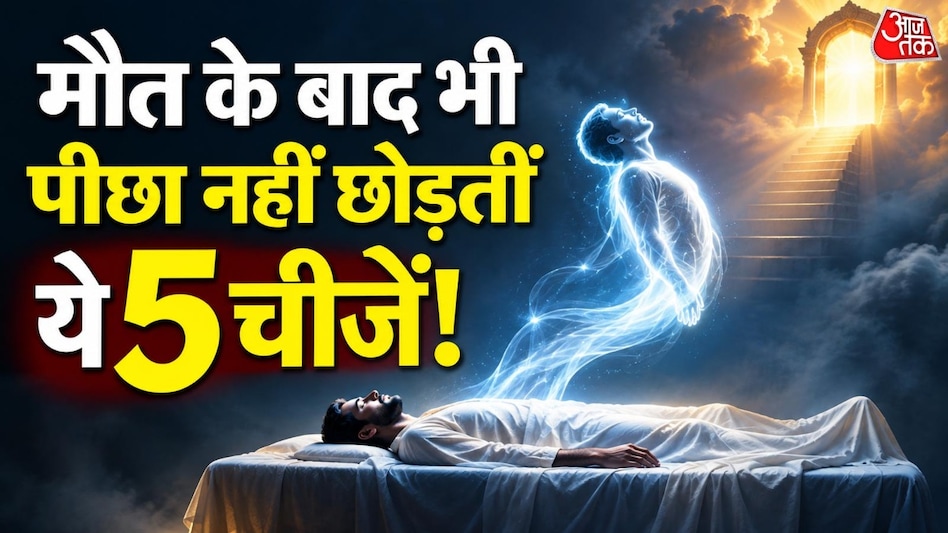
After leaving life, the human body decomposes into dust, and a person cannot take anything from the material world with them. However, Hinduism has a special concept of the soul. According to the Garuda Purana, even after the body ceases to exist, certain actions and habits of a person remain with them. It is believed that when the soul leaves one body and moves towards a new birth, certain things are retained with it.

The following five aspects are examined, which, according to the teachings, do not leave a person after death:

Desires and Attachments

The Garuda Purana asserts that desires and attachments remaining in a person's mind continue to haunt them. Often, some aspirations remain incomplete, and strong attachment to family, money, or relationships exacerbates this problem. In Hinduism, it is believed that unfulfilled desires can be the cause of the next birth. Therefore, it is recommended to avoid worldly hustle and attachments during life.

Burden of Debts

In his life, a person often takes on debt obligations. According to religious beliefs, the influence of debts does not disappear even after death. The Garuda Purana considers this in the context of the next birth. Therefore, it is advised to repay loans taken and fulfill one's duties on time.

Fruits of Virtuous Deeds

Any good deeds performed by a person in life will certainly bear fruit. The Garuda Purana indicates that acts such as charity, helping others, and serving the needy are virtuous. There is a belief that the fruits of good deeds remain with a person even after death. Consequently, everyone should help those in need and show mercy. It is also considered auspicious to make donations on special days such as Kartik Purnima, Makar Sankranti, Akshaya Tritiya, Magha Purnima, and Ganga Dashashti.

Good and Bad Deeds

Karma holds immense significance in Hinduism. It is believed that a person will inevitably receive retribution for their good and bad actions. An example of this can be found in the epic Mahabharata. According to the story, Bhishma Pitamaaha, lying on the bed of arrows, asked God Krishna why he was experiencing such pain. Krishna reminded him of an event from a past life. He recounted that Bhishma Pitamaaha threw a snake onto thorns. This event was considered a consequence of his past karma.

Knowledge and Conduct

Although a person cannot take money or other possessions with them after death, the knowledge gained in life and the established conduct are very important. In Hinduism, knowledge is considered the greatest wealth. Therefore, every person should constantly study something new. Furthermore, it is important to maintain good behavior and treat others with respect. Religious doctrine states that good conduct and knowledge are also connected to the soul.

Body Language Analysis: What Gestures Communicate and the Validity of Interpretations
Read more
super.abril.com.br

Body Language Analysis: What Gestures Communicate and the Validity of Interpretations

The relationship between body language and human communication was historically illustrated by a horse named "Hans Clever", which gained fame in Germany in the early 20th century for correctly answering mathematical and spelling questions and distinguishing musical notes. Its owner, Wilhelm von Osten, a mathematics professor and amateur trainer, did not charge admission to the shows.

Due to media interest, a commission composed of veterinarians, teachers, and circus professionals was formed to investigate the animal. The conclusion indicated that it was not fraud, as Hans responded even when his owner was not present, ruling out tricks or pre-arranged signals. Psychologist and biologist Oskar Pfungst was invited to try and explain the phenomenon.

Pfungst conducted experiments with Hans, including tests where the animal could hear the questions but not see who was asking them. In these cases, the success rate was only 6%. When Hans could observe the questioner, the accuracy rose to 89%. It was concluded that the horse did not know how to count, but rather that the people asking the questions were transmitting unconscious cues through gestures and movements.

When Hans began tapping his hoof, he perceived subtle signs of tension in the interlocutor, such as fixed gaze, leaning torso, or slightly turned head. When the horse reached the correct number, the questioner unconsciously relaxed this tension with a slight nod or change in gaze. Thus, the horse learned to recognize almost imperceptible variations in human expression to know when to stop tapping its hoof.

This story served as an example of how researchers can influence the results of analyses, reinforcing the need for rigorous studies, such as "double-blind" trials. It also highlights the central role of body language in communication between humans and other animals, where gestures, postures, and expressions convey messages and reflect our feelings.

Some manifestations are evident, such as crying indicating sadness or smiling suggesting happiness. However, outside the scientific scope, the topic is explored by self-help books and coaches, who promise improvements in non-verbal communication to increase confidence and professional success. On social media, supposed experts emerge claiming to detect lies or feelings just by analyzing facial microexpressions.

The term "body language" is considered imprecise because it lacks a fixed grammatical structure like a true language (unlike sign language). However, it is useful for describing the signs and movements that convey messages, often unconsciously, being part of "non-verbal communication," which also includes tone and speech rhythm.

Scientific investigation into this field dates back to Charles Darwin, the father of evolution, who published the book The Expression of Emotions in Man and Animals in 1872. For Darwin, emotional expressions did not arise primarily to communicate feelings, but rather for practical functions. For example, showing teeth in predatory animals serves to trigger a bite, and wrinkling the nose in humans is an attempt to reduce the inhalation of unpleasant odors.

Over time, humans developed the ability to interpret these expressions, which is vital for social species. Laughter, shared with chimpanzees and orangutans, functions as an indicator of positive climate within the group, promoting cooperation. The expression and reading of emotions are controlled mainly by the amygdala, part of the limbic system, distinct from the fusiform gyrus, which is responsible for facial recognition.

Later researchers expanded the study of body expression, partially validating the idea that body language can be improved. Serious studies prove that gesturing to illustrate or emphasize speech can increase persuasion in speeches. Speech therapy and public speaking training are considered evidence-based approaches.

A notable example involved Amy Cuddy, a Harvard psychologist, in a 2010 study on "power poses." The theory argued that adopting victorious postures, such as placing hands on the hips, for about two minutes, would trick the brain into generating more power. The study with 42 people showed increased self-confidence, as well as elevated testosterone and decreased cortisol. This finding led Cuddy to give her TED Talk in 2012, which became extremely popular.

However, subsequent research attempted to replicate the study but did not confirm the same effects. Although participants might have felt more confident, no hormonal changes or greater willingness to take risks were observed. A later consensus established that "power poses" do not cause significant physiological changes, being limited to a possible placebo effect on confidence.

Paul Ekman, from the University of California, is one of the biggest names in this field, beginning his investigations in the 1960s. Following Darwin, he postulated the existence of seven universal facial expressions. To prove this, Ekman researched diverse groups, including indigenous peoples of New Guinea island, and found that most volunteers associated the same expressions with the same feelings.

Ekman developed the FACS (Facial Action Coding System), a system that describes muscle movement instead of just classifying the expression. Each signal, such as raising an eyebrow, is a numbered "action unit." Although the system is widely accepted, the interpretation of body language remains limited, except for culturally fixed gestures. Therefore, one must be wary of simplistic interpretations, as many gestures are random or contextual.
According to the Garuda Purana: Where does the soul go after death and when does it reach Yamaloka?
Read more
www.aajtak.in

According to the Garuda Purana: Where does the soul go after death and when does it reach Yamaloka?

When the human body ceases to exist, the question arises about the fate of the soul: does it immediately go to Yamaloka after leaving the body, or does it remain near home and family for some time? Can it see its loved ones and experience hunger or thirst? These questions always arouse strong curiosity in people.

The Garuda Purana, one of the most important texts of Hinduism, provides answers to these questions through a dialogue between Lord Vishnu and Garuda. It examines themes of death, the soul, sins, and merits, as well as the afterlife. According to religious beliefs, after death, the soul begins a new journey where the good and bad deeds of the person are decisive.

The Garuda Purana illuminates various aspects of life and death. According to the teaching, the influence of a person's actions persists not only during life but also after its end. It is believed that a person reaps the fruits of their past actions, whether good or negative.

This scripture details the process of the soul separating from the body during death and the nature of its subsequent path. It also explains the significance of religious rites such as Sharaddha, Tarpan, and Pindadana, as well as the concept of Yamaloka.

What happens to the soul at the moment of death?

According to the Garuda Purana, when a person dies, their soul leaves the body. During this period, Yamadakshas are mentioned, described in a terrifying manner; they hold a noose and a staff. According to religious beliefs, the consequences of life's actions affect even after death. People who have committed sins may experience fear and suffering at the moment of death. After this, the soul proceeds on a further journey according to its deeds.

The Garuda Purana also contains a description of the subtle body. It is believed that the soul's journey does not cease even after the physical body is destroyed, as it continues to move under the influence of accumulated karma.

Does the soul return home after death?

The question of whether the deceased's soul remains in the house for some time is often asked. According to beliefs associated with the Garuda Purana, after death, the soul may retain an attachment to its home and family. It is said that the soul is capable of seeing its family members but cannot communicate with them due to the absence of a body. There is also a belief that it feels sorrow from being separated from relatives and loved ones.

This is why various rituals are performed in Hinduism after death. However, there are different religious opinions regarding how long the soul stays in the house, and this should be considered purely as a religious belief.

What does the soul receive from Pindadana?

In Hinduism, there is a tradition of performing Pindadana and Tarpan after a person's death, and the Garuda Purana emphasizes their importance. According to religious beliefs, during Pindadana, food is offered on behalf of the deceased. It is believed that this helps the soul on its further journey and brings it peace. Therefore, family members perform Pindadana, Tarpan, and other religious rites on specified days after death.

Why are special rituals held on the tenth, eleventh, and twelfth day?

In Hinduism, special worships and rituals are conducted after death on the tenth, eleventh, and twelfth days. The Garuda Purana also mentions Pindadana and other rites performed on these days. According to religious beliefs, the Pindadana performed on these days completes the process of forming the deceased's subtle body. It is believed that this facilitates the soul's further journey, after which representations of its path to Yamaloka follow.

What does the journey to Yamaloka look like?

The Garuda Purana describes the journey to Yamaloka as very difficult. Especially the journey of people who have committed evil deeds is depicted as full of suffering. Various difficulties and complex circumstances are mentioned during this journey. This journey also mentions the river Vaitarani, which is depicted as a terrible stage in religious texts. According to beliefs, the soul goes through various trials depending on its actions. Ultimately, it reaches the kingdom of Dharmaraja, where it is destined to reap the fruits of its deeds.

Can the soul see family after death?

According to the Garuda Purana, the soul's attachment to family and past life does not disappear instantly after death. It can feel attached to its home, loved ones, and things associated with its entire life. It is said that after the soul leaves the body, it can see its relatives but cannot establish contact with them. Because of this, it experiences anxiety and sadness.

Due to these beliefs, rituals such as Sharaddha, Tarpan, and Pindadana are performed in Hinduism after burial. It is believed that this brings peace to the soul of the deceased and eases its further journey.

Does the soul experience hunger and thirst after death?

The Garuda Purana also mentions that the soul experiences hunger and thirst after death.

Popular