Elon Musk admits SpaceX lags behind competitors in artificial intelligence development
Read more
Podrobno.uz [uz]
podrobno.uz

Elon Musk admits SpaceX lags behind competitors in artificial intelligence development

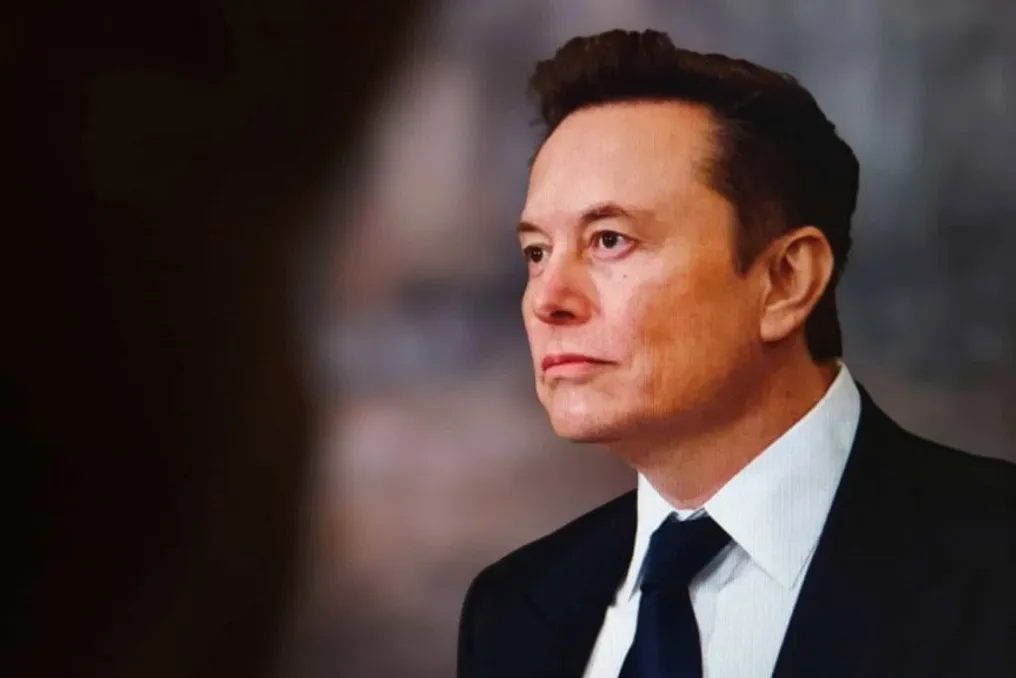
Elon Musk informed his employees that SpaceX is falling behind competitors in the field of artificial intelligence development. Consequently, instead of focusing entirely on developing its own products, the company earns revenue by leasing its computing power to other developers, including Anthropic and Google.

According to information obtained by The New York Times based on internal correspondence and testimonies from SpaceX employees, Musk believes it is more profitable to monetize data centers than to use them to improve its own chatbot Grok and other AI projects.

The entrepreneur expressed dissatisfaction with the current situation in workplace communication with engineers. In August, he temporarily renamed a general chat involving hundreds of employees to 'Selling computing power because we cannot compete.' Furthermore, Musk introduced a requirement for regular reporting on the use of GPUs necessary for training neural networks and warned of dismissal for inefficient resource consumption.

Renting out computing power has become a significant source of profit for SpaceX; the SpaceXSI division generates over half of the company's total revenue. The contract with Anthropic brings the company about $3.1 billion monthly, and with Google—$800 million. These agreements are set until 2029 but include a clause allowing termination with three months' notice.

Amid this reallocation of resources, SpaceX has suspended or scaled back several AI initiatives. In September, the AI companions division was closed, and in the autumn, employees working on the Digital Optimus system for office tasks were transferred to support the main Grok model and its programming functions.

In November, a team of 60 specialists working on Grok Imagine—a tool for creating images and videos—was disbanded. Company management explained this decision as a necessity to concentrate efforts on the most priority areas.

Nevertheless, SpaceX continues to expand its infrastructure for renting computing power. In November, the company announced plans to invest $74 billion in building new data centers in Arizona and Texas.

Previously, Musk opposed transferring power to competitors, hoping to use it for his own needs. However, after an inquiry from Anthropic in April, he changed his mind. At the DealBook conference in November, he stated his intention to continue leasing and his interest in increasing the volume of available computing resources.

In a previously published ranking of AI chatbots developed by Elon Musk's xAI, Grok ranked fourth, holding a 2.3% share among all tested services.
Similar stories

Anthropic and SpaceX impose atypical rules on IPOs, causing dissatisfaction among Wall Street banks
Read more
olhardigital.com.br

Anthropic and SpaceX impose atypical rules on IPOs, causing dissatisfaction among Wall Street banks

The initial public offerings (IPOs) of Anthropic and SpaceX have caused discontent among bankers and lawyers on Wall Street. Both technology companies implemented unique terms, exercising control over phases of the operations and limiting the autonomy of financial institutions.

Although the banks received over US$ 500 million (approximately R$ 2.85 billion) in fees from Anthropic's IPO, internally nicknamed Project Lantern, sources close to the process reported several issues during the transaction.

These complaints signal a shift in the dynamic between tech giants and Wall Street, driven by the high demand for artificial intelligence (AI)-related stocks. Both SpaceX, in June, and Anthropic managed to negotiate conditions distinct from usual market practices.

One point of contention was the compensation of the banks. According to Jay Ritter, an emeritus professor at the University of Florida and an IPO specialist, the two companies negotiated not to compensate coordinators for the distribution of extra shares sold via the greenshoe option, a feature that allows increasing the volume of securities offered in an initial public offering.

Ritter suggests that few companies will be able to demand similar terms, but does not rule out that OpenAI might possess sufficient bargaining power for such demands.

In the case of SpaceX, Elon Musk's team defined how and to whom the banks should trade the shares. Furthermore, exact order volumes were stipulated that the institutions had to meet, reaching billions of dollars. The banks agreed to participate in the operation without prior knowledge of their earnings.

Anthropic applied a different control model. The company instructed about 22 coordinating banks to restrict the number of employees involved in the deal to four, requiring them to be senior professionals. Additionally, it requested that executives from certain institutions sign agreements preventing central members of their teams from working with competitors such as OpenAI, Cursor, DeepSeek, and Hugging Face for a period of six months after the IPO.

Data control also characterized the offer preparation phase. Almost four weeks before the public disclosure of the registration submitted to the U.S. Securities and Exchange Commission (SEC), Reuters released details of the document, including risks, commercial relationships, and Anthropic's financial data.

To share files with most banks, the company used the NetRoadshow platform. This system monitored who accessed the documents and which pages were viewed, in addition to applying watermarks with the professionals' names. However, the tool prevented bankers from saving copies, complicating the teams' work.

Setbacks persisted on the eve of sending an updated version of the registration, scheduled for November 10. A law firm sent banks a PDF containing incorrect information about prices and shares related to the sale of securities in Canada, only to ask shortly after that the document be ignored.

The correct version was made available by NetRoadshow around 2 a.m. New York time zone. Banks had only a few hours to validate the material before submitting it to the SEC.

Despite the difficulties in preparation, both IPOs registered significant interest. SpaceX shares reached US$ 201.80 (about R$ 1,190.62) on June 16, but later fell below the initial price of US$ 135 (approximately R$ 796.50) in mid-July. Meanwhile, Anthropic's shares rose 17% on the first day of trading but closed Friday with an 8.5% drop.

For Ritter, companies like Anthropic and SpaceX demonstrated sufficient bargaining power to impose their own conditions on the banks. Nevertheless, he estimates that large financial institutions will likely maintain their normal operations with most companies, although OpenAI may be an exception.

Elon Musk accuses Zelensky of lying about Starshield system performance limitations
Read more
noticiasaominuto.com

Elon Musk accuses Zelensky of lying about Starshield system performance limitations

Elon Musk, the leader of SpaceX, accused Ukrainian President Volodymyr Zelensky of lying about a recent decrease in the performance of the Starshield military satellite communication network in Ukraine.

The previous week, Zelensky had stated that the Ukrainian army was detecting 'significant disturbances in the functioning of Starshield' within Ukraine, territory invaded by Russia in 2022, and added that such problems were characterized as 'systematic speed restrictions.'

In response, Elon Musk declared this claim false during a video interview from China, in the context of a forum promoted by The New York Times. He accused the Ukrainian president of lying about Starshield's restrictions.

Musk stated that the core issue is that Zelensky is actually requesting the use of commercial Starlink satellites for military purposes, something the company has refused to do since the beginning of the conflict.

According to sources in Kyiv, SpaceX's Starshield terminals, which represent the military version of the civilian Starlink network, stop transmitting when the travel speed exceeds 160 km/h, a fact that had already been noted in October. According to Volodymyr Zelensky, this limitation prevents the use of interceptors against Russian jet attack drones to specifically target Kyiv.

Elon Musk, who also spoke in defense of Russia, reinforced on Wednesday that control of Starshield belongs to the United States Department of Defense.

In October, there was a clash between the businessman and the Ukrainian president, at which time the latter blamed Washington for imposing similar restrictions. On that occasion, both the White House and Elon Musk denied any responsibility. Subsequently, the restriction was suspended upon request from Donald Trump.

Jensen Huang's departure from Nvidia reignites discussion on succession planning in large tech companies
Read more
olhardigital.com.br

Jensen Huang's departure from Nvidia reignites discussion on succession planning in large tech companies

Jensen Huang's departure from Nvidia's leadership has exposed a governance issue that also plagues other tech giants: the lack of defined plans for replacing their founders.

This situation highlights companies such as Tesla, SpaceX, and Meta, whose operations and strategies heavily rely on their key executives. In Elon Musk's case, financial documents already point to the risks inherent in the absence of this entrepreneur.

Both Tesla and SpaceX state in their financial documents that Musk's absence could lead to serious business consequences. Specifically, in public offering records, SpaceX mentioned that finding an individual with similar skills to his and capable of inspiring the same market confidence would be a long and uncertain process.

At Tesla, the succession structure is outlined among clauses tied to the last two installments of a compensation package valued at US$1 trillion (approximately R$5.6 trillion), designed to keep Musk at the company until the mid-next decade.

The absence of an established successor also causes anxiety among investors. Shareholder Ross Gerber compared Jensen Huang's situation to what he considers one of Musk's biggest fears, emphasizing the entrepreneur's geopolitical exposure, particularly due to his involvement in the war in Ukraine through Starlink.

The difficulty in structuring succession is not limited to Musk's companies. For Nell Minow, president of ValueEdge Advisors, preparing for the replacement of executive directors is one of the most crucial tasks of a board of directors. She observes that this responsibility is often neglected because the leaders themselves hesitate to discuss the possibility of leaving office, fearing loss of power or alteration of internal corporate dynamics.

Meta also acknowledges the dangers associated with the absence of its founder. The company's financial documents indicate that Mark Zuckerberg's unavailability could negatively impact its operations. Furthermore, the executive holds the majority of the company's voting rights and participates in high-risk activities, such as combat sports and aviation.

While these corporations are questioned about their succession plans, Nvidia is dealing with the mobilization of investors and entrepreneurs supporting Jensen Huang's return. The board is conducting an independent investigation into the reasons for his departure, while CFO Colette Kress temporarily assumes the role of CEO.

An online petition managed to gather over 170,000 signatures in favor of the executive's return. Elon Musk, Garry Tan, and Tim Sweeney expressed their support for the initiative, and Huang's allies are seeking ways to pressure the company's management.

However, the prospect of his return faces resistance. Government authorities and analysts present divergent views on the possibility of Huang resuming his position, given scrutiny from American legislators and national security investigations.

This debate encompasses companies of great economic relevance and in the financial market. Nvidia, Tesla, SpaceX, and Meta collectively employ over 280,000 people and represent almost 20% of the market value of shares in the S&P 500 index. The magnitude of these businesses explains why the absence of a director can transcend an internal issue and become a concern for the technology sector and investors.

Popular