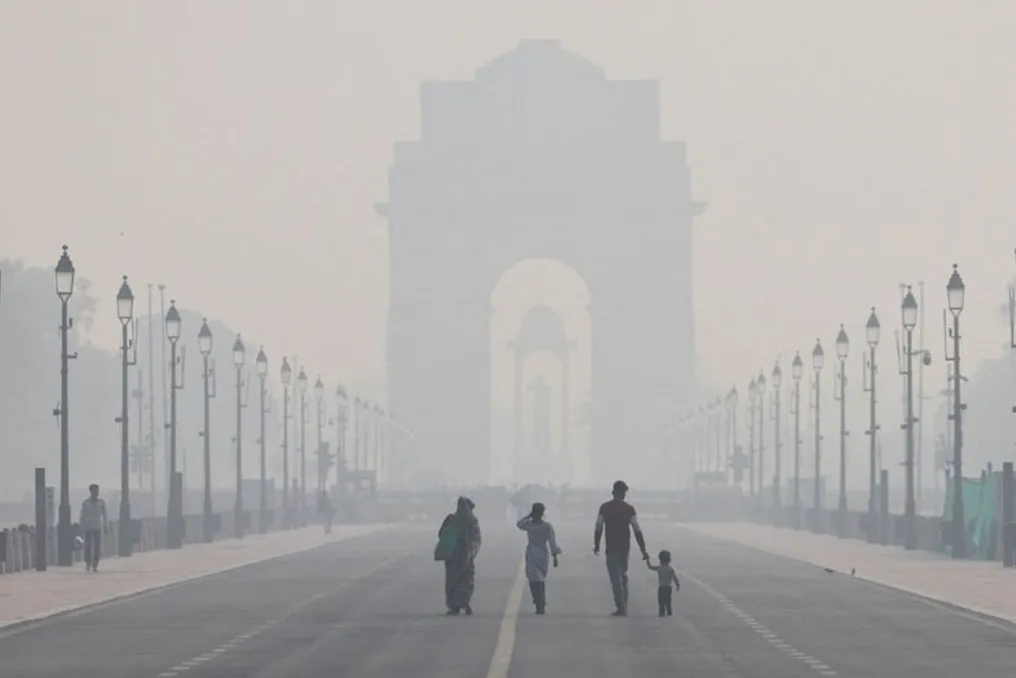
Air pollution in Delhi reaches 'Very Poor' category, accompanied by fog, smog, and cold
Read more
Aaj Tak
www.aajtak.in

Air pollution in Delhi reaches 'Very Poor' category, accompanied by fog, smog, and cold

The capital city of Delhi is experiencing a dual impact from the weather: on one hand, breathing is difficult due to high pollution levels, and on the other, the cold is intensifying. Consequently, residents, especially the elderly and children, are advised to stay indoors, and working individuals are advised to exercise caution.

According to the latest forecast from the India Meteorological Department (IMD), most of North India will experience dry weather over the next few days. However, a drop in daytime and nighttime temperatures is expected, leading to a feeling of cold.

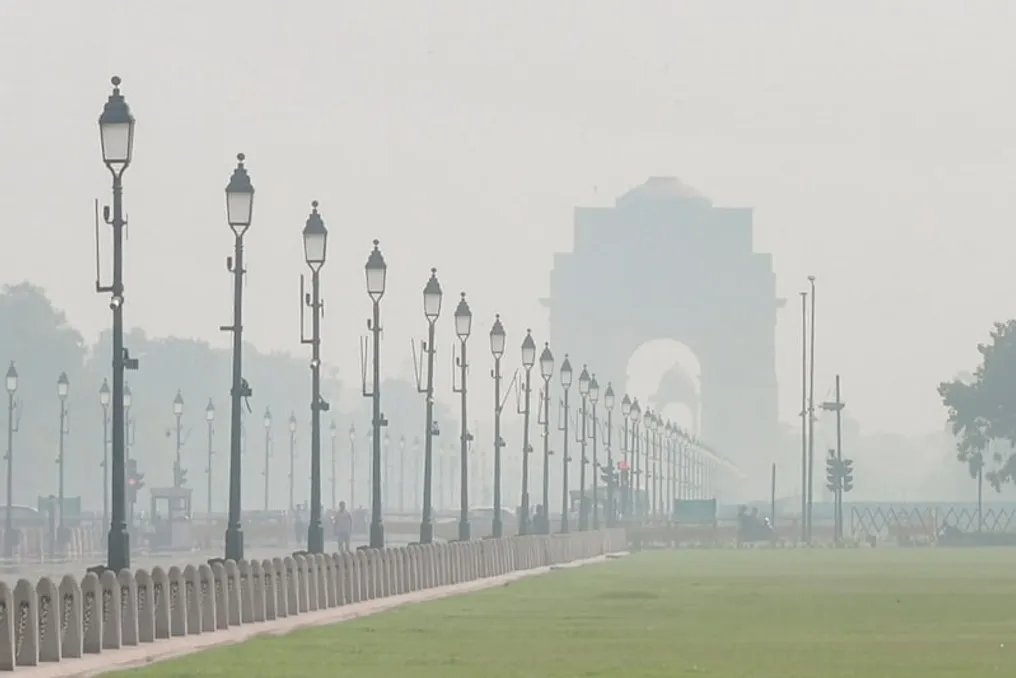
Air pollution levels vary across different areas of the capital. According to the Central Pollution Control Board (CPCB), the Air Quality Index (AQI) in the Anand Vihar area was 327, corresponding to the 'Very Poor' category. Similar AQI readings of 327 were recorded near the Akshardham temple. Nevertheless, near India Gate and Kartavya Path, there is some improvement, with the AQI at 161, falling into the 'Moderate' category.

On the other hand, the influence of winter is gradually appearing in North India. Fog and smog are observed in the mornings in the Delhi-NCR, Haryana, Punjab, and Western Uttar Pradesh regions. The meteorological department has issued a dense fog warning for Delhi, Haryana, and Chandigarh for November 26 and 27. Dense fog is expected in Punjab from November 25 to 27. Therefore, people traveling in the morning should exercise extra vigilance.

On November 25, predominantly clear weather is expected in Delhi-NCR. Light fog and haze may be observed in some areas in the morning. The maximum temperature in Delhi is forecasted to be between 24–26 degrees Celsius, and the minimum between 9 and 11 degrees Celsius. Dry weather is also expected in Gurugram: daytime temperature around 25 degrees, and nighttime around 11 degrees Celsius. Currently, the probability of precipitation in Delhi, Noida, Ghaziabad, Gurugram, and Faridabad is nil.

According to the sub-regional forecast from IMD, a dense fog warning has been issued for Delhi, Haryana, and Chandigarh for November 26 and 27. Furthermore, the district forecast for Delhi indicates a possibility of light fog and haze in some places, meaning the intensity of the fog may vary depending on the area. By November 27, the minimum temperature in Delhi could drop to 8–10 degrees Celsius, while the maximum remains at 24–26 degrees Celsius.

The overall forecast for the period starting November 25 indicates dry weather in North India, but the influence of fog and haze may intensify in the morning. Extra caution is necessary in Delhi-NCR over the next two days due to fog, as well as the gradual increase in cold weather.

In the plains of North India, the probability of precipitation is currently low. A dense fog warning has been issued for Haryana on November 26 and 27 amid dry daytime weather. Dense fog is expected in Punjab from November 25 to 27. Dry weather is predicted in Western and Eastern Uttar Pradesh. Rajasthan does not expect significant weather changes or heavy rains. Dense fog is possible in some areas of Himachal Pradesh until November 26, while Uttarakhand shows no signs of widespread rainfall.

According to the seven-day forecast from IMD, most of North-Western India will remain dry from November 25 to 30, including Delhi, Haryana, Punjab, Uttar Pradesh, Rajasthan, Uttarakhand, and Jammu and Kashmir. However, the weather will remain active in some states of South India.
Similar stories

Air quality improved in Delhi with the onset of winter, AQI dropped below 150 in some areas
Read more
www.aajtak.in

Air quality improved in Delhi with the onset of winter, AQI dropped below 150 in some areas

With the arrival of winter, there has been a significant improvement in air quality in India's capital, Delhi. On Sunday, November 22, 2026, the AQI level was recorded below 150 in several areas of Delhi, which was a relief for residents.

During the third week of November, there is a substantial difference in pollution levels across various parts of Delhi. While in places like India Gate and Anand Vihar, the AQI dropped below 150 and entered the 'moderate' category, the air quality remains alarming in other areas.

According to data from the Central Pollution Control Board (CPCB), the average AQI for Delhi was 239, corresponding to the 'poor' category.

In Anand Vihar, which is usually considered a pollution hotspot, the air quality changed sharply on Sunday morning. According to CPCB data, at 5:30 AM near Anand Vihar, the AQI was 252, classified as 'poor'. However, just an hour later, the air began to clear. By 6:40 AM, the AQI in the Anand Vihar area had dropped to 145, moving this area into the 'moderate' category.

Speaking of important areas of the capital, the air around India Gate and Kartavya Path was significantly better in the morning. An AQI of 143 was recorded at India Gate and Kartavya Path, which falls under the 'moderate' category. These conditions were quite comfortable for people walking in the morning.

On the other hand, pollution levels remain high in some zones. At 6:50 AM near AIIMS, an AQI of 326 was registered, placing it in the 'very poor' category.

Air Pollution and Cold Intensify in Delhi; AQI Remains High
Read more
www.aajtak.in

Air Pollution and Cold Intensify in Delhi; AQI Remains High

Delhi is experiencing deteriorating air quality amid intensifying cold weather. The Air Quality Index (AQI) in many areas is classified as 'poor,' and the temperature has dropped to 10.6 degrees Celsius. The share of biomass burning reached 33.3 percent.

Forecasts indicate that the air will remain 'very poor' from Friday until November 22nd and for six more days after that date, although experts believe the peak pollution has already passed. Previously, on Thursday, the AQI was 280, on Wednesday it was 232, and on Tuesday it was 204.

On Friday morning at 7:30 AM, an AQI of 267 was recorded in the Anand Vihar area, which, according to data from the Central Pollution Control Board (CPCB), falls under the 'poor' category. Similarly, at 7:30 AM in the Akshardham area, an AQI of 267 was registered.

At 7:00 AM in the ITO area, a higher AQI reading of 322 was recorded, which CPCB classifies as 'very poor.'

Satellite monitoring showed field fires in Delhi on Tuesday and Wednesday. On Wednesday, 772 incidents were registered across seven states: 370 in Madhya Pradesh, 202 in Punjab, 109 in Uttar Pradesh, 59 in Rajasthan, 30 in Haryana, and one incident each in Delhi and Uttarakhand.

Biomass burning, including agricultural residue (parali), wood, and fuel briquettes, contributed the most to the pollution, increasing by 24% compared to Wednesday and by 18% compared to Tuesday. Other pollution sources included waste burning with plastic and rubber (19.7%), vehicles (18%), secondary organic aerosols (14.1%), secondary inorganic aerosols (9.5%), coal (1.8%), industry and fireworks (1.5%), and road dust and soil (0.7%).

Meteorologist Navdeep Dahiya noted on social media that the peak pollution in Delhi and NCR, as well as in the northern plains, is beginning to subside. He predicts that the AQI will rise during the night and early morning, but it will remain within the range of 90–200 over the month. Relief is possible towards the end of the week due to easterly winds, while next week is expected to see the return of northwesterly winds with strong daytime gusts. The probability of the pollution becoming more hazardous is decreasing.

Air quality in Delhi and NCR worsens: AQI exceeds 400 in Noida and Gurugram
Read more
www.aajtak.in

Air quality in Delhi and NCR worsens: AQI exceeds 400 in Noida and Gurugram

The air pollution problem has once again caused concern among residents of Delhi-NCR. On Friday morning, the overall Air Quality Index (AQI) in the capital exceeded the 400 mark. In the Anand Vihar area, this figure reached 414. The air situation remains severe in Noida, Ghaziabad, and Gurugram, indicating that the impact of pollution is felt across the entire NCR region.

According to data collected at 5:05 AM, all major cities in Delhi-NCR recorded poor air quality. In Anand Vihar, the AQI reached 414; in Ghaziabad, it was 377; in Noida, 369; and in Gurugram, 349. This shows that the problem is not limited to Delhi, and the air in neighboring cities has also become unfit for breathing.

In the Anand Vihar area of Delhi, an AQI of 414 was recorded, indicating an extremely unfavorable air condition. The AQI reflects the level of atmospheric pollution; the higher this index, the worse the air quality. Exceeding the 400 mark raises serious concerns regarding public health.

The AQI serves as an indicator of air purity or pollution. An increase in this index signifies a deterioration in atmospheric quality. Therefore, reaching an overall AQI above 400 in Delhi is a cause for concern.

The pollution problem in Delhi-NCR has persisted for several days. On November 11th at 6 AM, the AQI in Delhi was 299, while in Noida it was 276, and in Gurugram it was 295. However, on Friday morning, the air situation in Delhi looked even worse. Previously, on October 12th, regulations in Delhi-NCR had already been tightened. On Thursday morning, the AQI in Delhi was registered at 319, while dense smog was observed in the Akshardham area. Pollution was also recorded near MIS, JLN stadium, and Sarai Kale Khan.

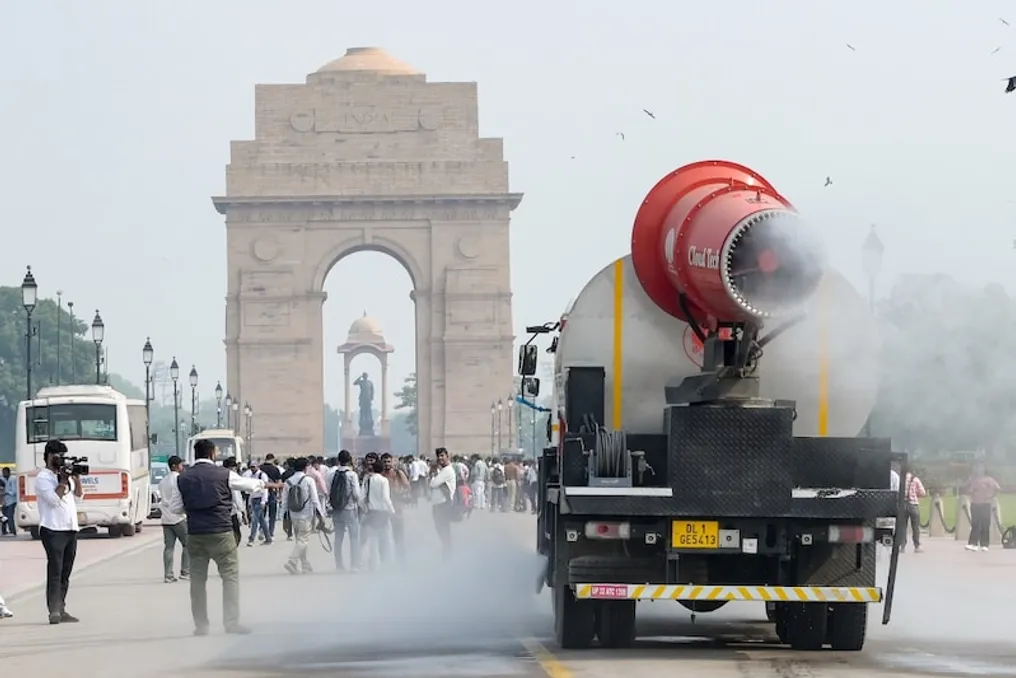
Due to pollution in Ghaziabad, directives were issued to suspend public and private construction work until November 20th. Work related to building demolition was also prohibited. Orders were given to double the street cleaning using machinery and water spraying. Furthermore, in Noida, Greater Noida, and Ghaziabad, instructions were issued to conduct training for children up to the fifth grade in a hybrid format, allowing children to study online or attend school.

Current data shows that the overall AQI in Delhi exceeds 400. The reading in Anand Vihar is 414. Data from Noida, Ghaziabad, and Gurugram confirms that there are no signs of improvement in the pollution situation in Delhi-NCR.

Popular