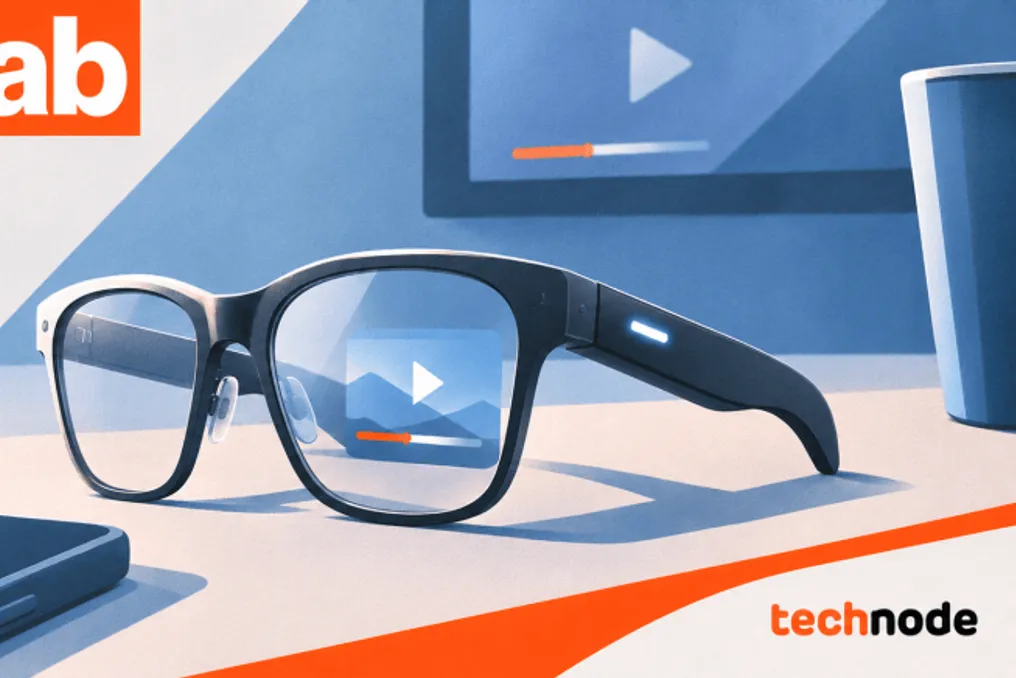
XREAL, which filed for listing in Hong Kong in April, has unveiled its Aura glasses. These wired glasses run on Android XR and became available for pre-order in October. They resemble sunglasses more than the bulky headsets that previously promised to implement spatial computing concepts.
This project involves a division of labor between companies: Google provides the software and artificial intelligence, Qualcomm is responsible for the main processor, and XREAL manufactures the hardware worn by the user.
Before Google approached the company, XREAL had been developing hardware solutions for many years. Founded by Chi Xu in 2017 as Nreal, the company first showcased its Light glasses at CES in 2019. Later, it focused on the Air line, allowing users to connect the glasses to a compatible device to view a large virtual screen, keeping the phone in their pocket.
This approach allowed people to acquire the product without immediately adopting a new computing paradigm; the movie remained a movie, and the game remained a game, only the screen moved. Furthermore, it gave XREAL valuable engineering experience, teaching it how to create displays that feel comfortably distant even when the wearer moves their head, and focusing on weight, heat, and the fit of the nose pads.
The company developed these competencies independently, opening an optical module factory in Uxi and developing its own display technology. With the One series, it introduced the X1 chip, which provided spatial display functions within the glasses, allowing the screen to remain fixed while the user turned their head, thus increasing the device's versatility for phones, computers, and gaming gadgets.
By the time Aura appeared, XREAL had experience selling glasses to those expecting them to work with existing devices. The next step required users to purchase an additional computer connected by cable to a separate computing unit containing the main processor and battery. Placing these components outside the glasses helps keep them relatively light but requires the owner to carry another object for charging and control.
XREAL describes Aura as a collaborative project combining the company's lightweight hardware, Android XR and AI from Google, and processors from Qualcomm. For Google, the appeal of this product lies in the ability to integrate its software into glasses made by a company that has been convincing consumers to wear displays for years. For XREAL, Android XR represents the operating system around which developers can build applications. Unlike earlier models that merely enlarged the existing screen, Aura allows applications to occupy space around the user, using cameras and hand tracking for interaction.
The addition of Gemini opens up new possibilities. In one review, the assistant was able to identify collectibles on a shelf and discuss their value, as well as help explain how to arrange virtual windows. Google's software is capable of analyzing both the room and the user's actions within the device.
Thanks to this collaboration, XREAL has begun appearing in foreign publications alongside larger brands. In an October comparison, its glasses were featured next to a future Meta device. Initial reviews suggest that making a computer wearable and ensuring its usability are two separate tasks. Critics praised the Aura displays and wearing comfort compared to larger headsets, but problems often arose when trying to issue commands to the device, noting unreliable gestures, heating, and frustration with the computing unit, as well as limited app selection.
These complexities are difficult for one company to solve. XREAL can improve optics and fit, while Google can improve the operating system and provide developers with stronger incentives to create content. The Aura user simultaneously faces all these solutions: they see a window, reach for it, and expect a response.
The partnership with Google is a significant step forward for XREAL and changes the criteria for product evaluation. If before selling a portable display meant image quality, now selling Aura implies creating a space where people can watch, work, and switch between applications. The company is seeking public capital for expansion, reporting revenue of 516 million yuan in 2025 in its listing application, with over 70% of sales coming from overseas markets. The partnership with Google has given XREAL's previously existing business a more ambitious scale.