As noted in the article, the long-term partnership between Singapore and China is maintained by both sides' willingness to engage in joint innovation. As economies develop and needs change, the governments of both countries have found new ways to cooperate.
Three government-level projects—the Suzhou Industrial Park, the Tianjin Eco-city, and the Chongqing Connectivity Initiative—demonstrate this process. They addressed challenges at different stages of development: from industrial growth in Suzhou to sustainable urban development in Tianjin and ensuring connectivity in Chongqing. All three projects continue to evolve and adapt, opening up new avenues for interaction.
Today, the partnership is expanding into digital and green economies, healthcare, biotechnology, and third-party markets, and the authors call for applying the same readiness for innovation in these areas.
Developing New Solutions Together
Joint development of new solutions is a priority for both Singapore and China. Singapore actively invests in new technologies, including artificial intelligence (AI), leveraging its potential in the economy—from boosting small business productivity to advancing high-tech industries and healthcare.
China is also striving for high-quality development through investments in science and technology, evidenced by the dynamism of its innovative ecosystem, represented by companies such as ByteDance and Moonshot AI.
These opportunities allow research institutes and enterprises to combine their expertise to solve common problems. Since launching the Enterprise Singapore Joint Innovation Programmes with selected provinces and cities in China in 2020, over 40 projects in AI, biomedical sciences, and green technologies have been supported.
To further deepen cooperation, it is proposed that research be more closely linked to the needs of businesses and society, helping promising technologies find practical applications. For instance, in the city of Punggol, Singaporean local transport operators Grab and ComfortDelGro collaborate with Chinese tech companies WeRide and Pony.ai to implement autonomous shuttles, which will make trips for residents to transport hubs and neighborhood amenities more comfortable.
At the JCBC meeting, additional cooperation agreements were announced between research centers of the two countries, providing researchers with more chances to combine their knowledge, achieve breakthroughs, and create practical solutions.
Bringing Innovations to Market
Economic ties between Singapore and China are very close. China has been Singapore's main partner in commodity trade for over ten years, and Singapore remains the largest foreign investor in China. These ties can be utilized to assist businesses in commercializing their inventions and entering new markets.
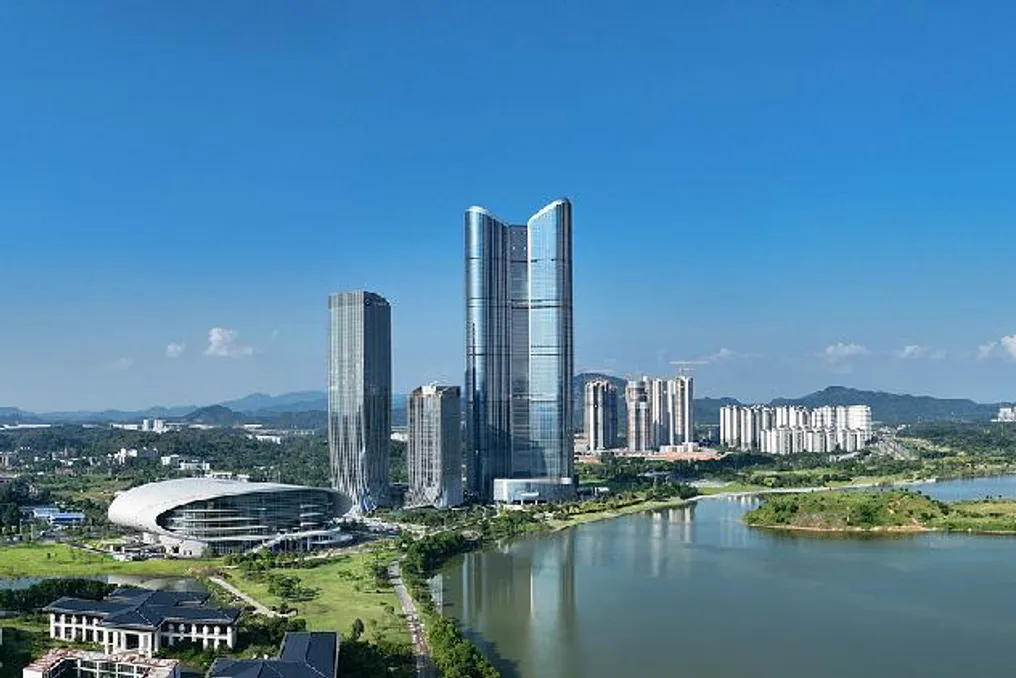
An example of such interaction is the Guangzhou Knowledge City China-Singapore (GKC), established in 2010. It serves as a launchpad for Singaporean companies wishing to enter the Greater Bay Area of China. The GKC Intellectual Property (IP) Innovation Centre helps Singaporean firms protect and commercialize their developments in China, while allowing Chinese enterprises to leverage Singapore's IP offerings for international expansion.
These platforms can be used to find partners, protect, and commercialize innovations, as well as to jointly explore third-country markets. Closer financial interaction also simplifies cross-border operations for individuals and businesses. The Monetary Authority of Singapore and the People's Bank of China are working closely to expand money transfer channels to ensure instant transfers of small amounts between accounts.
Uniting People and Ideas
Innovation ultimately starts with people. Singapore and China have always maintained close people-to-people ties at various levels, especially in education and research. These connections need to be developed to attract more students, researchers, and experts for knowledge exchange and the development of new solutions.
The Singapore-China scholar and specialist exchange program, launched at the 19th JCBC in 2023, is one such platform. Furthermore, ties between educational institutions are being strengthened through new joint programs and research collaborations in advanced fields.
It is necessary to encourage continuous exchange so that participants can gain a deeper understanding of each other's economies and societies. These networks can evolve into research and business partnerships that sustain innovation and cooperation for many years.
Maintaining a Rules-Based International Order
All these opportunities are realized amid growing international uncertainty. Rapid technological advancements are transforming societies, while climate change and geopolitical tensions are placing additional pressure on the global economy.
As they adapt to these changes and deepen innovation partnerships, it is crucial to firmly adhere to international law and the multilateral, rules-based system. These frameworks have underpinned the development of both countries for many decades, giving businesses confidence in investment and allowing people to exchange ideas and work across borders.
The situation in the Strait of Hormuz highlighted the vulnerability of world trade to disruptions, especially for economies oriented towards open trade. Maintaining the right of transit passage is critical for all countries, including Singapore and China. Both nations are interested in protecting these rights and maintaining trade openness.
The partnership continued to grow because both sides remained farsighted and pragmatic, constantly finding new ways to respond to the needs of their populations. Reliance on mutual trust, leveraging the strengths of each side, and deepening cooperation where interests align should be prioritized.
Innovating together and supporting an open, inclusive, and rules-based international order allows Singapore and China to help build a better future for the next generation, providing them with greater opportunities to realize their ambitions. This is the future worth striving for together.