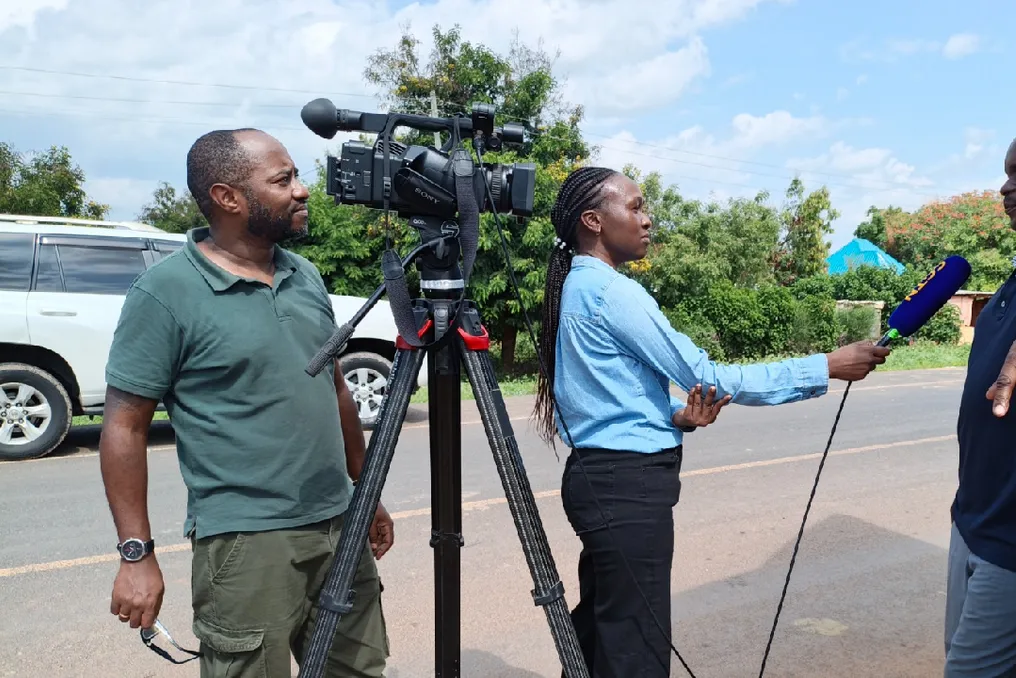
In Moyale, Kenya, refugees found shelter in camps after conflict on the border with Ethiopia
Read more
CGTN
cgtn.com

In Moyale, Kenya, refugees found shelter in camps after conflict on the border with Ethiopia

On a hot day at Holale school, located in Marsabit just 3.8 km from the Moyale border post, a scene unfolded where women and children hid under trees to escape the scorching sun. Some were queuing for a meager ration of sorghum, yellow beans, and vegetable oil distributed by the Kenyan Red Cross among families.

The team traveled to this northern frontier, covering 770 kilometers from Nairobi. The area has become a safe haven for tens of thousands of refugees fleeing the conflict on the Ethiopian side of the border. According to the Kenyan Red Cross, Holale is one of seven temporary camps housing approximately 58,000 displaced persons.

It is impossible to ignore the large number of children in this temporary shelter. However, a Red Cross volunteer reported that they were scheduled to visit the Oriental Mission Church camp an hour later, which is about 7 kilometers away, because 'the situation there is more chaotic.'

This camp is adjacent to the main aid depot, jointly managed by the United Nations High Commissioner for Refugees (UNHCR), the Kenyan Red Cross, and their partners. The people who met the team exude a deep eloquence born from hardship, suffering, and desperate hope.

People are visible everywhere—a thousand faces, a thousand stories. Although the team feared being late for lunch, they were quickly informed that food was still being served. A Red Cross official stated that the feeding protocol begins with men, followed by women and their children, who require more time to eat properly.

Food preparation takes place in an improvised open kitchen under the guidance of a group of volunteers. Among them is Zeiny Noor, who lived across the border with her family before the fighting began. Her team prepares and distributes food daily to over 2,300 people living in this settlement. This helps her stay occupied despite the difficulties of her current circumstances. She said in her dialect: 'We came empty-handed; we only have these clothes, so we cannot even change them.'

The violence in the region was triggered by a long-standing territorial dispute between communities in the Oromia and Somali regions of Ethiopia. According to Marsabit Governor Mohamed Ali, sporadic gunfire and stray bullets crossed into Kenya, resulting in two deaths and twenty-two injuries by mid-November.

Despite its modest size and limited resources, the town of Moyale opened its doors to neighbors in times of need. With the support of humanitarian organizations, the local community strives to offer more than just a hope for safety. Nevertheless, the future of the displaced families remains uncertain unless the conflict is resolved.

Similar stories

Places to Visit in Pokhara: An Alternative to Shimla and Nainital in Nepal
Read more
www.aajtak.in

Places to Visit in Pokhara: An Alternative to Shimla and Nainital in Nepal

If you are tired of monotonous landscapes, crowds, and mountain views in Shimla or Manali during your vacation, you can consider traveling to a new destination abroad. Pokhara, located in Nepal, is a picturesque place where you can experience a unique combination of mountains, lakes, greenery, and tranquility.

Pokhara offers numerous options for relaxation and active pursuits: from watching majestic snow-capped peaks at sunrise to boating on the lakes and paragliding. Notably, a trip to Pokhara can be a budget-friendly option for tourists from India, allowing them to enjoy nature without large expenses.

Pokhara is a well-known tourist location in Nepal, famous for the stunning views of the Annapurna mountain range. Here, quiet lakes, snow-covered peaks, and green hills harmonize beautifully. The area around the lake is very popular among visitors who enjoy walks, visiting cafes, and leisurely evening strolls along the shore.

Phewa Lake is one of Pokhara's most famous attractions. Beautiful mountain views open up around the lake. Guests can take boat rides and visit the Tal Barahi temple located in the middle of the lake. Morning and evening here are especially picturesque; a walk along the shore or relaxing in a cafe with a view of the lake is a pleasant experience.

For sunrise enthusiasts, Sarangkot is a must-visit. This famous viewpoint in Pokhara allows you to see the first rays of the sun painting the snowy Himalayas golden. Magnificent views of the Annapurna and Machhapuchhre (Fishtail) mountains can be seen from here. Paragliding is also possible here.

On Pokhara Hill stands the white Buddhist stupa, World Peace Pagoda. From this point, an impressive view of the lake, the city, and the surrounding mountains opens up. If you prefer solitude away from the hustle and bustle, this place will appeal to you. Access is possible both by road and on foot across the lake.

Devi's Falls is a popular waterfall in Pokhara. The water crashes into a deep rock niche and then flows into an underground passage. During the rainy season, the water flow increases, making the spectacle even more impressive. This is a good spot to stop for photography and enjoy natural beauty. Near Devi's Falls is the Gupteshwar Mahadev cave, a natural cave with a temple dedicated to Lord Shiva. Inside the cave, you can see natural formations and passages between rocks. Descent down the stairs is required for visiting, so comfortable shoes are recommended.

If you are interested in mountains, mountaineering, and Nepalese culture, you should visit the International Mountain Museum. It features exhibits detailing the history of the Himalayan mountain systems, mountaineers, local communities, wildlife, and the connection between mountains and human history. The museum is interesting for both children and adults.

If you want to spend time in a quieter place than Phewa Lake, you can visit Begnas Lake. It is located a little further from Pokhara, and there are fewer tourists here. On the lake shore, you can admire the views, take boat rides, and enjoy the peaceful atmosphere.

The optimal time to travel to Pokhara is from October to November, when the weather is comfortable and clear skies provide beautiful mountain views. You can also visit the region in March and April when the weather is warm and the blooming flowers add extra beauty to the area. From December to February, it is cold, but the weather is often clear. The period from June to September falls within the monsoon season, which can bring heavy rains and cloudiness, making active recreation difficult.

It is recommended to plan a trip to Pokhara for 3 days to have time to see the lakes, temples, viewpoints, caves, and waterfalls. If you plan trekking or paragliding in the surrounding villages, you should allocate one or two additional days.

To reach Pokhara, you can first go to Kathmandu, the capital of Nepal. Flights from there to Pokhara take about 25–30 minutes. A journey by car or tourist bus takes approximately 6–8 hours. Upon arriving in Pokhara, it is recommended to stay in a hotel near the lake, as most tourist attractions are easily accessible from there.

Trampolim Beach in Ceuta has become a waiting area for dozens of migrants
Read more
noticiasaominuto.com

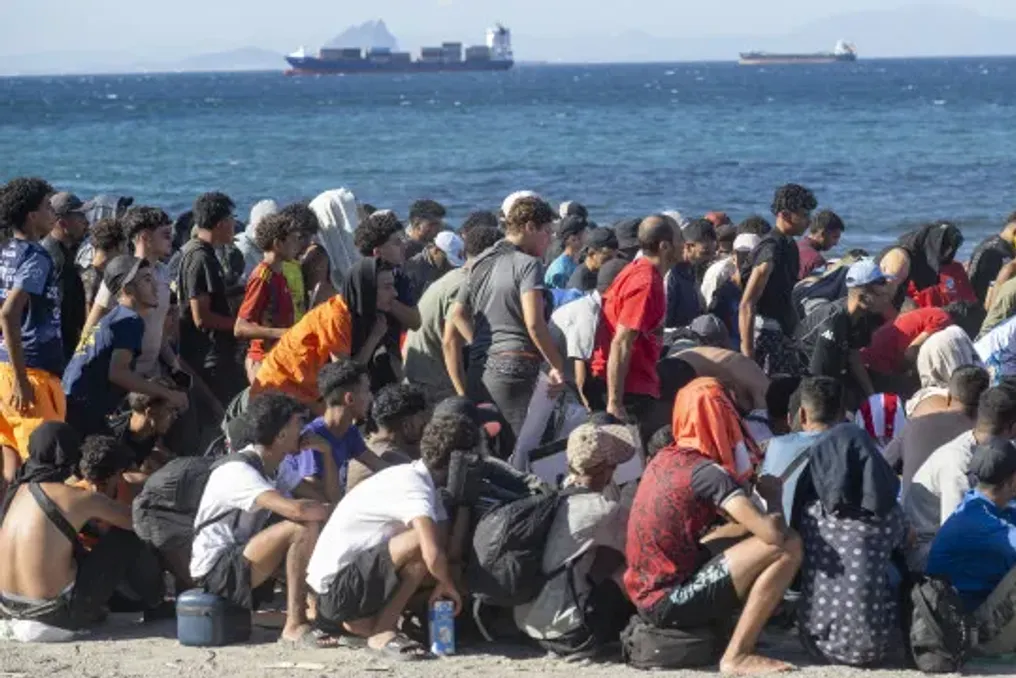
Trampolim Beach in Ceuta has become a waiting area for dozens of migrants

Trampolim Beach in Ceuta served as a temporary stay for numerous migrants. Kadi, Asita, and Marwan entered Ceuta in July. Despite days spent without food and sleeping on the streets, they do not regret their choice and maintain hope for the possibility of working or studying in Spain.

Kadi from Senegal, 27 years old, Asita from Malaysia, 28 years old, and Marwan from Morocco, 17 years old, are part of more than 90,000 people who illegally entered Ceuta on July 30th. Ceuta is a Spanish enclave in North Africa, bordering Morocco.

According to the Spanish Civil Guard, since then, over 88,000 people have returned to the Moroccan side of the border, either voluntarily or after deportations.

According to the Spanish government, at least 3,500 adults and over 4,000 unaccompanied minors remain in the city, housed in temporary reception centers such as camps. Adults await decisions on their asylum applications, while minors, according to Spanish law and international treaties, cannot be repatriated without an individual assessment that guarantees, among other things, their handover to families in countries of origin and the provision of certain socio-economic conditions.

Moroccan adults initially do not have the right to asylum, except for LGBTQI individuals and others who can prove they are victims of abuse, as Morocco is classified by the European Union as a 'safe country of origin', unlike sub-Saharan African countries. Kadi, Asita, and Marwan fit the profile of migrants in Ceuta who may be eligible for residence permits in Spain.

Trampolim Beach was covered by international television channels for over two months as it became an improvised camp for thousands of people who illegally entered Ceuta. Among them were Kadi and Asita. Today, this beach, already cleared of tents and trash, is a place where the two friends and dozens of other sub-Saharan migrants spend evenings waiting for answers to their asylum applications. A similar scene is observed on other beaches and promenades in the city.

Sitting at one end of Trampolim Beach, Kadi and Asita showed Lusa where they slept for a week before being taken to a nearby temporary foreign reception center. Asita said: 'It was a week on the street; NGOs gave us food, but there were two days when we ate nothing, only biscuits.' Kadi shared: 'We are waiting for documents and good news. We are asking for international protection. We wanted to get to Europe, and here we are. I don't know if I am better now than I was in Morocco. But I believe I will be better; this is an opportunity.'

Kadi had been in Morocco since 2019 and worked in a cafe in Tangier. Asita also lived in Tangier for five years and worked in agriculture, picking fruit. They left their home countries being poor and facing conflicts to reach Morocco, where, they say, they had nothing—they worked 'without contracts and sometimes didn't even get paid.'

They were told that they could cross the border into Ceuta at the end of July, and they joined this flow, but no further details are provided. Both dream of going to work in Bilbao, a city they saw online and liked. Currently, they have no contacts with local residents in Ceuta: 'Not a word with the Spaniards,' says Kadi.

At the other end of the city, near the entrance to the minor reception center located in an industrial zone warehouse in Tarajal, Marwan, 'from a village near Marrakech,' explained to Lusa, that he slept on the street for two weeks and 'there were days' when he didn't eat after entering Ceuta. When he got to the children's center, he underwent a bone medical examination to determine his age. He is 17 years old and hopes his name will soon be 'on the list for travel to Spain' before reaching adulthood. He stated that he does not want to return to Morocco. 'I want to study computer science, artificial intelligence,' he said. Like other teenagers around him, he learned about arriving in Ceuta through the social network Instagram, knowing how and when to enter the city.

Following an increase in human and logistical resources, the review of asylum applications in Ceuta has recently become faster, in 'less than two weeks,' although the results are mostly negative, especially for Moroccans, reported Lusa immigration lawyer Africa Monsalve. Africa Monsalve has been part of the assigned lawyers group since September working in the city's migrant registration centers and reported that new asylum requests have 'decreased from 20 to five lawyers, maximum.'

Despite thousands of people leaving Ceuta voluntarily or not, the lawyer notes that 'many people still remain and have not applied for asylum.' Some of them are in camps but have not started the registration process. Others probably have not done so due to fear, fearing that everything will end in 15 days. Africa Monsalve's colleague, lawyer Alma Ruiz, noted that many people have left, but the population of Ceuta will grow by at least 4,000 people, whom she believes can remain in the city in some way.

Popular