Pakistan-China Friendship Hospital Provides Medical Care in Gwadar City
Read more
CGTN
cgtn.com

Pakistan-China Friendship Hospital Provides Medical Care in Gwadar City

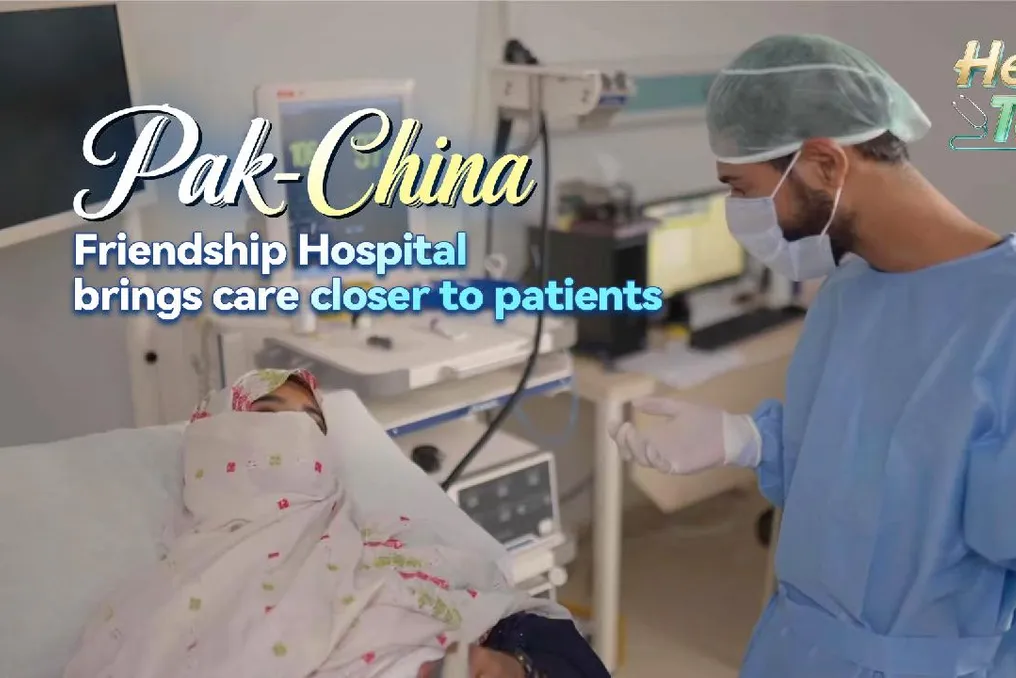
Thanks to the Pakistan-China Friendship Hospital, patients have found it easier to receive medical care. As Saud told CGTN in an interview, without this hospital, he would have had to travel to Karachi for treatment.

In the port city of Gwadar, Pakistan, serious injuries previously required long journeys and were associated with high treatment costs. However, the situation has changed.

Saud sustained injuries in a road traffic accident on his way to work, suffering fractures that required surgical intervention. Previously, patients needing such orthopedic surgery had to travel to Karachi. This trip not only increased the risk of complications but also created a significant financial burden for the patient's entire family. If treatment was delayed beyond the optimal period, the family could lose its main breadwinner. Saud was the sole provider for his family.

Today, the Pakistan-China Friendship Hospital has solved this problem. Officially opened in 2024, the hospital, utilizing modern medical equipment, implants, and standardized treatment protocols introduced by Chinese medical teams, allows Gwadar residents to undergo orthopedic surgery. Many local residents whose families depend on manual labor have received timely treatment at this hospital.

Similar stories

Volunteer from South Africa begins training in traditional Chinese medicine thanks to Peace Ark mission
Read more
cgtn.com

Volunteer from South Africa begins training in traditional Chinese medicine thanks to Peace Ark mission

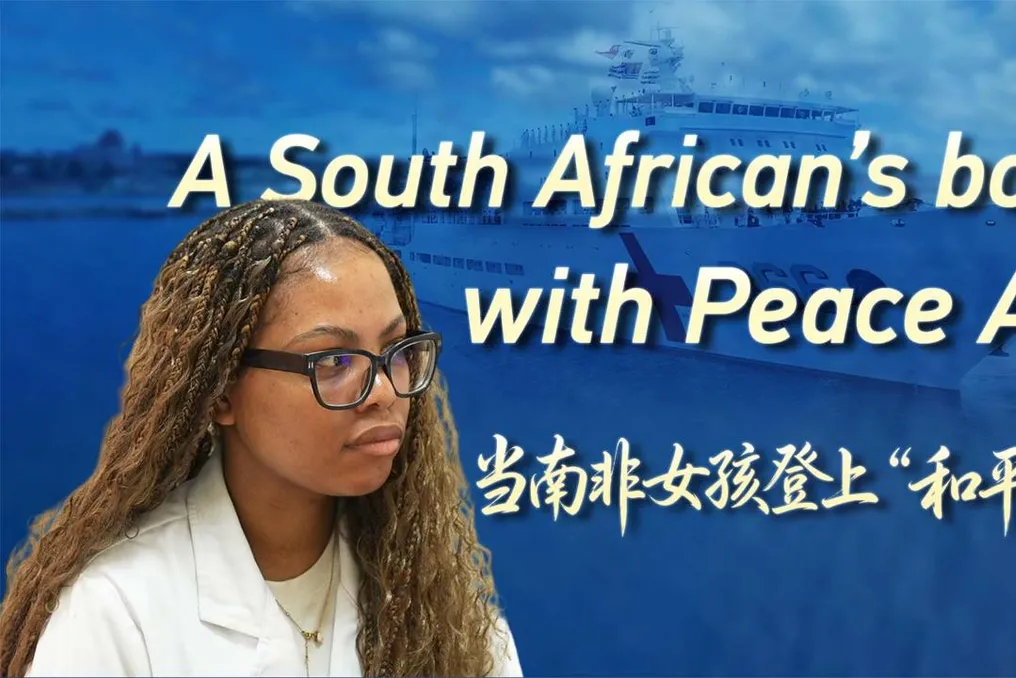
When Sinovuyo Mkhula was undertaking volunteer practice on the hospital ship Peace Ark in South Africa, her goal was to assist patients and gain knowledge from Chinese doctors. This experience inspired her to travel to China.

Mkhula is now studying a master's program in Traditional Chinese Medicine at Shanghai University. With the support of the doctors she met on the ship, she is turning her early interest in Traditional Chinese Medicine (TCM) into practical experience, aiming to improve the healthcare system in South Africa in the long term.

Sinovuyo Mkhula shared her impressions: 'My experience on Peace Ark ignited something in me. I think it's the beginning of everything. If I hadn't gotten on the ship, I might not have had this experience in China with such amazing doctors.'

From Volunteer to International Student

When Peace Ark arrived in Cape Town in August 2024, Mkhula joined the medical team as a volunteer. Chinese doctors treated local patients and exchanged experiences with South African Armed Forces medical specialists. As a translator, Mkhula was able to see their work firsthand and learn methodologies that she had not studied during her undergraduate studies.

One of the doctors aboard, Xu Jingyu, recalled her enthusiasm. He noted that Mkhula was very interested in studying acupuncture, medical equipment, and other TCM methods.

For Mkhula, studying in Shanghai provided a different perspective on this discipline, one that went beyond textbooks. She explained that during her undergraduate studies, she viewed the subject through a 'South African lens,' whereas now, while pursuing a master's degree, she is studying TCM through a 'Chinese lens.'

The training with the doctors she met at sea continued in Shanghai. There, Xu and his wife Zhang Xuan welcomed Mkhula to the TCM rehabilitation center at No. 905 Hospital of the Naval Medical University. Zhang, who is also a TCM doctor and participant in Peace Ark overseas missions, introduced Mkhula to clinical practices. Under supervision, the student was able to try performing acupuncture on a patient suffering from mobility issues.

Mkhula hopes to deepen her knowledge of Chinese medicinal herbs, although she admits that specialized terminology remains a challenging task. The medical couple advised her to study Chinese culture alongside medicine, as they believe these two aspects are closely related.

A Mission Beyond the Ship

Although Peace Ark helped Mkhula connect with Chinese doctors, the ship itself holds personal significance for Xu and Zhang. Zhang participated in missions in 2018 and 2023, and Xu joined the 2024 mission. After returning, Xu and Zhang compared their routes on a world map.

Zhang recalled: 'We were very happy. We considered it an honor for the whole family. TCM is not just a popular traditional form of medicine in China; it is also a calling card for China abroad.'

Studying in China allowed Mkhula to meet students from all over the world and provided her opportunities to exchange knowledge with people studying TCM in their home countries. She noted: 'I am truly amazed at how China has managed to standardize traditional medicine.'
Chinese and American Medical Equipment Manufacturers Expand Bilateral Ties Beyond Trade
Read more
cgtn.com

Chinese and American Medical Equipment Manufacturers Expand Bilateral Ties Beyond Trade

Changes in trade policy between China and the US are opening up new opportunities for the medical equipment industry. In September, China's Ministry of Commerce announced the China-US Trade Council and a mutual tariff reduction system, including medical devices in the list of American imports subject to lower duties.

The tariff reduction could potentially decrease costs for certain American instruments and consumables, which benefits hospitals, third-party laboratories, and life sciences research institutes. However, a more significant aspect is the growing exchange of innovations and investments between the two countries.

The United States remains one of the most important overseas markets for medical devices in China. According to data from the China Chamber of Commerce on the import and export of drugs and healthcare products, in the first half of 2026, exports of medical devices from China reached $27.1 billion, an increase of 12.4% compared to the previous year. Exports to the United States amounted to $5.37 billion, accounting for nearly one-fifth of the total volume.

Chinese companies are also increasing their global presence, supported by domestic innovations in areas such as genomic sequencing, medical imaging, and precision tools.

For American medical technology companies, China is becoming not only a major market but also an important base for research, manufacturing, and innovation implementation. At the 93rd International Medical Equipment Exhibition in China in April, GE HealthCare presented over 50 innovations in precision medicine, including 12 new products and 11 clinical solutions. Over 60% of the exhibited items were developed by Chinese research groups, and 95% were manufactured in China. The company is also strengthening its local research capabilities, with four innovation centers and over 1800 local R&D specialists. This strategy reflects a broader shift towards developing products in China not only for the domestic market but also for patients and healthcare providers worldwide.

Meanwhile, Chinese medical device manufacturers are deepening their presence in the United States. United Imaging Healthcare, based in Shanghai, established a research center in North America in Houston in 2013, and subsequently expanded its operations there by creating a regional headquarters and facilities for research, manufacturing, and customer support. Its high-tech imaging equipment is now installed in over 90% of US states, with a cumulative number of installations exceeding 640 units. In the first three quarters, the company's overseas revenue reached 2.996 billion yuan (approximately $448.99 million), a 50.3% increase compared to the same period last year, including more than 700 million yuan (approximately $104.93 million) from the North American market.

For companies involved in the production of medical devices on both sides of the Pacific, each other's markets have ceased to be merely places for selling goods. They are becoming sources of research talent, innovation, and industrial experience, as well as bases for creating globally scaled products. Tariff reductions may facilitate product flow, while closer ties in research, development, and global operations can create new opportunities for both parties in competition and cooperation.

Popular