Guiansian Community in Urumqi Presents the History of a District Home to Representatives of 14 Ethnic Groups
Read more
CGTN
cgtn.com

Guiansian Community in Urumqi Presents the History of a District Home to Representatives of 14 Ethnic Groups

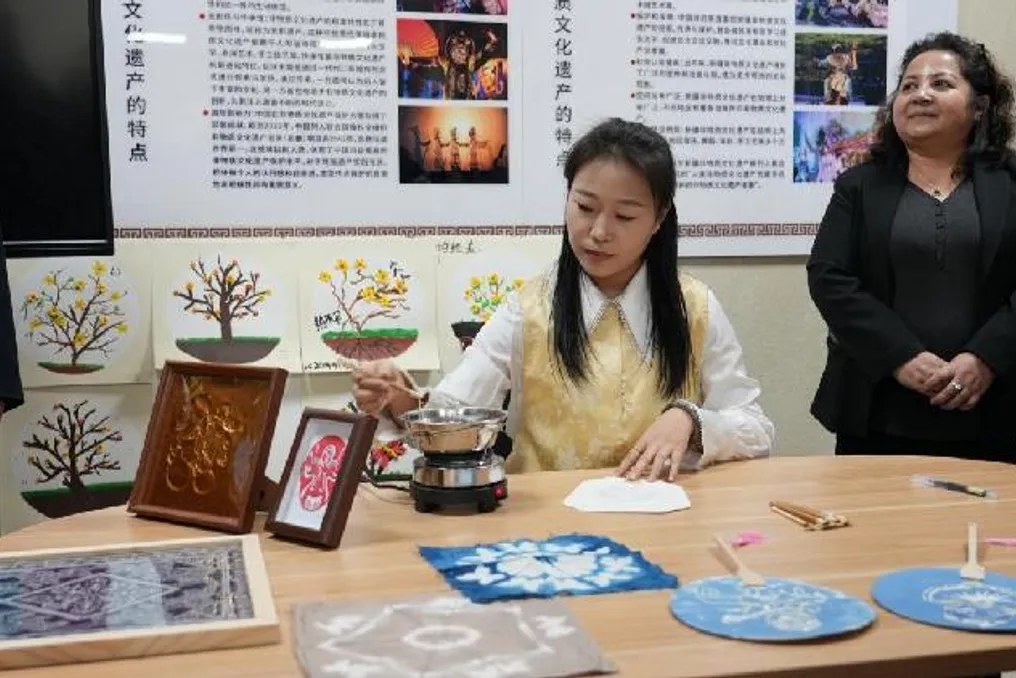
The question of what makes a city a good place to live sometimes finds answers within a single district. The Guiansian community is located in the Tianshan district of Urumqi, the capital of the Xinjiang Uyghur Autonomous Region, situated in northwestern China.

This district is home to over 4,000 residents representing 14 different ethnic groups. Life here is based on mutual support, cultural exchange, and a strong sense of community.

As part of the Urumqi session of the 2026 Global Mayors' Dialogue, which began on Monday in the capital of Xinjiang, mayors and representatives from 26 cities across 13 countries, along with more than 200 Chinese and international guests, gathered. Visiting Guiansian allowed participants to see firsthand how people of different ethnicities have created a close-knit community.

The residents of Guiansian share daily moments, celebrate holidays together, and care for one another. Over time, these bonds have transformed the district from a mere place of residence into a shared home where everyone feels a part of it.

Similar stories

Tamannaah Bhatia and Vishal Bhardwaj Discuss Sadguru's Photo Book on Himalayan Peoples
Read more
timesofindia.indiatimes.com

Tamannaah Bhatia and Vishal Bhardwaj Discuss Sadguru's Photo Book on Himalayan Peoples

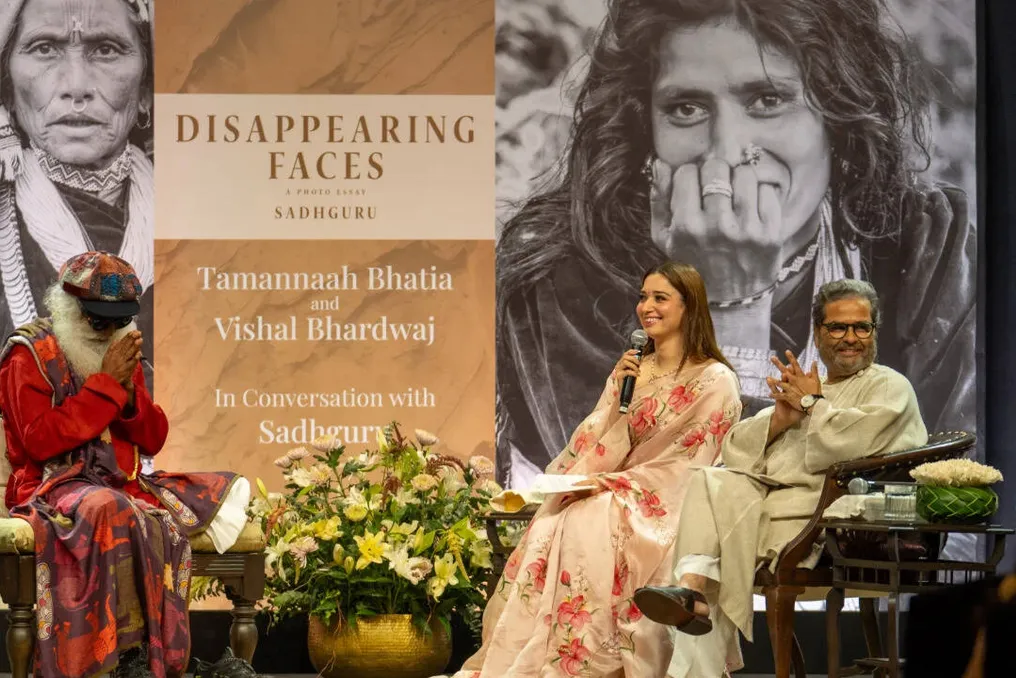
Actor Tamannaah Bhatia and film director Vishal Bhardwaj joined spiritual leader Sadguru to discuss his photo book, 'Disappearing Faces'. The conversation took place on November 22 at the Fairmont Hotel in Mumbai.

The discussion covered topics such as aging, individuality, education, devotion, and the changing lifestyles of people living in remote Himalayan regions.

The book is a collection of photographs taken by Sadguru over five decades of his travels through the Himalayas, particularly in Nepal and Tibet. These portraits capture people and communities whose lives have been shaped by interaction with the natural environment.

During the discussion, Tamannaah commented on the depiction of aging in the photos, contrasting the acceptance of visible signs of age among the people captured in the book with attitudes in urban settings. She asked, 'Why do we not accept what is most inevitable, namely the passage of time?' noting that the people in the photographs seem more ready to accept aging than city dwellers.

In response to her remarks, Sadguru stated that the attitude towards aging in India has changed recently. He suggested that this is a recent phenomenon in India, as men and women in the country previously aged gracefully. However, in his opinion, Western ideas have been adopted, according to which entire civilizations are governed by hormones.

He added that society has begun to place excessive importance on youth and age associated with peak hormonal activity. At the same time, Sadguru warned, 'But if you make one aspect of life everything, then your life will be very distorted.'

The conversation also touched upon the individuality of the people featured in the photographs. Tamannaah noted that despite having fewer resources, education, and experience compared to urban residents, these people demonstrated unique personalities and greater freedom of self-expression.

Sadguru linked this to the purpose of education, asserting that it is increasingly focused on preparing people for employment rather than encouraging the exploration of their interests and abilities. He emphasized, 'Education should be about expanding our horizons,' observing that many people are preoccupied with finding jobs, leaving little room to explore their inclinations or capabilities.

Vishal Bhardwaj, for his part, drew attention to the stillness noticeable in the faces in the book. He referenced Sadguru's observation that stillness embodies the highest level of intensity and asked how this relates to the devoted lives of saints like Meera and Kabir.

Sadguru explained that Meera's devotion to Krishna shaped her emotional experience, allowing her to approach everything with a sense of sweetness. As for Kabir, he said he sought to balance his inner experience with the practical demands of daily life. He also cited Krishna as an example of a person fully engaged in the world but not allowing external circumstances to disrupt his inner peace.

The book 'Disappearing Faces', launched in August, is a collection of pictures taken by Sadguru during his fifty years of travels through the remote regions of the Himalayas. It focuses on the communities of Nepal and Tibet, documenting their faces, way of life, and experiences. According to the book's description, the photographs reflect a way of life that is changing under the influence of modern development and the information age.
Akhilesh Yadav received a meeting in Gorakhpur, considered the territory of Yogi Adityanath
Read more
timesofindia.indiatimes.com

Akhilesh Yadav received a meeting in Gorakhpur, considered the territory of Yogi Adityanath

The head of the Samajwadi Party, Akhilesh Yadav, attended a grand meeting on Wednesday during the 20-kilometer 'PDA Rath Yatra' procession in Gorakhpur. This city is the main territory of the Chief Minister of Uttar Pradesh, Yogi Adityanath.

The event attracted participants from all nine constituencies of Gorakhpur and from other districts of eastern Uttar Pradesh. The coalition plank SP, known as PDA, or Pichhda, Dalit and Alpsankhyak (meaning backward classes, Dalits, and minorities), is being used by the party for the 2027 elections.

Austrian journalist and educator shares story of China
Read more
cgtn.com

Austrian journalist and educator shares story of China

In her memoir, Wai Lushi shares her thoughts on her time in China, noting that she initially planned to stay only for a short period for study and research. However, she eventually became deeply rooted in the country, feeling a sense of belonging and interest in its future. She emphasizes that thanks to the support of comrades and friends, she formed deep and sincere ties with China, calling it her home.

Born in Austria, Ruth F. Weiss arrived in Shanghai in 1933 as a correspondent for a Viennese publication, beginning a six-month introductory tour of China. Upon completion of this trip, she decided to stay in the country and found new work with the help of a friend. Around the same time, she adopted her Chinese name—Wai Lushi.

In Shanghai, influenced by figures such as Sun Qinlin, Agnes Smadley, and Revy Ali, Wai gradually deepened her understanding of the Chinese revolution and decided to dedicate her life to the revolutionary cause and national construction of China.

In 1946, she traveled to the United States to work at the United Nations Secretariat. In 1951, she returned to Beijing and officially received Chinese citizenship in 1955. After that, she worked as an English language expert at the Bureau of International Press, the predecessor of the China International Communications Group, and as a German language specialist at China Pictorial.

Later, Wai Lushi participated in the VI and VII National Committees of the Chinese People's Political Consultative Conference (CPPCC), actively taking part in discussions on state affairs. She died in Beijing on March 6, 2006. She held a deep and sincere affection for the Chinese people and dedicated her entire life to efforts for China's international communication, making a significant contribution to strengthening mutual understanding and friendship between China and the rest of the world.

Popular