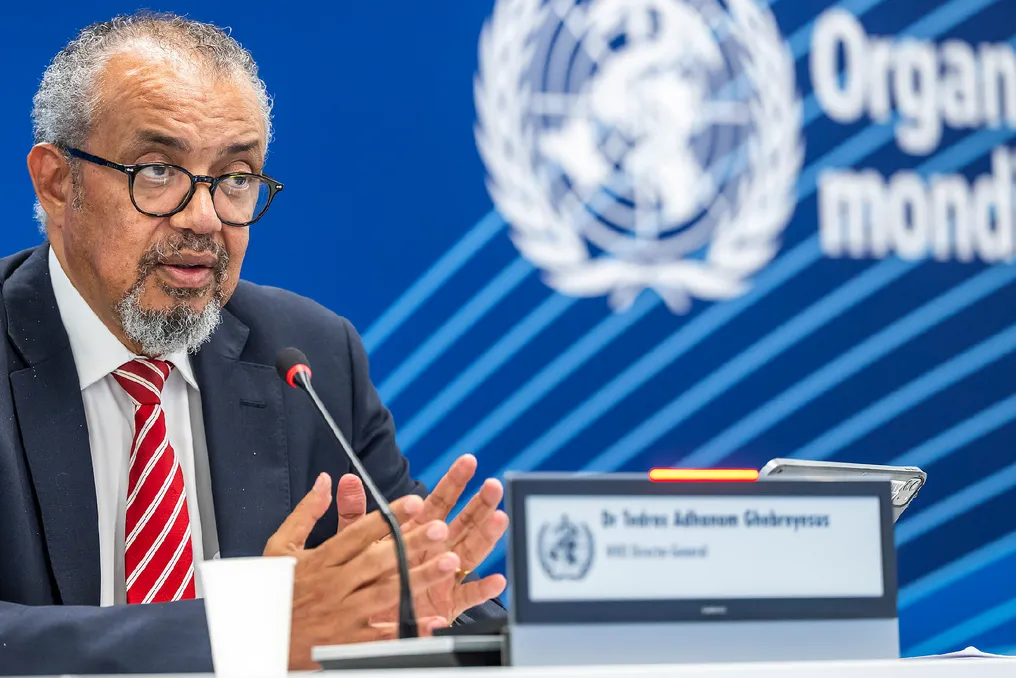
World Health Organization expresses disappointment over the failure of climate summit COP31
Read more
CGTN
cgtn.com

World Health Organization expresses disappointment over the failure of climate summit COP31

The Director-General of the World Health Organization (WHO), Tedros Adhanom Ghebreyesus, criticized the inability of the COP31 climate summit to reach an agreement. He warned that the deadlock leaves vulnerable communities unprotected against the worsening effects of climate change.

In a statement published on X on Tuesday, Tedros called the failure to secure an agreement protecting lives and health a 'serious setback.' He noted that the summit's outcomes also missed the chance to accelerate proven measures in climate and health that could save over 1.5 million lives annually.

Tedros emphasized that the international community's inability to agree on transitioning away from fossil fuels is another missed opportunity to save millions of people from air pollution.

COP31 concluded on November 22 in Antalya, Turkey, without a comprehensive agreement after two weeks of negotiations. An additional two days of discussions failed to resolve disagreements regarding fossil fuels. Countries remained divided on whether the final decision should include a clear commitment to transition away from coal, oil, and gas. This issue became a serious obstacle to reaching a consensus, as several countries objected to the final draft after references to fossil fuels were excluded.

UN Secretary-General António Guterres characterized the result as deeply disappointing, stating that the lack of consensus does not change the urgency of the climate crisis.

Despite the deadlock, countries made progress in several areas, including climate finance, adaptation, and just transition. Negotiators also advanced electrification efforts and launched the second global stocktake under the Paris Agreement.

Nevertheless, the inability to agree on a common policy position raised concerns about the pace of international climate action, especially for developing countries facing growing climate risks. Attention has now shifted to COP32, scheduled for 2027 in Addis Ababa, Ethiopia, where countries are expected to face renewed pressure to strengthen climate commitments and resolve outstanding issues concerning fossil fuels and climate finance.

Similar stories

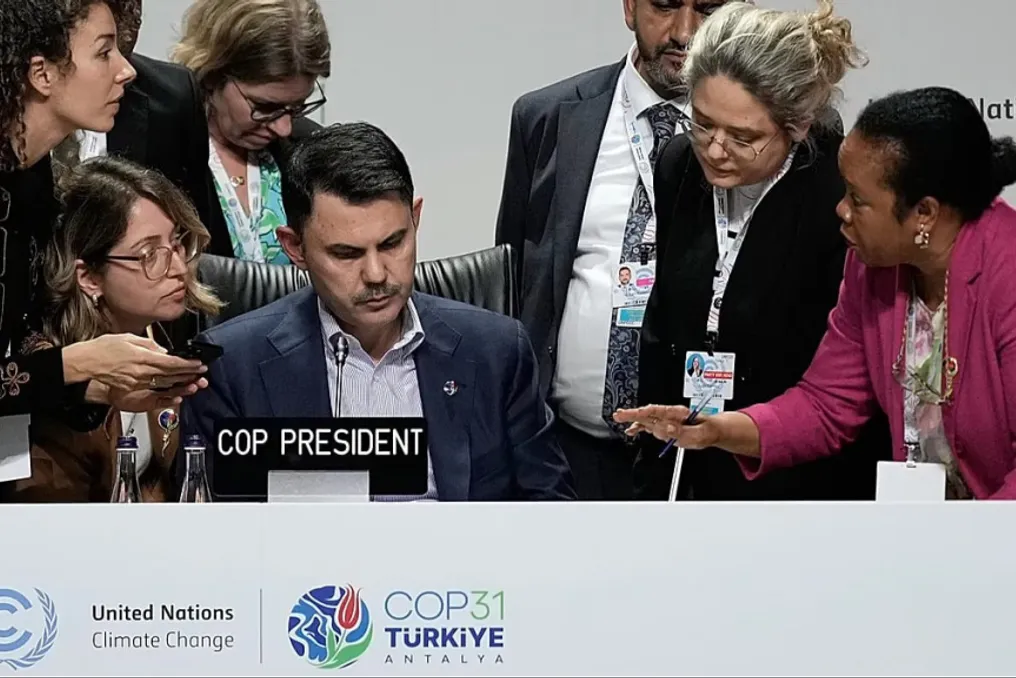
UN Conference COP31 concludes without agreement on phasing out fossil fuels and financing
Read more
podrobno.uz

UN Conference COP31 concludes without agreement on phasing out fossil fuels and financing

The UN Climate Conference COP31, held in the Turkish city of Antalya, concluded on November 22nd without adopting a final document. Nearly 200 countries failed to reach a consensus regarding the phase-out of coal, oil, and gas, as well as the issue of financing adaptation measures for developing nations.

Negotiations extended for two days beyond the scheduled timeframe. The main sticking point was the draft final decision, titled the 'Antalya Pact,' which was prepared jointly by the presidencies of Turkey and Australia. Although early versions of the document contained provisions for accelerating the phase-out of fossil fuels, these provisions were excluded from the final drafts.

The proposal did not receive support from the European Union and the United Kingdom. Ireland's Environment Minister, Dara O'Brien, speaking on behalf of the EU, stated that the presented document does not match the scale of the current climate crisis. Furthermore, Panama, Norway, and the Marshall Islands opposed it.

Issues of transitioning away from fossil fuels

More than 130 countries initially demanded the inclusion of commitments in the agreement for transitioning away from fossil fuels. Instead, the development of carbon capture and storage technologies was discussed. Saudi Arabia advocated for the inclusion of these technologies, while critics expressed concerns that focusing on such methods could encourage further use of coal, oil, and gas.

COP31 Chair Murat Kurum noted the lack of consensus and emphasized that the organizers did not attempt to impose a controversial text on the participants.

Financing and electrification

The second major source of disagreement was climate finance. A group of negotiators from Africa sought an increase in adaptation funds to $120 billion annually by 2035, but participants could not agree on either a specific amount or a mechanism for its implementation.

Representatives of African states also highlighted the insufficient coverage of loss and damage compensation issues, as well as ensuring a just energy transition. Ghana, speaking on behalf of this group, acknowledged the shortcomings of the draft but assured that it would not hinder the achievement of a general consensus. Pakistan called for continued dialogue to preserve other agreements reached.

Another initiative, put forward by the presidencies of Turkey and Australia, was increasing the share of electricity in global consumption from the current approximately 21% to 35% by 2035. Although this goal was supported by more than 70 countries according to World Resources Institute data, it was not included in the final document. Some delegations insisted that electricity should be generated predominantly from clean sources.

UN Secretary-General António Guterres characterized the conference results as disappointing, calling for an acceleration of emissions reduction, the transition away from fossil fuels, and increased adaptation financing. He reminded that states had already agreed on a gradual phase-out of fossil fuels at COP28 in Dubai. In his view, the absence of a new agreement does not nullify the scientific data on the planet approaching the critical 1.5-degree warming threshold.

The next UN Climate Conference, COP32, is scheduled for November 2027 in Addis Ababa, the capital of Ethiopia, where participants will have to reconsider the issues that could not be resolved in Antalya.

Earlier in Antalya, the COP31 World Leaders Summit took place, attended and addressed by the President of Uzbekistan, Shavkat Mirziyoyev. The head of state proposed developing a unified model of climate cooperation for Central Asia, which would allow the region's countries to jointly monitor natural threats such as droughts and glacier melt, exchange information, and attract funds to counteract the effects of climate change.

China expresses deep disappointment with the failure of the COP31 climate summit in Antalya
Read more
noticiasaominuto.com

China expresses deep disappointment with the failure of the COP31 climate summit in Antalya

China today expressed 'deep disappointment' regarding the outcome of the Antalya Climate Summit (COP31), which concluded without any agreement being reached. Despite this, Beijing called on the international community to maintain confidence in the multilateral process dedicated to combating climate change.

Li, China's Vice Minister of Ecology and Environment and head of the country's delegation at the conference, told local press that the lack of a final document should not lead participants to doubt or lose faith in the multilateral climate process, nor should it result in mutual accusations.

The official emphasized that, to address the common challenge of climate change, the only path forward is through defending multilateralism, solidarity, and cooperation. Li assured that China participated in the negotiations in a 'full and substantial' manner, holding over fifty bilateral meetings and attending more than ten multilateral consultations, seeking to encourage parties to find practical solutions to overcome divergences.

Additionally, the Vice Minister informed that Beijing will continue to implement its national strategy to combat climate change, maintaining objectives to peak carbon emissions and achieve carbon neutrality.

COP31 ended on Sunday without political consensus, even after a record extension of more than 44 hours of negotiations, which prevented the reconciliation of positions from various regional blocs. The Turkish-Australian presidency of the conference failed to obtain the necessary consensus to approve a base text establishing a global commitment on actions to mitigate planetary warming.

This impasse exposed existing divisions in the multilateral system, at a time when the impacts of climate change are becoming progressively more evident through extreme weather events, heatwaves, and drought periods. Before the end of the conference, the Chinese delegation indicated its willingness to support the final version of the document under discussion. While acknowledging 'concerns' regarding certain contents, Beijing stated it was willing to accept the text to 'send a positive signal to the international community that countries are uniting and cooperating.'

Popular