The Chinese agency for manned spaceflight announced at a press conference on Tuesday that the Shenzhou-24 crewed spacecraft is scheduled to launch on Wednesday at 8:18 AM from the Jiuquan Satellite Launch Center in northwestern China.
This landmark mission includes Muhammad Zeeshan Ali, a Pakistani astronaut who will serve as a payload specialist. This marks the first foreign visitor to China's Tiangong space station, representing a significant milestone in the long-standing cooperation between China and Pakistan in space.
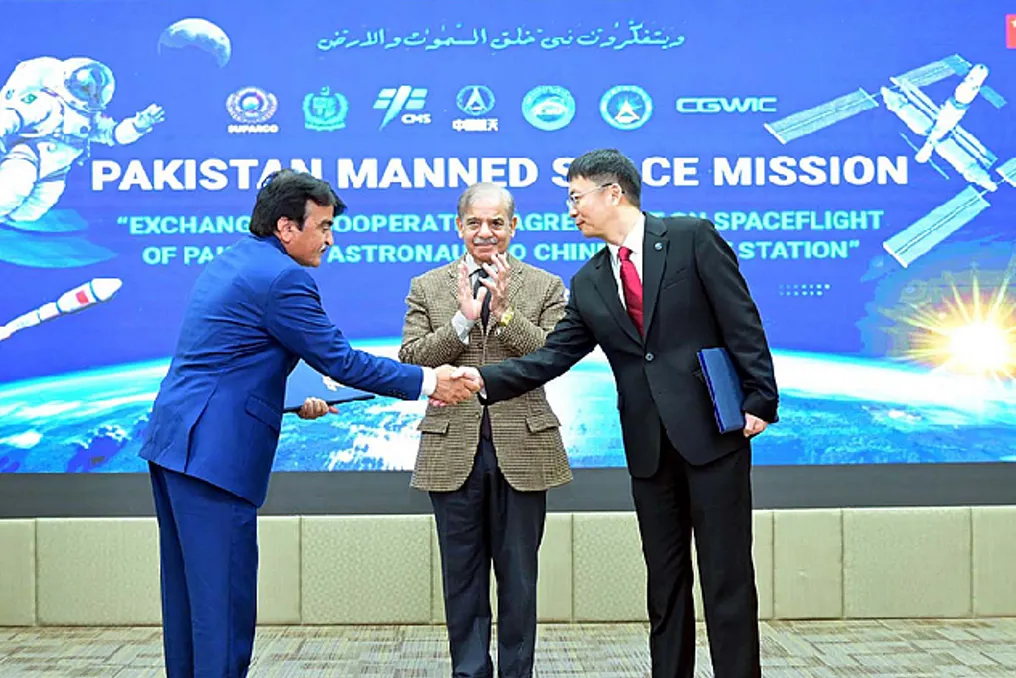
This human space endeavor has roots in a bilateral agreement. On February 28, 2025, during a ceremony in Islamabad, Pakistani Prime Minister Muhammad Shehbaz Sharif witnessed the exchange of a cooperation document between the China Manned Space Agency and the Pakistan Space and Upper Atmosphere Research Commission (SUPARCO), which laid the legal foundation for Pakistani astronauts to participate in missions to the Chinese space station.
China and Pakistan maintain a long-standing partnership in space sciences. Their joint work has expanded from satellite development, launch, and application to lunar and deep space exploration, as well as manned spaceflight programs.
In September 2025, the governments of the two countries adopted an Action Plan to build an even closer China-Pakistan community with a shared future in a new era (2025–2029). This document commits to continuing the implementation of projects under the China-Pakistan Space Cooperation Plan (2021–2030), strengthening collaboration in lunar and deep space exploration, and jointly working on the selection and training of Pakistani astronauts.
Significant progress has been made in various space-related sectors. Starting with remote sensing and communication satellite launches, bilateral cooperation continued when Pakistan's CubeSat ICUBE-Q joined China's Chang'e-6 lunar mission.
Now, Pakistani astronaut Muhammad Zeeshan Ali will travel to the Tiangong station as a payload specialist as part of the Shenzhou-24 mission, marking another stage in bilateral space ties. Remote sensing and communication satellites jointly developed or launched under China-Pakistan cooperation contribute to socio-economic development across Pakistan.
Data from these satellites assists in monitoring agriculture, surveying natural resources, observing the environment, and mitigating disaster risks, helping Pakistan systematically enhance its capabilities in applying space technologies.
The partnership has also opened new horizons in deep and manned space exploration. Pakistan's CubeSat ICUBE-Q separated from the Chang'e-6 orbiter and received lunar observation data, enabling Pakistan to conduct its first lunar research activities.
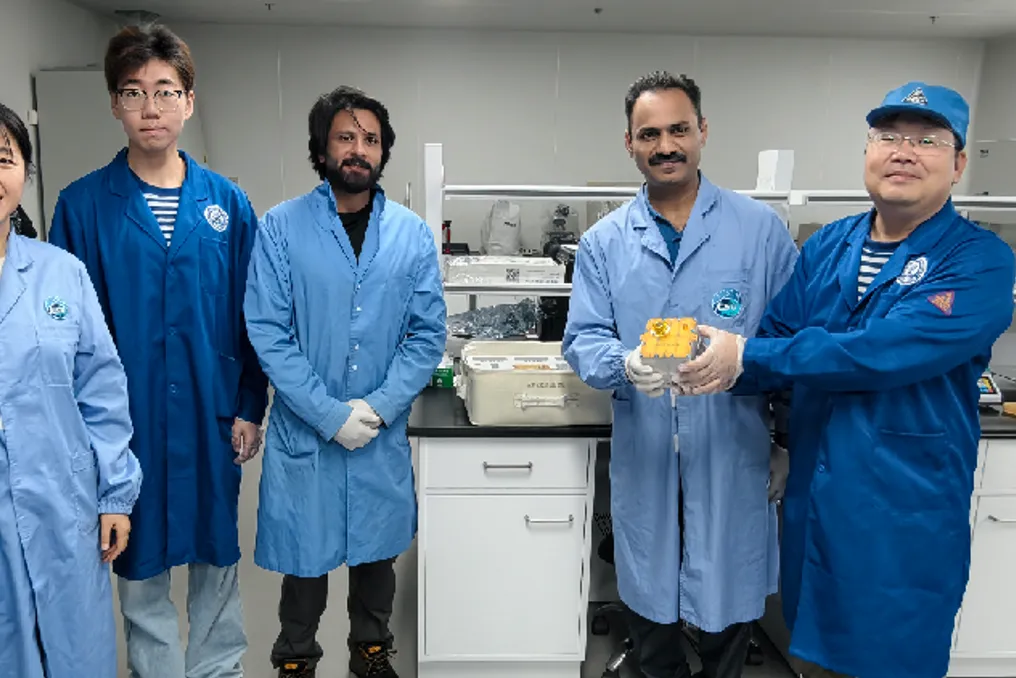
During his stay in orbit, Muhammad Zeeshan Ali will conduct four joint China-Pakistan scientific research projects focused on biotechnology and materials science, including an experiment on photosynthetic cyanobacteria, according to a briefing held on Tuesday.
Moving forward, China and Pakistan will continue to expand practical space cooperation. Both sides will promote joint research in lunar exploration, deepen experience exchange in astronaut training, and explore more opportunities for innovation in space technologies and deep space exploration, which will bring tangible benefits to both nations.