China's China Manned Space Agency (CMSA) announced on Tuesday that the Shenzhou-24 mission involves conducting over 90 scientific experiments and technological tests.
According to Shang Jingbo, a CMSA representative, at a press conference, the main objectives of the mission include completing crew rotation with the Shenzhou-23 crew, maintaining routine operations on the station, carrying out work in space science and applications, as well as performing technical maintenance, popularizing science, and testing payloads.
The experiments and tests will cover areas such as astrobiology, space materials science, fluid physics in microgravity, and combustion chemistry, fundamental physics, space medicine, and new space technologies.
In astrobiology, researchers plan to develop vascular and multi-type organ chips to study the influence of the space environment on key physiological processes, such as vascular aging, with the aim of creating new methods for preventing and treating age-related vascular diseases.
In space materials science, the main focus will be on preparing in orbit and controlling the characteristics of ultra-high temperature niobium-silicon intermetallic compounds, as well as calcium-silica bioactive glass. Scientific studies of materials such as monocrystalline silicon and perovskite will also be conducted.
Research in fluid physics in microgravity and combustion chemistry will concentrate on fire prevention technologies and high-efficiency heat exchange in space. This includes studying micro-nanostructures related to the electric field to improve heat transfer during boiling in microgravity conditions, as well as analyzing the interaction of pure gas-based fire suppressants with diffusion flames at various pressures and oxygen concentrations.
In fundamental physics, the mission will allow the study of new states of matter and physical laws through quantum simulations using optical lattices and research into new quantum states. Furthermore, key inertia measurement technologies based on cold-atom interferometry in space will be tested.
In space medicine, the crew will advance multiomics research and study behavioral and brain functions within the framework of human space exploration programs, continuing to test new technologies to maintain the health of astronauts and the general population.
In aerospace technology, crucial tests of a chemo-electric hybrid propulsion system using new ion liquid-based fuels will be conducted, which is part of efforts to develop next-generation propulsion systems for spacecraft.
When asked about the value of long-term experiments on the space station, Shang noted that fundamental research requires scientists to be prepared for years of inconspicuous work and continuous deepening of knowledge in chosen fields.
He emphasized that by utilizing space conditions, which are difficult to reproduce on Earth—including high purity, intense radiation, vacuum, and microgravity—and combining orbital experiments with ground-based research, scientists can discover physical laws elusive on Earth, paving the way for major discoveries and technological breakthroughs.
Shang cited an example from fundamental physics: the century-long search for absolute zero. After fifteen years of work, Chinese scientists first applied cooling technology using a fully optical trap in an ultracold atom setup on the space station to cool a cloud of rubidium atoms to 9.7 picokelvins, approximately 14 orders of magnitude below room temperature, and maintain it for seven seconds.
He reported that this result represents the coldest known artificial substance, setting a record minimum that opens up new possibilities for fundamental physics and related technologies.
Shang concluded that China will continue to use the space station as a national space laboratory for the sustainable development of space science, space applications, and space technologies, thereby promoting scientific and technological progress, as well as economic and social development.
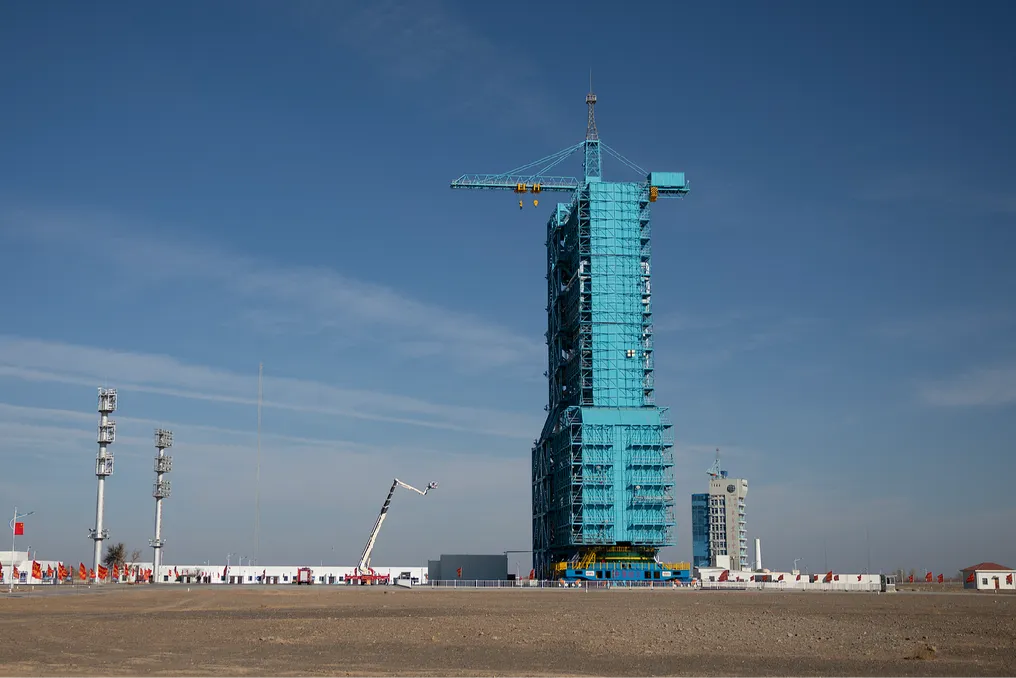
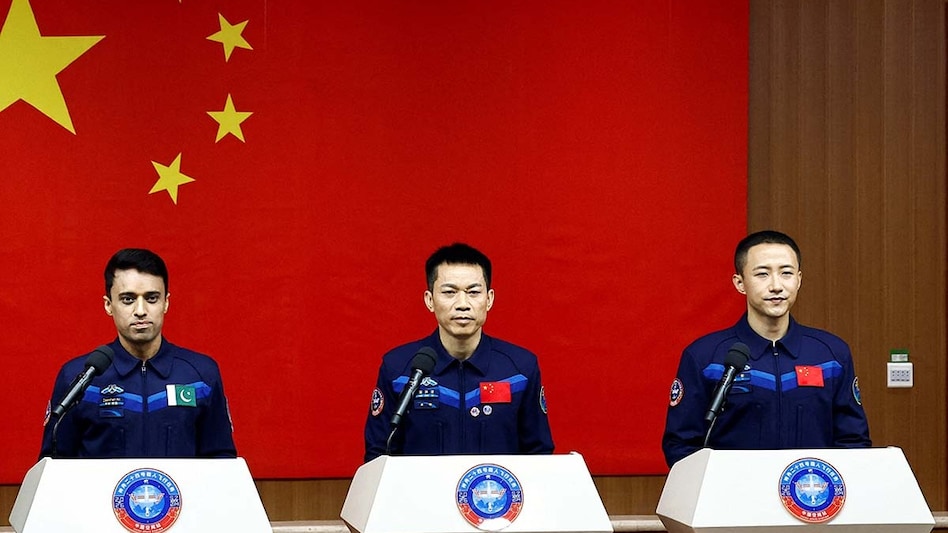
The Shenzhou-24 spacecraft, carrying Chinese astronauts Tan Hongbo and Wu Yi, as well as Pakistani astronaut Muhammad Zeeshan Ali, is scheduled for launch on Wednesday at 8:18 AM from the Jiuquan Satellite Launch Center in northwestern China.
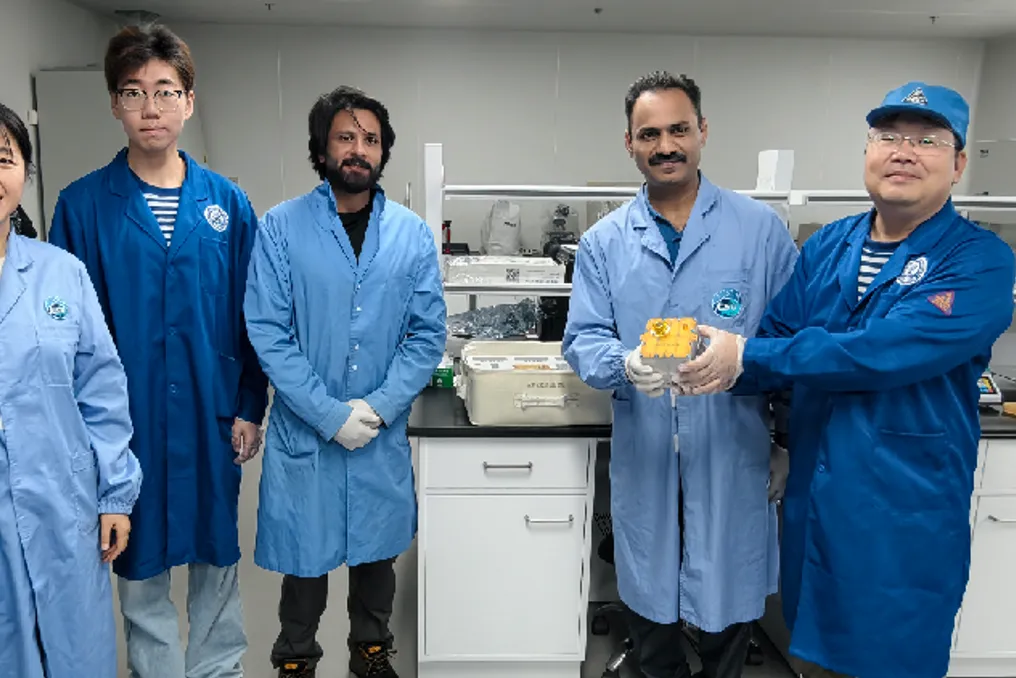
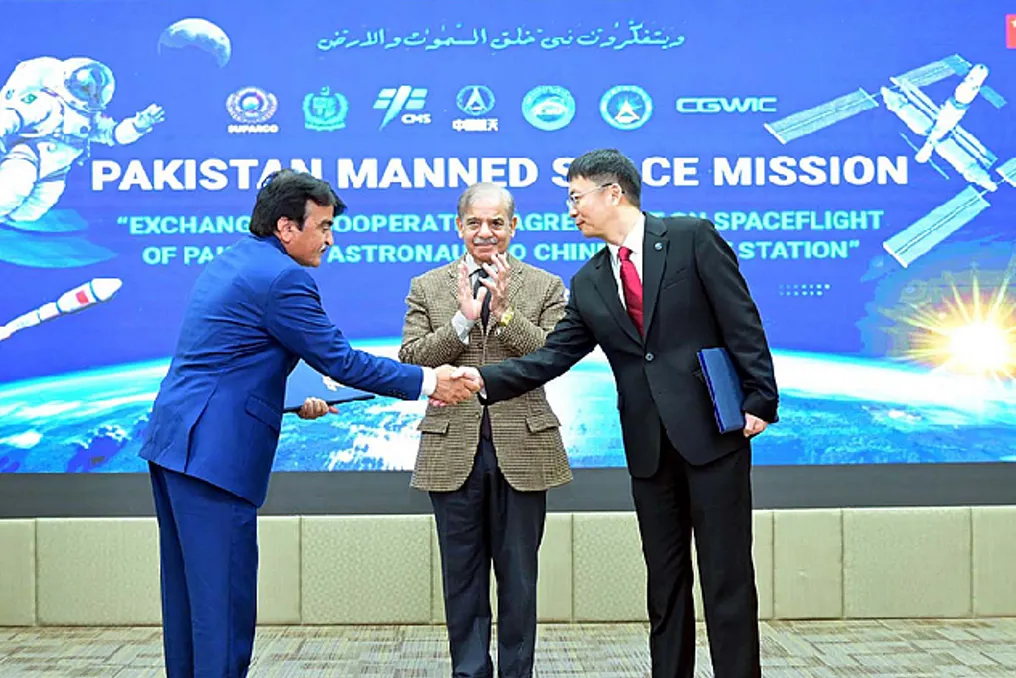
According to Shang, the Shenzhou-24 mission will also include four joint China-Pakistan research projects in biotechnology and materials science. A Pakistani payload specialist will conduct an experiment with photosynthetic cyanobacteria in orbit.