On the night of Kartik Purnima, at the Konhara jetty on the riverbank in Hajipur (Bihar), a combination of religious rites and scenes related to ghost beliefs and negative influences was observed. Thousands of people gathered by the water; some immersed themselves, others chanted mantras and performed worship while bells rang.
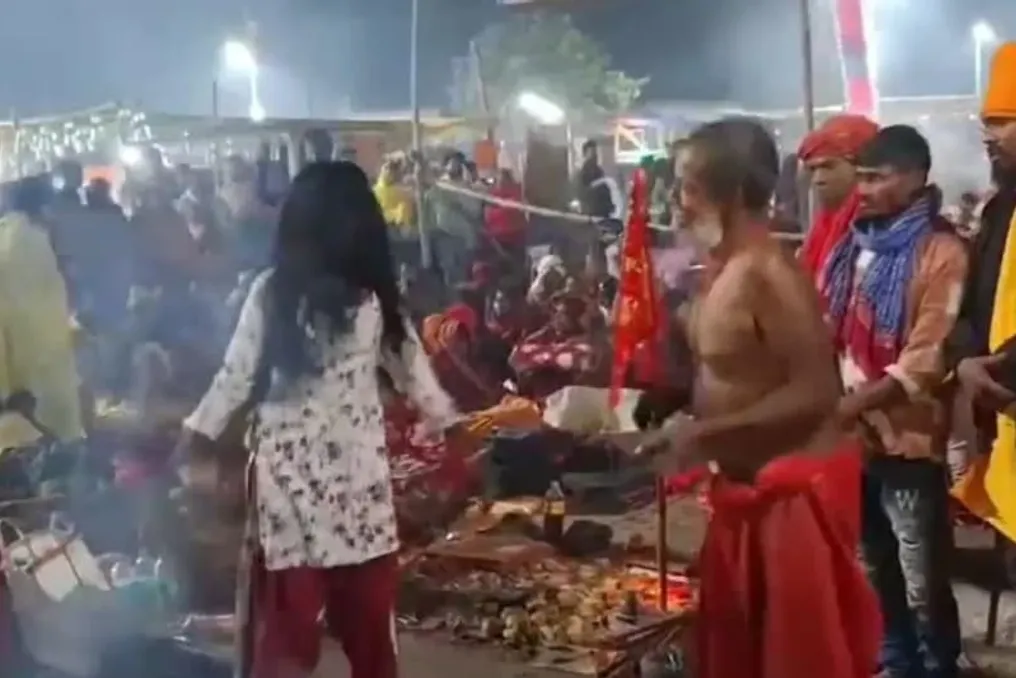
Among the crowd, a spectacle drew attention where a woman was strangely jumping, and a man standing nearby was pulling her hair. Other people used sticks while chanting mantras, asserting that a spirit had possessed the woman's body, which they were attempting to expel.
These scenes, captured at the Konhara jetty in Hajipur, demonstrate a contrast: on one hand, people come to the river seeking salvation and merit, and on the other, they hope to rid themselves of ghosts, evil spirits, and negative influence.
Locals refer to these rituals as 'bhut-kheli' (playing with ghosts). It is claimed that a large number of supposed ghosts and evil spirits gather here on the night of Kartik Purnima, which shamans and tantrics attempt to expel using various methods. This raises the question of why such attention is drawn to these rites in the 21st century, when hospitals and doctors exist to treat illnesses.
The Konhara jetty holds religious significance, and many pilgrims arrive there for Kartik Purnima. At the same time, the famous Harikshhetra fair in Sonpur begins. However, on this night, not only bathing and prayers took place at the jetty.
Scenes were observed where women jumped into the water, some made strange movements on the ground, and shamans performed rituals over people, trying to expel supposed spirits. In some places, people pulled hair, accompanied by constant declarations that the person was under the influence of a ghost or negative influence that needed to be removed. This is what distinguishes the place from an ordinary religious festival.
Shamans and tantrics use their unique methods. Some perform rites near the water, while others display their alleged knowledge of Tantra in the middle of the crowd. A person's behavior determines whether they are subject to the influence of any spirit, after which a ritual to correct the situation begins.
People gather to watch these scenes: some watch in amazement, some record videos on mobile phones, and some believe in these actions and bring a family member. Essentially, 'stalls' of shamans are set up here, and each presents their claims. Some claim to worship power, while others claim to heal diseases caused by ghosts.
One female tantric, when asked about her rituals, linked them to providing for her family's livelihood and helping people. She stated that deities possessed her, and she helps people. The female tantric emphasized that this is not just an act but a source of income to support her family, education, and happiness.
A male tantric made broader claims. He asserted that not all illnesses can be cured by medicine; some illnesses are caused by supposed spirits. He said he treats ghost-induced illnesses, whereas medication-induced illnesses are treated with pharmaceuticals, but troubling spirits require a different approach.