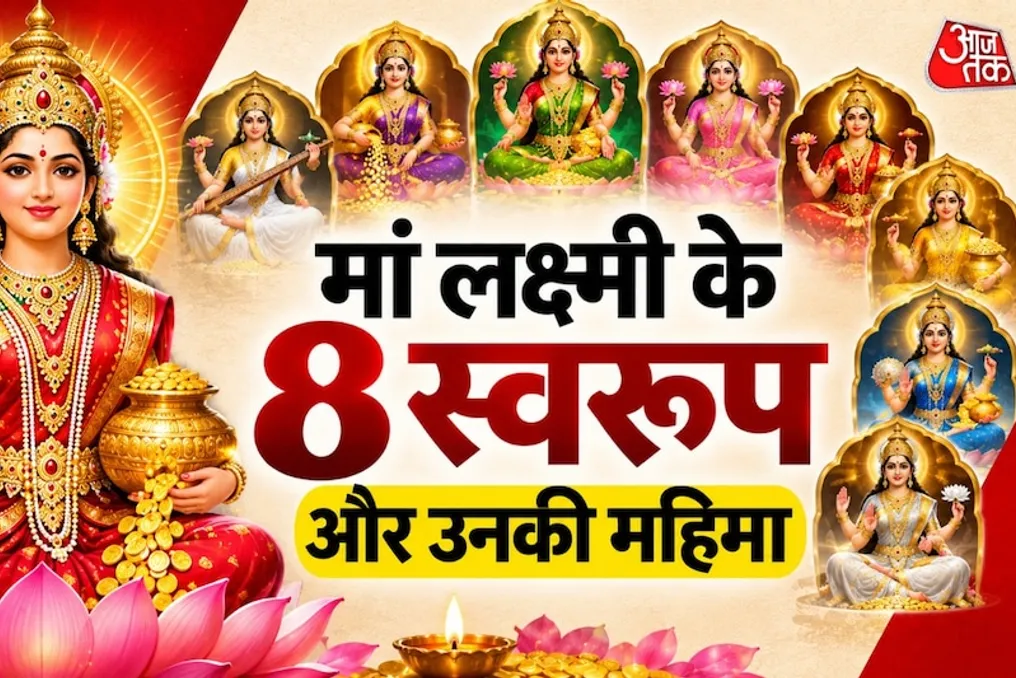
Eight Forms of Goddess Lakshmi: What Desires Does Each One Grant?
Read more
Aaj Tak
www.aajtak.in

Eight Forms of Goddess Lakshmi: What Desires Does Each One Grant?

In Hinduism, the goddess Lakshmi is revered as the goddess of wealth, happiness, and prosperity. It is believed that with her grace, a home flourishes, and there is never a shortage of grain or food. Most people know Mother Lakshmi only as the goddess of money, but the meaning of her various aspects is much broader.

According to religious beliefs, Mother Lakshmi has eight forms known as Ashtalakshmi. Each of these forms is associated with a specific desire. Some bestow blessings in the form of wealth and property, while others are linked to progeny, knowledge, courage, and success. Below is a description of the significance of these eight forms of Mother Lakshmi, along with an indication of which form should be worshipped to achieve a particular wish.

Adi Lakshmi is considered the first form among the Ashtalakshmi. She is also called Mahalakshmi. According to religious concepts, this form is associated with the world and liberation (moksha). She is worshipped alongside Lord Vishnu. It is believed that worshipping Adi Lakshmi brings peace to the soul, and the person advances on the spiritual path. Devotees seeking moksha also worship this form of the Mother.

The second form of Mother Lakshmi is Dhana Lakshmi, who is considered the goddess of wealth and property. According to mythological beliefs, the Mother took this form to free Lord Vishnu from the debts of Kubera. In her hands, the Mother holds a vessel full of wealth and a lotus. It is believed that worshipping Dhana Lakshmi maintains prosperity in the home and eliminates financial problems.

The third form of Mother Lakshmi is Dhanya Lakshmi, and she is the goddess of grain and harvest. There is a religious belief that the Mother's blessing resides in homes where food is respected and grain is not wasted. To ensure food abundance in the family and prevent any shortage of food, one worships Dhanya Lakshmi.

The fourth form of Mother Lakshmi is Gaja Lakshmi. In this form, the Mother sits on a lotus, flanked by elephants on both sides. Gaja Lakshmi is considered the goddess of agriculture and prosperity, also known as Raja Lakshmi. It is believed that worshipping her increases comfort and convenience in life. Farmers also worship this form of the Mother for a good harvest and progress in agriculture.

The fifth form of Mother Lakshmi is Santan Lakshmi. People who desire offspring worship this form of the Mother. In this form, the Mother sits holding the child Skanda on her lap. This form is associated with the well-being of children and family happiness. It is believed that worshipping Santan Lakshmi bestows blessings upon children for good health, long life, and a bright future.

The sixth form of Mother Lakshmi is Vir Lakshmi, who is considered the goddess who grants courage and strength. In this form, the Mother holds a sword, shield, and various types of weapons in her hands. It is believed that worshipping Vir Lakshmi provides bravery in difficult times.

The seventh form of Mother Lakshmi is Jai Lakshmi, also known as Vijaya Lakshmi. Worship of this form of the Mother is performed for victory and success. It is believed that worshipping her leads to success in endeavors and also increases respect and recognition in society.

The eighth form of Mother Lakshmi is Vidya Lakshmi, who is considered the goddess of knowledge and education. Students and people involved in studies worship this form of the Mother. It is believed that worshipping Vidya Lakshmi helps achieve success in studies and expands knowledge. People striving to advance in the fields of art and education also worship her.
Similar stories

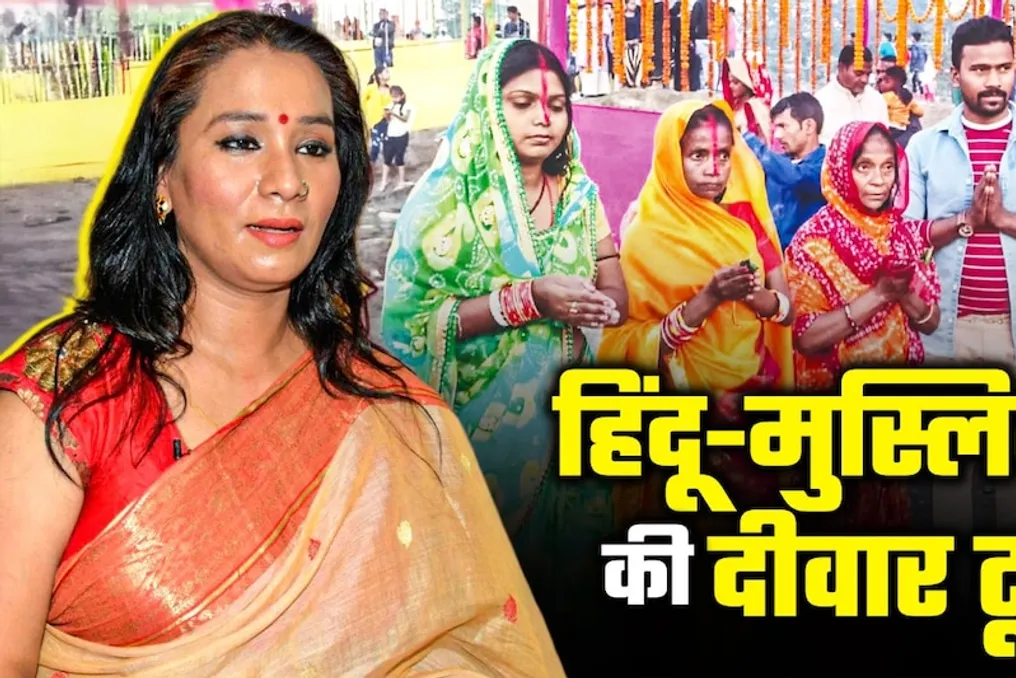
Singer talks about how Muslims in Bihar celebrate Chhath, emphasizing interfaith harmony
Read more
www.aajtak.in

Singer talks about how Muslims in Bihar celebrate Chhath, emphasizing interfaith harmony

When the festival of Chhath is mentioned, images of women offering tributes to the rising and setting sun come to mind. They are depicted wearing a daura on their heads, holding fruits and flowers, with unwavering faith in Chhathi Maiya in their hearts. This festival is not just a religious rite but also a symbol of Bihar's culture, traditions, and mutual brotherhood. Notably, the faith in Chhath is not limited to any single religion or community; Muslim families in Bihar also celebrate this festival with deep respect and enthusiasm.

Popular Bhojpuri singer Kalpana Patwari highlighted this beautiful tradition and the concept of Ganga-Jamuni Tehzeeb (cultural synthesis). Kalpana, who came from Assam, shared that when she learned that Muslim women in Bihar also observe Chhath, she felt a desire to do something special for Bihar. She decided to embody this feeling in her song.

Kalpana Patwari shared that she was deeply moved by the tradition of celebrating Chhath among the Muslim community in Bihar. She felt the need to present this beautiful aspect of Bihar to the world. In her opinion, Bihar carries a certain label, and to change this image, one must draw a more significant line. It was with this thought that she created a song intended to demonstrate Bihar's culture, faith, and unity.

According to Kalpana, the song depicts a Muslim woman who sets aside her prayer attire to celebrate Chhath. This image serves not only as a demonstration of religious tradition but also reflects the feeling when human faith and hopes transcend religious boundaries.

Speaking, Kalpana Patwari also touched upon the deeply emotional aspect of motherhood and faith. She emphasized that when a woman goes to Chhathi Maiya hoping to become a mother, her primary identity remains that of a woman. At that moment, her greatest hope is to give birth. She prays to Chhathi Maiya, relying on her promises, faith, and piety. In such circumstances, her feelings and beliefs are more important than her religious affiliation.

This idea is the most important in her song. The fact that a Muslim woman celebrates Chhath here is not a story of her abandoning religion or adopting a new one, but rather an attempt to show the connection between faith and motherhood that unites people.

Issues of caste discrimination and social distance are often discussed in Bihar. However, Chhath is a festival that brings together people of different castes and communities. On the riverbanks, everyone offers tribute to the Sun God. People assist the devotees and share food while standing next to each other. The beauty of this festival lies in the fact that it demonstrates not only faith but also social unity. Many Muslim families also celebrate Chhath with great enthusiasm and reverence. Some fast, while others help with preparations and organization on the banks.

Kalpana Patwari's words draw attention to this shared culture. She believes that the true strength of Bihar lies not in its castes, discrimination, or negative news, but in its culture, folk traditions, and the interconnectedness of its people.

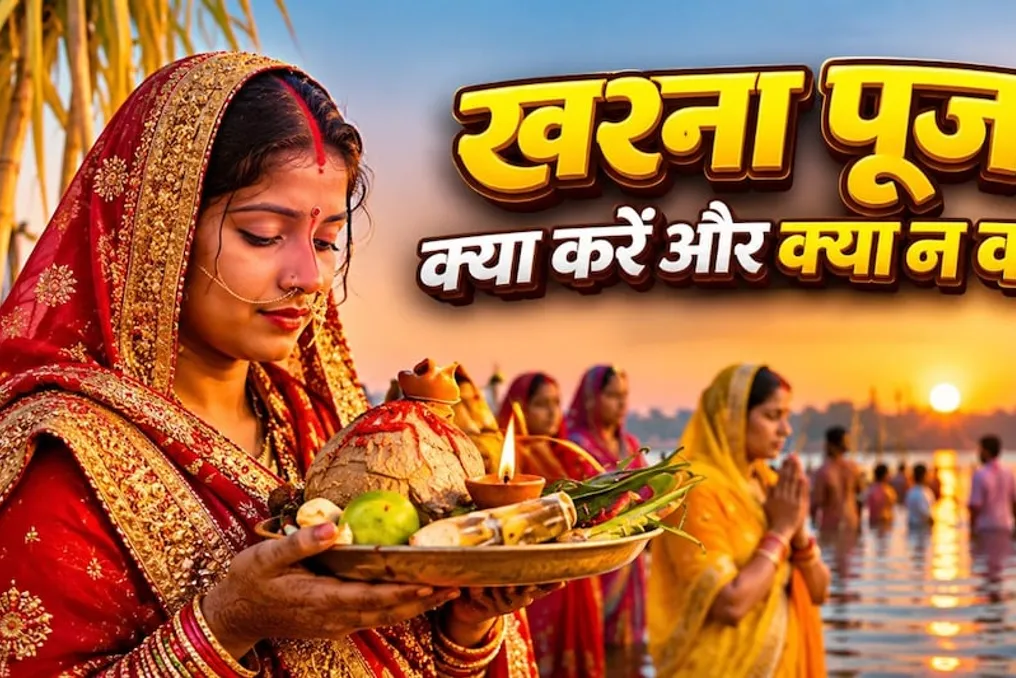
Rules for Kharna Puja: Five Mistakes to Avoid to Keep Chhathi Maiya Pleased
Read more
www.aajtak.in

Rules for Kharna Puja: Five Mistakes to Avoid to Keep Chhathi Maiya Pleased

The day of Kharna is considered extremely important during the four days of the Chhath festival. It falls on the second day of the festival, which is celebrated on the fifth day of the Kartik Shukla lunar month. On this day, fast observers observe a fast from the morning. After sunset, a ritual worship of the Sun God and Chhathi Maiya takes place. During this ritual, offerings of rice porridge made with palm jaggery, bread, and fruits are prepared. After the worship concludes, the fast observers first accept the offering, after which the most difficult stage of Chhath—the waterless fast—begins, lasting about 36 hours. According to beliefs, observing certain rules during Kharna Puja helps maintain the favor of Chhathi Maiya. Therefore, it is important to know what should be done and what mistakes should be avoided on this day.

Kharna Puja Rules: What to Do and What to Avoid

What to do during Kharna Puja?

On the day of Kharna, one must thoroughly clean the house and the place where the ritual will be held. Since cleanliness is of great importance in Chhath Puja, special attention should be paid to the area where offerings are prepared and worship takes place.

Worship should be performed after taking a bath. Fast observers need to take a shower in the morning, wear clean clothes, and observe the fasting rules throughout the day. In the evening, it is also recommended to take a shower before preparing for the worship.

The preparation of offerings should be done on an earthen stove. Traditionally, rice porridge and bread are cooked with palm jaggery, and in many places, this is done on an earthen stove using mango wood. Great attention must be paid to the cleanliness and sanctity while cooking.

In the evening, worship should be offered to the Sun God and Chhathi Maiya. After the daytime fast, one should take a bath, wear clean clothes, light a lamp, and perform the ritual worship of the Sun God and Chhathi Maiya. Offerings in the worship should include porridge, bread, and seasonal fruits. After the ritual is completed, the fast observers accept the Kharna offering and then share it among family members, relatives, and neighbors.

It is important to maintain a calm mind. During Kharna Puja, one should keep good thoughts in mind, meditate on God, and avoid unnecessary arguments or quarrels. It is believed that the worship on this day should take place in an atmosphere of peace and reverence.

What to avoid during Kharna Puja?

One must monitor the cleanliness around the offering preparation area. Food should not be cooked in dirty utensils or in an unclean place. The area where food is prepared must remain clean.

One should refrain from tasting the offering. Since the Kharna offering is prepared for the worship of Chhathi Maiya, tradition dictates that it cannot be tasted during preparation. It should only be accepted after it has been offered as a gift.

One must not be careless in observing the fasting rules. On the day of Kharna, fast observers observe a waterless fast from morning till evening. Although in case of health problems one should not force oneself into a waterless fast, the fasting rules must still be observed.

During worship, anger and arguments should be avoided. Mental purity is also considered important in Chhath Puja, so on the day of Kharna, one should avoid quarrels, using harsh words, and anger towards anyone.

Disrespecting the offering should not occur. The Kharna offering is considered extremely sacred. It should be accepted with reverence and respect. Belief holds that discarding or disrespecting the offering is inauspicious, as it may cause displeasure to Chhathi Maiya. Therefore, it should be distributed respectfully among family members and others.

The 36-hour fast begins after Kharna

After performing Kharna Puja and accepting the offering, the Chhath fast observers begin a waterless fast lasting about 36 hours. During this time, they consume neither food nor water. On the third day in the evening, an offering is made to the setting sun. The fast concludes the next day after making an offering to the rising sun.

Popular