NetEase and LiuGong plan to produce AI excavators following demonstration
Read more
Pandaily
pandaily.com

NetEase and LiuGong plan to produce AI excavators following demonstration

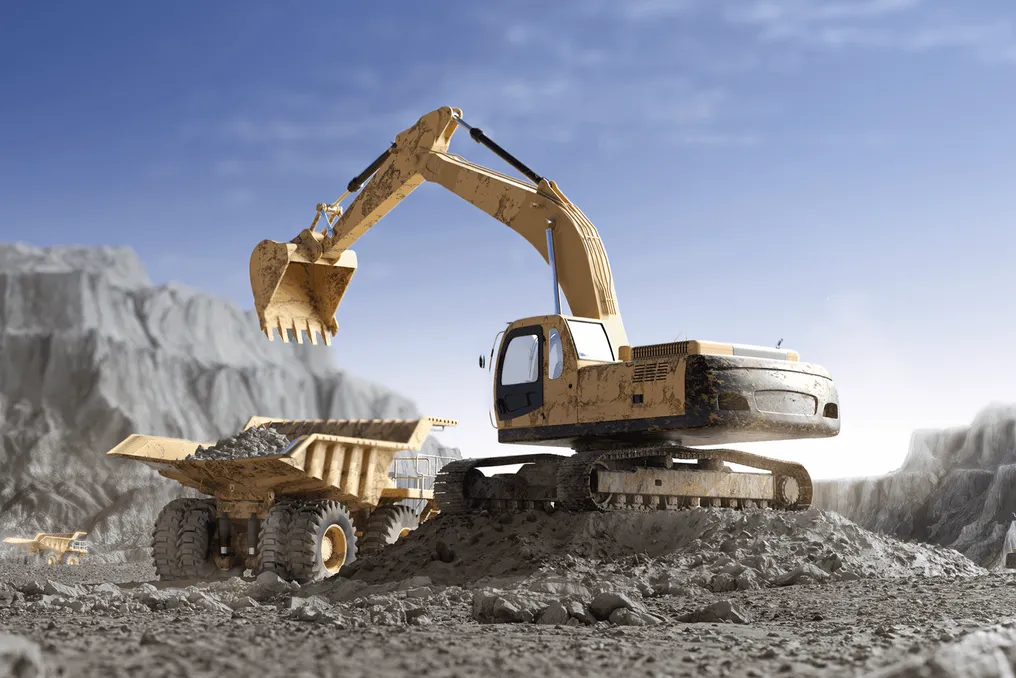
NetEase, a company specializing in construction robotics, and equipment manufacturer LiuGong have reached an agreement to advance the production and expand the international activities of artificial intelligence-supported excavators. This decision was made after a demonstration of loading operations at the bauma CHINA exhibition in Shanghai.

According to Chinese reports from November 24, this collaboration includes an agreement and a workflow prototype, but it has not yet reached the stage of mass production or export supply.

The demonstrated machine was a model LiuGong 922FE. The operator entered a task in natural language, after which the system independently broke it down into stages: navigation, obstacle avoidance, digging, and loading. According to reports, this sequence was executed without human intervention at the exhibition. Nevertheless, this example demonstrates a specific task, not general autonomy on all construction sites and under various operating conditions.

On NetEase's official English website, the brand SmartEase is used for its intelligent construction machinery management activities. The new control system integrates visual, linguistic, radar, and geometric information with a world-action model approach. Its goal is to predict the consequences of movements and link digging actions into a continuous trajectory, thereby minimizing material loss, spillage, and rework.

The company reported a bucket fill factor of 4.0% for the second-generation system, based on its own measurements on site. However, the published report does not establish an independent benchmark figure reproduced under different soil, weather, equipment, and loading configurations. This figure should be regarded as the result of the supplier's work, not as a universal operational specification.

A separate set of operational data pertains to existing NetEase loading robots, not to the newly commissioned fleet of 922FE AI excavators. The company notes that these robots are used in over 100 regular operation projects across more than ten provinces in China. It links these deployments to the completion of over 85% of core production tasks, a task success rate of 95%, and overall efficiency equivalent to 120% of a skilled worker's productivity. Furthermore, this last value signifies a 20% increase compared to that comparison, not a 120% improvement.

The agreement combines LiuGong's capabilities in equipment and distribution with NetEase's control software. Whether the demonstrated excavator can maintain comparable performance at scale remains a matter of implementation. The partnership announcement did not specify production schedules, export volumes, or results from independent field testing.

Similar stories

Former Meituan and Feishu executives join forces to create AI-powered recording ring
Read more
technode.com

Former Meituan and Feishu executives join forces to create AI-powered recording ring

It is reported that Liu Yanshan, a former executive at Meituan responsible for the business of ticket sales, travel, and transportation services, left the company and started a joint project with a former Feishu executive who oversaw international operations. This startup is based in Beijing and is called Huling Technology.

According to Sina Tech, the startup has already attracted initial funding of tens of millions of yuan and is preparing to attract an angel round.

The ring developed by Huling Technology focuses on capturing voice data. Users can activate recording by double-pressing a physical button, after which the software transcribes what was said and extracts tasks or calendar events from the speech.

The main goal of the startup is to provide convenience in moments when it is inconvenient to take out a phone, such as while traveling or right before going to sleep.

Artificial Intelligence Projects in China Remain Dependent on Nvidia Processors
Read more
olhardigital.com.br

Artificial Intelligence Projects in China Remain Dependent on Nvidia Processors

Chinese computing initiatives, totaling over $3 billion, remain dependent on restricted processors manufactured by Nvidia. Due to the tightening controls imposed by the United States and the departure of CEO Jensen Huang, these projects risk delays and supply issues.

A Reuters investigation revealed investments and contracts exceeding 23 billion yuan, equivalent to about $3.2 billion, distributed across various regions of China. The investigation analyzed over 150 tender notices, investment plans, construction contracts, and corporate announcements.

The examined documents show that the American company's technology is present in universities, regional computing centers, and locally supported ventures, in addition to large technology corporations. This amount includes both planned investments and already signed contracts and completed installations, including buildings, power systems, and other infrastructure, not just the acquisition of processors.

Among the mapped projects, regional computing centers and commercial facilities configured to receive specific Nvidia processors, such as the H100, H200, and H800 models, stand out. One such location is in Gansu province, in northwest China, and had plans to install thousands of chips before the end of the year, although it is unclear whether the equipment reached its destination.

Those responsible for these projects face potential supply interruptions, delays, and high readjustment costs if Washington intensifies restrictions. Huang's resignation could worsen the situation, as it weakens Nvidia's influence with American legislators who advocate for stricter regulations.

Nvidia's co-founder resigned as CEO on Thursday amid a scandal linked to his relationship with Alice Huang, a former executive associated with Megaspeed, the cloud service partner of the Singapore-based manufacturer. US authorities suspect this businesswoman may have intelligence ties to Beijing.

Megaspeed denied any illegal diversion of Nvidia processors to China. Nvidia's board launched an independent investigation and stated it had no reason to believe that corporate secrets or US national security were compromised.

US restrictions on Nvidia's advanced AI processors began in 2022 and were later expanded to cover modified versions aimed at the Chinese market, such as the H800. In January, the Trump administration began evaluating export licenses for the H200 to eligible Chinese customers under specific conditions.

In August, Nvidia claimed to be almost entirely excluded from the Chinese data center computing market. Jensen Huang had also stated the previous year that the company's share in the country dropped from 95% to zero, leading the manufacturer to exclude revenue from this market from its forecasts due to regulatory uncertainties.

However, distribution data suggests a different picture. An IDC report cited by Reuters in October estimated that Nvidia was responsible for 34% of AI accelerator shipments to China during the first half of 2026. The indicators used measure distinct aspects and do not clarify how restricted processors reached Chinese consumers.

For Sunny Cheung, an analyst at the Jamestown Foundation in Washington, it is crucial that US surveillance considers the end destination of the equipment. He stated that 'Washington must stop focusing only on who buys the chips on the surface and start examining who ultimately uses the computational power—and for what purpose.'

To date, there is no public confirmation that Huang violated export control laws. The Chinese projects identified by Reuters were also not linked to Megaspeed or the accusations involving the executive.

CoreWeave: Company Profile and the Importance of Its Infrastructure for Artificial Intelligence
Read more
olhardigital.com.br

CoreWeave: Company Profile and the Importance of Its Infrastructure for Artificial Intelligence

CoreWeave's shares fell by 6.3% before market opening amid instability related to Jensen Huang, CEO of Nvidia, and investor apprehension regarding AI infrastructure funding.

This devaluation is noteworthy because CoreWeave provides essential computational capacity for various AI applications. The company's performance reflects how doubts about the sector's growth affect companies responsible for maintaining this infrastructure operationally.

CoreWeave functions as a cloud computing provider, focused on offering processing power for artificial intelligence systems. Its business model is intrinsically linked to the growth of corporations that require large volumes of computational resources to create and run these technologies.

The company belongs to a group called neoclouds. Unlike established giants such as Alphabet, Amazon, and Microsoft, these companies are more recent and concentrate their operations on providing computational infrastructure. They do not need to develop their own AI models to operate in this market; they serve developers and other companies already working with such technologies.

In this context, CoreWeave acts as an independent partner to organizations like Anthropic and OpenAI while competing with major cloud providers. Its importance lies in providing computational capacity for a sector that increasingly demands processing due to its expansion.

However, this business model requires substantial financial input. To increase the capacity offered to clients, CoreWeave needs to acquire chips and build data centers. Since these structures demand capital, the availability of credit and associated costs directly impact the company's expansion plans.

Investor concern goes beyond the simple drop in stock prices. CoreWeave's high-yield debt securities, classified as junk bonds—which are higher-risk papers and thus require higher interest rates to attract buyers—also suffered devaluation.

On Monday, the company's most traded bond, maturing in 2032 with an interest rate of 9.625%, showed a return close to 15%, according to MarketAxess data. When a bond's price decreases, its yield increases, indicating that investors demand greater compensation to lend money to the company.

CoreWeave's shares also accumulated a drop of approximately 40% over the month. If the 15% yield is considered the cost for new fundraising, financing the purchase of chips and the construction of data centers could become financially unsustainable.

There are, however, alternative financing paths. Loans and asset-backed securities, such as those backed by data centers or supply contracts for computational capacity to major clients like Meta, performed better than some unsecured debt. This suggests that access to resources is not completely blocked, although the cost and conditions of financing remain points of vigilance.

The turbulence involving Huang adds an element of uncertainty to a sector that depends on infrastructure investment maintenance by companies like CoreWeave. On the same trading day that the cloud provider's shares fell 6.3% in pre-market trading, Nvidia's stocks also plummeted by 6.8%.

This simultaneous movement does not imply that Nvidia's leadership crisis caused CoreWeave's financial problems. Both companies, however, are subject to the expectations of the AI market: Nvidia supplies the crucial chips for this infrastructure, while CoreWeave markets computational capacity to companies using these technologies.

The market is also assessing whether the demand for processing will be sufficient to sustain the necessary investments for sector expansion without excessively inflating financing costs or service prices. For companies that rely on debt to grow, more expensive credit can compromise new ventures.

CoreWeave and Nebius Group, a Dutch company, were among the companies scheduled to release results that week. Investors awaited signs on how these companies planned to finance their expansion and increase computational capacity without relying excessively on expensive loans.

Popular