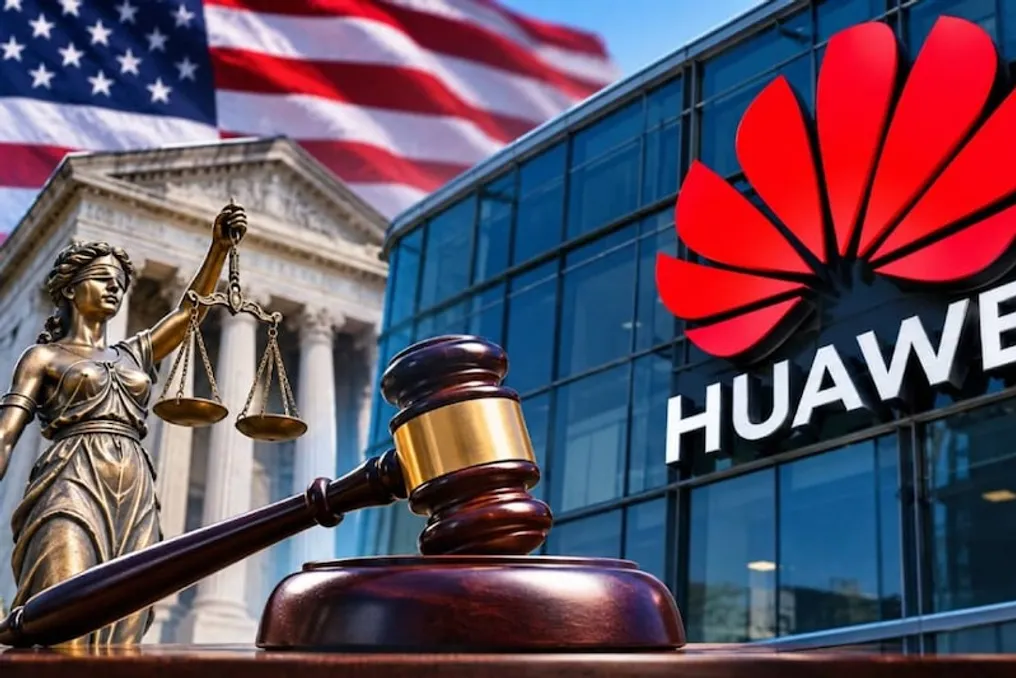
Chinese technology giant Huawei has suffered a major blow in the United States. A jury in an American court found the company guilty of a conspiracy to steal secret technologies and commit bank fraud.
Nevertheless, the company managed to avoid the most serious charge—criminal conspiracy—as the jury acquitted Huawei on that count. In the case heard in the Federal Court of Brooklyn, New York, 12 charges were brought against Huawei, and the company was found guilty on 10 of them. It now faces a fine of billions of dollars and a potential sentencing in September 2027.
US Allegations of Technology Theft
American prosecutors alleged that Huawei attempted to advance its business by stealing technologies and trade secrets from other companies. According to the charges, the company sought access to the technologies of firms such as Cisco Systems, Motorola Solutions, T-Mobile, Fujitsu, and Quintel USA.
Other suspicious incidents were uncovered during the American investigation. In one instance, a Huawei employee was accused of photographing network equipment schematics on another company's booth at a trade show. In another case, a company employee was charged with removing and measuring a robotic arm from a competing firm's laboratory.
Furthermore, the US stated that Huawei conducted business in sanctioned countries, such as Iran and North Korea, and provided false information to American officials and banks to conceal its activities.
Huawei Denies the Charges
The company's lawyer, Brian Heberlig, stated that American investigative bodies presented the errors of individual employees as a conspiracy involving the entire organization. He emphasized that the acquittal of the company on several serious charges is a significant blow to the government's claims.
Huawei declared its commitment to honest business practices, respect for intellectual property, and compliance with regulations. The company also announced its intention to appeal the decision.
Huawei's Case Amid American Sanctions
In 2019, the US brought criminal charges against Huawei. Due to security concerns, the company was unable to sell its network equipment to American telecommunications companies for a long time. Sanctions were also imposed by other countries, including the UK and Canada.
Despite restrictions from America, Huawei's global operations continue. In addition to smartphones and telecommunications equipment, the company is actively expanding its presence in chip manufacturing. Against the backdrop of growing demand for artificial intelligence, Huawei is strengthening its position in China as an alternative to chips from companies like Nvidia.
Zhou Wangzhou, the company's CFO, was also involved in this case. She was arrested in Canada in 2018, but the US closed the case against her in 2021, and she returned to China.