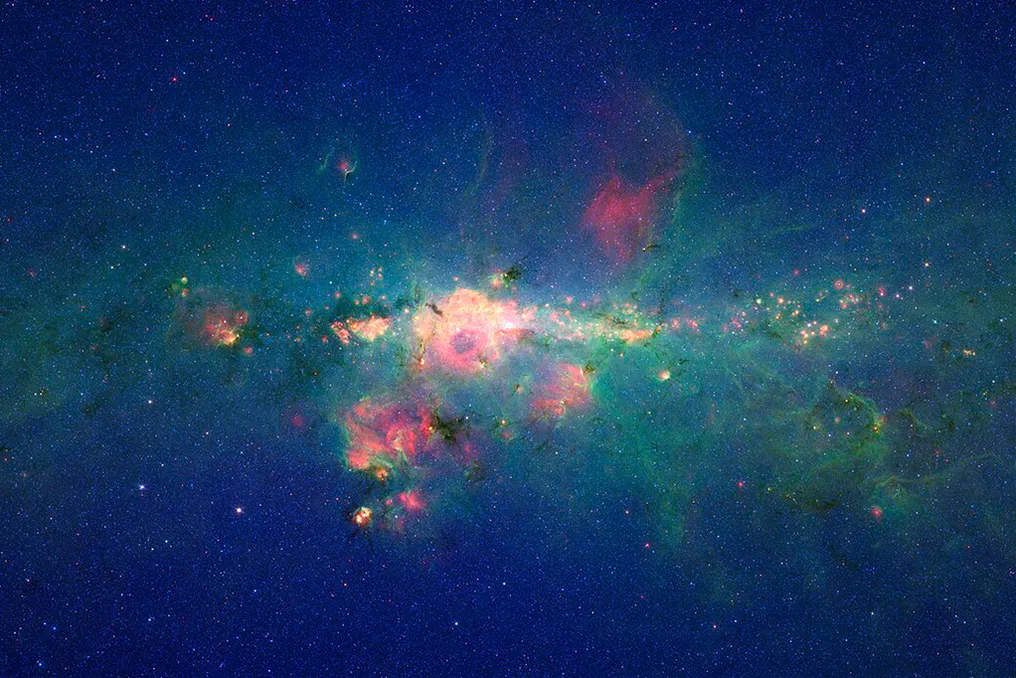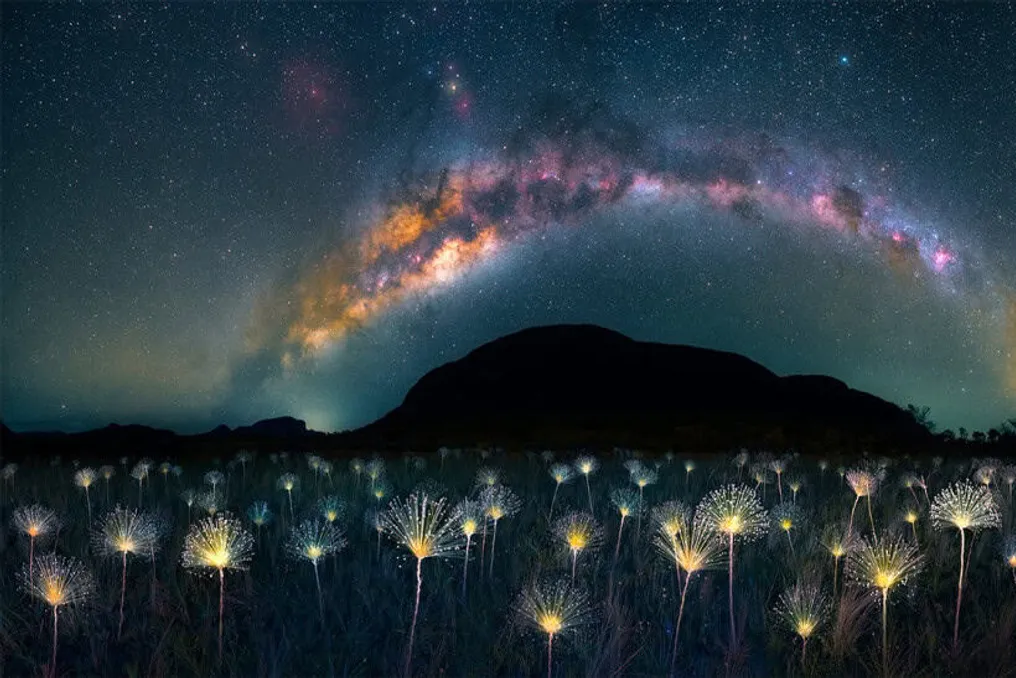
New analysis estimates Milky Way's mass at 1.19 trillion solar masses
Read more
Olhar Digital
olhardigital.com.br

New analysis estimates Milky Way's mass at 1.19 trillion solar masses

A recent investigation conducted by astronomers from the Dark Energy Spectroscopic Instrument (DESI) collaboration revealed that the Milky Way is significantly more massive than suggested by previous estimates. The new calculation indicates that our galaxy has approximately 1.19 trillion times the mass of the Sun, establishing the most accurate estimate to date for the galaxy's total mass.

This calculation takes into account both ordinary matter and dark matter, the latter being an invisible component that exerts gravitational force on stars and other celestial bodies. Determining this value has been complex because not all of the Milky Way's mass can be observed directly.

Previous estimates showed great variation, ranging between 500 billion and three trillion solar masses. The current work, which is still a preprint and awaiting peer validation, uses a vast amount of astronomical data combined with various calculation methods to reduce this margin of uncertainty.

One of the biggest obstacles to defining a galaxy's mass is that visible objects, such as stars, constitute only a fraction of its content. Like other galaxies, the Milky Way is predominantly composed of dark matter. Although it does not interact with light in the same way as ordinary matter, it is responsible for exerting gravitational influence and sustaining the galactic structure.

Therefore, summing only the mass of visible stars would result in a much lower value than what is necessary to justify the observed movements within the galaxy. The researchers concluded that the Milky Way contains 1.19 trillion solar masses, with an estimated error margin of about 11%.

Additionally, the team calculated that within a radius of 260 thousand light-years from the galactic center, there are approximately 636 billion solar masses, with a smaller uncertainty of about 8%.

Despite the precision achieved, the scientists themselves point out limitations in the study. The methods employed are based on two assumptions: that the Milky Way has a spherical shape and that it is in dynamic equilibrium, meaning its configuration does not undergo significant changes over time. However, the galaxy is inherently dynamic and may not have a perfectly spherical distribution, which could affect the calculation results.

Given this, the scientists argue that future research should focus on improving both the data collected through observations and the theoretical models used to estimate galactic mass. The study was published in the scientific repository arXiv but is still awaiting formal evaluation by other experts through peer review. Even with these caveats, the research constitutes an important advance in understanding the composition and structure of the Milky Way.
Similar stories

Astronomers observe for the first time a star swallowing its companion in the Andromeda Galaxy
Read more
olhardigital.com.br

Astronomers observe for the first time a star swallowing its companion in the Andromeda Galaxy

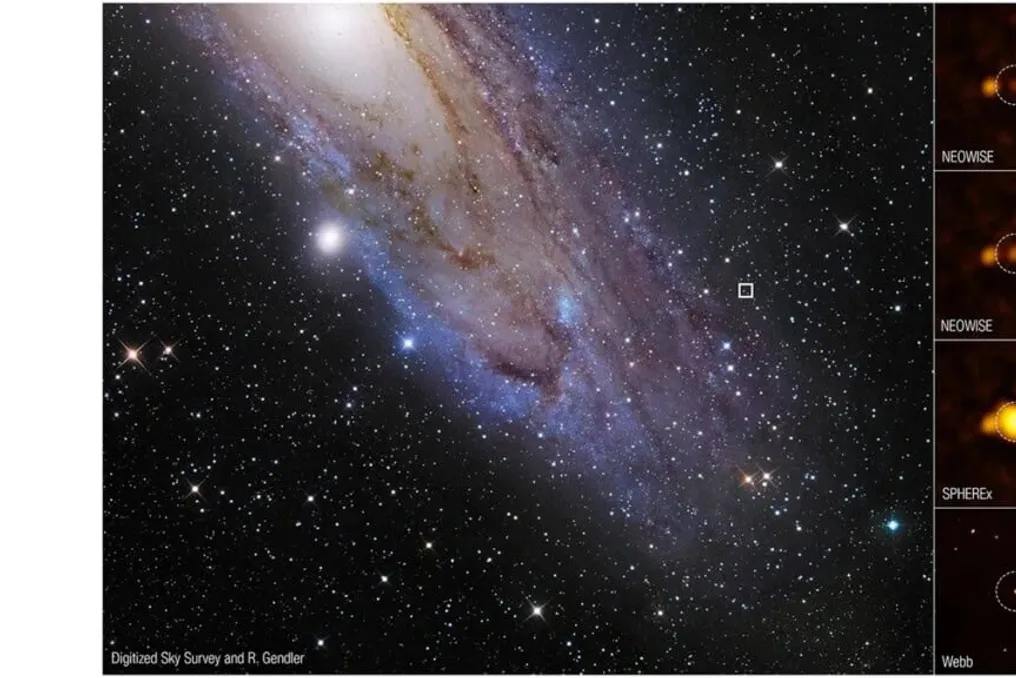
Astronomers were able to record a phenomenon predicted by science but never previously observed directly: a giant star swallowed its companion. This event occurred in the Andromeda Galaxy, located approximately 2.5 million light-years from Earth, allowing researchers to recreate various stages of stellar merger.

The system was named Bao and consisted of two stars of significantly different sizes. The larger star, called Big Bao, had a mass approximately seven times that of the Sun and a radius 350 times that of our Sun. Its companion, Little Bao, possessed about 70% of the Sun's mass.

Details of this discovery were presented in a study published in the scientific journal Nature on Thursday (the 18th). Various instruments, including NASA's James Webb Space Telescope, were used to collect data.

One of the most striking aspects of this phenomenon was the speed at which the flare developed. According to Nadia Blagorodnova, a researcher from the University of Barcelona (Spain) and co-author of the study, scientists expected that the explosion associated with such a massive star would take years to reach its peak luminosity. However, the increase in brightness happened very quickly: the event reached its peak in just one week.

Researchers calculated that the explosion ejected into space an amount of matter equivalent to approximately 10%–20% of the Sun's mass. Although observations indicate that Big Bao swallowed its companion, and that both stars might have merged into a single object, scientists have not ruled out other possibilities yet.

According to Viraj Karmabalkar, the lead author of the study, the stars could have survived this episode but begun orbiting much closer. Therefore, the team plans to continue monitoring the system after the effects of the explosion subside. New observations will help determine exactly what happened to both objects.

This discovery marks progress in understanding stellar mergers—phenomena that have been predicted for decades but have been extremely difficult to observe in real-time. Researchers also hope to find other similar cases using future observatories, such as the Nancy Grace Roman Space Telescope and the Vera C. Rubin Observatory.

Satellites surpass visible stars in various cities, study points out
Read more
olhardigital.com.br

Satellites surpass visible stars in various cities, study points out

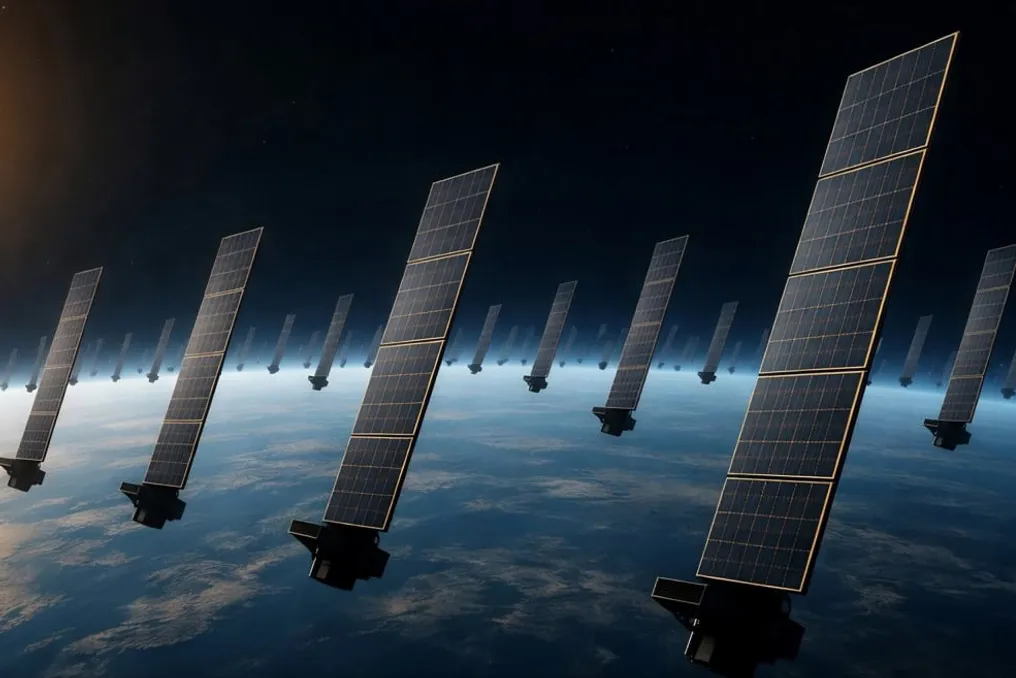
In many locations, the number of satellites crossing the night sky already exceeds the number of visible stars to the naked eye. It is estimated that more than 700 satellites pass simultaneously over the night sky above a city at a mid-latitude.

This estimate comes from a survey that analyzed 15,833 active satellites in low Earth orbit, detailing how the concentration of these devices varies according to latitude and time of day. The research was conducted by the engineering company Accu Components, using monitoring data from the United States Space Force, accessible on the CelesTrak website, and considering trajectories recorded on October 12 and 18 of this year. It is important to note that this study has not undergone peer review.

With a completely unobstructed horizon, researchers calculated that, in a medium-sized British city, 710 satellites cross the sky at any given moment during the night. Over the course of one night, a total of 12,891 distinct devices pass through that area. Although the focus of the analysis was the United Kingdom, researchers indicate that intense traffic is also common in much of Europe, the United States, and other regions located between 40 and 50 degrees of latitude, both north and south.

A spokesperson for Accu Components clarified that most Starlink satellites circulate at altitudes of approximately 53 degrees relative to the equator, concentrating in mid-latitudes. He added that global projections are only approximations, based on a worldwide grid examined during a single day. Near the equator, the number of satellites decreases to about 490.

Despite the large movement of equipment, only a fraction of it can be seen. Unlike stars, satellites do not generate their own light; they rely on the reflection of sunlight while the ground is dark. According to the survey, at any given moment, about 105 of the 710 satellites crossing the sky are illuminated and can display a brightness similar to that of stars. This number fluctuates significantly throughout the night: reaching approximately 300 in the first hour after sunset, dropping to less than 20 around midnight, and rising again to nearly 300 before sunrise.

This amount of visible satellites takes on a new perspective when compared to the number of observable stars in different scenarios. In large urban centers affected by light pollution, such as London and New York, only a few dozen stars are perceptible at night. In smaller cities and suburban areas, the number rises to a few hundred, requiring one to seek isolated rural regions or remote mountains to see thousands.

The volume of satellites in orbit has increased drastically in the last decade, driven mainly by the launch of the Starlink constellation by SpaceX, Elon Musk's company. Industry companies plan to place hundreds of thousands or even millions of devices into orbit in the coming decades. This expansion raises concerns among astronomers, as satellites passing into the field of view of ground telescopes leave luminous trails in images, and the reflected light increases the overall brightness of the firmament. If expansion plans materialize, even the most advanced telescopes may face difficulties observing distant stars and galaxies, which are essential for scientific investigation into the history of the Universe.

Milky Way's mass estimated at 1.2 trillion solar masses based on new research
Read more
super.abril.com.br

Milky Way's mass estimated at 1.2 trillion solar masses based on new research

The total mass of all objects in the Milky Way—including stars, planets, asteroids, black holes, gas, dust, and dark matter—is equivalent to the mass of 1.2 trillion suns. To convert this figure into kilograms, one must multiply the quantity by the approximate mass of the Sun, which is 1.989 × 10³⁰ kg.

This figure is the result of a preprint published on arXiv, meaning the article has not yet undergone peer review. Researchers used DESI (Dark Energy Spectroscopic Instrument), installed on the Mayall Telescope in Arizona, USA, to conduct the most accurate measurement to date. They analyzed stars located between 30,000 and 310,000 light-years from the galactic center.

Similar to estimating the weight of a house where much of the mass might be hidden in the walls, astronomers face the challenge of determining the mass of the Milky Way. Although planets in the Solar System, moons, the Sun, and hundreds of billions of galactic stars are visible and can be accounted for, they constitute only about 10% of the total mass.

The majority of matter in the Universe consists of an invisible and practically undetectable type of matter called dark matter. This mysterious mass accounts for 85% to 90% of the Milky Way's mass, and it cannot be counted with the eyes or telescopes because it does not emit, reflect, or block light.

The composition of dark matter remains unknown. Physicists propose various hypotheses, including the possibility that it is formed by unknown particles, similar to how known 'ordinary' matter is composed of indivisible particles like quarks. The existence of dark matter is confirmed only by indirect evidence.

Despite its invisibility, dark matter leaves traces. Since all matter, whether dark or not, creates gravitational attraction, researchers observe its gravitational influence on other objects—in this case, on stars—instead of attempting visualization, thereby trying to quantify it.

One of the instruments used for these measurements is DESI—Dark Energy Spectroscopic Instrument. It was created to map the three-dimensional structure of the Universe and study dark energy, using 5,000 robotic optical fibers to record light from up to 5,000 objects simultaneously. In total, over 47 million galaxies and quasars have been recorded.

The research team applied DESI to measure more than 10,000 stars in the galaxy's halo—a region presumed to be spherical and surrounding the entire galaxy, which mainly consists of dark matter. These stars were registered during the first three years of DESI's operation and are located between 30,000 and 310,000 light-years from the galactic center.

This data was compared with measurements of these same stars' motion across the sky obtained using the Gaia space telescope. The stars belong to two different types of aging stars: BHBs (Blue Horizontal Branch stars) and RR Lyrae (pulsating stars).

Both star types have a known intrinsic brightness, making them good standards for distance measurement. Using these measurements, scientists were able to calculate the velocity of each star in three dimensions: DESI measures approach or recession from us, while Gaia measures sky drift over years. This allowed them to estimate the gravity acting on them, as gravity is what determines the speed of these stars' movement.

Gravity, as mentioned earlier, indicates the amount of existing matter. The greater the mass, the stronger the gravity, and the faster the stars move. By measuring their movement speed, researchers also obtain an answer regarding the amount of mass in the area they occupy.

The researchers applied four different calculation methods and tested them on simulated galaxies where the correct amount of dark matter is known. This allowed them to correct the errors of each method and combine them into a single, more reliable result.

Previous studies have also attempted to 'weigh' the Milky Way in various ways, including observing stars in the outer halo and star clusters. However, according to the researchers, these works rarely combined multiple methodologies and did not realistically account for the galaxy being in disequilibrium, which distorts calculations.

Nevertheless, the researchers' conclusion has an error margin of about 11%, meaning the mass of the Milky Way could range from 1.07 to 1.33 trillion suns.

Popular