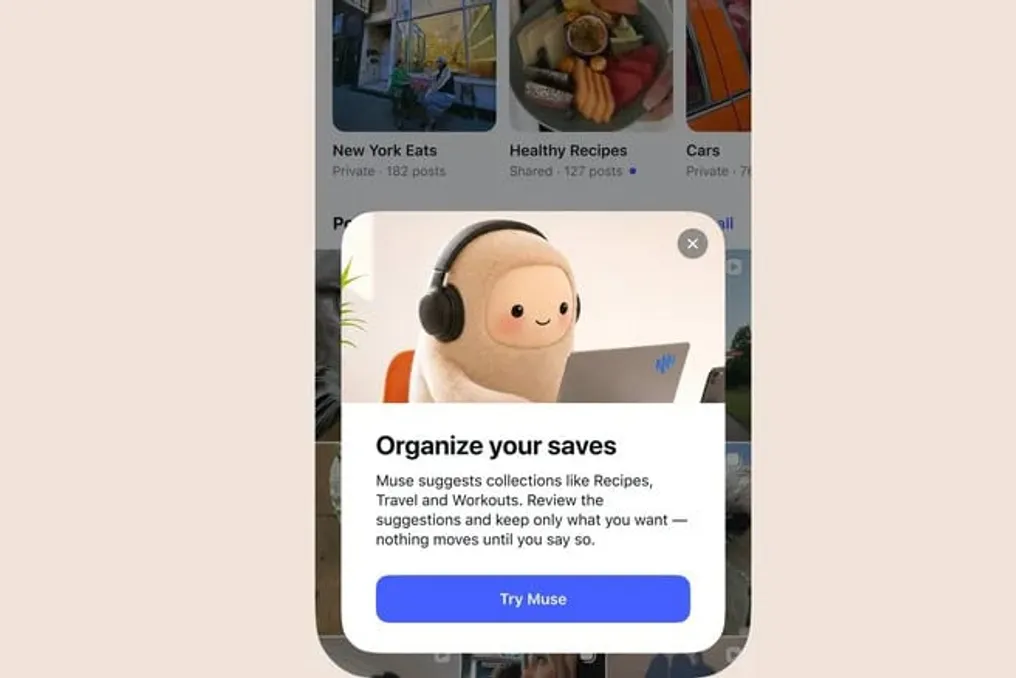
Meta integrates AI agent Muse into Instagram aiming for new sales opportunities
Read more
Olhar Digital
olhardigital.com.br

Meta integrates AI agent Muse into Instagram aiming for new sales opportunities

Meta is implementing its personal artificial intelligence assistant, Muse, within the Instagram platform. This addition will allow users to manage saved posts and interact with the assistant directly through Direct. However, behind this functionality lies a clear commercial strategy focused on converting user interest in products and content into new revenue streams through sales and advertising.

The company will begin promoting the use of Muse when users save posts on Instagram. Specifically in the United States, users will also receive suggestions to categorize content into thematic collections, such as culinary recipes or travel videos.

To use this integration, it is necessary to link Instagram and Muse accounts. Furthermore, the assistant will have a dedicated presence in direct messages, allowing conversations to be initiated from content found on the social network.

The expansion of the agent to Instagram has a significant commercial purpose. Since the social network is one of Meta's main sources of advertising revenue, the company plans to capitalize on user browsing and consumption patterns to drive purchases.

According to data provided by CNBC, about 20% of daily Instagram users save at least one post daily. A considerable portion of this material contains purchasable products or advertisements.

Muse has the potential to simplify the process of returning to these items and reduce the steps needed between initial interest and actual purchase. A Meta executive told CNBC that even without running its own ads, the agent already assists in the company's advertising business by raising advertisers' conversion rates.

The operational logic is straightforward: if the assistant helps someone locate an item, organize references, and complete a purchase, the corporation can generate better results for brands already investing in advertising on Instagram.

Additionally, the information collected about products searched for and purchased via Muse can help Meta gain a deeper understanding of consumer interests, allowing for more accurate ad targeting.

Data released by CNBC indicates that Muse is gaining relevance in commerce facilitated by AI agents. During Meta's last earnings conference, CEO Mark Zuckerberg stated that 25% of Muse users use the tool to make purchases. This is the most frequent action among agent users, and the average value of these purchases exceeds US$ 200 (approximately R$ 1,100).

Zuckerberg also mentioned the company's intention to apply a small fee on transactions made on the platform.

A study conducted by the e-commerce analysis firm, Forter Intelligence, revealed that Muse was responsible for 51% of orders placed by AI agents in the week ending November 22. In the same period, Grok, developed by xAI, registered 24% market share, while ChatGPT, from OpenAI, reached 22%. The remaining 3% was divided between Google and the startup Instinct.

These indicators demonstrate that Meta is consolidating its position in a market where AI assistants are taking over tasks that were traditionally performed directly by consumers in online stores.

Although it already contributes indirectly to the company's advertising revenue, Muse does not yet feature its own ads. Sources consulted by CNBC indicate that Meta may test advertising within the agent in the future, but is not under financial pressure to rush this implementation.

One possibility being considered is the insertion of ads directly into the Muse feed, which operates more like a publication wall than a strictly question-and-answer interface. The company tends to prioritize increasing the user base before introducing monetization mechanisms into its products. With the integration into Instagram, Meta gains another chance to attract users to Muse and expand its presence in digital commerce.
Similar stories

Meta plans to launch AI keychain device with 5G connectivity
Read more
olhardigital.com.br

Meta plans to launch AI keychain device with 5G connectivity

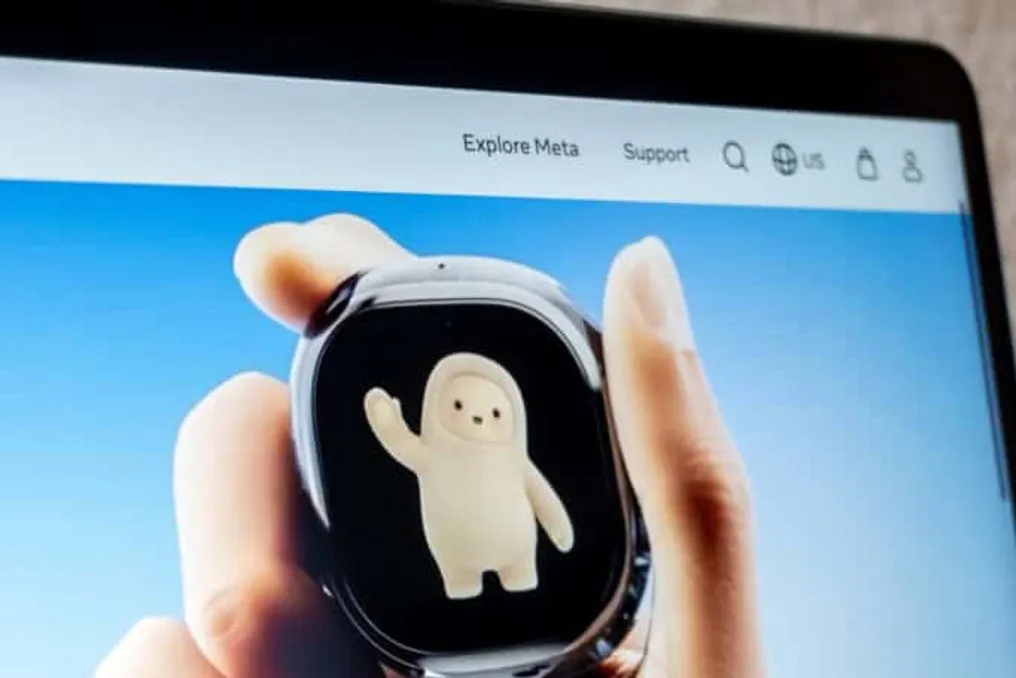
Meta is developing a new wearable device aimed at expanding access to its artificial intelligence (AI) agent. This device, called the Muse Charm, will be in the form of a keychain and could be sold for US$300 (approximately R$1,590). The launch would come with up to 12 months of free access to Verizon's 5G network, according to reports from The Information.

The central idea is to enable users to interact with Muse without needing to use a mobile phone. During the September edition of the Meta Connect event, Meta presented this device and mentioned that it would be launched in time for year-end celebrations.

However, both the price and the connectivity package have not yet received official confirmation from the company, and Meta has not commented on the matter.

The Muse Charm integrates a broader strategy by Meta to ensure its AI agent is available on various types of devices. The company has already made the Muse app available for watches running Wear OS and watchOS operating systems.

Additionally, in October, the company released open-source guides, allowing developers to create their own equipment compatible with the agent, known as Muse Gadgets. This initiative comes as the Muse service continues to grow, having surpassed ten million users.

Meta is also working on e-commerce functionalities so that users can make purchases through the agent. In this business model, the company intends to charge a fee to commercial establishments for transactions made.

Zuckerberg had previously stated that, in the future, Muse could generate more revenue per user than the company's conventional applications. Furthermore, this strategy would help Meta exert greater control over consumer interaction, given that much of its services currently depend on applications accessed via smartphones, platforms subject to the guidelines of corporations like Apple and Google.

Besides the keychain, the company is reportedly developing a wearable device similar to a smartwatch, although this project has been postponed until 2027, according to The Information.

Meta launches Achados app for buying and selling used goods in Brazil
Read more
olhardigital.com.br

Meta launches Achados app for buying and selling used goods in Brazil

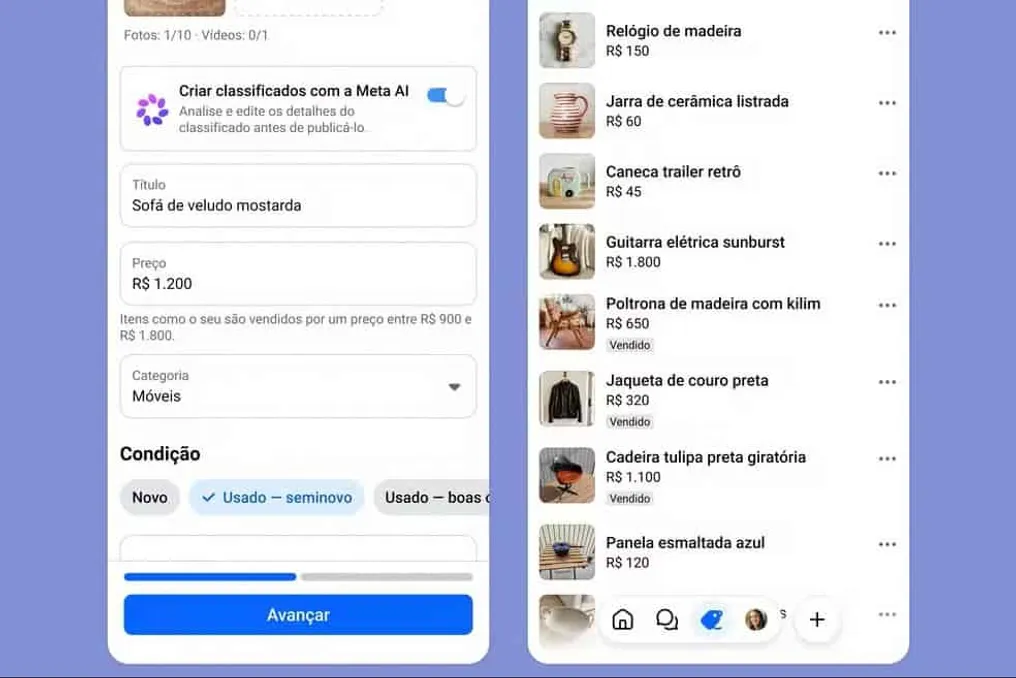
Meta introduced Achados this Tuesday (the 17th)—a free mobile application designed for the buying and selling of pre-owned items. This service aggregates listings posted on Facebook and Instagram platforms. Brazil was the first country to gain access to this new service, which aims to compete with platforms such as Enjoei.

Currently, the application is available exclusively for Android users. It allows users to search for items, view seller information, and directly agree on delivery and payment terms. Information regarding the release of an iPhone (iOS) version has not yet been provided by the company.

Achados aggregates offers published on Facebook Marketplace, in Facebook groups, and on Instagram. Users can communicate with sellers through the Achados app itself or using WhatsApp. The payment and delivery mechanism is fully agreed upon between the parties, and Meta does not take a commission from sales.

Before making a transaction, buyers have the opportunity to review seller profiles on Facebook and Instagram, as well as check reviews, other listed items, and transaction history. The company also states that it uses automated tools to detect and remove fraudulent schemes. If suspicious activity is detected, users can report listings or sellers.

The search functionality includes two notable tools. At the top of the feed is the 'Garimpo de hoje' section, which showcases various items daily. Additionally, the 'selo de achado' helps identify selected listings by comparing prices with similar offers on Facebook Marketplace.

The service does not yet have its own website. The app's launch comes amid growing interest in purchasing second-hand items online. According to a study by the Confederation of National Store Directors (CNDL) and SPC Brasil Credit Protection Service, 46% of consumers who made online purchases in the last 12 months acquired some used item.

For the Executive Manager of CNDL, Daniel Sakamoto, the industry already has stable demand, but further development requires improvements in guarantees, security, and simplifying the sales process. He noted that the used goods market is no longer a niche, and the main driver for consumers is the desire to save money.

The study also showed which categories of used goods are most popular among Brazilian consumers. Among the purchasing platforms, in order of popularity, are Mercado Livre, OLX, Facebook Marketplace, and Enjoei.

ByteDance plans to launch an AI assistant similar to Meta's Muse
Read more
technode.com

ByteDance plans to launch an AI assistant similar to Meta's Muse

According to a report by IT Home on Wednesday, citing Bloomberg, ByteDance intends to introduce a voice assistant similar to Meta's Muse in the coming weeks.

ByteDance co-founder Zhang Yiming presented this plan at an internal meeting with the company's artificial intelligence team, according to sources familiar with the discussion.

Meta launched Muse in September as a voice assistant with an animated avatar and plans to integrate it into devices such as smart glasses. Currently, ByteDance uses the chatbot Doubao and sells access to its video generation models, Seedance. The new assistant will allow ByteDance to expand its consumer AI offerings.

During the meeting, Zhang noted that ByteDance is capable of competing with OpenAI and Anthropic, but he predicted that reaching their level would take time—until 2029 or 2030. He also pointed out the lack of data for pre-training and strongly urged the team to reduce reliance on distillation, a method where one model is trained on the results of another model.

Popular