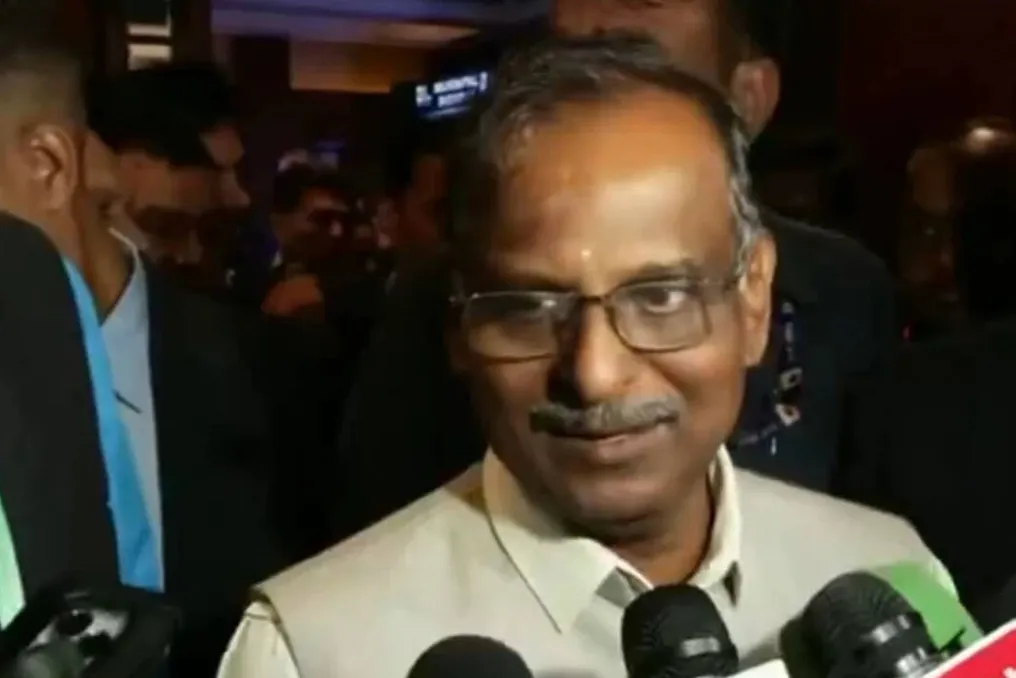
ISRO Chief Announces Readiness of First Private PSLV Rocket for Launch Early Next Year
Read more
The times of India
timesofindia.indiatimes.com

ISRO Chief Announces Readiness of First Private PSLV Rocket for Launch Early Next Year

ISRO Chairman V. Narayanan stated on Tuesday that the first PSLV-N1 launch vehicle, built by private companies, is ready for its inaugural flight in the first quarter of next year. He also noted that the government is significantly accelerating satellite launches in partnership with startups, as ISRO currently has only 56 spacecraft in orbit.

Speaking about international cooperation, the ISRO chairman emphasized that India collaborates with 64 countries, and over the past 12 years, at least 434 satellites have been launched from Indian territory for 34 nations.

Addressing the 5th International Space Conference in Delhi, V. Narayanan reported that previously, PSLV was developed solely by ISRO with industrial support. Now, the L&T and HAL consortium has been tasked with building five PSLV rockets. Consequently, the first PSLV-N1 rocket is preparing for a launch scheduled for early next year.

The ISRO division, NSIL, signed a contract with this consortium in September 2022 worth 860 crore rupees for five PSLV rockets. Narayanan added that a large number of spacecraft are required for communication, navigation, and Earth observation, which cannot be achieved by the public sector alone. He noted that ISRO and INSPACe support private companies, and the benefits of this collaboration will become evident in five years.

He also mentioned that the number of satellites from a single startup has grown to over 440. Emphasizing that the Gaganyaan program is not being delayed, Narayanan explained that it is technologically complex work, and they are in the final stages. The rocket and other components are ready, and work is currently underway on the orbital module, which will be launched at the earliest opportunity.

Furthermore, he announced that ISRO and Semiconductor Lab in Chandigarh have developed the Vikram processor, and the Vikram-32 chip has already been released and will be implemented.
Similar stories

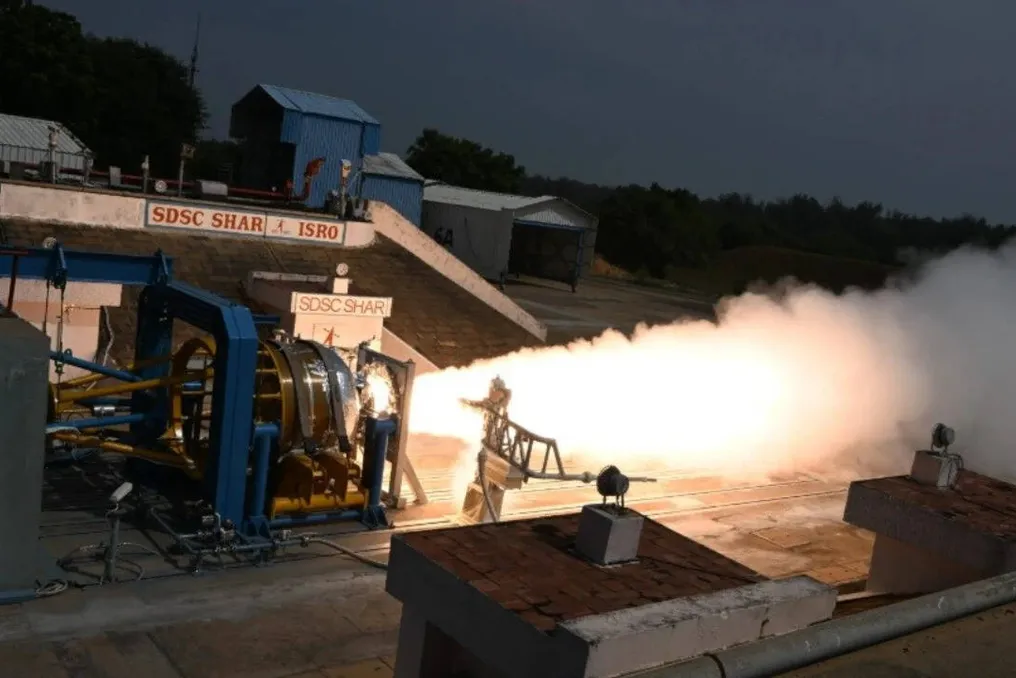
ISRO successfully tested modified PSLV third stage after two failed launches
Read more
timesofindia.indiatimes.com

ISRO successfully tested modified PSLV third stage after two failed launches

Following two consecutive launch failures, ISRO successfully conducted a ground static test of the modified third stage of its Polar Satellite Launch Vehicle (PSLV).

According to a statement made on Thursday, this test was carried out at the Satish Dhawan Space Centre in Sriharikota. This step is important for restoring the reliability of this rocket, which serves as the agency's main workhorse.

Astrobase Space Technologies plans to build a 360-acre center in Andhra Pradesh for reusable rocket testing
Read more
www.aajtak.in

Astrobase Space Technologies plans to build a 360-acre center in Andhra Pradesh for reusable rocket testing

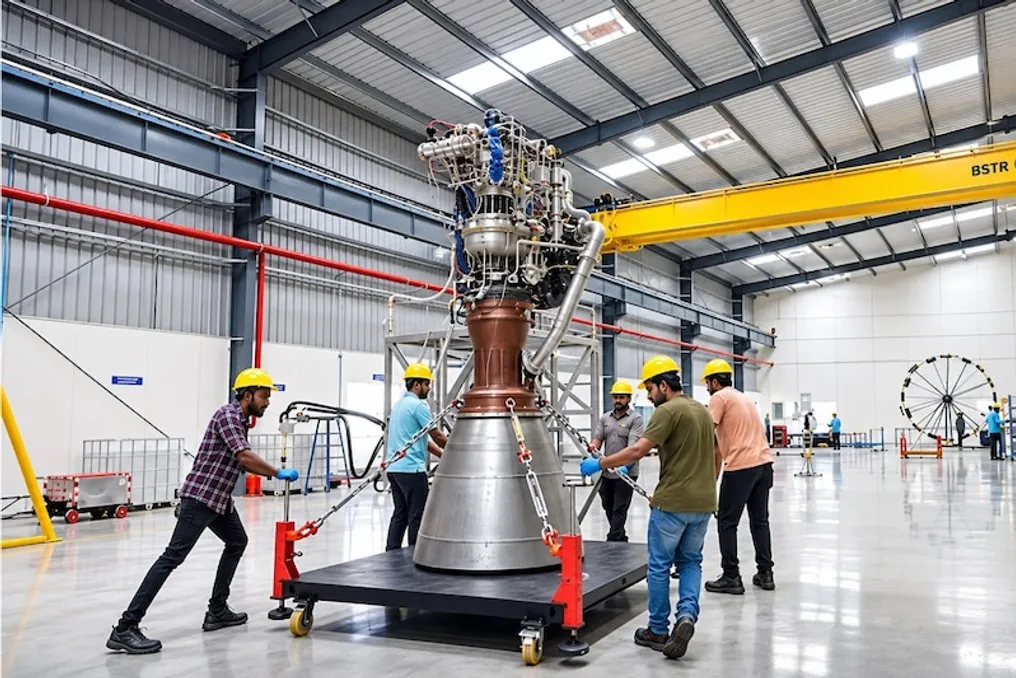
India is striving to elevate its capabilities in space transportation. Private space company Astrobase Space Technologies plans to construct infrastructure spanning approximately 360 acres in the state of Andhra Pradesh for testing its rockets. This expansion focuses on developing and certifying critical technologies for launch vehicles, including stage testing, static fire tests, and hop tests.

These tests are considered essential for advancing reusable rockets. The company signed a Memorandum of Understanding (MoU) with the Andhra Pradesh Economic Development Council. This agreement was concluded on November 12th at the 31st CII Partnership Summit in Visakhapatnam, attended by Chief Minister N. Chandrababu Naidu and Industries Minister T. J. Bharta. Astrobase announced investments of 800 crore rupees for this expansion, which will add 339 acres to its existing base of about 22 acres.

Globally, reusable rockets are viewed as a key element of the next phase of space transportation, as they can reduce both the cost and time of delivering payloads into orbit. India also intends to strengthen its domestic space ecosystem to launch satellites more frequently and at lower costs.

The Astrobase facility will provide infrastructure for the development and certification of launch vehicle stages alongside rocket engine testing. In a hop test, a rocket stage is verified through a controlled ascent and landing, which is crucial for proving its reusability potential. Comprehensive ground testing of engines, stages, and integrated systems is required before any rocket enters operation.

This expansion also reflects the growing role of private companies in India's space ambitions. Since opening the space sector to private participation, local companies have been developing competencies in rocket engines, launch vehicles, satellite construction, and related technologies. Astrobase's long-term goal is to develop a launch system capable of delivering up to one thousand tons of payload annually from Indian territory, which is the company's stated objective, not its current capability.

In addition to the Andhra Pradesh project, the company plans to invest another 500 crore rupees in Karnataka, including a manufacturing base in Bangalore. This site will house infrastructure for assembling engines and stages for the Everest Engine and AB220 Medium-Lift Launch Vehicle programs, as well as equipment for additive manufacturing, fabrication, non-destructive testing, and quality inspection.

The Andhra Pradesh project is expected to create around 500 direct and one thousand indirect jobs. The significance of such investments ultimately depends on the ability to transform testing and production infrastructure into flying rockets, successful demonstrations, and reliable operational readiness.

India's objective in space ambitions is not just to build rockets but also to develop systems that can deliver payloads to orbit frequently, reliably, and affordably. Private sector participation will increase competition and accelerate innovation. Establishing a large facility in Andhra Pradesh and a manufacturing unit in Karnataka will strengthen the company's entire value chain.

If these plans are implemented on schedule, India can solidify its position in the global space market. The focus on reusable technology may prove beneficial for reducing costs and increasing launch frequency. The Astrobase initiative demonstrates the evolving nature of India's space sector, where private companies actively participate alongside government agencies. The commitment of 360 acres for testing and an investment of 800 crore rupees signals a massive dedication. Facilities like fire and hop tests represent a solid step toward developing indigenous reusable rockets.

Popular