
Volvo continues to raise safety standards with new technologies, including adaptive belts
Read more
Super Abril
super.abril.com.br

Volvo continues to raise safety standards with new technologies, including adaptive belts

The phrase 'já volto' (I'll be back) holds special significance for Volvo, as it symbolizes the promise of a safe return for those who wait. The company tirelessly works to raise industry safety standards and develop new solutions, placing paramount importance on protecting people both inside and outside vehicles.

The history of this commitment to safety dates back to the past. In 1959, engineer Nils Bohlin introduced the three-point seat belt developed by Volvo. On August 13 of that same year, the first Volvo PV544 car was released with this technology as standard equipment. Prior to this, belts only restrained passengers at the waist, providing limited protection in collisions.

Immediately afterward, the manufacturer granted patents to other automakers, allowing them to use this development without fear of potential claims.

In 2002, Volvo published a study indicating that the belt created by Bohlin had saved over a million lives. In the United States, the National Highway Traffic Safety Administration estimates that this technology prevents approximately 100,000 injuries annually resulting from car accidents.

In 1985, the German Patent Office recognized this technology as one of the eight most important inventions in the company's century of existence.

The principle of safety has always guided Volvo's operations. As one of the brand's founders stated in 1927: 'Cars are driven by people. Therefore, the principle that guides everything we do at Volvo, and must continue to be, is safety.'

Safety is an integral part of Volvo's history and remains so in various ways. A telling example is the story of Fabio Harris. In 2006, he and his wife were on a business trip in a Volvo XC90 when their car collided with an oncoming truck. Both vehicles overturned several times. 'When we got out, several minutes passed, but we realized we were unharmed,' he recounted. This experience strengthened his loyalty to the brand, and he explains: 'Why would I need other cars if I tested it in practice regarding an accident?' Today, he expresses happiness about driving a car where he feels safe with his family, concluding: 'It's a brand that allowed me to return home with my children.'

The evolution did not stop at the three-point belt. In 1994, the Volvo 850 model became the first equipped with a side airbag (Lateral Airbag). And in 2003, the company began widely implementing the Blind Spot Information System (BLIS).

A recent achievement was the introduction of the Driver Understanding System in 2023. This proprietary system uses infrared cameras to monitor the driver's level of attention and concentration. If signs of drowsiness, distraction, or compromised behavior are detected, the system can activate a range of measures, from audible warnings to a complete vehicle stop with hazard lights activated.

Parallel to this, the brand has evolved in design, technology, electrification, and sustainability, which coexist with safety as a central element of its identity. The manufacturer has begun producing and selling electric vehicles, demonstrating a commitment to sustainability principles and taking on the obligation to ensure another type of safety—the safety of the planet.

Now Volvo is revolutionizing again with a well-known element—the new multi-adaptive seatbelt, which will be presented alongside the Volvo EX60. This technology uses sensors and analyzes data in real time to personalize passenger protection. For instance, in a severe accident, a larger passenger will receive a higher load from the belt (i.e., greater impact absorption and distribution), which helps reduce the risk of head injuries. Conversely, in a lighter accident, a smaller passenger will receive a lower load configuration to reduce the likelihood of rib fractures.

This technology, recognized by TIME as one of the best innovations of 2025, is another step for Volvo in fulfilling its promise that the phrase 'já volto' will never remain uncertain, as it always has.
Similar stories

Volkswagen transforms electric Polo into track concept with 367 hp, removing rear seat
Read more
autopapo.com.br

Volkswagen transforms electric Polo into track concept with 367 hp, removing rear seat

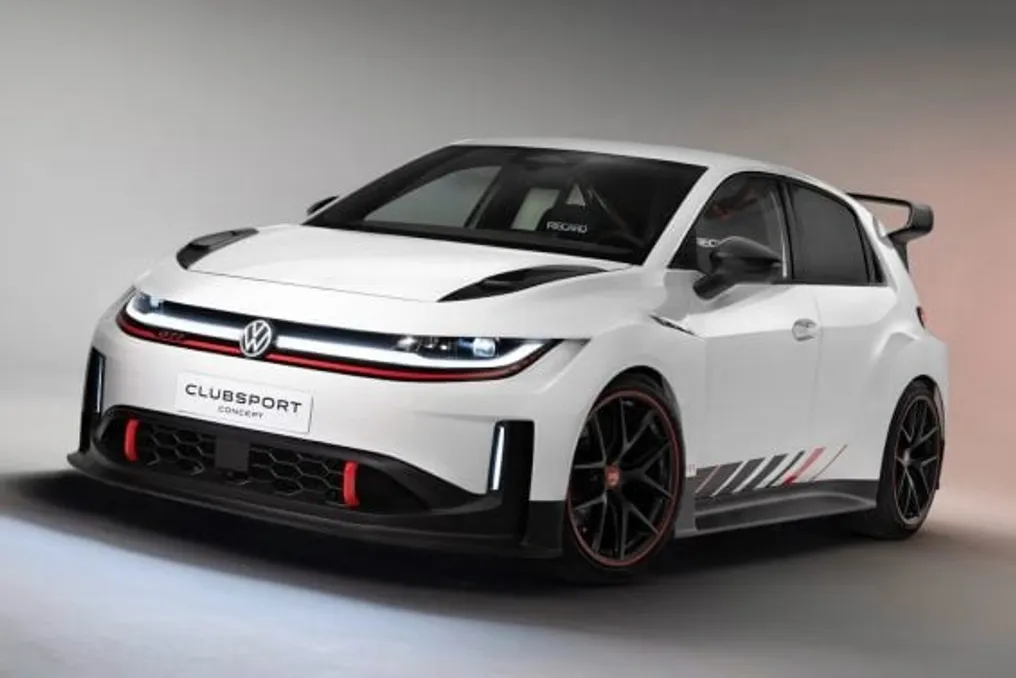
Volkswagen has modified the electric Polo, transforming it into a high-performance track vehicle. The changes included the removal of the rear seat, the installation of a roll cage, and the integration of an engine originally designed for larger models from the manufacturer.

The result of this work is the ID.Polo GTI Clubsport Concept, a concept car intended exclusively for tracks, capable of reaching 100 km/h in just 4.7 seconds. This exclusive example will be presented to the public during the Essen Motor Show, a prepared car event held in Germany from November 27 to December 6.

This new model celebrates the 50th anniversary of the GTI designation and represents the fourth sporty addition by the brand in 2026, following the Golf GTI Edition 50, the ID.3 GTI, and the standard ID.Polo GTI.

In comparison, the standard ID.Polo GTI, which was the first production electric model to adopt the sporty nomenclature, is available for pre-order in Europe since October and has 226 hp, completing 100 km/h in 6.8 seconds.

To further boost performance, the engineering team adapted the APP550 electric motor to the front axle of the hatchback. This motor was initially conceived for the rear-wheel drive of larger Volkswagen vehicles, such as the ID.7 sedan. With this adaptation, the torque increased significantly, from 29.6 kgfm to 56.1 kgfm.

The 52 kWh battery continues to provide power peaks of 394 hp, allowing the vehicle to reach a top speed of 240 km/h. The mechanical assembly was complemented by an electronically controlled locking front differential, track-tuned adaptive suspension, and brakes equipped with ceramic discs.

External aesthetic modifications include reducing the body to only two doors, widening the fenders by 5 cm on each side, adding a large front splitter, a diffuser, and a carbon fiber spoiler that extends beyond the roofline.

Inside, the rear seat and multimedia center were removed. In their place, two Recaro bucket seats, five-point safety belts, and a red-painted roll cage were installed, along with dark microfiber finishes adorned with red stitching.

According to Volkswagen, young apprentices from the company collaborated largely in the construction of this concept car. The manufacturer did not provide confirmation regarding possible production plans. It is important to note that in the Brazilian market, the Polo is sold solely with an internal combustion engine.

Lamborghini has registered two potential names for future models: Atrevido and Delirio
Read more
autopapo.com.br

Lamborghini has registered two potential names for future models: Atrevido and Delirio

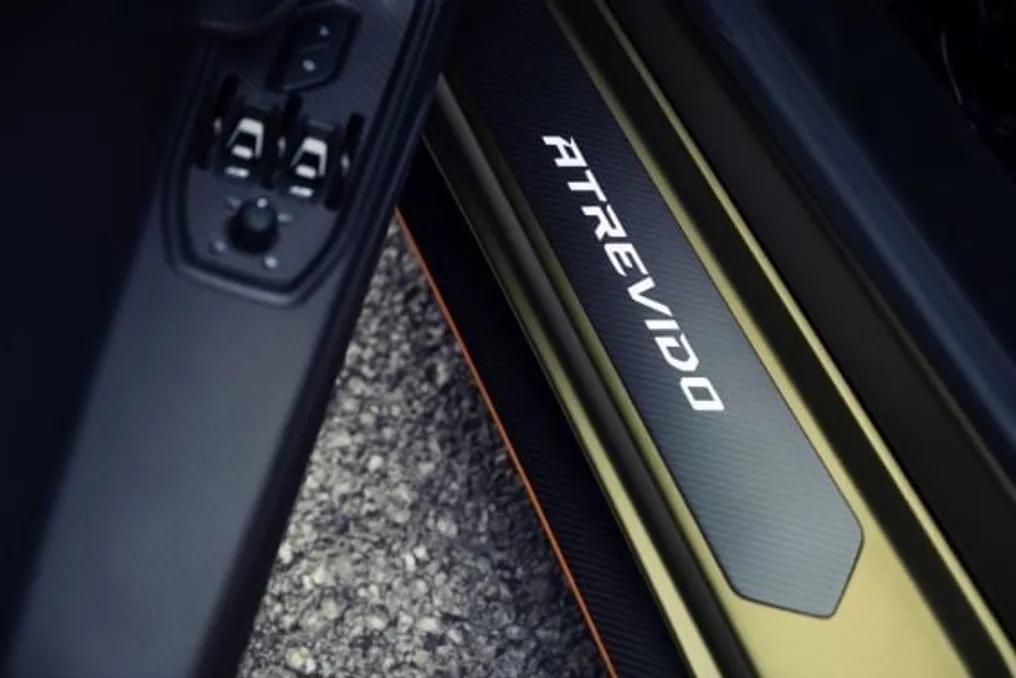
Lamborghini has registered two names in Europe that may be assigned to its upcoming vehicles: Atrevido and Delirio. These trademarks were discovered by the website Carmoses and protect the right to use these names not only for cars but also for miniatures, toys, clothing, and electronics, which is standard practice for the Italian manufacturer before releasing a new model.

The models that will receive these names remain secret for now. However, the period between registration and the vehicle's appearance is usually not long; for example, in the case of the Revuelto, it took about ten months.

The choice of names aligns with the brand's tradition of drawing inspiration from the world of bullfighting. The word Atrevido means 'bold' in both Spanish and Portuguese. It was also the name of a bull from the Osborne herd that fought matadors at the Las Ventas arena in Madrid in 1966.

The name Delirio retains its meaning in Italian and Spanish. According to data from the Czech website Autoforum, no known bull from the Miura or Osborne herds had this name, suggesting it is a general term used in the arena atmosphere.

The same site ironically noted the choice, suggesting that naming a new hybrid Delirio would sound like an admission, especially as Lamborghini replaced pure internal combustion engines with electrified systems.

Automotive press experts point to two possible scenarios for the appearance of these new cars. The first is a limited series within the Few-Off program, where Lamborghini uses the mechanics of an existing model but with an exclusive body, similar to what was done with the Veneno, Centenario, and the recent Fenomeno.

The second option is the introduction of a fourth model in the lineup—a four-seater GT based on the Lanzador concept car. This project, presented in 2023 as Lamborghini's first fully electric vehicle, was later converted into a plug-in hybrid after CEO Stephan Winkelmann stated that customer interest in the brand's fully electric model was close to zero. This GT is expected to appear by the end of the decade. Currently, the Lamborghini lineup includes three models, all of which are plug-in hybrids: Revuelto, Temerario, and Urus SE.

Popular