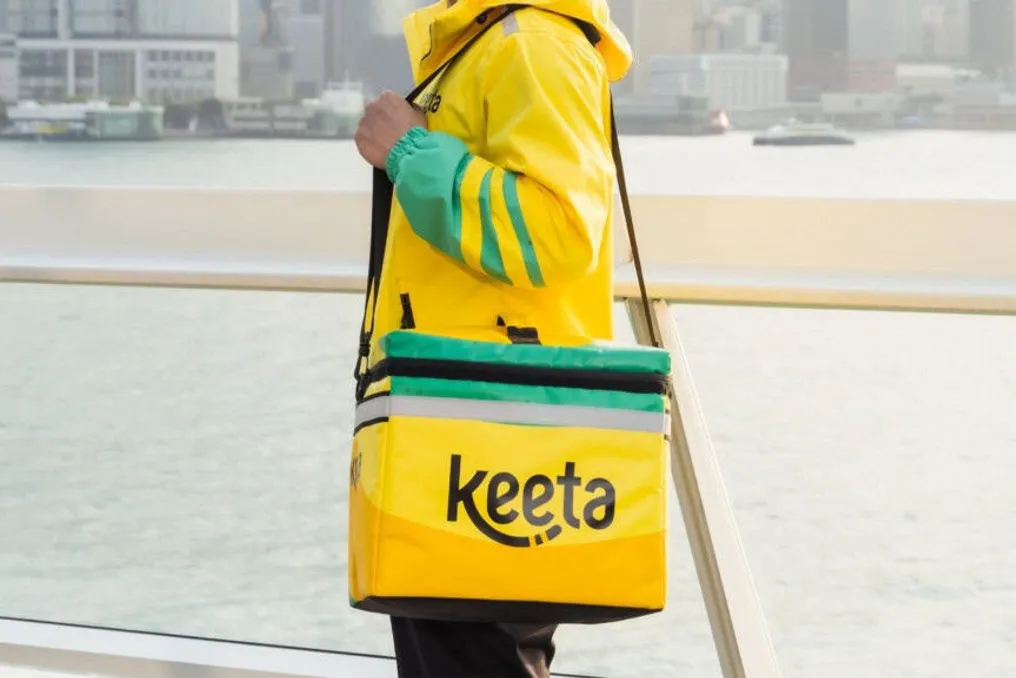
For those who work with delivery services via apps, small time intervals significantly determine daily earnings. A delay in picking up an order can result in losing a ride, not receiving a bonus, or, in certain cases, receiving notifications that demand agility. However, this pressure to meet deadlines raises concerns about the safety of drivers in traffic.
This scenario is the focus of an investigation conducted by the Labor Public Ministry (MPT) regarding Keeta. The platform was the subject of a complaint in July by Elias Pereira Freitas da Silva Júnior, known as JR Freitas. He questions the use of speed alerts, incentives for speed, and mechanisms that force professionals to accept orders.
The formal representation requests the suspension of speed-related alerts and an independent audit of the algorithm. Among the points under scrutiny is the system's ability to take into account variables such as traffic jams, rain, traffic lights, and road conditions before demanding compliance with a deadline.
Jamesson Batista da Silva, known as Prince of Deliveries, shared in an interview with Olhar Digital that he receives frequent notifications from Keeta. This driver, who has been working in São Paulo for ten years and has over 140 thousand followers on Instagram, released videos demonstrating the alerts sent by the application during rides.
According to Jamesson, initially, messages appeared when there was approximately one minute left to reach the restaurant. Recently, the platform changed the pattern, sending a first alert four minutes earlier and another when only one minute remained.
He observed that other applications also notify about deadlines, but in a different way. On Keeta, the alerts are complemented by sound alarms, while the other mentioned platforms use internal messages within the app itself.
Although it seems like a minimal difference, the driver claims that this intensifies anxiety during work. When the pickup deadline expires, the order disappears from the professional's screen and can be assigned to someone else, causing him to lose the chance to complete the ride and, at times, miss out on a promotion linked to the delivery.
For Jamesson, the problem is particularly serious for beginners in the field. Professionals with little experience may interpret the notifications as mandatory commands, even when traffic conditions prevent them from arriving on time.
The professional clarified: 'I am not talking about young people, I am talking about newcomers to the profession, because they understand that they have to do what the app is telling them to do.' He added: 'So, those of us who are much older in the profession don't care about this type of alert. I myself don't care.'
Jamesson guarantees that he does not alter his driving due to the notifications. If he perceives that he will not reach the destination safely within the deadline, he chooses to refuse the ride, even risking losing a bonus or facing a penalty in the application.
However, he frequently witnesses risky behavior from other drivers, such as running red lights and speeding. In his view, the pressure for productivity can foster such attitudes and generate competition among professionals. He noted: 'Few applications put this emphasis on speed. Keeta is putting it, 99 does too, but iFood doesn't. So, it generates competition among drivers.'
The issue of incentives for speed transcends just labor conditions, as there is specific legislation restricting such practices. Law 12.436/2011 prohibits contracting companies of professional motorcycle couriers from implementing mechanisms that encourage increased speed in traffic. Prohibited examples include bonuses for delivery targets, competitions between motorcyclists, and incentives linked to meeting deadlines.
Juliene Oliveira Fernandes, a lawyer specializing in Labor Law and a consultative member of the Social and Labor Rights Commission of OAB/MG, explains that classifying the driver as self-employed does not nullify these limitations. This implies that a platform cannot justify any collection method solely by not recognizing the employment relationship with the workers. The analysis must focus on how the incentives operate and what effects they generate on the drivers' driving.
The lawyer emphasizes: 'The legislation does not necessarily require the company to explicitly tell the driver to hurry. What needs to be analyzed is whether the adopted practice ends up encouraging increased speed.' She exemplifies: 'For example, if the app offers financial advantages to those who deliver faster or sends constant alerts demanding higher speed, this can represent an indirect form of pressure.'
The deadlines for accepting orders also deserve attention, according to Juliene. It is crucial to verify whether the mechanism induces the driver to use their cell phone while riding the motorcycle, compromising their attention in traffic.
Another aspect addressed is the control exercised by algorithms. When the system stops merely organizing order distribution and starts dictating how the worker must perform their tasks, signs of subordination may emerge. Juliene calls this situation algorithmic subordination. Control does not need to come from a human supervisor, as automated systems can also impose rules and apply consequences. However, this does not automatically constitute an employment relationship, whose characterization depends on the requirements defined in Articles 2 and 3 of the Consolidation of Labor Laws (CLT).
The lawyer also recalls that the General Data Protection Law (LGPD), in its Article 20, grants the right to request a review of decisions made exclusively based on the automated processing of personal data. However, this rule does not oblige companies to fully reveal their source code or trade secrets.
The complaint filed by JR Freitas was integrated into a civil inquiry opened by the MPT on May 7, 2026, which investigates various aspects of the platform's operation.
Rodrigo Castilho, a Labor Prosecutor and national coordinator for Combating Fraud in Labor Relations (Conafret) at the MPT, detailed in an interview with Olhar Digital that the procedure covers possible irregularities in the recognition of the employment relationship, in the health and safety conditions of workers, in algorithmic manipulation, and in the payment of bonuses, prizes, and gratuities for deliveries that may stimulate acceleration.
JR Freitas has already testified before the body. Meanwhile, Keeta presented two administrative defenses, both denying the pointed irregularities. One responds to the complaint that originated the inquiry, and the other specifically addresses the driver's representation.
Castilho informed that the process is in the final stages, including evidence production and inspections at the company. To date, no data on the results of the diligence or measures adopted has been disclosed.
If irregularities are identified, the MPT may propose a Conduct Adjustment Term (TAC), in which the company commits to changing considered inadequate practices. If there is no agreement, the body may file a public civil action and request urgent measures from the Judiciary. Compulsory suspension of functionalities or imposition of changes to the algorithm's operation, in case of corporate resistance, generally requires a judicial decision.
The discussion gained a new dimension during the Apps Break, on September 1st. On that occasion, drivers accused Keeta and 99Food of offering extra bonuses per ride precisely during the strike, raising suspicions of an attempt to reduce participation in the movement. JR Freitas, who participated in the mobilization, brought this complaint to the MPT. The representation asks the body to investigate a possible anti-union practice and verify whether incentives were used to influence professionals' decision to join the protest. Keeta denied that the bonuses were related to the demonstration.
Concerns about the effects of deadlines also reached corporate publicity. In October, the São Paulo councilwoman and cycling activist Renata Falzoni (PSB) filed a representation with the National Council for Advertising Self-Regulation (Conar), requesting the suspension of advertisements from Keeta and 99 that promise deliveries in a few minutes. The complaint maintains that such advertising can motivate drivers to speed up to meet the deadlines announced to customers, increasing the risk of accidents. The representation also invokes Law 12.436/2011, which restricts speed incentives.
The companies contested the allegations. Keeta mentioned investments in technology for safety, while 99 alleged that the average advertised time does not correspond to an individual speed goal.
The questions gained more weight given the accident data in the category. A survey by the Ministry of Health, released by the MPT in August, registered 34,211 incidents involving motorcycle and bicycle delivery drivers between 2023 and July 2026. In 2025 alone, 11,662 accidents were recorded, an increase of about 35% compared to 2023. Although these numbers do not establish a direct correlation between the events and the application's charging mechanisms, they quantify the risks faced by the professionals.
When contacted by Olhar Digital to comment on the complaints and the methods of charging for speed used in the application, Keeta sent an official note, which follows below:
The safety of partner drivers is a priority for Keeta, which continuously invests in cutting-edge technology to ensure a safer operation. Initiatives include proprietary systems and artificial intelligence algorithms capable of optimizing routes, reducing waiting times, and increasing delivery volume without overloading partners. These technologies ensure that deliveries are completed within the time scheduled in the application, without the partner driver exceeding speed limits.
The scheduled time for deliveries is calculated considering a set of variables, such as day of the week, time of day, route distance, type of order, among others, with extra time for safe delivery. The platform reviewed the content of the communication and the mechanisms and reaffirms that there is no financial loss in case of failure to meet the scheduled time, acting in compliance with current laws.
For consumers, the 'Guaranteed Time' policy provides compensation in case of delays, reinforcing that Keeta's commitment to fast deliveries is supported by technology and planning, not by pressure on partner drivers. For Keeta, building a safer and more sustainable delivery environment is part of its strategy for entering Brazil, through constant collaboration with public authorities, mobility specialists, and industry leaders to develop policies that minimize risks and expand care for those on the streets daily.
Methods vary depending on the platform used. iFood, for example, communicated that it uses speed data in its Safe Driving program, lan
3