For enthusiasts, evaluating electric vehicles requires a more practical view, going beyond the environmental issues of batteries or charging infrastructure, which still has deficiencies. The focus is on the cars themselves, as essential electrical components, such as motors and batteries, are often standardized and supplied by few global companies, which tends to homogenize the identity of each brand and model.
When the choice comes down to price, design, and finish, the similarity between cars is increasing, with similar designs, identical comfort features, and a lack of personality in the cabin. Although these vehicles sell in high volume due to mass production, there is a significant surplus in dealerships.
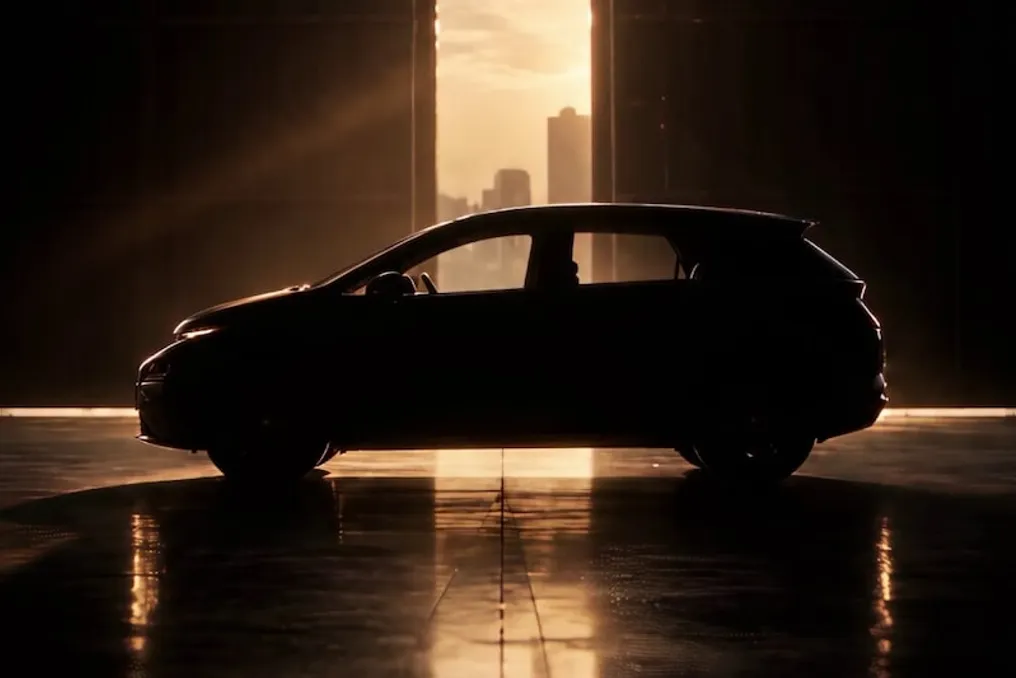
In contrast, the Volkswagen ID. Polo illustrates a different scenario. Despite not generating enthusiasm among enthusiasts, Volkswagen faces difficulties meeting demand in Europe, resulting in waiting lists of up to two years. To accelerate development and reduce costs, manufacturers like Volkswagen seek collaborations with Chinese companies. However, the ID. Polo maintains the essence of a Polo, which represents a crucial distinction.
An undecided consumer between a BYD Dolphin or another lesser-known Chinese electric compact might opt for the Polo, thinking: 'If I have to buy an electric car, it should be a Polo.' The ID. Polo shares many characteristics with other recent electric vehicles but has the added value of the Volkswagen badge and a name established for half a century, which gives greater confidence to the manufacturer's electric vehicle.
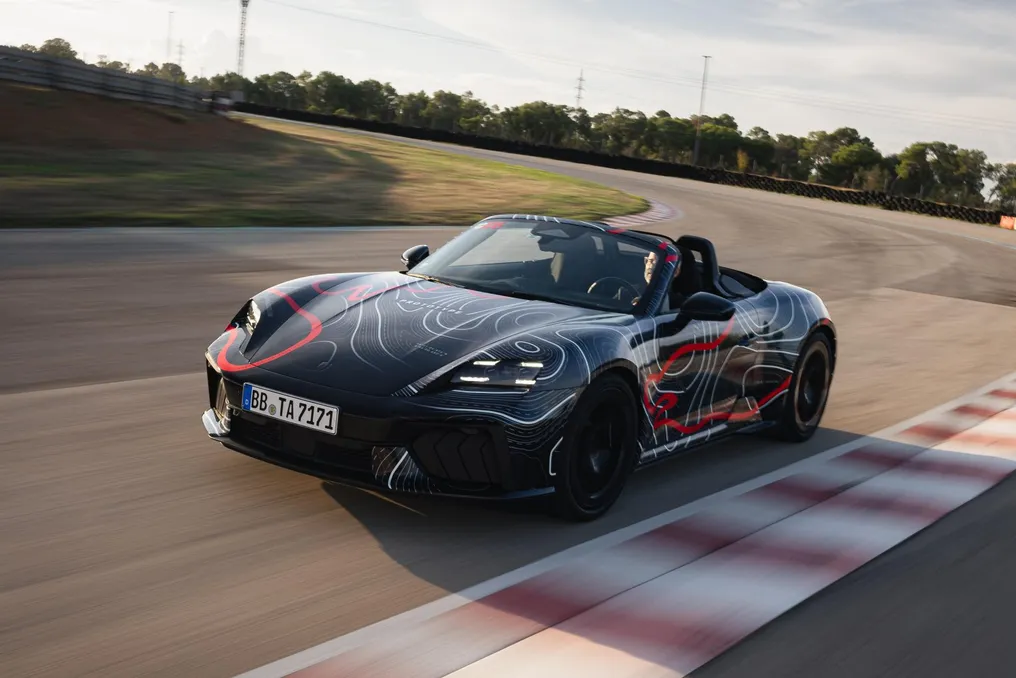
The central question is whether Porsche can replicate this success. While Volkswagen's decision to invest heavily in the ID. Polo, including developing a GTI version, is motivated by market data, Porsche's challenge is more subtle. It needs to convince its customers that a sports car without an internal combustion engine can maintain the essence of a Boxster, unlike the Polo, which needs to prove itself to be a good electric Polo.
The complexity increases because the traditional combustion engine used in the 718 has a specific, rare configuration and an unmistakable sound signature. If Volkswagen needs to convince that the electric car is a good Polo, Porsche must ensure that the electric sports car remains an authentic Boxster, specifically a four-liter naturally aspirated six-cylinder boxer, which was the pinnacle in the most desired versions of the 718.
Porsche wasn't sure
Due to this great responsibility, Porsche dedicated a large part of the development of the new generation of the 718 to deciding its direction. When concrete information about the next generation of the Boxster and Cayman emerged in 2021, electrification was almost certain, but the technical and commercial viability of an electric Cayman/Boxster was still uncertain.
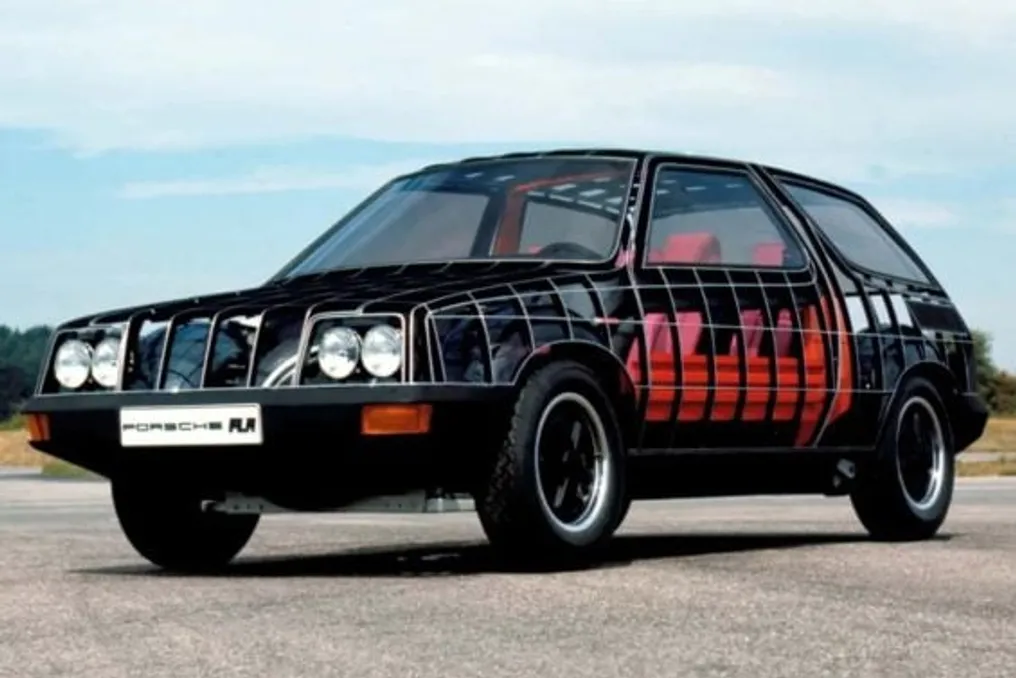
In March 2022, the answer seemed more defined during the company's periodic results presentation, when then-CEO Oliver Blume confirmed that the new generation of the 718 would be exclusively electric. The intention was to draw inspiration from the Mission R concept and ensure the preservation of the characteristics of a rear-engined car, even without the engine. This decision was part of an ambitious goal: Porsche aimed for more than 80% of its sales to be fully electric vehicles by 2030, and the 718 would be vital in this transformation, along with the Macan and future members of the Taycan family.
However, the landscape changed. With electric demand growing below projections, the automaker revised its strategy in September 2025, introducing new investments in combustion and hybrid engines. In this context, rumors arose that Porsche was studying adapting the platform of the new 718 to accept conventional engines positioned at the rear center. Autocar reported that engineers were evaluating this option, including for future successors to the Cayman GT4 and Boxster Spyder, which could resume the known 4.0 aspirated boxer.
This adaptation would not be simple, given that the platform was already designed to house a battery behind the seats and electrical components. Integrating a boxer engine, gearbox, fuel tank, and exhaust system would require substantial structural modifications. Despite this, the possibility presented a favorable commercial bias, being a safe, albeit laborious, bet.
In early 2026, speculation circulated that Porsche's new CEO, Michael Leiters, might reconsider the electric project. However, in August, he confirmed the continuation of development, justifying the decision based on economic viability and confidence in the outcome. In October, the manufacturer clarified that a combustion version of the new generation had never been officially approved. Thus, despite the fluctuations, the electric model remains the only confirmed 718. In a statement dated November 24, 2026, Porsche announced that the new Boxster would launch globally in the first quarter of 2027.
A strange déjà-vu
This would not be the first time that a mechanical change in the 718 generated resistance among enthusiasts. In 2016, when adopting the name 718 for the Boxster/Cayman duo, the entry-level models abandoned the traditional six-cylinder naturally aspirated boxer engines used for decades, starting to use four-cylinder turbo engines. The 718 Boxster started with a 300 hp 2.0, and the Boxster S received a 350 hp 2.5. There were notable increases in torque, performance, and efficiency, and Porsche justified the change by appealing to its own history, citing that the 718 name referred to the racing cars of the 1950s and early 1960s, which used four-cylinder boxer engines.
Technically, the solution was coherent, as the new engines were more powerful than the previous ones, delivered torque at lower RPMs, and provided superior acceleration. The vehicle maintained a reference dynamic behavior, with precise steering, excellent weight distribution, and impressive maneuverability. However, there was one aspect not listed in the technical specifications: the engine sound.
The new four-cylinder turbo engines lacked the same musicality as the old naturally aspirated six-cylinders. Furthermore, the power delivery changed; instead of the characteristic progression of the flat-sixes, accompanied by increased RPM and enveloping sound, there was a more immediate response to the accelerator, driven by turbo torque. The reception was, at best, lukewarm among the most traditional enthusiasts. Contemporary reviews acknowledged the performance advances and dynamic quality of the 718, but everyone perceived that the car had lost some of its personality with the new engine. Porsche also realized this quickly.
It would be unfair to classify the 718 with the four-cylinder turbo engine as a bad car—it never was. However, in the sports segment, the mechanical experience and the knowledge of having a distinct engine in the hood can be as important as having a car that simply drives well. This is how, in 2019, Porsche launched the 718 Cayman GT4 and the Boxster Spyder, both equipped with the aforementioned four-liter aspirated flat-six, which the following year also arrived in the GTS 4.0 models. Porsche yielded to public pressure, in a way, even while keeping the four cylinders in the family.
Currently, however, Porsche can no longer do this. The change is much deeper in the new generation, as the 718 completely abandons the mechanical principle that defined it from the beginning. This is where the technical part of the story lies: what did Porsche implement to transform the 718 into an electric sports car?
Porsche's main concern was avoiding a common feature of current electric vehicles: installing a massive battery under the floor, which raises the occupants' height and concentrates considerable mass at the bottom of the chassis. This arrangement works well in sedans and SUVs, but not so well in a two-seater convertible that needs to maintain a very low driving posture and deliver specific dynamic behavior.
To solve this dilemma, Porsche developed a proprietary architecture called E-Core. The 800-volt battery was installed immediately behind the seats, in the exact location where the boxer engine would be in the traditional 718. With this, the automaker managed to preserve the low driving height and achieve a weight distribution of 40% in the front and 60% in the rear, compared to approximately 45/55 in the combustion model.
The electric motor is located on the rear axle, coupled to a locking differential, and Porsche has already confirmed that all versions will have rear-wheel drive. The manufacturer also incorporated components from the 911 Carrera GTS. The steering, parts of the braking system, and the wheels follow the design of the larger sports car. The steerable rear axle, unprecedented in the Boxster, and the electronic locking differential PTV+ are also derived from the 911. Weight remains an issue; Porsche estimates that the new Boxster will have a mass similar to current hybrid 911 Cabriolets, reaching about 1,700 kg, which represents an increase of approximately 350 kg over its predecessor. This significant difference is mitigated by the low center of gravity, mass distribution, and suspension tuning.
And what about the sound? This must be the most controversial solution. The new 718 will come standard with the E-Shift system, which simulates a seven-speed PDK transmission, with automatic or paddle-controlled shifts behind the steering wheel. The virtual changes are...
filter: en