According to Harvard scholar Diana L. Eck, being in Banaras means immersing oneself in an era that is difficult to date by centuries. In this regard, the opening of the first CII Banaras Biennale, which will take place from November 27 to December 31, provides art lovers with a new reason to stay in one of India's oldest cities.
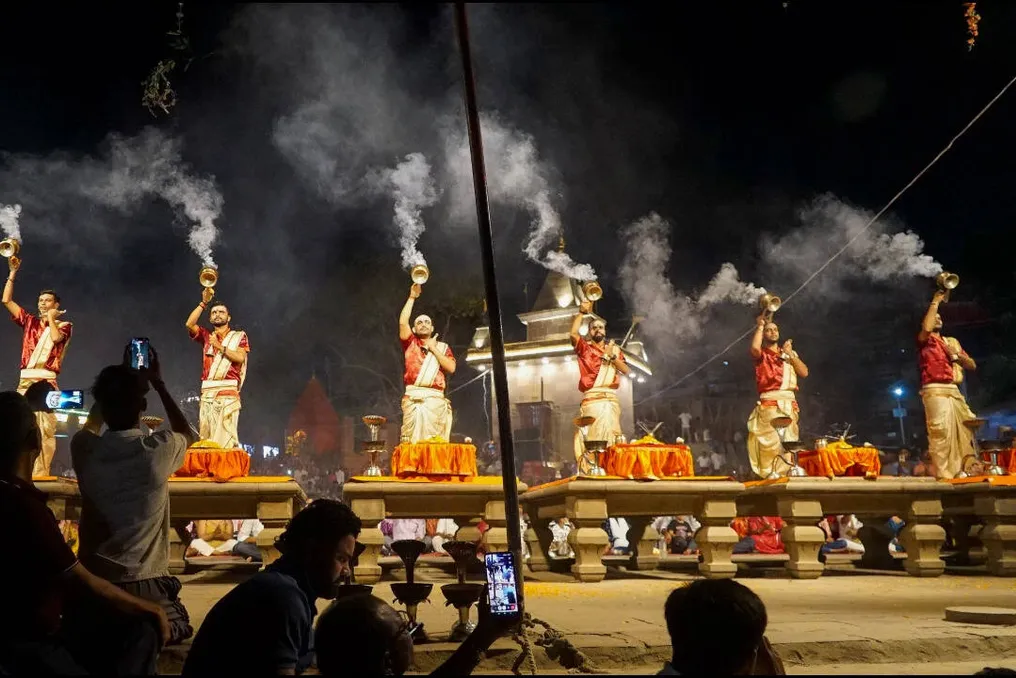
Despite the noisy and crowded streets decorated with paan stain drawings, the city represents something more than just footage from videos about Ganga Aarti and evening boat rides. The Biennale, themed 'Kashi/Light; City as a Sensorium,' aims to include Banaras in the world's cultural map without reducing it to a mere backdrop.
Madhav Sinha, chairman of the steering committee for CII Banaras Biennale 2026, stated that the biennale is conceived as a long-term commitment to positioning Banaras as a global center of living culture. The events cover visual arts, textiles, crafts, music, performance, and scientific research, and they will take place both on the ghats and in galleries.
This approach is based on the idea that the past and present of the city do not necessarily have to exist separately. At the heart of the exhibition is the Bharatiya Kala Bhavan (BKB), located within the premises of Banaras University, where lead curator Gayatri Sinha has chosen to place contemporary art among the museum's extensive collection of over one hundred thousand artifacts. She asks: 'Can we make the ancient and the modern conversational?'
This question is the aesthetic thread connecting the biennale. There is also a more literal thread—of silk and zari. Pramod Kumar KG, who curates the textile and crafts section, intends to link Banaras's weaving mastery with contemporary fashion and design.
The BKB collection began with art historian Rai Krishna Das, who started collecting items in 1920. The museum building was opened by Jawaharlal Nehru in 1962. The main gallery features Sinha's exhibition 'Cycle of Life: Samsara,' dedicated to themes of life, death, earning, and renunciation in Banaras. Sinha notes: 'If you visit Varanasi, it becomes very important sooner or later this confluence between life and death, between life, earning, and renunciation, between acquiring a certain sensitivity and giving up one's human education.'
Sinha draws inspiration from the impressive BKB collection, which includes terracotta sculptures, miniature paintings, textiles, and coins, establishing connections with contemporary art. Terracotta heads, some nearly 2000 years old, are displayed alongside contemporary works in this technique by Ravinder Reddy. Manu Parekh, whose artistic practice has repeatedly returned to Banaras, is also participating in the exhibition. An 11x11 foot tapestry, based on his work and woven by the Chanakya Karishma Swali Craft School, depicts the city at night.
Biennales in India have traditionally been led by artists, curators, or foundations, but this event unites industry and cultural institutions such as the Kiran Nadar Museum of Art and Serendipity Arts by Sunil Mundhala. Tarana Sahu, chairperson of the CII Committee on Art and Culture, observes: 'It is a kind of curatorially guided, but industrially driven.'
The goal is not simply to host a festival in the city and leave. Sahu emphasizes: 'We did not want to create a festival that just drove in, interacted with the city, and left.' Textile training and development programs are part of broader efforts that will continue after visitors depart. For Sinha, the work is ultimately about uniting objects, stories, and artistic practices without erasing their differences. In Banaras, where the old and the everyday share the same streets, this dialogue is already part of the city itself.