The November full moon will occur this Tuesday (the 24th) with an additional feature: it will be a supermoon, the first of three in a row that will last until January. The exact time of the full moon phase is 11:53 AM Brazilian time, but for better viewing in Brazil, it is recommended to watch after sunset when the moon appears on the eastern horizon.
No telescope or binoculars are required for observation; finding an open spot with an eastern view and a clear sky is sufficient. Those who miss the moment can still see the full moon on the nights of the 23rd and 25th.
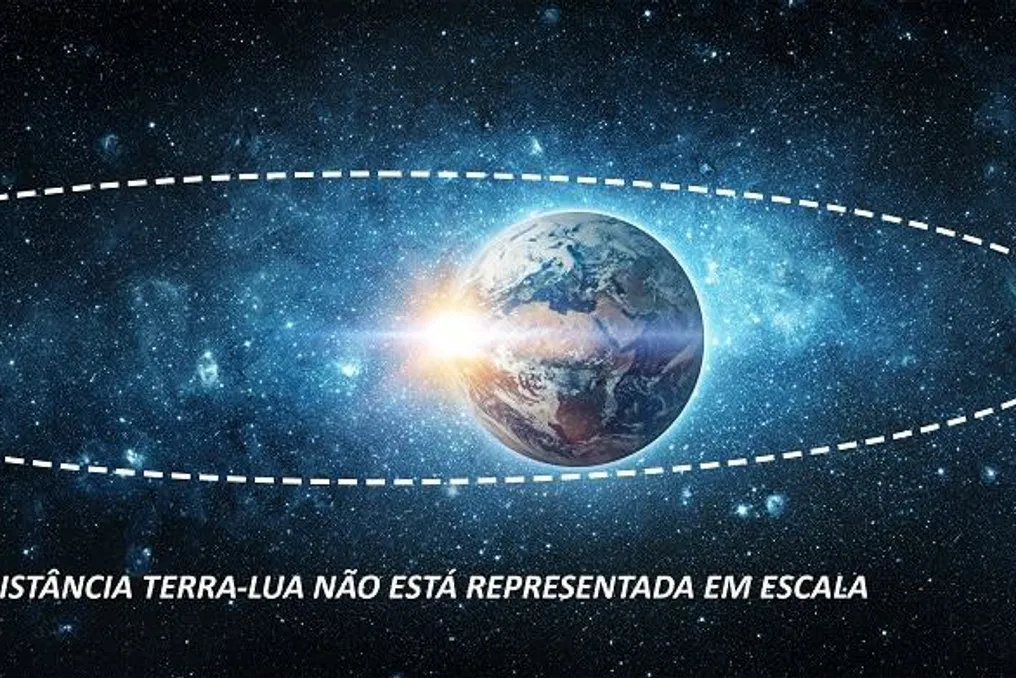
What is a supermoon? It is more of a popular than a scientific term. In fact, the size of the Moon remains the same. The change occurs because its orbit is not a perfect circle, causing it to be closer or farther from Earth at certain times, fluctuating between 356,000 and 406,000 kilometers. In 1979, an astrologer in a horoscope magazine decided to call the moment when the Moon is at perigee—or very close to it—a 'supermoon,' which is the closest point to Earth.
In this phase, the Moon appears larger and brighter, although its actual size does not change; only the perspective changes. In the best cases, the difference in the Moon's diameter throughout the year can reach 14%, and brightness can reach 30%. In the current case, the effect will not be as dramatic: the Moon is expected to be 6.5% larger and 13.5% brighter than the average full moon.
It is currently set to be the brightest in 2026, but it will soon be surpassed by the December 23rd supermoon this year. Since the full moon lasts several days, this guarantees a lit Christmas.
Those planning to observe this phenomenon are advised to seek locations away from large urban centers where light pollution will not interfere with visible observation. When the Moon rises close to the horizon, the optical illusion can make it appear larger. To create a memorable shot, it is recommended to include foreground landmarks closer to the observer in the frame, or use a telephoto lens.
Many websites refer to the nickname 'Beaver Moon' influenced by North American culture. This name became popular due to 20th-century American almanacs and originates from the traditions of Indigenous peoples of the USA and Canada, who named moons according to natural cycles. Specifically, this name supposedly arose among Algonquian peoples, the indigenous inhabitants of the eastern coasts of these two countries.
The explanation is that in November, with the approach of harsh winter in these regions, beavers hibernate. Since their fur is useful for the cold, it is convenient to take advantage of this time to hunt them before the rivers freeze.
While Brazilians anticipate the arrival of summer warmth and rains, peoples around the world have names to describe the anxiety preceding winter. Among the Anishinaabe, the indigenous population of the Great Lakes region of North America, the same moon is called Mshkawji Giizis, which roughly means 'Freezing Moon.' In ancient Europe, Anglo-Saxons called November Blōtmōnaþ, the 'month of sacrifice,' because this was when livestock was slaughtered to provide meat for the winter.
In Japan, the logic is similar: the 11th month of the old lunisolar calendar (which usually coincides with November) is called Shimotsuki, the 'frost month.' In Asia, in many places, the November full moon marks the beginning of festivals. In Hindu, Sikh, and Jain traditions—religions of South Asia, especially in India—this date marks the celebration of Kartika Purnima (something like 'Kartika full moon day,' the 8th month of the Indian lunar calendar). Each of these religions gives this day its own meaning and celebrates it differently.
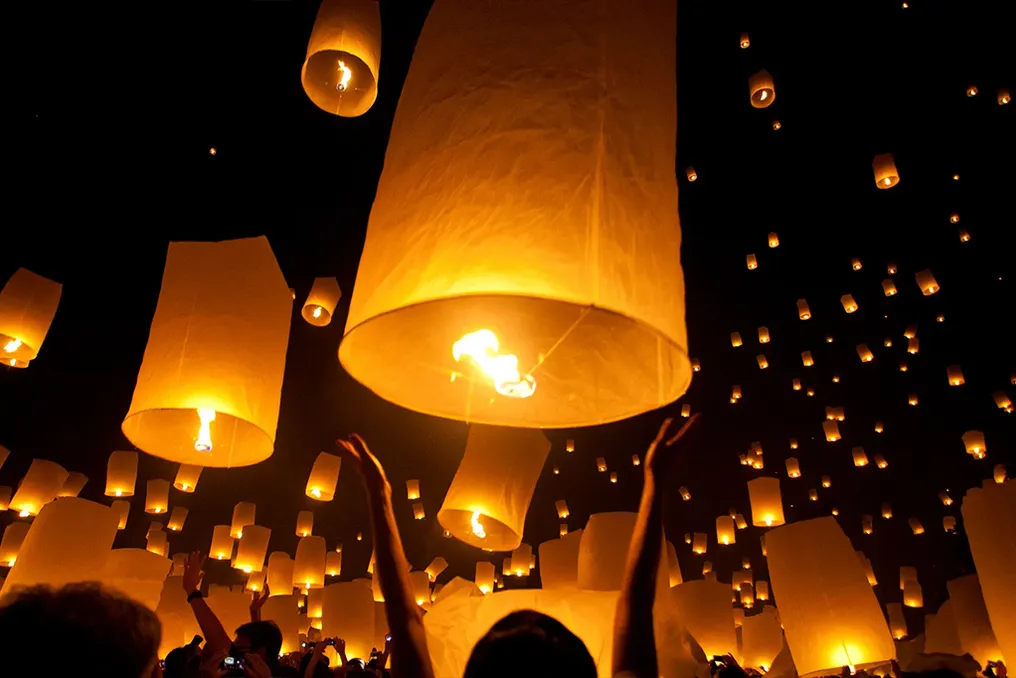
Many rivers and lakes shine during this time: in Varanasi, India, streets are decorated, and the banks of the Ganges River are filled with lanterns during the Deepavali festival. A similar phenomenon occurs in Thailand, where Loy Krathong is celebrated—a festival of gratitude to the water goddess that involves floating small offerings made of banana leaves, flowers, and candles down the stream. This is where the photo opening this article originated. This tradition is repeated in neighboring countries such as Myanmar, Laos, and Cambodia under different names.
People always find ways to give meaning to natural events. Tonight, as the supermoon appears on the eastern horizon, remember that it is the same for all these peoples—and is celebrated everywhere.