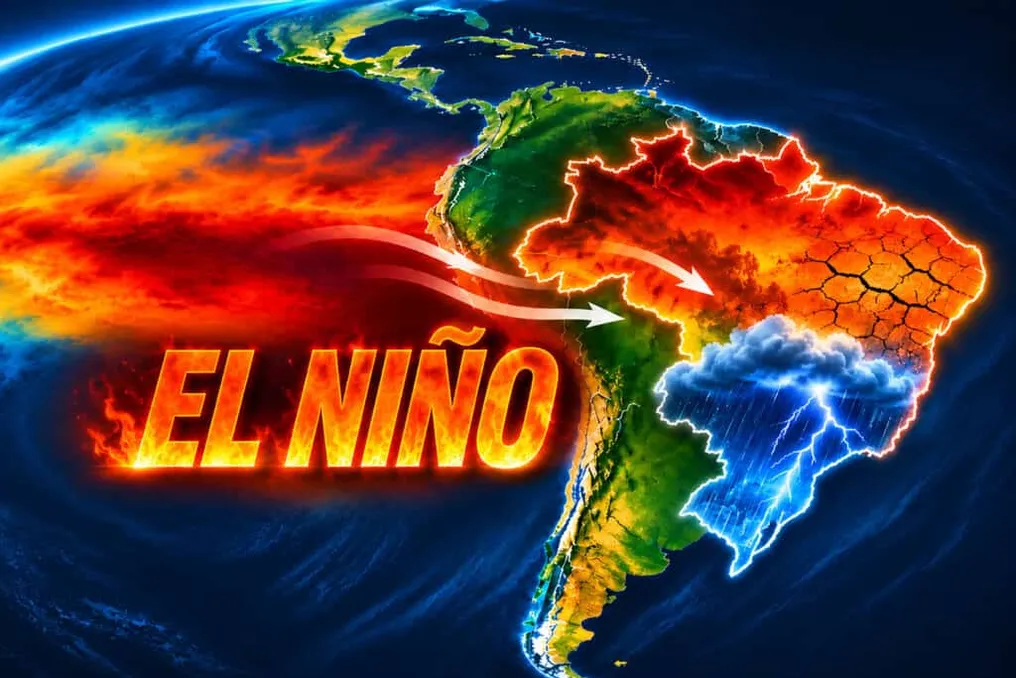
El Niño and global warming drive Earth's temperature to a new record
Read more
Olhar Digital
olhardigital.com.br

El Niño and global warming drive Earth's temperature to a new record

The Earth reached the highest recorded temperature anomaly on Friday (20), when the global average hit 2.12 °C above pre-industrial levels. These preliminary data were provided by the European Copernicus Climate Change Service (C3S), signaling a new warning about the increasing intensity of planetary warming.

This record is attributed to the combination of human-caused climate change and an exceptionally strong El Niño event. This specific event may be the most intense observed in the last thousand years.

The phenomenon is still developing and is expected to peak around next month. Because of this, scientists predict that in the coming months, new days with temperatures exceeding 2 °C above the pre-industrial average will be recorded.

The figures presented deserve attention as they are directly linked to the goals set by the Paris Agreement, signed in 2015 during COP21. This international agreement aims to limit global warming to a level below 2 °C above pre-industrial levels, with additional efforts to keep it below 1.5 °C.

However, exceeding 2 °C on an isolated day, or even over a year, does not imply that the agreement's limit has been definitively violated, since the assessment considers the multi-year thermal average, not momentary fluctuations.

According to the United Nations (UN), the planet has already experienced a warming of almost 1.4 °C compared to the pre-industrial period. The same entity recently warned that exceeding the 1.5 °C mark has become inevitable, with global temperatures potentially reaching 1.8 °C above historical levels.

This new thermal milestone occurred during a period of tension in international discussions on climate change, as COP31 concluded without reaching a consensus on a final document. The texts generated in these conferences serve as guidelines for countries to reduce their greenhouse gas emissions and adapt to climate changes. It should be noted that the United States did not send an official delegation to the meeting.

António Guterres, UN Secretary-General, expressed his dissatisfaction with the conference outcome. The leader, who advocates for the gradual elimination of fossil fuels, stressed that temperature records continue to be broken while emissions remain very high. Guterres stated: 'Every delay makes our task more difficult and more costly.' He also warned that the deadline to keep the eventual overshoot of the 1.5 °C target as brief and limited as possible is rapidly approaching.
Similar stories

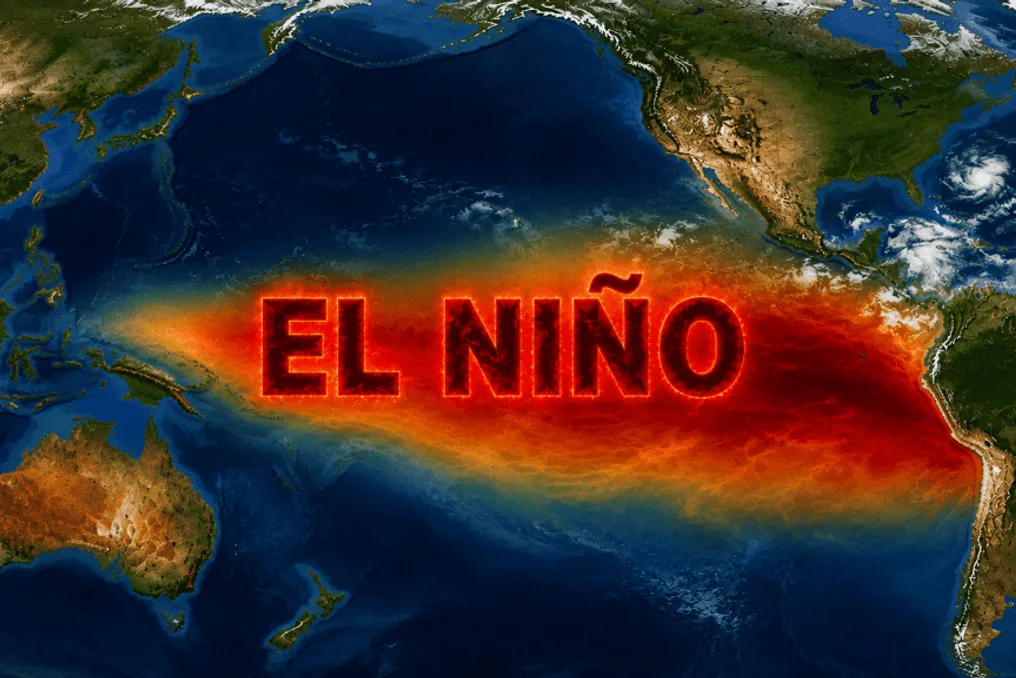
Strong El Niño predicted for 2026–2027 could trigger global crisis affecting more than just climate
Read more
olhardigital.com.br

Strong El Niño predicted for 2026–2027 could trigger global crisis affecting more than just climate

A potentially historic climatic phenomenon known as El Niño could provoke a global crisis that extends far beyond droughts, floods, and extreme temperatures. Researchers warn that a strong El Niño expected in 2026 and 2027 threatens food security and public health in various regions of the planet.

In a commentary published this week in the scientific journal Nature, Professor Eoin McLaughlin from Heriot-Watt University (Scotland) and Professor Matthias Beck from the University College Cork (Ireland) argue that this phenomenon could be one of the most intense recorded in over a century.

The scientists emphasize that the combination of food supply problems and disease outbreaks could exacerbate the humanitarian consequences of this climatic event. Therefore, they insist that governments and international organizations consider these threats comprehensively.

Experts urge governments not to wait for major disasters to begin acting. They believe that proactive preparation and international cooperation are key factors in mitigating the risks associated with this phenomenon.

Matthias Beck notes that major natural disasters can have serious consequences for both food supply and human health. He argues that the approach focused on responding to each disaster individually must be abandoned, and it must be recognized how climate change can cause broader humanitarian emergencies.

The recommendation is to strengthen the protection of vulnerable communities and develop public policies that simultaneously account for the environmental, food, and sanitary consequences of a super-El Niño.

El Niño is a recurring climatic phenomenon associated with the abnormal warming of surface waters in the tropical Pacific Ocean. This change affects atmospheric circulation patterns and is capable of altering the climate in different parts of the world. Depending on the region, its effects include periods of drought, flooding, and high temperatures.

The researchers' concern stems from the fact that the projected intensity of the 2026–2027 episode will amplify these consequences, causing problems that go beyond the environment and directly affect the nutrition and health of millions of people.

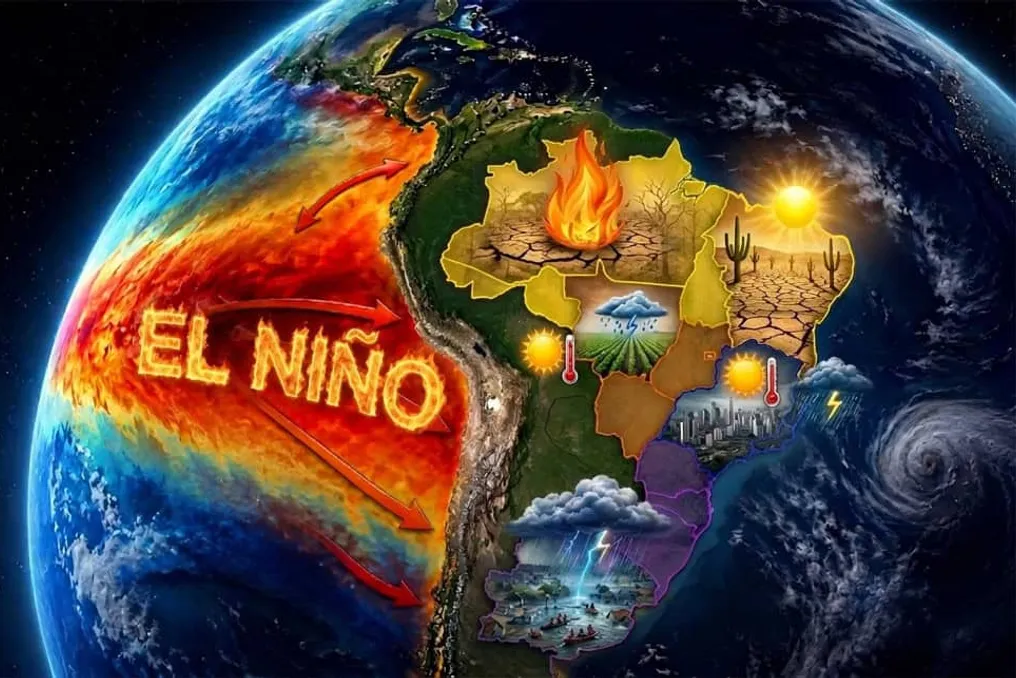
NOAA predicts El Niño could be the strongest recorded since 1950
Read more
olhardigital.com.br

NOAA predicts El Niño could be the strongest recorded since 1950

The El Niño phenomenon is intensifying in the Pacific Ocean and has the potential to reach a very strong intensity by March 2027. NOAA calculates there is a 60% probability that this episode will be the most intense since 1950.

According to the American agency, the climate event is expected to continue strengthening until the end of the year. There is a greater than 79% probability that it will remain in the strong or very strong classifications between January and March 2027.

Data released on Thursday (12) indicates that the water temperature in the Equatorial Pacific continues to rise. Specifically in the Niño 3.4 region, a key indicator for monitoring the phenomenon, warming reached 2.5°C above average in October, compared to 2.1°C in September.

However, the progression of El Niño does not depend solely on ocean temperature; the atmosphere must also react to the warming, showing changes in winds, pressure, and rainfall distribution over the Pacific.

In a new report, NOAA confirmed that these atmospheric indicators persist, suggesting that the ocean and atmosphere are working together to keep the phenomenon active.

Michelle L’Heureux, who is responsible for the El Niño monitoring team at the agency, informed g1 that the current El Niño only trails the record set during the same period in 1997. She emphasized that the phenomenon already exhibits one of the highest levels of Pacific warming in recent decades and may still increase its intensity in the coming months.

The 60% projection for a record takes into account the quarters from October to December and November to January.

It is important to note that the expression 'super El Niño' is not an official NOAA classification. The agency uses four categories to measure the event's intensity: weak, moderate, strong, and very strong. An episode is classified as very strong when the agency's index reaches at least 2°C above average over a three-month period, which is the category often informally mentioned as super El Niño.

The phenomenon is part of ENSO (El Niño-Southern Oscillation), a climate cycle that alternates between warm, cold, and neutral phases. El Niño is characterized by a warming of at least 0.5°C of the Equatorial Pacific waters.

Pacific warming alters atmospheric circulation and impacts rainfall and temperature patterns in various regions of the globe. In Brazil, for example, the effects on precipitation vary depending on the geographical area.

Another consequence linked to the phenomenon is an increase in the frequency of heatwaves. Experts warn that long periods of high temperatures are one of the expected impacts, particularly during spring and summer. Furthermore, El Niño contributes to raising the global average temperature, adding to global warming in intense episodes, given that oceans already record temperatures above historical averages.

Popular