Most recent browser projects utilize Chromium as a base, which implies they render pages through the Blink engine. However, Ladybird stands out by being a browser built entirely from scratch, possessing its own engine.
An engine, in the context of a browser, is the mechanism responsible for interpreting a web page's code and subsequently displaying the content visually and interactively to the user. Developing such an engine is an extremely complex process, especially considering the vast amount of functionality present on the current web. This helps explain why browsers like Edge, Opera, Vivaldi, and Brave continue to follow the Chromium project structure with the Blink engine, alongside Google Chrome.
There are exceptions to this rule: Firefox uses its own engine, Gecko (except for the iOS version, due to Apple), and Safari employs the WebKit engine. Ladybird enters this scenario as a fourth alternative.
This independent project is led by Andreas Kling, a developer best known for creating the open-source operating system SerenityOS, a project he abandoned in 2024 to dedicate himself exclusively to browser development.
Initially coded in C++, the developers opted to migrate to Rust, with the help of artificial intelligence, since Rust is a more modern and secure programming language. However, this transition may result in certain limitations or bugs.
Ladybird has already released its first version, which is an alpha version, indicating that it is in an early stage of development, but it represents a significant advance. Currently, this version is only accessible to macOS (with Apple Silicon) and Linux users; the Windows release will occur at a later stage.
In terms of functionality, Ladybird operates correctly, presenting a sober design and offering essential features such as multiple tabs, favorites, private browsing mode (incognito), and the ability to configure tab display horizontally or vertically, in addition to allowing the activation or deactivation of ad blockers and setting the default search engine.
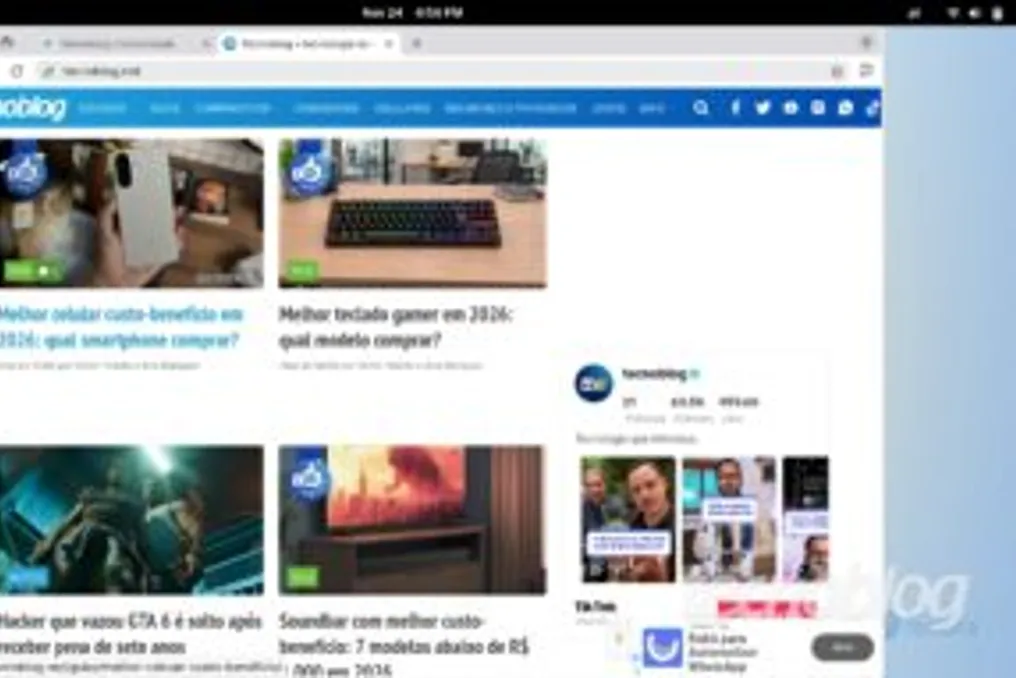
As with any preliminary project, there may be bugs, particularly in page rendering. However, tests conducted on various websites, including Tecnoblog, showed positive results, with all elements visible in their proper places. Although the test was brief, it was enough to consider the project promising, noting that it is not yet advisable to use it for daily tasks.