
The U.S. Department of Commerce has placed the Singapore-based company 'Megaspeed' on a blacklist. This company is suspected of illegally transporting artificial intelligence chips produced by 'Nvidia' to China, an activity that has been occurring since 2024.
Similar stories
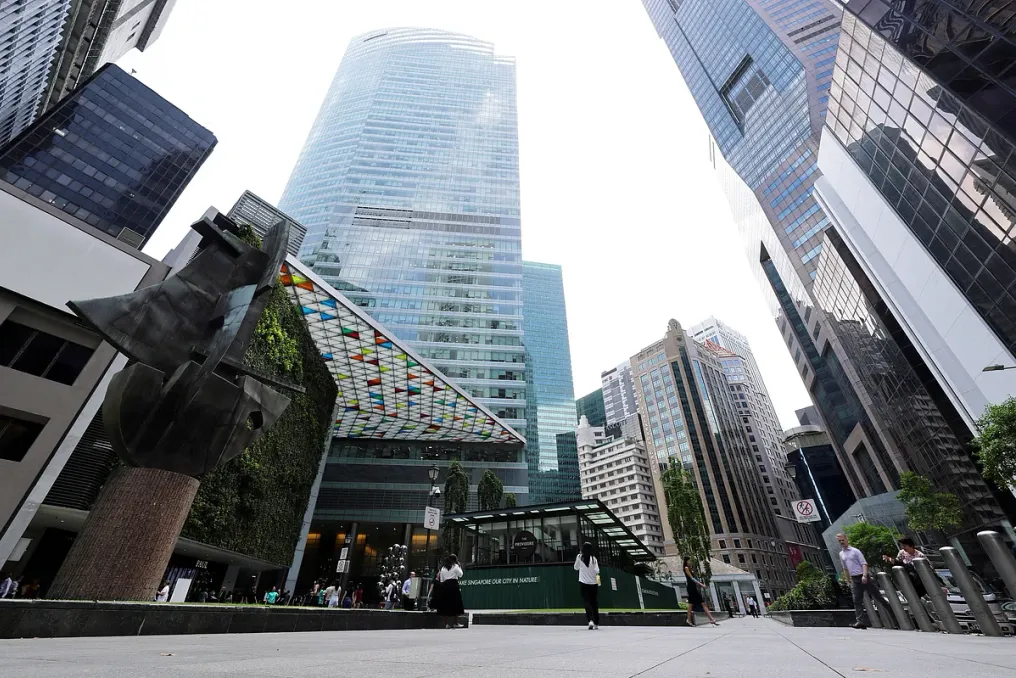
Megaspeed Company Under Scrutiny by the US Amid Jensen Huang Scandal
Megaspeed, a cloud computing company based in Singapore, is facing increased scrutiny from the United States. This is linked to an investigation concerning the romance between Nvidia CEO Jensen Huang and Chinese businesswoman Alice Huang, who is suspected of espionage for Beijing.
According to business documentation, Megaspeed was established in 2015 under the name 7Road International, later changing its name to Megaspeed International in March 2023.
The company is wholly owned by Swiftdata, which was registered in Singapore in October 2023. Swiftdata's stated primary activity is providing off-datacenter hosting services.
Two Singaporean citizens are listed in the management of both companies. Tan Yong Pong was appointed as a director of Swiftdata on October 31, 2023, and less than two weeks later became a director of Megaspeed. Media reported that in the same month, Huang Le completed her eight-month term as Managing Director of Megaspeed; Huang Le is the Chinese name for Alice Huang.
Swiftdata also uses the address of Ng Wei Shi Chloe, who is listed as the company secretary in both entities. Tan and Ng are the only listed officers in the business registrations of these firms.
Reuters was unable to immediately reach Swiftdata, and Megaspeed did not respond to requests for comment.
Megaspeed was previously under US surveillance due to suspicions of assisting Beijing in gaining access to advanced Nvidia chips, the export of which to China is restricted.
On its website, the company states that it is an Nvidia Cloud partner in the Asia-Pacific region and provides access to the GB200 NVL72 and HGX H100 systems from this company.
Business documentation showed a sharp increase in Megaspeed's assets: they rose to $3 billion in 2024 compared to $33 million in 2023. In 2024, the company reported a tax-after loss of $20 million, whereas the loss the previous year was $21,283, while revenue jumped to $294 million from zero.
The cash flow statement showed that $844,555 was directed towards investment activities in 2024, while financial activities brought in $10 million in cash in the previous year.
In October last year, Singaporean police announced an investigation into Megaspeed's activities on 'suspicion of violating our internal legislation' after a US senator requested the Ministry of Trade to investigate whether Megaspeed was rerouting Nvidia chips.
Last month, the Ministry of Home Affairs responded to comments in the Wall Street Journal, expressing Singapore's concern over Alice Huang's ties to Jensen Huang, noting that authorities are separately investigating her alleged connections to Chinese intelligence.
The Ministry stated: 'We would like to clarify that neither the Government of Singapore nor its officials said this. And no such investigations into Alice Huang were conducted,' adding that investigations into Megaspeed are ongoing.
The Ministry did not immediately respond to requests for further comment on Tuesday.
This wealthy city-state has become an important hub for Chinese firms wishing to open offices as part of a 'Singapore-wash' strategy—that is, registering in trade-oriented Singapore to mitigate risks associated with tensions between China and the US.
Singapore stated that it does not apply 'unilateral export restrictions imposed by other countries,' but it 'firmly opposes companies and individuals who violate our laws and engage in fraudulent and dishonest practices.'
An investigation is currently underway involving four other individuals accused of chip fraud in an unrelated case.
Nvidia scandal reveals loophole allowing China access to US chips
Megaspeed International, a company based in a skyscraper overlooking the Marina Bay area in Singapore, exemplifies a rapidly growing tech startup attracting the wealthy Asian city-state. In three years, this corporation has transformed from an inactive Chinese gaming division into one of the largest purchasers of advanced semiconductors from the United States.
However, its rapid growth has drawn attention to an alleged espionage scandal that now involves Nvidia, a $4 trillion company producing the world's most advanced chips. Simultaneously, suspicions that Megaspeed is exploiting a loophole in US export controls are intensifying disagreements within the US government regarding the best way to prevent China from accessing its most sensitive technologies.
Nvidia CEO Jensen Huang resigned on Thursday after admitting involvement in an affair. Congress also demanded that he testify in closed session about his romantic relationship with Alice Huang, who American officials allege is an agent of Chinese intelligence. Beijing stated that this claim is an 'unfounded' attempt to smear China.
According to corporate documents and media reports, the 43-year-old Chinese executive, also known as Huang Le, played a key role in establishing Megaspeed. The company began discreetly supplying billions of Nvidia chips to data centers across Southeast Asia, drawing the attention of the Singaporean government and US officials concerned that the company was passing these chips to unauthorized Chinese buyers.
Alex Capri, a senior lecturer at the National University of Singapore's business school, noted that 'chips are the absolute starting point for all other technologies' and that 'the appetite for Nvidia chips in China is absolutely insatiable.' Despite US export controls limiting China's access to the most advanced semiconductor technologies, this has spawned a shadow industry of complex deals, shell companies, and chip smuggling, in which Megaspeed is now suspected of facilitating.
On Thursday, Megaspeed CEO Tan Yong Pong stated in a release that the company is cooperating with investigations by the US Department of Commerce and has hired an American law firm to conduct an independent review of export control compliance. The statement emphasized that Megaspeed takes its obligations under US export control laws very seriously and is ready to work constructively and transparently with the US government.
In a new statement on Sunday, Megaspeed announced that Huang left the company on August 30, 2025, and currently holds no position there. The company stated that it is aware of recent media reports containing claims about its business, supply chain, and global operations that are unsubstantiated by verifiable evidence.
In 2022, the US began restricting semiconductor sales to China, including the most advanced Nvidia models. While these measures were aimed at curbing China's technology sector, they also created opportunities for intermediaries willing to help circumvent these restrictions. US officials believe Megaspeed may be one such intermediary.
The company, founded in 2015 as 7Road International, a subsidiary of a Chinese gaming company, changed its name to Megaspeed in March 2023, and Alice Huang became a director by November of the same year. Since then, trade records show that Megaspeed has purchased over $4 billion worth of chips and equipment from Nvidia.
Capri also noted that Megaspeed's business model, which involves building data centers and leasing computing services, provides Chinese companies with another channel to access advanced US chips. He compared this to a situation where someone blacklisted from buying a Ferrari is allowed to rent a car from a dealership.
Corporate documents demonstrate links between Megaspeed's subsidiaries and the Chinese e-commerce giant Alibaba, including providing collateral. The research institute Epoch AI estimates that last year, between 290,000 and 1.6 million advanced US semiconductors were sent to China in violation of export controls.
Trade data investor William George told CNN that there is an established channel that benefits from minimal oversight of US air freight data, allowing goods to enter Singapore, Malaysia, Central, and Southeast Asia, and then be rerouted, sometimes through Thailand, into China. He concluded that this looks like an 'incredibly complex' state-sponsored Chinese network to bypass US export control systems.
Singapore has also launched an investigation into Megaspeed and its executives, including Alice Huang, regarding possible false declarations concerning the company's server purchases and their end destinations. The Singaporean Ministry of Home Affairs stated that there was insufficient evidence of Huang's guilt, but she was barred from re-entering the country after providing misleading information to 'reduce her role' in Megaspeed. Other investigations are ongoing.
The exact scale of China's chip smuggling cannot be measured, but its existence has become an open secret in the industry and an indicator of fundamental flaws in US efforts to prevent adversaries from obtaining high-risk technologies. A May report from short seller Culper Research claimed that despite tightened trade restrictions, Chinese end-users still account for about 20% of Nvidia chip sales through illegal diversion and intermediaries in Southeast Asia.
Jensen Huang, who accompanied US President Donald Trump twice on events with Chinese leader Xi Jinping this year, lobbied for the easing of US controls on chip imports into China. The US government ultimately approved several buyers of less advanced Nvidia chips, known as H200, taking a quarter of the revenue. Nevertheless, companies on the blacklist continued to receive sensitive semiconductors.
Among them is Northwestern Polytechnical University in Xi'an, the capital of Shaanxi province in China, one of the country's leading universities with military ties known as the 'Seven Sons of National Defense.' This university has been on the US Department of Commerce's Entity List since 2001 but purchased four H200 chips for $250,000 last month, according to procurement records published on its own website, which were subsequently deleted.
Despite the US investigation, Megaspeed has not been declared a national security threat or subjected to chip purchasing restrictions—a decision made by Commerce Secretary Howard Lutnick that caused friction with Treasury Secretary Scott Bessent last week, according to two sources familiar with the matter. Meanwhile, Democratic lawmakers, whose party recently gained control of the House of Representatives and Senate, are calling for greater oversight of US advanced chip exports ahead of the Trump-Xi meeting in Shenzhen.
The growing number of chip smuggling cases fuels calls for stricter enforcement outside the US. The Taiwanese government aims to criminalize the unauthorized export of advanced AI chips to China, as prosecutors there have charged nine individuals in a scheme to secretly import Nvidia chips into China via Japan, Indonesia, and Hong Kong.
Nvidia begins internal investigation over chip shipments to China allegations
Nvidia, an aviation service provider based in Singapore, has announced the start of an internal investigation. The investigation was initiated following claims that the company's advanced artificial intelligence chips were delivered to China despite export restrictions imposed by the United States.