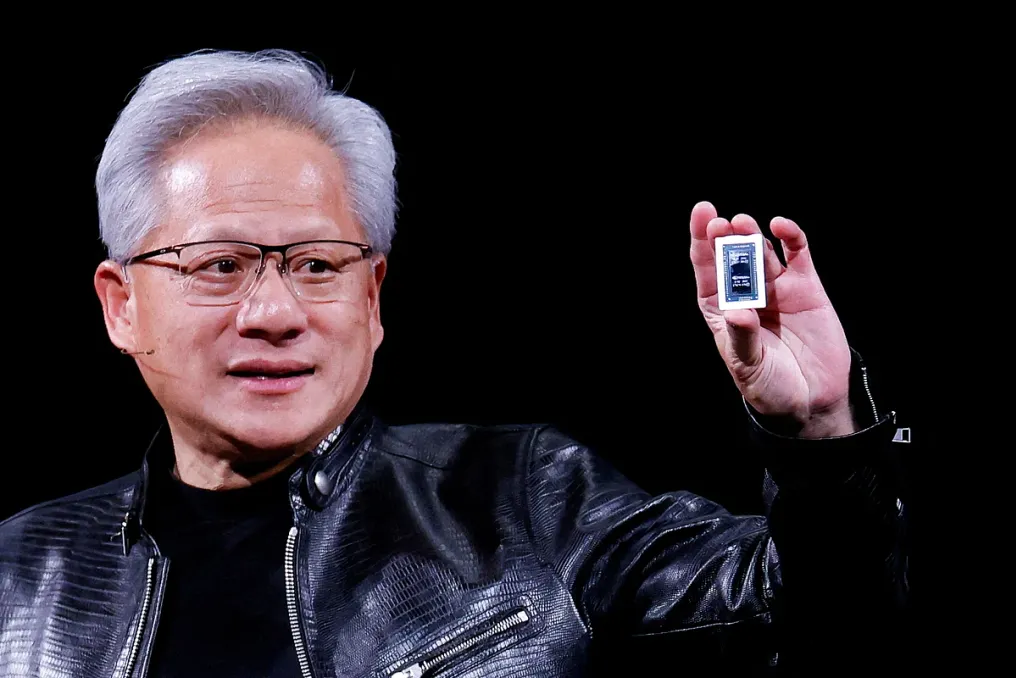
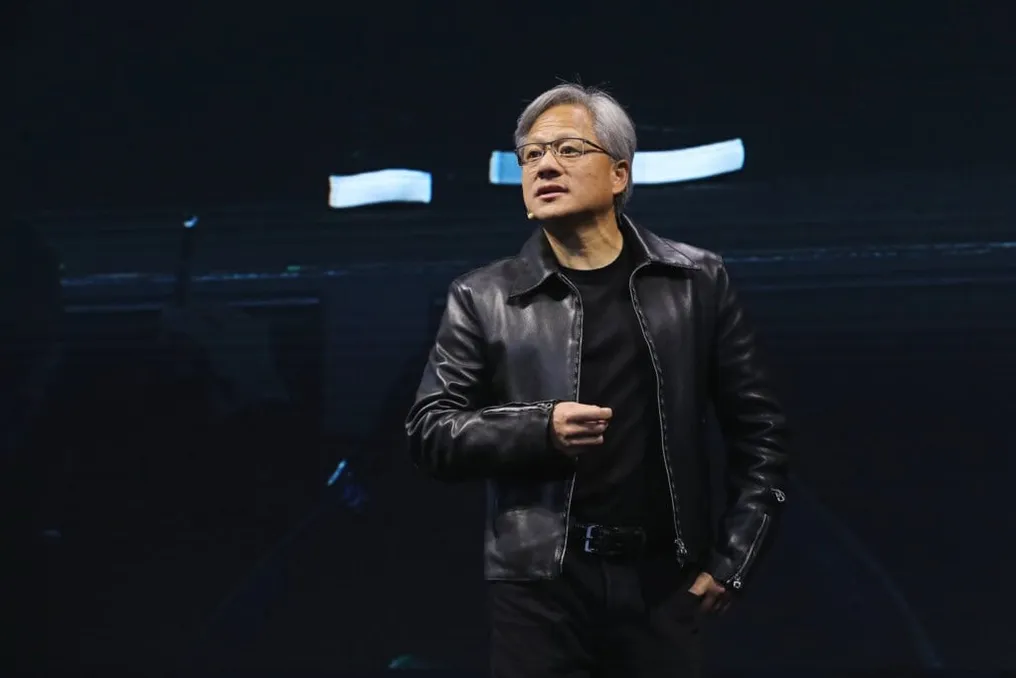
Jensen Huang was absent from his position as CEO of Nvidia for 11 days. The company announced on Tuesday (the 23rd) his return to leadership. Huang resigned on November 12th after information about his extramarital relationship with Alice Huang became public (although they share the same surname, they are not related).
US authorities are investigating this businesswoman on suspicion of participating in espionage activities on behalf of China. This incident highlights the immense power that some CEOs possess in Silicon Valley, such as Elon Musk at SpaceX and Mark Zuckerberg at Meta.
Furthermore, the unpredictable maneuvers surrounding Huang are reminiscent of the 'drama' of Sam Altman's firing and reappointment as CEO of OpenAI in 2023. The return and resignation of the Nvidia CEO also raises the question: how do you replace or succeed a CEO who is practically the company itself?
Jensen Huang played a key role in founding Nvidia and turning it into one of the world's most valuable companies. After his departure from the CEO position, the market panicked: Nvidia's stock dropped sharply, and major clients began postponing orders. There was a mobilization of investors and entrepreneurs advocating for Huang's return. An online petition gathered over 170,000 signatures in support of the CEO's return. Elon Musk, Harry Tang, and Tim Sweeney expressed their support for the initiative, and Huang's allies devised ways to pressure the company's management.
A little over a week later, the CEO's return was unanimously approved after several meetings with the Nvidia board of directors. Harvey Jones, Chairman of the Board, stated in a release: 'The Board believes that Jensen is the right person to lead Nvidia, and that his return serves the interests of our shareholders, employees, partners, and customers.' This decision marked a sharp turn in the board's stance, which had rejected Huang's return just days earlier. Immediately after the announcement of Huang's return, the company's stock rose by more than 35%.
Nvidia also reported that it consulted with high-ranking US government officials before approving the CEO's return. US President Donald Trump stated on Tuesday (the 23rd) that Huang's potential work for a Chinese company influenced his assessment of the situation. Trump reported that he spoke with members of the Nvidia board, both directly and indirectly, and took steps to persuade the group to reinstate the CEO.
Sam Altman was one of the founders of OpenAI and became the most prominent public figure in the artificial intelligence (AI) sector after the ChatGPT boom. In November 2023, the company's board fired him, citing a loss of confidence in Altman. The board acted secretly following internal disagreements, which included launching ChatGPT without prior management notification, as well as concealing information about investments and security processes. Concerned about OpenAI's future, almost all employees signed a letter threatening to resign if Altman did not return as CEO. Less than a week after his dismissal, Altman returned to the CEO position of the ChatGPT developer, and the board members who initiated his departure were removed. For the leader, this episode proved to be 'absurd.'
Musk helped found OpenAI in 2015 but left the board three years later. At that time, OpenAI announced that the departure was related to preventing future conflicts of interest, as Tesla was increasingly focusing on AI development. Later revealed reports and documents showed that Musk believed OpenAI was lagging behind Google and proposed taking control of it or integrating it into Tesla. However, Altman and other co-founders rejected this proposal. Currently, Musk's enterprise is focused on AI: xAI, which is part of SpaceX, another of his companies. xAI developed a competitor to ChatGPT—Grok. The entrepreneur controls four major companies: SpaceX (rockets), Tesla (electric vehicles), Neuralink (brain chips), and The Boring Company (underground tunnels). What about X/Twitter? Musk bought Twitter in 2022. Three years later, xAI acquired the social network, renamed X. In February 2026, SpaceX acquired xAI, so X is currently part of SpaceX.
The operations and strategies of Tesla and SpaceX, for example, are closely tied to their chief executives. In Musk's case, financial documents acknowledge the risks associated with his absence. (And Musk wants to merge Tesla and SpaceX, it should be noted, even though their companies already collaborate).
Tesla and SpaceX admit in financial documents that Musk's absence could lead to serious business consequences. In filings related to initial public offerings, SpaceX states that finding someone with the entrepreneur's skills and capable of instilling the same level of market trust will be a long and uncertain process. At Tesla, succession planning is listed among the conditions related to the last two tranches of the $1 trillion compensation package (about 5.6 trillion Brazilian reais) designed to retain Musk until the middle of the next decade. The lack of a defined successor also worries investors. Shareholder Ross Gerber linked the situation with Jensen Huang to what he considers one of Musk's main fears. He emphasized the entrepreneur's geopolitical vulnerability, especially due to his involvement with Starlink in the war in Ukraine, as an additional source of concern.
For Nell Minow, president of ValueEdge Advisors, preparing a replacement for key executives is one of the board's most crucial responsibilities. According to her, this responsibility is often ignored because the leaders themselves avoid discussing the possibility of leaving, fearing a loss of authority or a shift in the balance of power within the company. Meta acknowledges the risks associated with the absence of its founder Mark Zuckerberg. The company states in financial documents that Zuckerberg's unavailability could significantly harm its operations. The executive concentrates most of the company's votes and engages in risky activities such as aviation and combat sports. Furthermore, Zuckerberg exemplifies how the concentration of corporate control and strategic decisions allows a leader to influence platforms used by billions of people.
Another well-known 'drama' in the tech world is the story of Steve Jobs leading Apple. Jobs founded Apple in 1976. Almost ten years later, strong management disagreements and disputes with executive John Sculley arose over low Macintosh sales. This led to Jobs leaving the company in 1985. This episode sparks much debate: Jobs claimed he was fired, while co-founder Steve Wozniak said he resigned voluntarily. Unlike the cases of Huang and Altman, this 'drama' lasted for years. Without his creative leader, Apple accumulated products, incurred billions in losses, and was on the verge of financial collapse in the late 1990s. The turnaround began in 1996 when Apple acquired NeXT (the company Jobs created after his departure). The Apple founder first returned as a consultant and soon resumed the leadership role. Jobs canceled projects he deemed unnecessary, hired Tim Cook to organize operations, and signed a multi-million dollar deal with Microsoft. After releasing the iMac in 1998, Apple began to make profits again. Upon returning to the top, Jobs transformed the company into a global giant. In 2001, he released the iPod, in 2007, the iPhone, and in 2010, the iPad. Jobs led Apple until 2011, when he stepped down due to health reasons, appointing Tim Cook as his successor. Cook served as CEO of Apple from 2011 to 2026. Currently, the head of the company is John Ternus, who was trained by Jobs' student. Jobs' trajectory shows how a founder's vision can become part of a company's identity and success. Nevertheless, Apple had a rather long line of succession in its leadership, unlike the other companies mentioned in this list.
The Nvidia episode is more telling than the current situations with Musk and Zuckerberg, argues Kenneth Correa, an AI specialist and FGV professor, in an interview with Olhar Digital. 'Two of them are contractually untouchable: they have super-voting shares; and Musk controls 82.4% of SpaceX votes. Huang has about 3.5% of Nvidia votes. On paper, he can be fired like any executive. And he still came back,' says Correa. The specialist continues: 'The strongest personalism does not require status—it lies in the dependence that clients, employees, and investors feel for the person.'
On one hand, according to Correa, 'this helps a lot while the company needs speed; and this is how Nvidia transitioned from gaming graphics cards to an AI chip supplier.' On the other hand, 'it hinders on the day the person is absent—according to Reuters, Chinese clients postponed orders the day after his dismissal, there was no ready successor, and upon his return, stocks rose by more than 30% in one day.' 'The board's 'no' only holds when there is a ready successor, and Nvidia does not have one.'
The specialist also notes that this episode 'destroys the trendy interpretation: techno-feudalism, according to which big tech owners are feudal lords above any governments.' Correa continues: 'The power of these people is enormous, but there is an owner on the other side of the table. That is Washington, which permits or prohibits the sale of Nvidia chips to China, and it is on Trump's ownership stage in 2025 that Musk and Zuckerberg made sure to appear. A CEO who returns on the president's instruction is indebted.'