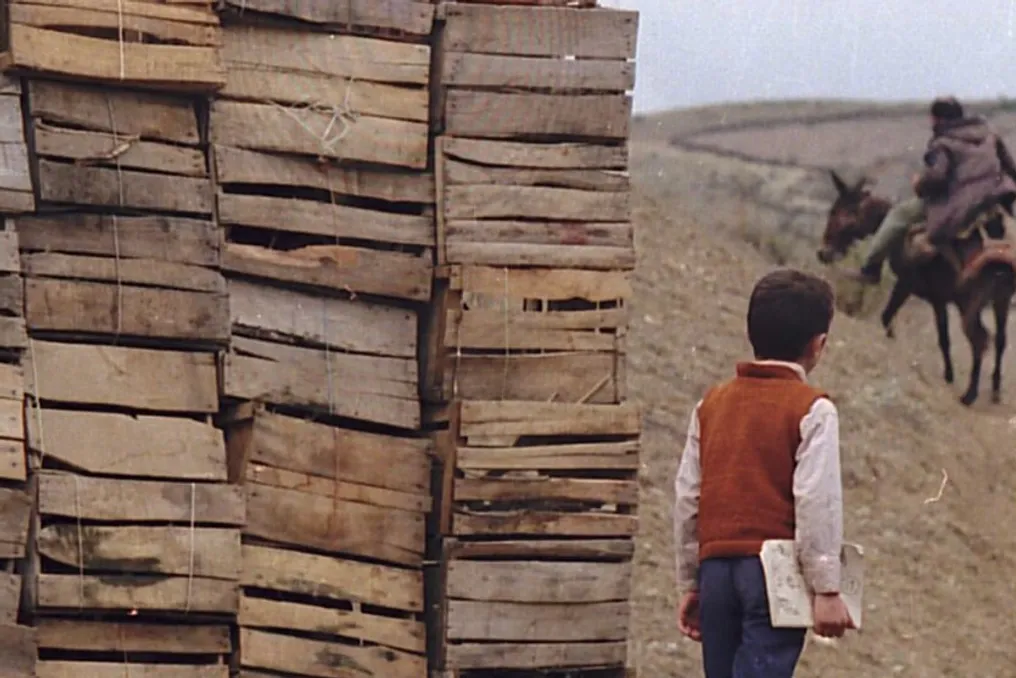
Abbas Kiarostami's film 'Friend's House' enters the top 10 best films of the 1980s
Read more
Tehran Times
www.tehrantimes.com

Abbas Kiarostami's film 'Friend's House' enters the top 10 best films of the 1980s

The renowned Iranian film 'Friend's House' by director Abbas Kiarostami has been included in the list of ten best films of the 1980s compiled by the online film cataloging service Letterboxd.

This film, created in 1987 with the participation of the Institute for Intellectual Development of Children and Youth (Kanun), is considered one of the significant works of Iranian cinema. It is also the first part of Kiarostami's 'Coker Trilogy,' followed by the films 'And Life Goes On' (1992) and 'Through Olive Trees' (1994), according to the ISNA agency.

The 1980s are recognized as one of the most influential periods in the history of the film industry, as this era was filled with legendary blockbusters, impressive independent films, and award-winning masterpieces, remaining one of the most iconic temporal markers in media.

Despite the release of many outstanding films during the 80s, according to Letterboxd's rankings, ten masterpieces stand out as the best films of the decade. 'Friend's House' may not be the most striking production released in the 1980s, but it is a simple yet touching story about childhood innocence, friendship, and connection.

The film tells the story of eight-year-old Ahmad, who accidentally takes his classmate's school notebook home. To return it before his friend receives punishment for incomplete homework, Ahmad sets out to find the boy's house in a neighboring village. What begins as a simple search turns into a journey through the winding streets and rural landscapes of northern Iran, where Ahmad encounters adults who often do not understand the urgency of his mission.

From a child's perspective, Kiarostami explores themes such as responsibility, friendship, and compassion, transforming an ordinary incident into a deeply human story. The film is not boring or simplistic, as its plot might suggest; Kiarostami's quiet masterpiece gradually unfolds as a profoundly moving and truly uplifting exploration of the human condition.

The legendary Iranian director has released numerous masterpieces throughout his career, including the other two parts of his unofficial Coker trilogy, but 'Friend's House' is considered his most intimate work and a must-watch for any cinephile.
Similar stories

Fritz Lang's film 'Scarlet Street' to be screened and analyzed in Tehran
Read more
www.tehrantimes.com

Fritz Lang's film 'Scarlet Street' to be screened and analyzed in Tehran

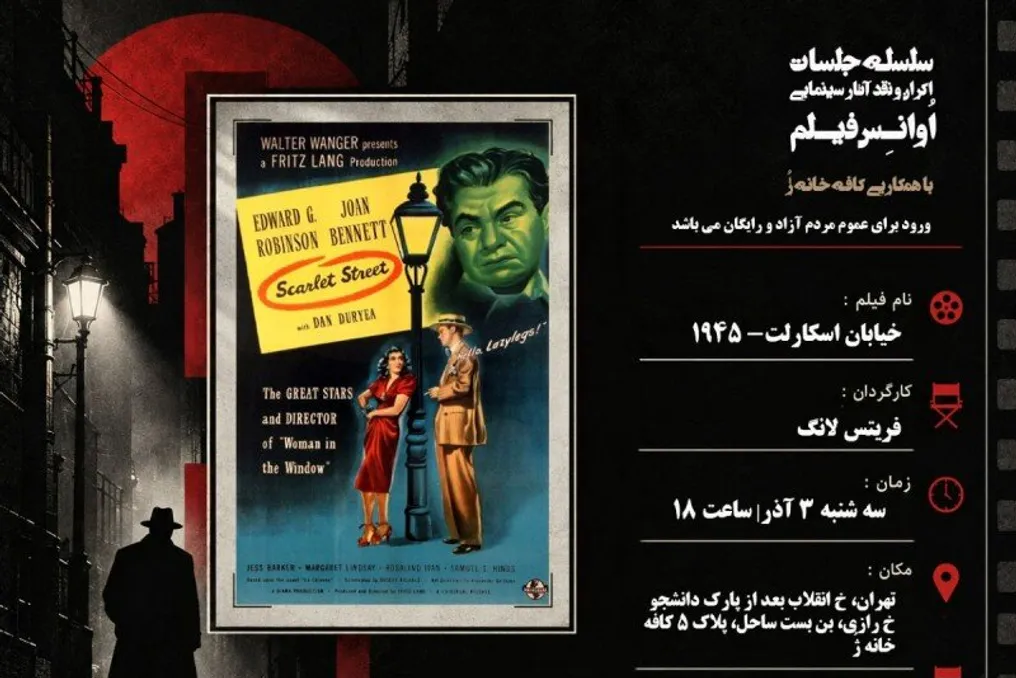
The American film noir from 1945, 'Scarlet Street,' directed by Fritz Lang, will be shown in Tehran. The event will take place on Tuesday at the Zhou House with the assistance of the Ovanes Film Club.

The screening is scheduled for 18:00 and will be accompanied by a review session featuring film critic Afshin Kamiyabfard and cinematographer Sajjad Mansouri.

The plot of the film is based on the French novel 'La Chienne' by Georges de La Fouchière, which was previously adapted into a film in 1931 by Jean Renoir. The movie tells the story of two criminals who use a young artist to steal his works of art.

The main actors, including Edward G. Robinson, Joan Bennett, and Dan Duryea, previously starred together in the 1944 film 'The Woman in the Window,' also directed by Lang.

In early 1946, local authorities in New York, Milwaukee, and Atlanta banned 'Scarlet Street' due to its dark subject matter and themes.

Friedrich Christian Anton Lang (1890–1976), better known as Fritz Lang, was an Austrian director, screenwriter, and producer who worked in Germany and later in the United States. He is considered one of the most influential filmmakers of all time and was named 'Master of Darkness' by the British Film Institute. He was one of the most famous emigrants from the German Expressionist school.

Lang's work spans five decades: from expressionist silent films of his early German period to a brief stay in Paris, work in Hollywood, and the last three films made in Germany.

Among his most famous works are the futuristic science fiction film 'Metropolis' (1927) and the influential film 'M' (1931), which is considered a precursor to the noir genre. His 1929 film 'Woman in the Moon' demonstrated the use of a multi-stage rocket and first introduced the concept of a rocket launchpad and countdown timer.

Other significant films by Lang include 'Dr. Mabuse the Gambler' (1922) and its sequel 'The Testament of Dr. Mabuse' (1933), and after moving to Hollywood in 1934—'Fury' (1936), 'Live Once' (1937), 'Executioners Also Die!' (1943), and 'The Big Heat' (1953).

Film 'Friend's House' Joins Focus Iran Program at French Film Festival
Read more
www.tehrantimes.com

Film 'Friend's House' Joins Focus Iran Program at French Film Festival

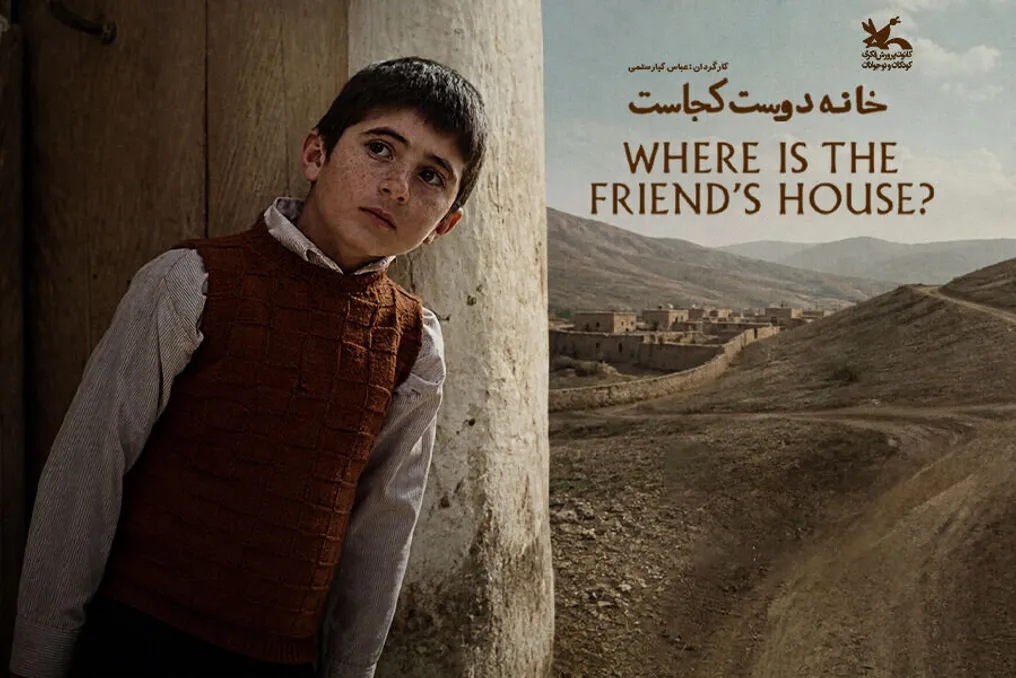
Abbas Kiarostami's renowned film 'Friend's House?' will be screened in the Focus Iran section of the 46th Amiens International Film Festival in France. This film was produced by the Institute for Intellectual Development of Children and Youth (Kanun).

Created in 1987, this film is part of a special program dedicated to Iranian cinema. The program brings together a number of significant works from both established masters and new generation directors.

The plot of 'Friend's House?' tells the story of an eight-year-old boy named Ahmad, who accidentally takes home a classmate's school notebook. To return it before his friend is punished for not submitting homework, Ahmad sets out to find the boy's house in a neighboring village.

What begins as a simple search turns into a journey through the winding streets and rural landscapes of northern Iran. Along the way, Ahmad meets adults who often do not understand the urgency of his mission. Through Kiarostami's child's perspective, themes such as compassion, friendship, and responsibility are explored, transforming an ordinary incident into a deeply human story.

The film is considered one of the significant works of Iranian cinema and the first part of Kiarostami's 'Koker' trilogy, followed by 'And Life Goes On' (1992) and 'Through the Olive Trees' (1994). Its restrained narrative and focus on the child's perspective helped attract international attention to Kiarostami's work.

The Focus Iran program also includes other significant Iranian films from different generations, including 'Brick and Mirror' by Ebrahim Golestan, 'Cow' by Dariush Mehrjui, 'Close-Up' by Abbas Kiarostami, 'Narges' by Rokhshan Bani-Etemad, and 'Separation' by Asghar Farhadi.

Furthermore, the program features four feature films by Karim Lakzadeh: 'The Great Leap', 'Red', 'Dark Matter', and 'Living Twice, Dying Thrice'. Six short films by Iranian female filmmakers are also included in the selection, highlighting the emergence of new voices in the country's cinema.

The screening of 'Friend's House?' is scheduled for Wednesday, November 18, at 2:30 PM in the Cinéma Orson Welles hall of the Amiens Cultural Center. The 46th Amiens International Film Festival will run from November 13 to 21 and will present over 130 films from 40 countries, including fiction, documentary, and animation works.

Popular