German Language Centers and TELC Examination Center Opened in Tashkent
Read more
UzDaily
uzdaily.uz

German Language Centers and TELC Examination Center Opened in Tashkent

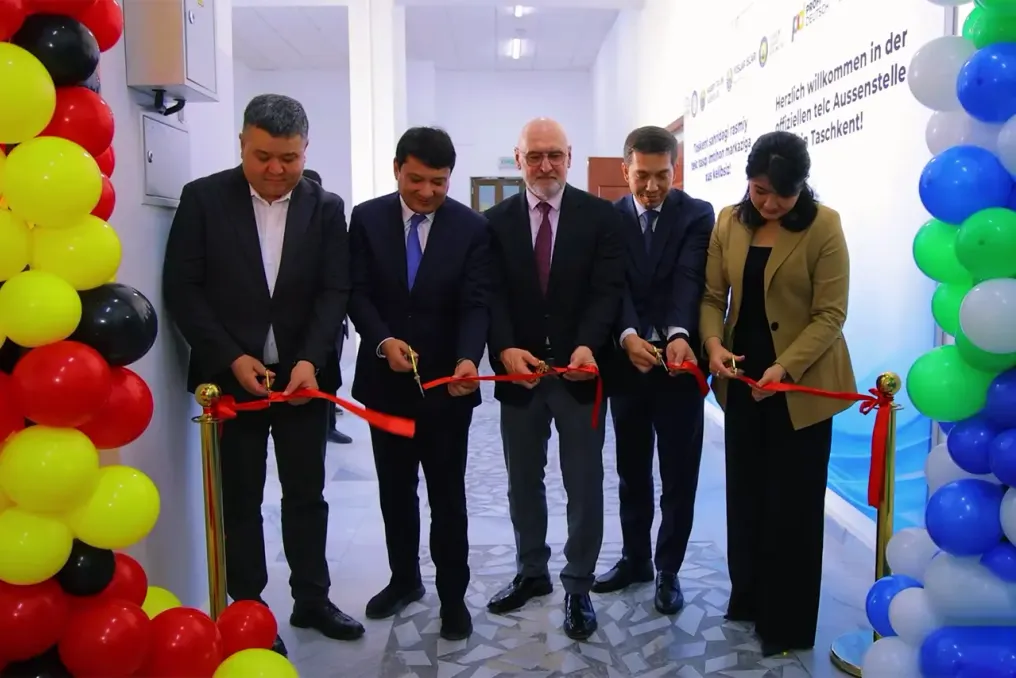
The city administration announced the opening of the PROFI DEUTSCH German language training center and the international TELC examination center in Tashkent. These institutions are located in a renovated building that was previously used by the Center for Material and Technical Support of Vocational Education. With the support of the Tashkent city administration, the premises were equipped with modern classrooms, furniture, and technical equipment.

The opening ceremony took place on November 23. The PROFI DEUTSCH center specializes in preparing young people to study the German language, obtain education, and find legitimate employment in Germany. The training program lasts ten months and allows students to progress from a beginner level to B1 level. The total capacity of the center is up to 180 people simultaneously.

The TELC examination center will conduct international certification of German language proficiency levels and issue corresponding certificates. It is planned that the center will accept 300 to 400 candidates monthly, achieving an annual throughput of 3600–4800 people.

Attendees at the Opening Ceremony

Present at the opening were Deputy Mayor of Tashkent Durdona Rakhimova, Director of the Agency for Vocational Education Azimjon Husanov, Deputy Director of the Migration Service Elyor Toshtemirov, TELC representative for Central Asia Winfried Ellwanger, and PROFI DEUTSCH head Kamoliddin Bediev.

The new centers are intended to expand opportunities for youth to participate in the German dual vocational training program, known as Ausbildung, enhance their qualifications, and enter the international labor market.
Similar stories

First Exhibition of Central Asia Equipment Opens in Tashkent
Read more
uzdaily.uz

First Exhibition of Central Asia Equipment Opens in Tashkent

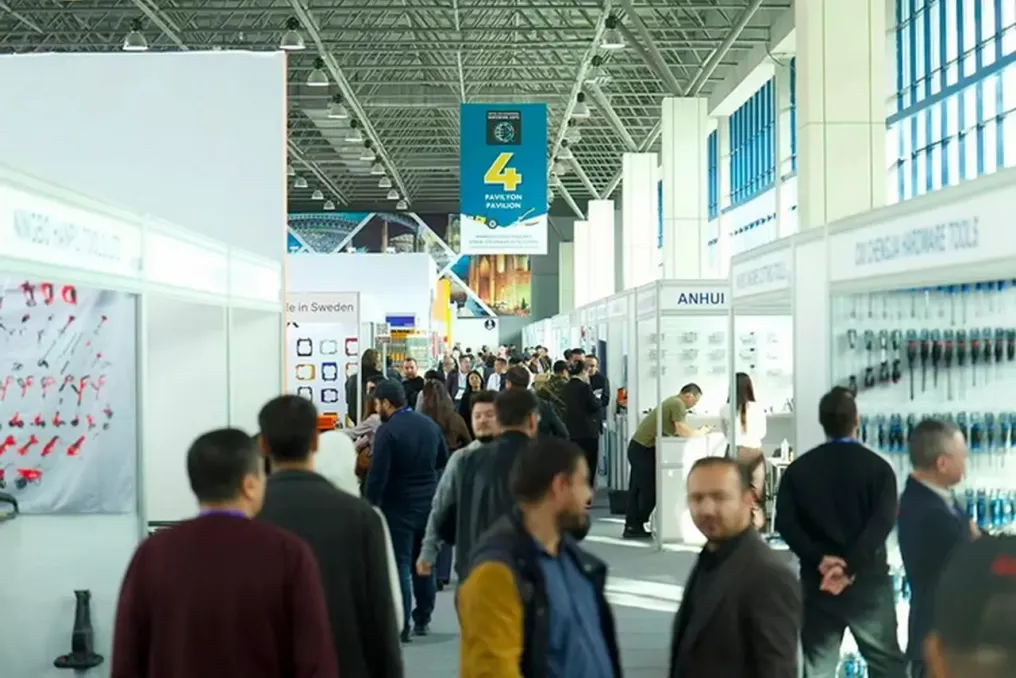
The first International Exhibition of Central Asia Equipment (CAIHE) 2026 started in Tashkent on November 24. According to Koelnmesse Ltd, the event brought together companies and brands from ten countries.

The exhibition is taking place at Uzexpocentre and will run until November 26 in pavilions 3 and 4. The organizer defines this event as a specialized B2B exhibition focused on the equipment industry in Central Asia.

The event is held under the brand EISENWARENMESSE and as part of the global Koelnmesse exhibition network. Koelnmesse positions EISENWARENMESSE as a leading global trade fair for the equipment industry.

The list of participating countries included China, Germany, France, Italy, the United Kingdom, Sweden, India, South Korea, Kazakhstan, and Uzbekistan. The exposition covers hand tools, power tools, welding equipment, fasteners, and construction equipment, as well as garden machinery, protective gear, and industrial services.

The products presented are intended for the needs of the construction sector, industrial maintenance, retail and wholesale trade. Representatives of investment, industrial, and trade bodies of Uzbekistan were present at the opening, as were delegations from the German and Chinese embassies in Uzbekistan, bilateral chambers of commerce, industry associations, and management bodies.

Michael Kruse, Managing Director of Koelnmesse Ltd, noted that this is an important stage for the company, as it is the first time they are bringing their global equipment network to Uzbekistan and expanding their presence in Central Asia. He characterized Uzbekistan as a key entry point into the regional market with high growth potential, supported by investments in infrastructure and industrial development.

Kruse added that the goal is to jointly develop this platform with the industry and facilitate the strengthening of business ties between local and international participants through personal interaction. The program also includes business meetings and industry discussions designed to help exhibitors negotiate directly with buyers.

According to the organizer, the growth of the equipment sector in Uzbekistan reflects the country's overall strategy for industrial modernization, infrastructure expansion, and the development of cross-border trade. These factors have increased the demand for quality products and industrial solutions. The exhibition is open to trade professionals, distributors, contractors, project owners, and other industry participants from Uzbekistan and all of Central Asia.

Discussion between Tashkent Region and Japan on Expanding Cooperation in Vocational Training and Employment
Read more
uzdaily.uz

Discussion between Tashkent Region and Japan on Expanding Cooperation in Vocational Training and Employment

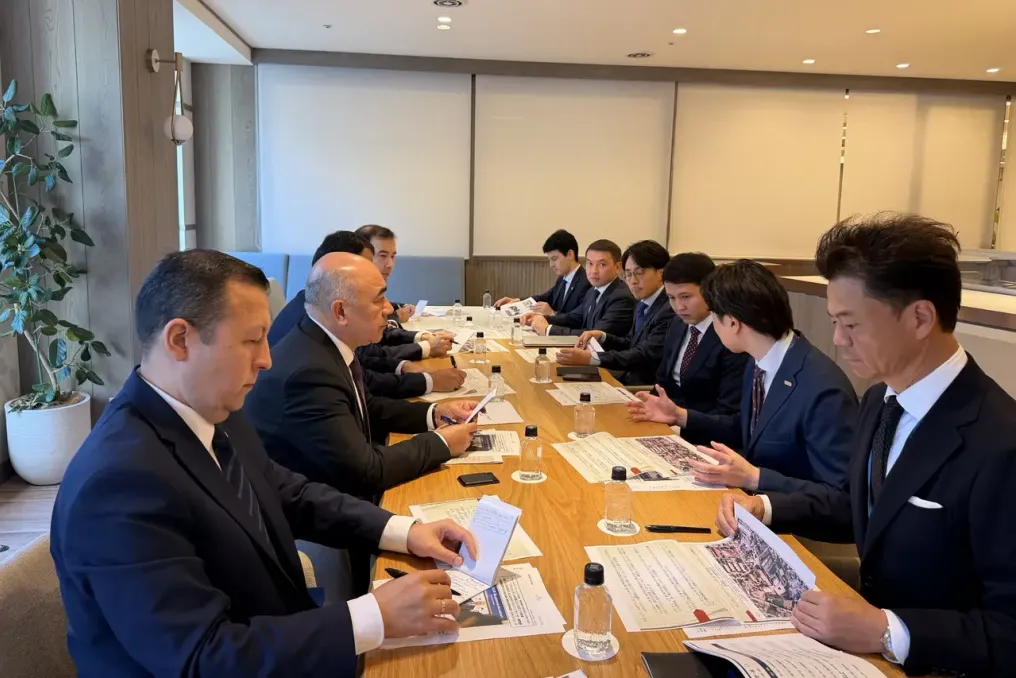
Representatives from the Tashkent Region and the Japanese company Onodera User Run held discussions aimed at expanding partnership in vocational training and creating job opportunities for Uzbek specialists in Japan.

The negotiations took place between the Governor of the Tashkent Region, Zoyir Mirzaev, and the company president, Jun Kato. The main topics of the meetings included new investment and social projects, as well as increasing the geographical scope of cooperation.

This meeting continued the dialogue previously initiated at the level of the leaders of the two countries. Previously, Jun Kato participated in the visit of the President of Uzbekistan, Shavkat Mirziyoyev, to the educational center OUR BLOOMING ACADEMY in Tashkent. During this visit, he presented programs offering free vocational training for Uzbek youth, skill development, and subsequent employment.

Onodera User Run was founded in Tokyo in 2016. It implements workforce training projects in countries such as the Philippines, Myanmar, Indonesia, and Laos. The company's main activity is teaching the Japanese language and professional skills to foreigners, preparing them for the Japanese labor market, and assisting with job searches.

The Our Blooming Academy Uzbekistan educational center began operations in Tashkent in November 2025. Currently, it provides training to young people in the fields of food service, elderly care, and driving.

During the recent negotiations, the parties considered the possibility of extending this experience to the Tashkent Region. Specifically, the possibility of signing a tripartite agreement involving the regional administration, the Uzbekistan Migration Agency, and Onodera User Run was discussed.

A proposal was also put forward to create a regional driver training center that would prepare candidates according to the requirements of Japanese employers. The parties noted that the proposed projects are intended to enhance the professional competencies of young people, support their employment, and expand practical interaction between Uzbekistan and Japan.

A 22.7-kilometer express bus corridor is being created in Tashkent, connecting Sergeli and Yunusabad
Read more
podrobno.uz

A 22.7-kilometer express bus corridor is being created in Tashkent, connecting Sergeli and Yunusabad

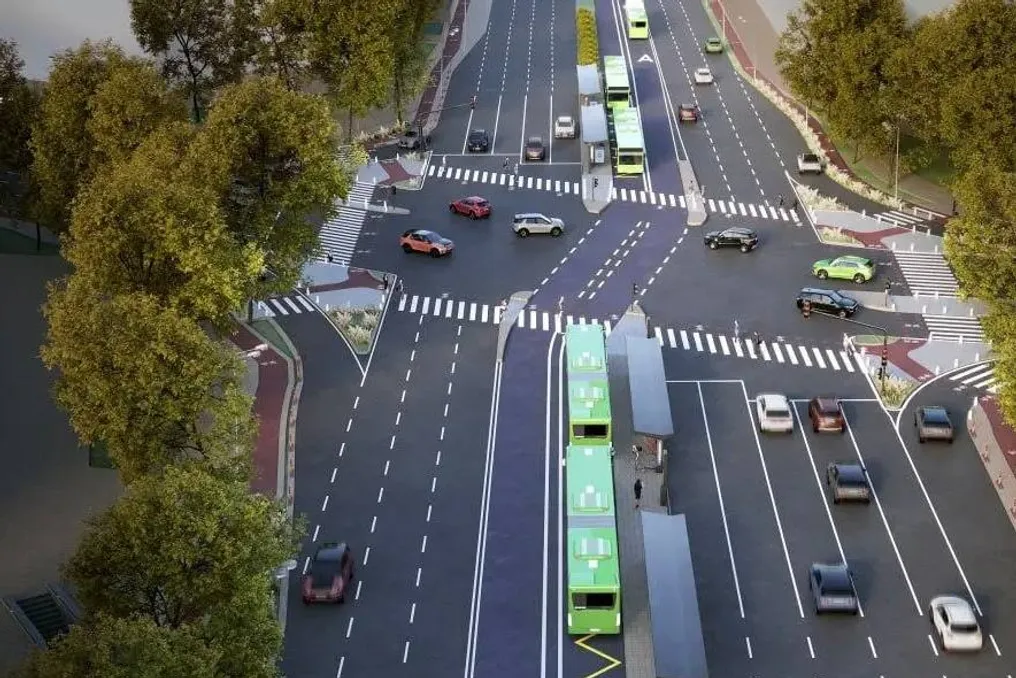
The formation of a unified Bus Rapid Transit (BRT) corridor is underway in Tashkent, which will connect the Sergeli and Yunusabad districts. The total length of this corridor will be 22.7 kilometers. In addition to dedicated lanes, modern stops, intelligent traffic lights, and electronic displays showing bus arrival times will be installed along the route.

According to information provided by the Road Traffic Organization Center, this corridor will run along four main streets of the capital. On Shota Rustaveli Street, the 6.5-kilometer BRT system has been operational since 2025. On Shahrisabz Street, 2.2 kilometers have been put into operation out of the planned 3.2 kilometers. Construction is ongoing on Amir Temur Avenue, where 7.6 kilometers of dedicated lanes are planned, and preparatory work is underway on Yangi Sergeli Street over a section spanning 5.5 kilometers.

The project involves not only dedicating lanes for buses. New stop complexes and platforms with increased capacity will be installed along the entire corridor, and lighting and traffic light systems will be modernized. In subsequent stages, the 'green wave' system is planned to be implemented, allowing buses to cross intersections with minimal stops.

At the stops, passengers will be able to use information boards displaying transport arrival times, as well as video surveillance cameras and SOS emergency call buttons. Simultaneously, there are plans to increase the bus fleet and revise the movement schedule to reduce waiting times for passengers.

The Road Traffic Organization Center presented preliminary operating results of the BRT on Shota Rustaveli Street. According to the Ministry of Transport, the average speed of buses on this section has increased by 45% compared to 2023, and the speed of passenger cars has increased by 18%. Furthermore, daily public transport usage on this route has increased by approximately 8 thousand people.

The department believes that prioritizing public transport contributes to a more efficient use of the city's road network. Nevertheless, during the construction period, residents are forced to accept temporary changes to their usual routes and face traffic restrictions. The exact completion date for the entire 22.7-kilometer corridor has not yet been announced.

Popular