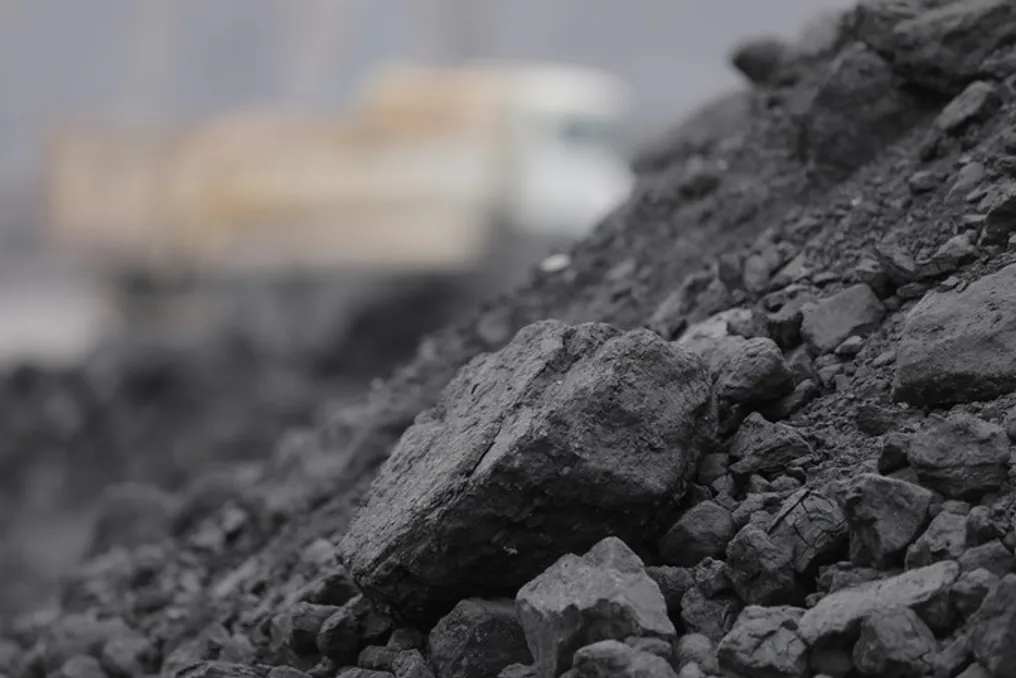
Kazakhstani coal, which clears customs in Uzbekistan at a price of about $40 per ton, reaches greenhouse farms for as much as $110, causing dissatisfaction among representatives of the greenhouse industry. This became known on November 16 during an open dialogue.
At this meeting, greenhouse owners discussed several issues with state structures organized by the Chamber of Commerce and Industry. Entrepreneur Khurshid Akhmedov emphasized that the high cost of greenhouse products is largely determined by the fuel price.
Akhmedov noted that although labor costs in Uzbekistan are relatively low, heating greenhouses requires significant financial investment, especially during the winter period. He stated that in the 21st century, the cost of goods heavily depends on energy resources, and the main problem in Uzbekistan is fuel.
The entrepreneur cited 'Shubarkol' brand coal imported from Kazakhstan as an example. According to customs data, this coal passes through customs for $40, but before reaching the greenhouse farm, its price rises to $110. This means that the Uzbek entrepreneur is forced to pay 2.75 times more than the declared customs value, i.e., an additional $70 per ton.
Nevertheless, Akhmedov explained that this difference may cover not only transportation costs but also costs for railway logistics, unloading, transshipment, storage, road transport from the station, as well as taxes and intermediary markups.
According to Akhmedov, the increase in the price of Kazakh coal is also related to the existing system of railway transport, unloading, and fuel storage. He reported that even when purchasing coal directly from producers in Kazakhstan, entrepreneurs find it difficult to organize deliveries independently.
Previously, there were about 66 coal unloading facilities in Uzbekistan, which participants call railway 'branches,' and all of them were under the control of one company. The entrepreneur noted the positive decision of the President to abolish this system and put it on the free market for anyone to use.
Akhmedov shared his personal experience: in 2022, when he tried to import coal from Kazakhstan himself, he had to pay an additional fee to the warehouse owner or railway 'branch' for unloading wagons, which artificially increased the cost.
Such conditions contribute to the dependence of greenhouse farms on intermediaries who handle the import, rail transport, and subsequent sale of fuel, which, in his opinion, is the reason for the price increase from the border to the end consumer.
Furthermore, it was noted at the meeting that in 2023, when discussing centralized coal supply, there was a shortage of wagons and access tracks. One participant noted that technically organizing centralized supplies was difficult, even if the situation could improve.
Another problem mentioned by Akhmedov is the current restrictions on transporting imported coal. Although Kazakh suppliers are ready to deliver fuel by road transport to the Uzbek border, importing from Kazakhstan requires the use of the railway.
Speaking to suppliers in the Chernyaevka area, located ten kilometers from Tashkent, Akhmedov learned that the coal costs $32 per ton there and can be loaded into a truck or bags. However, at customs posts around Tashkent, there is a requirement to import only by rail. A government representative clarified that this requirement is established by Uzbekistan.
The necessity of using the railway entails not only additional costs but also delays. During the heating season, wagons are scarce because the state prioritizes supplying remote settlements with coal, placing entrepreneurs second.
However, some small farms can independently deliver limited batches of coal directly from border areas of Kazakhstan.
The issue of coal import methods was raised at the state level back in May 2026. On May 26, at a presentation of coal industry development plans, the introduction of market mechanisms was announced, and authorities also stated their intention to introduce new environmental and quality standards for imported fuel, including calorific value and sulfur content.
An official statement explicitly indicated that in the future, coal imports would be carried out exclusively by rail. A similar provision is contained on the official website of 'Uzbekugol' in clarifications of the new coal market operating procedure, updated on September 5, 2026, which states that the import of coal is permitted only by rail transport.
Cabinet of Ministers Decree No. 418 of July 30, 2026, which the company refers to, provides for mechanisms of coal supply, accounting, and railway transport, but it does not contain a specific regulation establishing a complete ban on road imports.
According to the National Statistics Bureau of Kazakhstan, studied by 'Gazeta', from January to September 2026, Kazakhstan exported about 1.02 million tons of coal to Uzbekistan worth $23.1 million, with an average statistical export price of approximately $22.73 per ton.
For comparison, during the same period, Kazakhstan's total export of hard coal amounted to about 21.3 million tons for $536.6 million, with an average price of about $25.2 per ton. However, these figures include all shipments of this commodity category and do not separately reflect the 'Shubarkol' brand, nor do they include subsequent logistics, storage costs, and trade markups to the final consumer.
Entrepreneurs also complained about the quality of local coal, noting the presence of a large amount of ash and dust in some types of fuel. One meeting participant gave an example where 10 tons of ash and non-combustible residue can be formed from 60 tons of low-quality coal, creating increased load on filters and water treatment systems during combustion.
Coal quality is critical for heating efficiency. The key indicator is the lower heating value, which determines the volume of useful thermal energy obtained when burning a unit mass of fuel. The higher this indicator, the less coal is needed to achieve the required heat level.
In addition to calorific value, it is important to consider calorific power—the energy released when burning a kilogram of coal. Higher calorific power reduces the need for fuel.
According to the characteristics of JSC 'Uzbekugol', the lower heating value of Angren brown coal ranges from 2200 to 3560 kcal/kg depending on the grade; for example, for grade 2BZR, this figure is 3200 kcal/kg, and for 2BOMSSh-B2, it is 2200 kcal/kg. The average moisture content of some grades reaches 35%, and the maximum permissible ash content is 60%.
In contrast, the Kazakh company 'Shubarkol Komir' previously stated that the lower heating value of its coal is 5500–6000 kcal/kg, with a moisture content of 14–15% and ash content of no more than 15% in normal mining and 7% in selective mining.
'Shubarkol Premium' producer claims a calorific power in the range of 5800–6000 kcal/kg, with a moisture content of no more than 14% and ash content of no more than 10% based on the dry state of the fuel. Characteristics of Kyrgyz coal from the Kara-Keche deposit also depend on the batch; according to 'Kyrgyzkomir' for the 2020–2021 heating season, the average moisture content was 22–23%, and the ash content reached 20%.