With the commercial dollar exceeding the R$ 6 mark during Monday's (23rd) trading session, and remaining close to this level on Tuesday (24th), it opened Wednesday (25th) at R$ 5.82. This fluctuation causes apprehension among those planning international trips, as the question arises about how to cover costs abroad without further increasing the budget.
Among the available options—credit card, physical cash, or global accounts—international accounts generally offer the most advantageous combination of savings and predictability. However, the ideal choice depends on the fees applied by each institution, the destination, and the traveler's spending habits.
There was a change in taxation that impacted this comparison. Starting in June 2025, the Tax on Financial Operations (IOF) incident on most exchange transactions intended for personal expenses abroad was adjusted to 3.5%. This rate applies to purchases made with credit or debit cards, prepaid cards, and also to the acquisition of physical currency.
Consequently, the former tax advantage of acquiring cash or using a global account ceased to exist. Currently, the decisive factor between the modalities is primarily the so-called exchange spread, which represents the margin charged by the institution over the reference exchange rate, plus any additional fees.
International accounts provided by companies such as Wise, Nomad, C6 Bank, and Inter allow for the conversion of reais into currencies like the dollar and euro directly through the app, enabling the use of the balance via a debit card abroad. The main benefit of these accounts is the ability to fix the exchange rate at the time of conversion. For example, if the traveler converts US$ 500 when the dollar is at R$ 5.90, this amount serves as a reference for that sum, regardless of whether the currency fluctuates in subsequent days.
Additionally, these accounts tend to have smaller spreads compared to those practiced by credit cards and currency exchanges dealing in paper money. This occurs because many global accounts use rates close to the commercial exchange rate, although each company maintains its own fee and margin policy.
A useful suggestion is to purchase currency in installments, at different times before the trip. Instead of converting the entire amount at once, the traveler can spread out purchases over weeks or months. This tactic helps prevent all capital from being acquired on a high exchange rate day, although it does not guarantee a lower average price.
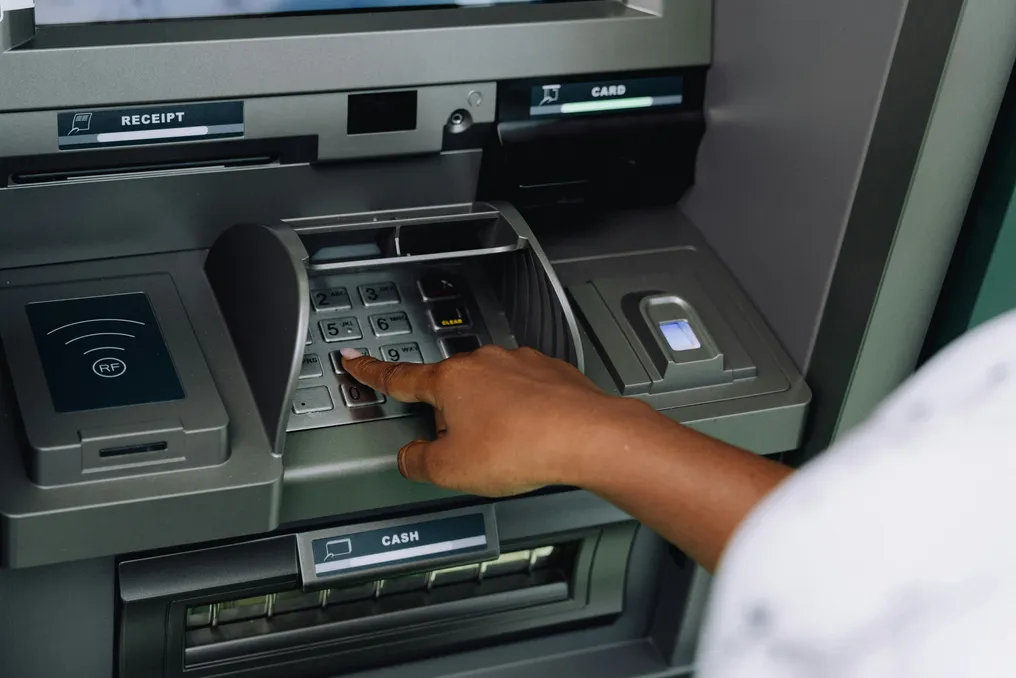
It is also essential to check the rules regarding ATM withdrawals, including free withdrawal limits and fees charged by both the institution and the terminal itself. Before proceeding with the withdrawal, the terminal displays the transaction cost; if there is a disagreement, the procedure must be canceled and another ATM sought.
The international credit card remains a practical option, especially for securing hotel reservations, vehicle rentals, or high-value purchases, and in situations requiring proof of payment. However, the traveler does not always know the exact amount they will pay in reais at the time of purchase. According to Central Bank regulations, the conversion must follow the rate applied by the institution on the date of expenditure, although the bank may offer conversion on the statement closing date, provided the client explicitly agrees to this condition.
Beyond the 3.5% IOF, it is crucial to analyze the spread imposed by the issuer. Depending on the institution, this margin can make the credit card significantly more expensive than a global account.
The benefits associated with cards, such as accumulating miles, points, cashback, or some form of IOF compensation, can be attractive, but a complete financial analysis is necessary. A beneficial points program does not automatically imply savings if the rate used by the bank is unfavorable.
Therefore, the credit card is more suitable as a complementary resource, particularly for expenses that require collateral or pre-authorization, as is common with rental car companies and hotels.
Even after losing the existing tax advantage until 2025, physical cash remains relevant. In certain places, small businesses, fairs, markets, and public transport may not accept cards. Furthermore, it serves as an alternative in cases of internet connection failure or payment terminal malfunction.
Conversely, buying dollars or euros in cash generally involves a larger spread. Institutions need to account for the costs of security, transportation, storage, and distribution of notes, which can increase the operation's cost.
This does not mean that all currency exchanges are detrimental. It is advisable to research various establishments, including those that allow online purchase with in-person pickup, and compare the final cost.
The final advice is to carry a modest amount of cash to cover occasional expenses and emergencies, reserving the majority of payments for the global account—or withdrawing directly from it upon arrival at the destination. One should avoid concentrating all conversion on the eve of departure. Those with months until the trip can acquire currency progressively, monitoring market variations. Although there is no guarantee of a dollar drop, this strategy reduces dependence on a single exchange rate.
When paying with a card abroad, it is important to note that when the terminal offers the option of charging in reais or the local currency, it is generally preferable to opt for the currency of the visited country, as the conversion offered by the establishment may include an extra margin.
In summary, the most balanced approach consists of using a global account for daily expenses, keeping an international credit card for reservations and unforeseen events, and carrying a small cash reserve. Given the dollar near R$ 6, the focus should be on avoiding unnecessary fees in each transaction, rather than trying to predict the next currency movement.