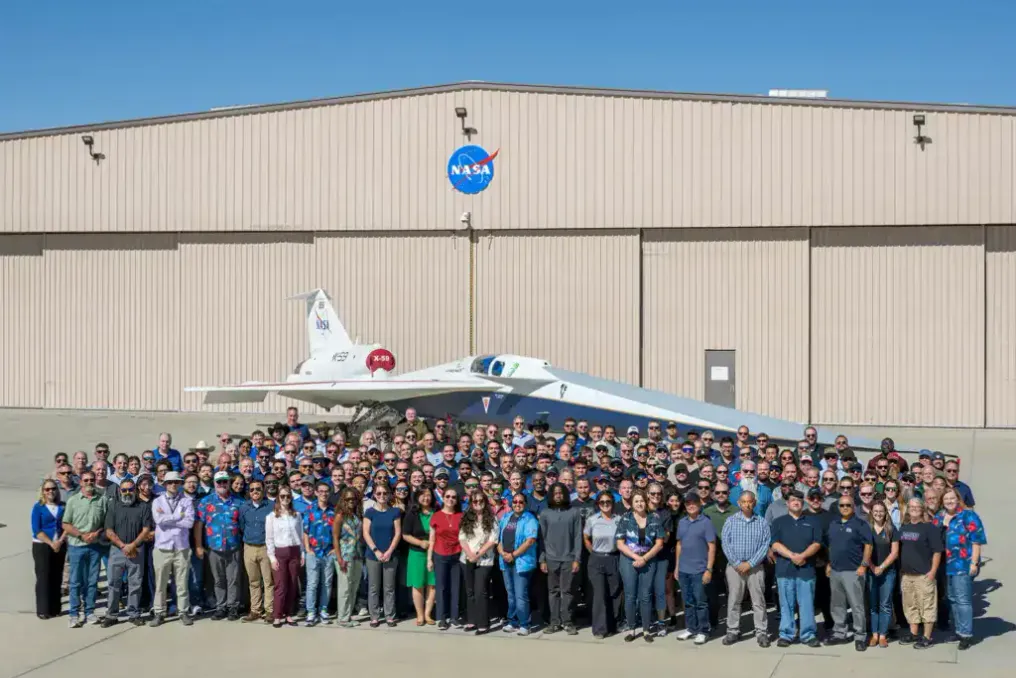
NASA formally assumed possession of the X-59 on November 18, 2026. This experimental aircraft was developed in partnership with Lockheed Martin with the goal of achieving supersonic speeds while minimizing the characteristic sonic impact.
This transition is part of the Quesst mission, which aims to gather crucial information to enable future commercial supersonic flights over land. Lockheed Martin was chosen by NASA to collaborate on the development of the X-59, being responsible for the construction and initial testing of the aircraft.
One of the central focuses of the project is to reduce the loud boom generated when a vehicle exceeds the speed of sound, replacing it with a softer noise that the agency calls a sonic thump.
The first flight of the X-59 took place on October 28, 2025. The aircraft began its journey at the Lockheed Martin Skunk Works facilities in Palmdale, California, and proceeded to the NASA Armstrong Flight Research Center in Edwards, also in California, which became its operational base.
Although tests were taking place on NASA premises, the official ownership of the X-59 remained with Lockheed Martin. The company maintained this status while finalizing an acceptance review of the aircraft with the agency, an essential step for closing the contract.
With the transfer of ownership, NASA becomes the official owner of the aircraft and will continue the trials. Lockheed Martin, in turn, will continue to provide additional support whenever necessary.
For Cathy Bahm, manager of the Low Boom Flight Demonstrator project, this change represents a significant milestone for the team, even if it may seem subtle to external observers. She commented: 'To someone outside the flight tests, this might seem like a subtle change.' However, she added: 'But, for NASA, this is another big moment for the X-59, which shows how far we have come, how our hard work has paid off, and how much closer we are to providing the necessary data to, we hope, make commercial supersonic flights over land a reality.'
The project aligns with NASA's commitment to utilize X-series aircraft and other experimental models to reinforce the United States' leadership position in aviation. Furthermore, the agency recently announced the X-70, which joins the X-59 in a growing set of renewing experimental projects. Through these actions, NASA aims to expand its flight research capabilities, accelerate the development of emerging technologies, and contribute to future generations of American aviation.