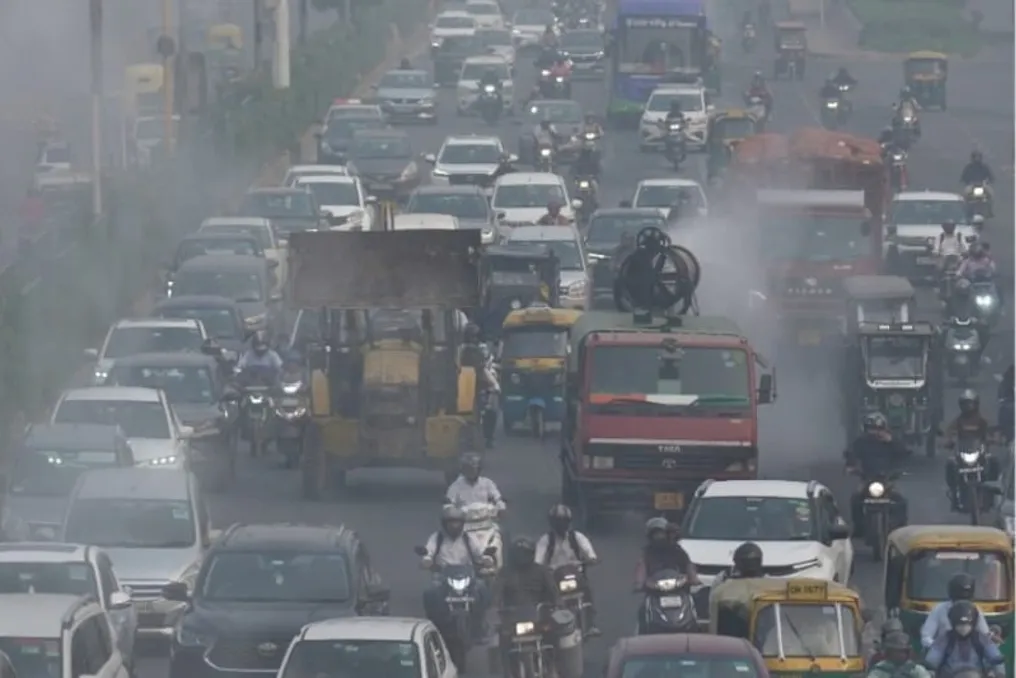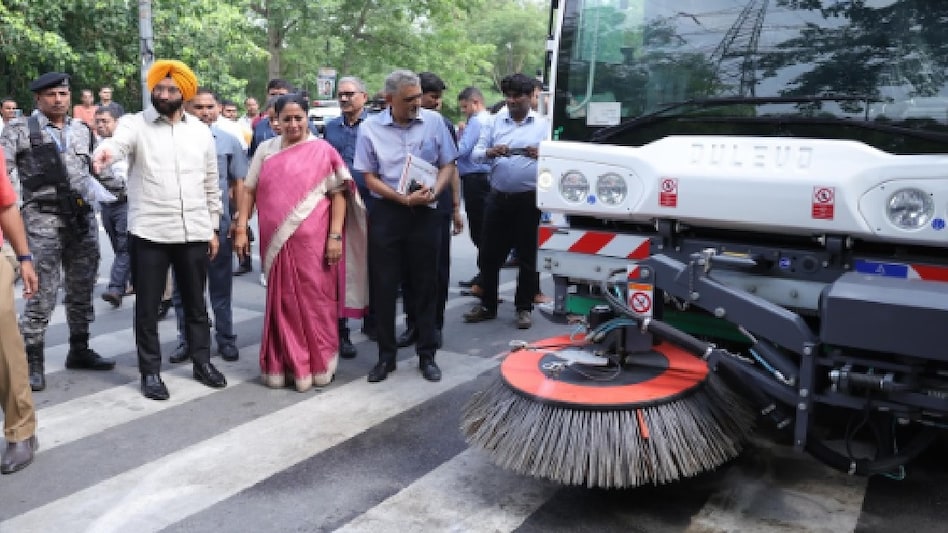
A serious question has arisen regarding the availability of Mechanized Road Sweeping Machines (MRSMs) needed to control dust on Delhi's streets in the fight against pollution. Despite the continuous rise in pollution levels, the process of procuring and deploying modern street cleaning machines is progressing extremely slowly.
According to information obtained by 'Aaj Tak', there is an acute shortage of such mechanized machines in Delhi. More than a year has passed, yet the machines necessary for cleaning Delhi's streets have not been provided. The situation is exacerbated by the fact that the need for these machines increases with the rising level of pollution in Delhi, but delays in the procurement procedure prevent timely utilization of this advantage.
Previously, there were 78 mechanized road sweeping machines in Delhi. According to central government recommendations, Delhi required a total of 505 such machines, indicating a deficit of 429 units.
According to Pravesh Vahi, the Municipal Corporation of Delhi (MCD) Mayor, 66 machines were previously operational. Last year, a tender was announced for 70 new machines, of which 12 were received, bringing the total to 78. The Mayor stated that another 58 machines are expected to arrive under a tender scheduled for March 2027, although the municipality aims to receive them by December.
According to available information, the problem of machine shortage in Delhi's street cleaning system was raised as early as May 2026. Following this, the MCD initiated the procurement process for an additional 70 machines, stating they would enter the fleet by October, but the set deadline was not met.
Even the procurement process for these 70 machines took a significant amount of time. According to a report, it took 106 days to publish the tender, followed by another 145 days to issue the work order.
The full chronology of events is as follows: On December 17, 2025, the MCD indicated a need for 88 mechanized road sweeping machines; on April 2, 2026, tenders were issued for the purchase of 70 machines; on August 24-25, 2026, work orders were issued to three companies; in September-October 2026, testing and field trials of four machines were conducted; in November-December 2026, deployment of 12 machines was planned; and the deployment of the remaining 58 machines was scheduled from December 2026 to January 2027. The final delivery deadline for the 70 machines is set for March 2027.
According to this schedule, only 12 machines will be operational on the streets until the end of December, and the deployment of the remaining 58 machines is planned for the period from December to January. This means that even during periods when pollution levels in Delhi are most severe, all new machines will not be available.
The problem of machine shortage was not limited to the MCD. The Central Government has also consistently insisted on increasing the number of machines in Delhi and addressing operational deficiencies. According to sources, discussions on improving the mechanized street cleaning system in Delhi have taken place over seven high-level meetings from November 2025 to the present.
In May 2026, the center instructed the Commission for Air Quality Management (CAQM) and the Delhi government to accelerate the procurement process for all remaining mechanized machines and complete it by September. However, despite the expiration of the September deadline, the procurement was not finalized. Subsequently, the center emphasized the necessity of conducting machine procurement under wartime conditions at one of its meetings.
A crucial aspect of this situation is the divergence of opinions: the MCD states that machines can be provided by December-January, whereas the respective companies assert that according to the contract, machine delivery can only occur by March 2027. The MCD attributes the delay to the crisis occurring in the Middle East, while the companies refer to their contract stipulating a delivery period until March 2027.
This raises the question: why were the procurement and delivery timelines not coordinated considering the pollution season, given that the need for these machines to control pollution in Delhi was evident beforehand?
The severity of the pollution problem in Delhi can be assessed by the fact that on November 8, 2026, on Diwali day, the city recorded the worst air quality index since 2021. Monitoring stations reached critical pollution levels.
At such a time, controlling dust on roads becomes extremely important. Mechanized road sweeping machines play a key role in removing dust accumulated on the streets. However, due to the shortage of machines and delays in the procurement process, the Delhi street cleaning system has not received the expected support.
The main question remains unanswered: why does the system only begin to operate after the pollution season begins?