Yemeni Ministry estimates economic losses from Saudi Arabian attacks and blockade at over $1.13 trillion
Read more
Middle East Eye
www.middleeasteye.net

Yemeni Ministry estimates economic losses from Saudi Arabian attacks and blockade at over $1.13 trillion

The Yemeni Ministry of Economy, controlled by the Houthis, stated that the cumulative economic losses caused by Saudi Arabian attacks and the blockade since the start of the war in March 2015 exceeded $1.13 trillion.

The acting Minister of Economy, Sam Al-Bashiri, reported that preliminary estimates of direct damage during the latest escalation, which lasted from July 13 to November 23, amounted to more than $881.5 million, according to Saba.

He specified that the Saudi strikes resulted in the destruction of 22 factories and partial damage to three others, leading to industrial losses exceeding $376 million. Furthermore, the ministry recorded commercial losses of over $85 million and investment sector losses exceeding $20 million.

The Minister of Transport and Public Works, Mohammed Kuhaim, reported infrastructure and other sector damages totaling more than $350 million for the same period. Kuhaim noted that attacks on airports, ports, roads, and bridges disrupted supplies and increased costs for transportation, insurance, and storage, placing additional financial pressure on Yemenis.

However, the announcement did not provide a detailed methodology for calculating the total estimate of one trillion dollars.

Similar stories

BYD advances in negotiations to install electric car factory in Minas Gerais
Read more
autopapo.com.br

BYD advances in negotiations to install electric car factory in Minas Gerais

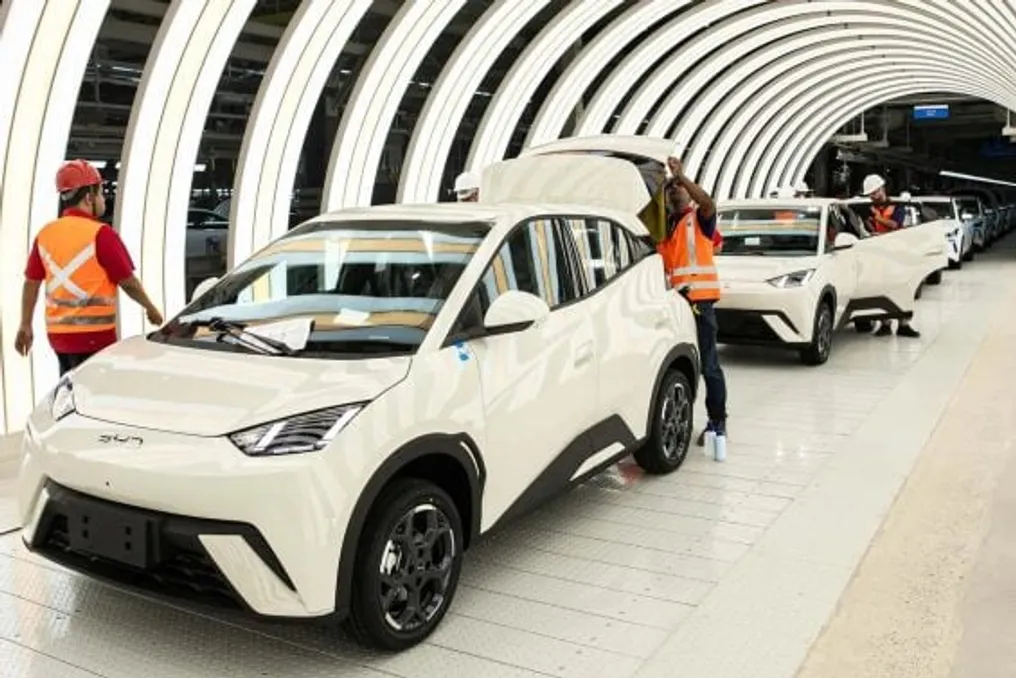
BYD has progressed in discussions aimed at establishing an electric vehicle factory in the state of Minas Gerais. The Chinese manufacturer held a meeting on Tuesday, the 24th, in São Paulo with the elected governor Cleitinho Azevedo (of the Republicanos party) and members of the upcoming state administration, with the goal of formalizing a letter of intent. This document is set to be signed only after the new government takes office, scheduled for January 6th.

The meeting also included the elected vice-governor, Luís Eduardo Falcão (Republicanos), and Thiago Toscano, who will be the future Secretary of Economic Development. Representing BYD were Tyler Li, the company's president in Brazil, and Alexandre Baldy, the automaker's vice-president in the country.

The future government aims to attract the factory specifically to the Vale do Jequitinhonha region, an area known for having significant lithium reserves. This mineral is essential in manufacturing batteries for electric cars and is already supplied to BYD by local companies, such as Companhia Brasileira de Lítio (CBL).

However, the decision regarding the installation site still depends on evaluations by the automaker itself and various logistical factors. Among the main obstacles cited by executives from the mining sector are the conditions of highways BR-367 and BR-116, as well as issues related to power transmission lines, which are seen as barriers to the region's industrial growth.

In addition to the negotiation with BYD, the next state administration plans to visit China to seek new capital injections. Thiago Toscano mentioned that the purpose of this trip is to establish a strategic collaboration that enables the development of the entire production chain, from mining to the end consumer.

Another point in the Government's plans includes implementing methods to simplify procedures and reviewing decrees and regulations that, according to the team, complicate the opening of new ventures in the state. The elected vice-governor stated that the objective is to streamline the processes necessary to attract investments.

Currently, BYD does not operate any factory in Minas Gerais. In Brazil, the automaker already has an industrial unit located in Camaçari, Bahia.

First Exhibition of Central Asia Equipment Opens in Tashkent
Read more
uzdaily.uz

First Exhibition of Central Asia Equipment Opens in Tashkent

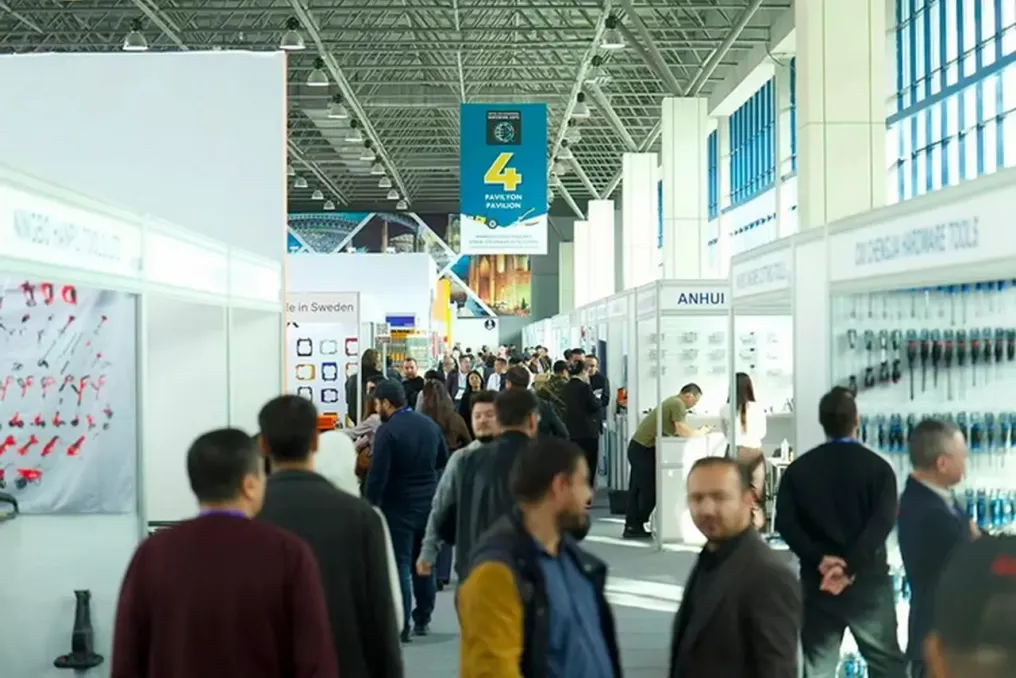
The first International Exhibition of Central Asia Equipment (CAIHE) 2026 started in Tashkent on November 24. According to Koelnmesse Ltd, the event brought together companies and brands from ten countries.

The exhibition is taking place at Uzexpocentre and will run until November 26 in pavilions 3 and 4. The organizer defines this event as a specialized B2B exhibition focused on the equipment industry in Central Asia.

The event is held under the brand EISENWARENMESSE and as part of the global Koelnmesse exhibition network. Koelnmesse positions EISENWARENMESSE as a leading global trade fair for the equipment industry.

The list of participating countries included China, Germany, France, Italy, the United Kingdom, Sweden, India, South Korea, Kazakhstan, and Uzbekistan. The exposition covers hand tools, power tools, welding equipment, fasteners, and construction equipment, as well as garden machinery, protective gear, and industrial services.

The products presented are intended for the needs of the construction sector, industrial maintenance, retail and wholesale trade. Representatives of investment, industrial, and trade bodies of Uzbekistan were present at the opening, as were delegations from the German and Chinese embassies in Uzbekistan, bilateral chambers of commerce, industry associations, and management bodies.

Michael Kruse, Managing Director of Koelnmesse Ltd, noted that this is an important stage for the company, as it is the first time they are bringing their global equipment network to Uzbekistan and expanding their presence in Central Asia. He characterized Uzbekistan as a key entry point into the regional market with high growth potential, supported by investments in infrastructure and industrial development.

Kruse added that the goal is to jointly develop this platform with the industry and facilitate the strengthening of business ties between local and international participants through personal interaction. The program also includes business meetings and industry discussions designed to help exhibitors negotiate directly with buyers.

According to the organizer, the growth of the equipment sector in Uzbekistan reflects the country's overall strategy for industrial modernization, infrastructure expansion, and the development of cross-border trade. These factors have increased the demand for quality products and industrial solutions. The exhibition is open to trade professionals, distributors, contractors, project owners, and other industry participants from Uzbekistan and all of Central Asia.

Popular