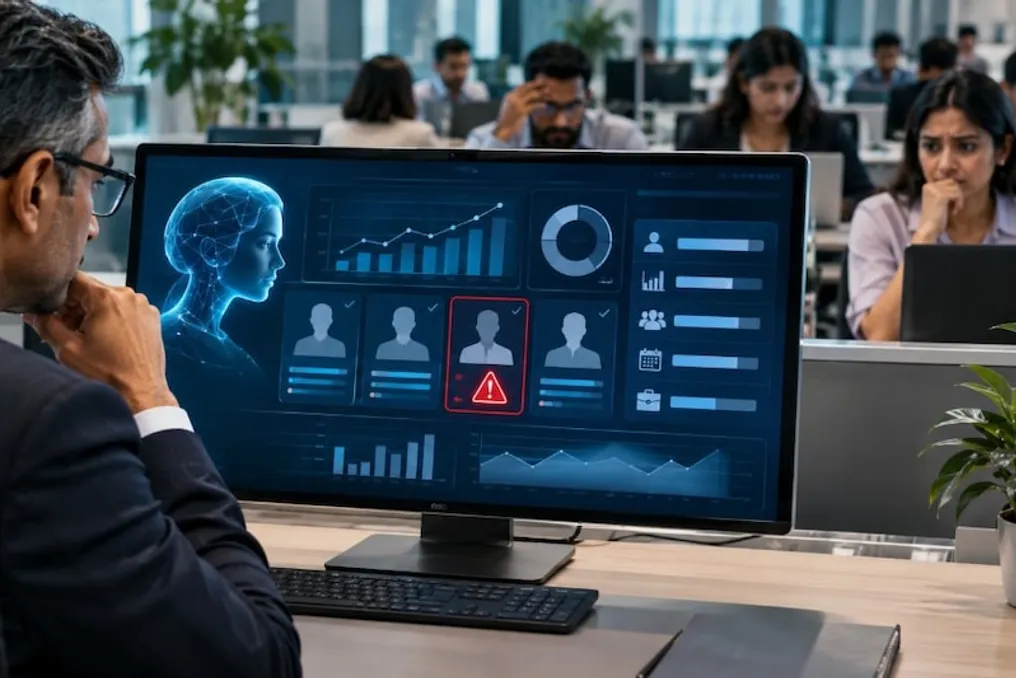
Artificial intelligence has transformed the modern workplace, making the computer screen a space where confidential information is frequently shared. It is observed that executives may present financial statements before official disclosure, and lawyers request the review of confidential clauses. Generative technology emerges as a powerful tool to aid human reasoning, but this poses a major challenge to the governance of this information, given that the distinction between functional memory and data collection remains ambiguous. Users tend to confuse the immediate context with the complete history of their accounts.
A survey conducted by Stanford University revealed that 52% of people express apprehension regarding advanced technology products. This 13 percentage point increase indicates a well-founded distrust regarding the lifecycle of digital secrets. Although AI assistants exhibit remarkable technical capability, they require a high level of digital literacy from the user.
Privacy rules differ significantly among various technology providers. For example, the default setting of ChatGPT for personal use allows textual interactions to be used to improve the base model; the user must access the panels and manually disable this permission. In contrast, the company's official documentation assures that algorithmic training is automatically blocked in business accounts and via API (Application Programming Interface).
In the Google Workspace ecosystem, controls are stricter. The cloud environment ensures the isolation of private data and prevents customer-generated flows from being used to train algorithms without prior consent. The network administrator controls command retention, being able to set periods of 90 days or indefinitely. Understanding these rules is crucial for differentiating safe professional use from accidental exposure of secrets.
Inserting an entire document into a consumer chatbot can turn a simple individual oversight into a serious legal situation. This type of action creates a secondary data flow that escapes the technical supervision of companies. Brazilian legislation is following this technological evolution, focusing on corporate accountability. An official document supporting recent decisions by the National Data Protection Authority classifies the use of information to train generative systems as direct processing of personal data.
Consequently, every organization must operate following the principles of purpose and transparency established by the LGPD (General Personal Data Protection Law). Companies have an obligation to create clear guidelines on which tools are permitted and to prohibit the inclusion of sensitive data in third-party platforms. Although technology increases team efficiency to unprecedented levels, the productive benefit requires that the volume of shared data be treated with maximum caution.
Artificial intelligence functions as a highly competent analytical consultant. Adopting good digital hygiene practices helps prevent the unintentional exposure of intellectual property. It is recommended to remove client names and exact financial figures before submitting any document for textual analysis. It is essential to maintain a strict separation between personal accounts and work equipment provided by the company. Furthermore, software solutions specifically licensed for business purposes should be chosen, as corporate licenses define retention periods and protect proprietary data.
The professional who uses the technology assumes legal and moral responsibility for the third-party data deposited in these virtual text boxes. AI represents an intellectual advance of our era, expanding human capacity and accelerating the resolution of complex problems. However, the ease of obtaining immediate answers imposes total responsibility for the governance of the transmitted information. The fascination with text accuracy masks the vast global infrastructure dedicated to processing this data. Therefore, before entrusting a corporate secret to a language model, it is imperative to understand the destination of the data, verify the system's retention time, and comprehend the true purpose of this algorithmic learning.