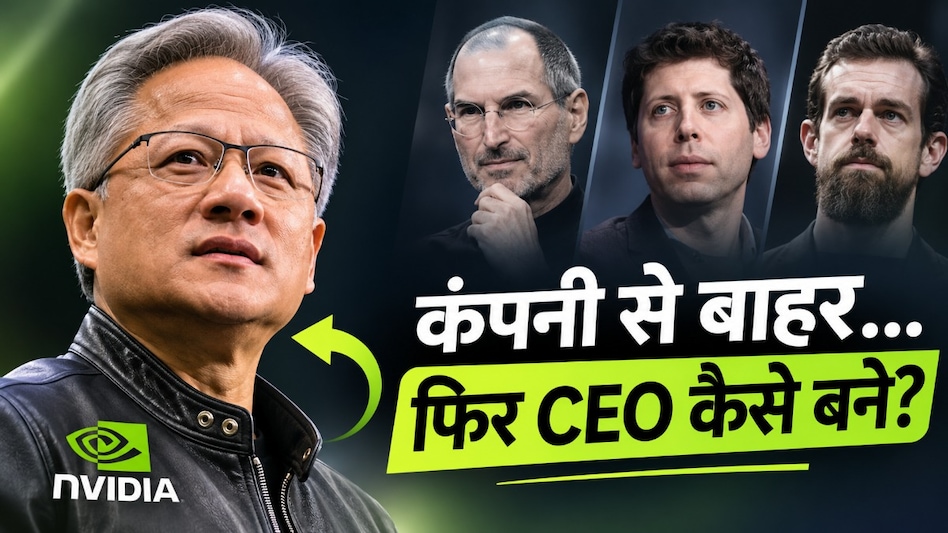
Company Founders Fired from Business and Then Returned to Leadership Positions
Read more
Aaj Tak
www.aajtak.in

Company Founders Fired from Business and Then Returned to Leadership Positions

In the world of technology, there are stories where founders have to start a company from scratch and then leave its leadership. However, in the tech sector, there are examples where founders return after leaving and take on top positions again. Jensen Huang of Nvidia is included in this list.

On November 23, Nvidia announced that the board of directors had decided to reinstate Jensen Huang as President and CEO. This decision was made just 11 days after his resignation. Huang left his post on November 12, and CFO Colette Kress was appointed as interim CEO. The board of directors subsequently unanimously approved Huang's return.

Huang is not the only tech founder whose story includes leaving a company and then returning. Among such figures are Steve Jobs, Sam Altman, and Jack Dorsey. Additionally, Matt Mullenweg, the founder of Automatic associated with WordPress, returned just 33 hours later.

In all these cases, the common thread is that the connection of these founders with their companies was not completely severed after their dismissal.

Jensen Huang founded Nvidia in 1993 with Chris Malachowsky and Curtis Priem. Initially, the company focused on developing chips for computer graphics and gaming. Today, Nvidia is considered one of the most important companies in the field of artificial intelligence (AI) because its chips are used worldwide to create and run AI models.

Huang's departure was sudden and a serious blow to the company. In November, numerous reports emerged concerning his personal life, including his relationship with Chinese businesswoman Alice Huang and alleged ties between this woman and China's intelligence agency. Reports also featured accusations of Huang's connections with two Nvidia employees.

Huang admitted to infidelity against his wife and apologized. Nevertheless, the investigation into Alice Huang regarding espionage allegations continues and is not an established fact. He left the CEO position on November 12, after which the Nvidia board of directors began an inquiry. Initially, Chairman of the Board Harvey Jones hinted at the impossibility of Huang's return, but the situation changed within a few days.

Donald Trump, the US President, also supported Huang's return. On November 23, Nvidia announced that the board of directors unanimously approved his reinstatement as CEO. The company stated that, based on information from high-ranking officials of the US government, the board trusts that his return does not pose a threat to national security. Furthermore, the company's internal independent review has not yet been completed.

Sam Altman's return is one of the most discussed stories in the world of corporate governance. In November 2023, the OpenAI board of directors removed him from the CEO position. The board argued that Altman failed to provide consistent and clear information in communications, which negatively affected his ability to fulfill his duties to the board.

This decision caused a serious crisis within OpenAI. The company's co-founder Greg Brockman also stepped down following the board's decision. On the other hand, hundreds of employees began demanding Altman's return. Over 700 employees signed an open letter stating they might leave the company if the board did not change its decision.

At this time, Microsoft offered Altman the chance to lead a new AI research team. However, under growing pressure within OpenAI, the board of directors was forced to concede. An agreement on Altman's return was reached on November 21, and he resumed his duties as CEO on November 29.

This entire sequence of events showed that in a technology company, the board of directors' decision is not the only determining factor.
Similar stories

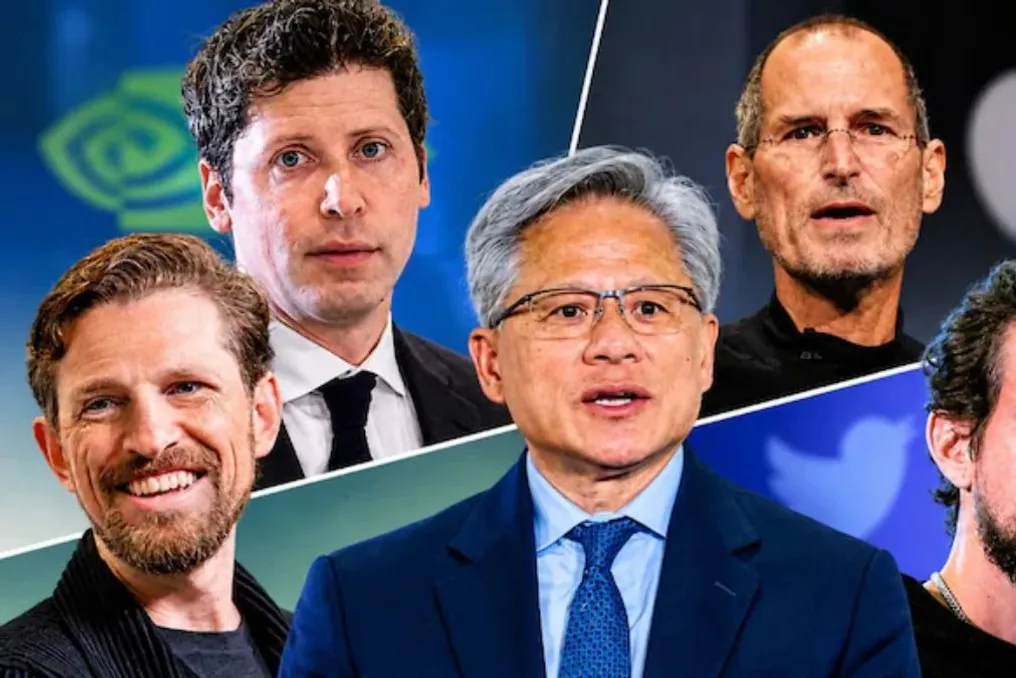
Five Tech Founders Who Returned to CEO Roles
Read more
www.aajtak.in

Five Tech Founders Who Returned to CEO Roles

In the technology industry, it is not uncommon for company founders who helped develop them to suddenly leave their leadership positions, only to return to the same companies later.

One of the most recent examples of this phenomenon is Geoffrey Huang, the CEO of Nvidia. He was reinstated as Chief Executive Officer on November 23rd following a unanimous board decision, less than two weeks after he resigned on November 12th.

Huang's return occurred during a period of instability at Nvidia. Following his departure, CFO Collette Kress was appointed as the interim CEO. However, after discussions with Huang, the board changed its decision, expressing confidence in his leadership qualities.

Huang's return brought to mind cases of other tech leaders who lost their positions but eventually managed to return to their companies. Among these figures are Steve Jobs and Sam Altman. These five founders have experienced sharp turns in their careers.

Huang founded Nvidia in 1993 with Chris Malachowsky and Curtis Priem. Under his leadership, the company transformed from a graphics chip manufacturer into a major force in artificial intelligence computing. After his resignation on November 12th, management changed, and Kress temporarily took over. Nevertheless, this change did not last long, as Nvidia announced Huang's reappointment as President and CEO on November 23rd by board resolution.

The board stated that it considered him a suitable person to lead the company. His return coincided with an ongoing independent investigation into the circumstances of his departure.

Sam Altman's exit from OpenAI in November 2023 became one of the biggest corporate board controversies in the tech industry. The company's board removed him from the CEO position, citing a loss of confidence in his leadership. However, following this board decision, a revolt among employees began; over 700 people signed an open letter demanding his return. OpenAI's major investor, Microsoft, also offered Altman a role leading a new AI research team.

After several days of uncertainty and negotiations, OpenAI announced on November 21st that Altman would return as CEO under a new board. He officially resumed his duties on November 29th.

Steve Jobs' return to Apple is one of the most famous stories of a founder's comeback. In 1985, Jobs was removed from operational activities following disagreements with then-CEO John Sculley and the Apple board. He founded NeXT and joined Pixar. In 1996, Apple acquired NeXT, allowing Jobs to return to the company he co-founded. Initially, he returned as a consultant before becoming interim CEO in 1997.

His second tenure fundamentally changed Apple's destiny. Products such as the iMac, iPod, iPhone, and iPad emerged under his leadership, transforming the company into one of the world's most valuable technology businesses.

Jack Dorsey founded Twitter in 2006 and became its first CEO. However, due to concerns about his management and the company's direction, he was ousted from the position in 2008. He founded the payment company Square, now known as Block, but remained associated with Twitter as chairman. Approximately seven years after leaving the CEO role in 2015, Dorsey returned as interim CEO, and his appointment was later confirmed permanently. He led Twitter until 2021, after which he left, and Parag Agrawal took his place.

Matthew Mullenweg's return to Automatic, the company behind WordPress.com, happened very quickly. In September 2026, the company's board sent him on paid leave, and CFO Mark Davis was appointed interim CEO. Mullenweg challenged this decision and subsequently returned as Chairman and CEO. Automatic confirmed his return on September 12th. The company informed TechCrunch that he had been absent for only 33 hours and 20 minutes. Following his return, changes were made to the board, and Mullenweg also gained significant influence through a controlling vote in the company.

Companies in the US and UK are rehiring employees after AI-driven layoffs
Read more
www.aajtak.in

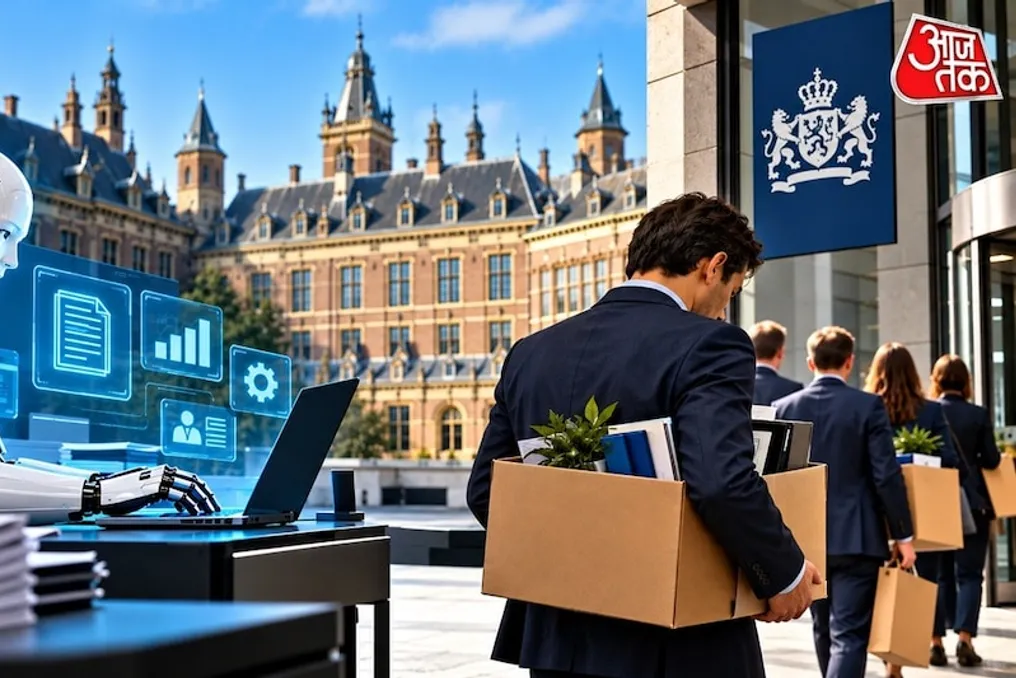
Companies in the US and UK are rehiring employees after AI-driven layoffs

Initially, it was expected that artificial intelligence (AI) would make companies faster and more efficient. However, these changes resulted in some employees losing their jobs. Now, many companies realize that replacing people with AI proved more difficult than they anticipated.

In the US and the UK, several employees who were laid off due to AI have subsequently been invited back to work. In India, there is also a rise in AI-related vacancies, but pressure remains due to job cuts from automation and reduced opportunities for junior specialists.

According to a study published in the Fortune report on November 9, talent assessment company SHL found that 19.1% of employees in the US reported being replaced by AI and were then offered a return to work. According to the same study, the overall figure for the US and UK was 16%. SHL termed this situation 'AI Rebounding.'

This raises a question for companies: what happens if the implemented technology cannot perform all of an employee's tasks? The problem goes beyond the limitations of chatbots and automated systems. Companies also understand that employees possess institutional knowledge, client relationships, and professional decision-making experience that is difficult to replicate with technology.

In July, reports from recruitment firm Robert Half showed that 32% of hiring managers in the US reported that their companies had to reinstate positions eliminated due to AI or create similar roles. Furthermore, 40% of such companies noted that AI could not replace institutional knowledge, 39% pointed to the need for relationship management, and 38% stated the need for a higher level of human oversight and quality control.

Automaker Ford also hired and promoted 350 experienced engineers in June. AI-based quality control systems did not perform as expected. The company emphasized that while AI can improve quality, an experienced engineering team remains indispensable.

Employees who are invited back may not agree to return under the same conditions. According to SHL results, 51% of workers facing 'AI Rebounding' demanded a significant salary increase before returning. Additionally, 42% requested a written guarantee of future job security, and 40% wanted clearer information on how AI would be used in their roles.

This data indicates that rescinding a layoff decision is not just about reopening a position. Companies need to rebuild the trust of employees whom they previously considered easily replaceable.

An Associated Press report from October 29 indicated what employees should consider before accepting such offers. It mentioned the necessity of discussing improved salary, career growth opportunities, and clarity regarding whether the returning employee would face automation in the future.

Employees can also consider roles where their current experience would be linked to the implementation, monitoring, and quality control of AI work.

Pressure on employment is also observed in India due to the adoption of AI. Although there is no comparable evidence yet on how often Indian employees get their jobs back after AI-related layoffs, an analysis by Nomura, obtained by Bloomberg in an India Today report on August 8, showed that 83,100 AI-related vacancies were registered in India, while the number of layoffs and employee departures totaled 31,921. This suggests that AI is creating new opportunities alongside changing existing roles.

Nevertheless, these changes are not easy for employees. An India Today report from October 8 noted that automation affects entry-level employment opportunities, especially in the technology and financial services sectors, where AI is rapidly taking over routine tasks previously assigned to new graduates.

The main issue is that companies are implementing automation too quickly without fully understanding its consequences.

'AI Rebounding' does not mean that automation has failed or that companies will reverse every layoff. This situation demonstrates the risk of viewing human experience as a disposable cost that can be eliminated without consequence. Employees need to learn to work with AI, but qualities such as the ability to make sound decisions, experience, creativity, and interpersonal skills remain extremely important.

The question is no longer just whether AI can do a human's job. The question is whether companies fully understand the job and responsibilities of an employee before deciding to replace them.

Popular