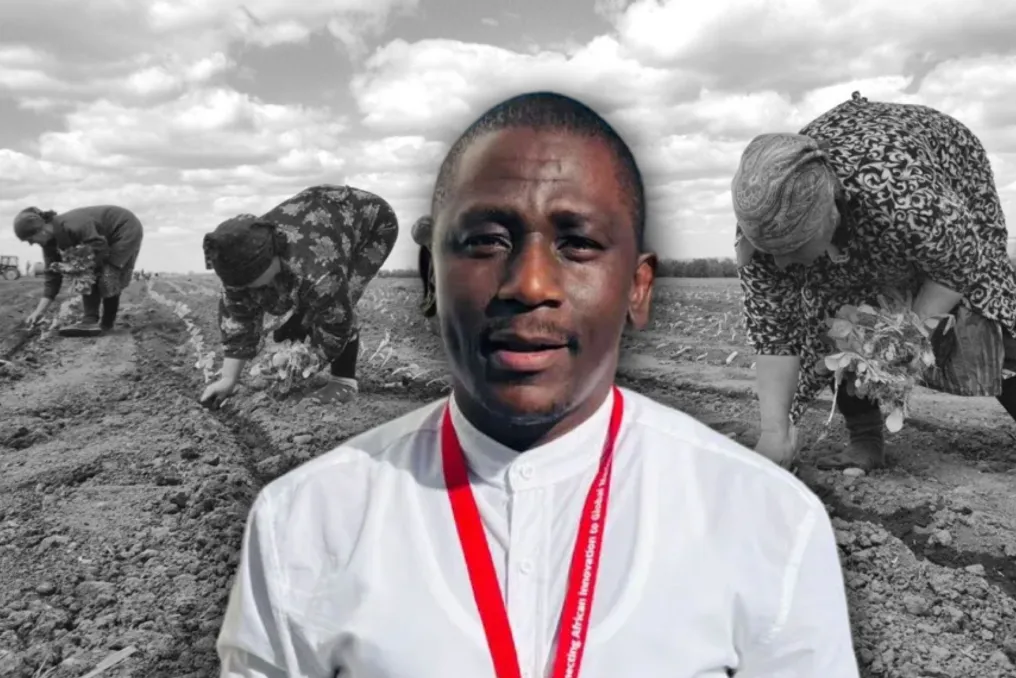
Employment Crisis in South Africa: Challenges in the Agricultural Sector
Read more
Food For Mzansi
foodformzansi.co.za

Employment Crisis in South Africa: Challenges in the Agricultural Sector

In the third quarter of 2026, 34,000 jobs were lost in South Africa's agricultural sector, creating growing pressure on rural livelihoods. ARC researcher Dr. Walter Shiba analyzes the latest Stats SA data and argues that solving youth unemployment requires attention not only to primary farming but also to agro-processing, cold chain logistics, and blended financing.

Recent data on South Africa's labor force reveals a complex paradox: despite job growth, the unemployment rate is also increasing. Although the economy added jobs in the third quarter of 2026, the number of people seeking work grew even faster, keeping the official unemployment rate at a persistently high level.

According to the Statistics South Africa Labour Force Survey for the third quarter of 2026, employment rose by 101,000 people, reaching approximately 16.8 million. However, the number of unemployed also increased by 97,000, totaling 8.6 million. Consequently, the official unemployment rate slightly rose to 33.7% from 33.6% in the previous quarter. These figures indicate that job creation alone is insufficient; South Africa must create jobs faster than its workforce is growing.

The agricultural sector remains vital for rural employment, household incomes, and food security. Nevertheless, between the second and third quarters of 2026, agricultural employment declined by approximately 34,000 jobs, falling from about 944,000 to 911,000, representing a quarterly decrease of 3.6%. Furthermore, agricultural employment was about 9,000 lower than in the corresponding quarter of 2025.

This decline is worrying because agriculture is one of the few sectors capable of generating jobs where alternative economic opportunities are limited. Job losses in farming affect not only individual workers; they reduce rural household income, weaken demand in local businesses, and increase the burden on social support systems.

Various factors can influence agricultural employment, including seasonal production cycles, adverse weather conditions, rising input costs, weak infrastructure, and uncertainty in domestic and export markets. Mechanization and technological adoption can boost productivity, but they may also reduce demand for certain categories of labor if not accompanied by investments in processing, logistics, and other labor-intensive activities.

The labor market crisis is particularly acute among young South Africans. In the third quarter of 2026, there were about 10.4 million people aged 15 to 24 in the country, of whom 35.7% were unemployed, uneducated, or untrained. This figure was 1.8 percentage points higher than in the same quarter of 2025.

Young people who remain outside the labor, education, and training market for extended periods face an increasing risk of permanent exclusion from the labor market. Therefore, the country needs intervention measures that combine practical skills development with real pathways to employment, entrepreneurship, and agricultural value chains. Agriculture can provide some of these pathways, but youth should not be directed into this sector without access to land, finance, infrastructure, markets, technology, and mentorship. Training programs must be linked to commercial opportunities, not just end in certificates that do not improve employment prospects.

South Africa's agricultural employment strategy must go beyond simple farming. Significant employment opportunities exist throughout the food system, including:

  • agro-processing and food production;
  • storage, cooling, and transportation;
  • fresh produce markets and retail distribution;
  • agricultural resource supply and machinery services;
  • digital agriculture and market information services;
  • extension, veterinary, and technical services;
  • export logistics and compliance.

For example, increasing horticultural production can create jobs on farms, but additional employment can also be generated through sorting, packaging, cold storage, processing, and transportation. This requires coordinated investment across the entire value chain.

Small and emerging farmers also need reliable market access. Government procurement programs, commodity organizations, agribusinesses, and retailers can support employment by integrating capable producers into structured supply schemes. However, market access must be supported by extension services, quality assurance, financial management, and robust infrastructure.

Recent data points to several priorities. Firstly, South Africa needs a more thoughtful agro-processing strategy focused on labor-intensive goods and regions with high unemployment. Investment incentives should encourage enterprises that create sustainable jobs, purchase products from local producers, and operate in rural areas.

Secondly, issues with poor roads, unreliable power supply, limited water infrastructure, and high logistics costs must be addressed. These constraints reduce agricultural profitability and discourage employers from expanding their operations.

Thirdly, agricultural training must directly meet industry needs. Partnerships between agricultural colleges, universities, research institutions, commodity organizations, and private companies can provide on-the-job training in technical production, farm management, food processing, data analysis, and agricultural marketing.

Fourthly, emerging producers require combined financial and technical support. Finally, policymakers must recognize that informal and household economic activities are important sources of livelihood. The latest survey recorded a decline in employment in both the informal and household sectors during the third quarter.

The unemployment crisis in South Africa will not be solved by one sector alone. However, agriculture and the broader food system can make a significant contribution, especially in rural communities where unemployment and poverty are concentrated. Thus, the decline in agricultural employment should serve as a warning. The country cannot view agriculture solely as a source of food and export revenue; it must be managed as a strategic asset for employment and rural development.

Third-quarter data shows limited progress, but it also reveals the scale of the problem. The creation of 101,000 jobs is welcome, but it is insufficient when 8.6 million people remain unemployed and new people continue to enter the labor market. South Africa needs faster, more inclusive, and labor-intensive growth. Agriculture, agro-processing, and the broader food economy must be central to these efforts.

In conclusion, the South African labor market continues to face a fundamental challenge: job creation is not keeping pace with the growing number of job seekers. While the economy added 101,000 jobs in the third quarter of 2026, unemployment remained stubbornly high, and agriculture, a key source of rural livelihoods, recorded a significant loss of jobs. Expanding employment opportunities in agriculture, agro-processing, and the broader food value chain, while simultaneously improving infrastructure, developing skills, and improving market access, will be crucial for achieving more inclusive growth and significantly reducing unemployment.
Similar stories

Experts warn: seedling distribution is insufficient to combat drought under climate change conditions
Read more
foodformzansi.co.za

Experts warn: seedling distribution is insufficient to combat drought under climate change conditions

The distribution of seedlings and tools is not a sufficient measure to counteract future droughts caused by hotter and drier conditions brought by El Niño in South Africa. In the context of COP31, dedicated to climate-resilient food systems, Simile Mikze from Tshikululu Social Investments explains why social investors should cease funding short-term results and begin investing in water security, reserve funds, and post-harvest support.

The thirty-first United Nations Climate Change Conference (COP31), which began in Turkey on November 9, includes food security as a priority topic in its Agenda for Action. This topic covers climate-resilient agriculture and strengthening the links between food and water management. Discussions at COP should prompt social investors to reconsider their approach.

This includes posing important questions such as: 'Will the food security programs we fund today help households eat well after the next drought, flood, or price shock?' The conference serves as a reminder and a call to action to consider household resilience to shocks as part of project design and to fund necessary support.

Food security means consistent access to sufficient and nutritious food over the long term. A successful harvest or food parcel meets an immediate need, but sustainable food security depends on what happens when rainfall stops, incomes disappear, or food prices rise.

According to the UN report on the state of food security and nutrition in the world for 2026, 645 million people faced hunger in 2025. Although this is almost 14 million fewer than in 2024, the figure remains alarmingly high.

Data from South African households show a worsening situation in the previous period: moderate and severe food insecurity increased from 15.8% of households in 2019 to 19.7% in 2023. These figures reflect different conditions and periods, but the trend in South Africa underscores the need for sustainable local action.

The issue of accessibility remains a central problem. In September 2026, the Group for Economic Justice and Dignity Pietermaritzburg set the cost of a food basket for seven people at approximately 5,488 rand, compared to 6,655 rand for a basic nutritious basket of the same size household. This gap reflects the discrepancy between what households buy and the cost of a complete diet. Growing vegetables helps, but it does not eliminate the need for sufficient income to purchase other foods.

As reflected in the priority items of the COP31 agenda, climate risks exacerbate existing pressures. On September 3, the World Meteorological Organization warned of intensifying El Niño, increasing the risks of drought, flooding, and extreme heat. The South African Weather Service's September forecast indicated hotter and drier conditions in many parts of the country in the coming months. These forecasts reinforce the arguments for more resilient food systems and better preparation for poor harvests.

This is where the focus of COP31 on sustainability must influence social investment decisions. Trialogue estimated South Africa's total corporate social responsibility spending at 13.1 billion rand in 2025. Their study showed that food security and agriculture accounted for an average of 13% of participating companies' CSR spending.

Funding organizations must ask what long-term protection this investment provides. Household gardening programs illustrate this problem. For a household that relies on a backyard garden for food and income, a crop failure creates a double burden: reduced food availability while simultaneously eliminating a source of income. Irrigation, savings, insurance, and credit provide protection where households have access to them. Without these resources, a weather shock quickly turns into a food and income crisis.

Seedlings, shade nets, shovels, rakes, and training can better prepare households for food production. Funding organizations provide these resources and track the number of gardens created, inputs distributed, and training sessions conducted. These results demonstrate delivery. They do not confirm that households will sustain production, improve diet, or recover from poor harvests after program support ends.

When funding stops at the creation stage, programs leave households to cope with risks threatening their progress. A garden without reliable water supply, input replacement, or practical follow-up support offers limited protection against a prolonged dry spell. Funding organizations must consider the costs of maintaining project outcomes when making investment decisions.

Work begins with planning. Program teams must assess households' access to water, income sources, available labor, care responsibilities, and vulnerability to local climate risks before intervention. They must agree with participants on what support is realistic and who will sustain it. Where households lack land, water, or time, a garden alone will not solve their food insecurity problem.

Agricultural support must be tailored to local conditions. Crop diversity, mulching, and water harvesting help households cope with dry conditions. Drainage, raised beds, and flood preparedness address other risks. Training must explain when and how to apply these methods, followed by support that helps households troubleshoot as conditions change.

Climate instability means that program implementation must be flexible and adaptable. Funding organizations must provide contingency budgets, allow flexibility in implementation timelines, and pre-agree on how beneficiaries will react to crop loss or household failures. Local support networks, savings groups, nutrition education, market access, and linkages to social assistance that complement agricultural inputs can help manage uncertainty.

Monitoring and evaluation must start with program planning and continue after the first harvest. Trialogue's 2025 study showed that 68% of surveyed companies had M&E policies, but only 36% allocated a specific budget for this work. Most of these allocations were 5% or less of CSR budgets. This puts funding organizations at a disadvantage for assessing outcomes and making informed decisions in the future.

In this context, a good M&E system involves establishing a baseline, tracking results across seasons, and studying what happens after shocks. Are households eating a wider range of nutritious foods? Has home production led to reduced food expenses? Does surplus produce generate income after deducting costs?

How quickly does production recover after a shock? Answers should guide changes in support, alongside manual activity reporting. These questions reflect the four dimensions of food security: availability, access, utilization, and stability. Food must exist, households must be able to obtain it, and diets, cooking practices, and health status must support good nutrition. These conditions must also be maintained over the long term.

The number of gardens created is only a partial measure of food security and cannot, by itself, demonstrate whether households are fed.

COP31 provides governments, businesses, and social investors with an opportunity to link climate commitments to household realities. The answer for funding organizations must include longer funding periods when necessary, budgets supporting adaptation and recovery, and metrics that track households after project completion.

The real test is whether households still have reliable access to nutritious food after the next unforeseen cost, flood, price spike, or drought. Investments in food security must pay for the conditions that make these achievements sustainable and viable in the long run. This is the standard that South African social investors must bring to the COP31 discussion.

South African agriculture cuts 34,000 jobs due to rising resource costs
Read more
foodformzansi.co.za

South African agriculture cuts 34,000 jobs due to rising resource costs

South Africa's agricultural sector lost 34,000 jobs in the third quarter of 2026. Producers cite sharp increases in diesel and other resource prices, low maize yields, and hot, dry weather conditions as primary factors forcing farm staff reductions.

The overall negative economic situation in the country significantly impacts various sectors, including agriculture, regarding job retention. According to Agbiz senior economist Vandile Sikhlobo, 911,000 people were employed in primary agriculture in the third quarter of this year, which is 4% less than in the second quarter.

Sikhlobo noted that in the same period last year, the decline was minor—only 1%. He added that employment declines are observed annually in most provinces, with the exception of the Western Cape and Limpopo.

The expert emphasized that despite existing difficulties, workers in the sector have maintained a relatively stable employment level. In discussions with farmers across the country and data analysis, Sikhlobo indicated that growing resource costs, especially fuel and fertilizer, along with the war in Iran, are pressuring the industry.

Sikhlobo warned that the El Niño drought will have a significant impact on the agricultural sector during the 2026/27 production season. He stated that prospects for improving agricultural employment remain uncertain, with improvement expected only after the drought ends.

Recent data from the South African Statistics Agency (Stats SA) Labour Force Survey shows that agriculture recorded the second-largest job reduction among industries in the country between the second and third quarters of 2026.

The official Stats SA report highlighted the sharpest sectoral declines nationwide: private households (68,000), agriculture (34,000), and construction (8,000).

AgriSA reported that the quarterly employment drop is 3.6%, while annual figures show approximately 25,000 lost jobs (2.7%) compared to the third quarter of 2025. The organization noted that while quarterly fluctuations are normal for farming, the annual decrease underscores the importance of monitoring employment trends outside of seasonal changes.

In the Free State province, producers confirmed that high operating costs and adverse weather conditions directly affected their ability to retain staff. Farmer Sejhaba Ramabenyane reported that increased production costs forced him to reduce his workforce during this period, laying off three employees.

He attributed this to soaring operational expenses, noting that high resource and diesel prices tripled his operating costs, alongside ongoing climate challenges. Ramabenyane explained that the high cost of diesel made running the farm very expensive, and climate issues also played a role.

A colleague from the Free State, Kyle-Jones Middleton, noted that although he managed to retain current staff, severe financial pressure across the farming community forced many neighboring farms to scale back operations. Middleton pointed out that producers without on-farm storage facilities suffered heavy financial losses during the 2025/26 maize harvest because they had to sell grain at discounted prices, leading most farmers to losses.

Combined with the hot and dry conditions, these financial constraints prevented farmers from maintaining previous production levels or full staffing. Middleton added: 'The weather also plays a role; it is very dry and hot right now. Some farmers have been forced to consolidate their cattle herds and reduce acreage; consequently, they require less labor, and they cannot afford it.'

How South Africa can protect agricultural export growth amid tariff changes and the end of Agoa benefits
Read more
foodformzansi.co.za

How South Africa can protect agricultural export growth amid tariff changes and the end of Agoa benefits

Despite achieving a record $15.1 billion in agricultural exports in 2025, South Africa faces challenges caused by changes in US tariffs and the imminent conclusion of Agoa program benefits. Economists from NAMC, Bhekani Zondo, and Mahlogedi Thindisa propose specific policy solutions for South Africa's agricultural sector.

South Africa demonstrates steady growth in agricultural exports and maintains a competitive position in global markets. Through the implementation of the Agricultural and Agro-processing Master Plan (AAMP)—a joint social contract between the government, industry, farmer organizations, and other partners—there is an opportunity to strengthen this momentum and expand the country's export potential.

The AAMP and the Industrial Development Strategy (2026) aim to maintain existing markets and diversify the range of exported products. As a member of the World Trade Organization (WTO), South Africa's export portfolio is defined by various trade agreements and preferential protocols within the Southern African Customs Union (SACU) concluded with the rest of the world.

Since the agricultural sector is export-oriented, it is vulnerable to global disruptions due to several factors: rising and high fuel and fertilizer costs stemming from the geopolitical situation, climate change and the looming El Niño phenomenon, protectionist policies of large and dynamic economies, a weak biosecurity system, as well as strict tariffs and non-tariff measures (NTMs) in key markets.

In 2025, South Africa's agricultural exports reached a record level for the sixth consecutive year since 2020. By the end of 2025, the total value of agricultural exports amounted to approximately $15.1 billion, which is 10% more than the $13.7 billion exported in 2024. The African continent became the main destination for South Africa's exports. In 2025, Sub-Saharan Africa (SSA) accounted for 42% of total agricultural exports, followed by the European Union (21%), Asia and the Middle East (20%), the United Kingdom (7%), the Americas (6%), and the United States of America (USA) with less than 4%.

Agricultural exports to the USA totaled $516 million (9.2 billion rand), lower than the $535 million recorded in 2024. This represents a 4% year-on-year decrease, leading to a loss of export revenue of approximately 580 million rand, partly due to mutual US tariffs of 30%.

Under the current US administration, South Africa faced reciprocal tariffs of 30% on all exports to the USA, including agricultural products. However, on February 20, 2026, the Supreme Court ruled that these reciprocal tariffs, imposed under 'emergency powers' according to the International Emergency Economic Powers Act of 1977 (IEEPA), did not include the right to impose broad import duties. Nevertheless, South Africa remains subject to Section 301 tariffs of about 12.5%, although there are significant exemptions covering around 2,100 product lines and covering a large portion of exports to the USA.

At least until December 31, 2026, South Africa's agricultural sector has duty-free access to US markets for certain agricultural goods under the provisions of the African Growth and Opportunity Act (Agoa). Agoa came into effect in 2000 and is a unilateral trade measure by the US providing preferential access to the US market through lower or absent tariffs for pre-defined product lines, including agricultural products from SSA countries.

As early as 2014, the classification of South Africa as a higher-middle-income country and the need for its exit from the Agoa program were discussed in the US. Meanwhile, South Africa continued to gain access to the US market through both Agoa and the Generalized System of Preferences (GSP). Agoa provided duty-free access for over 1,800 products, while GSP offered duty-free treatment for an additional 3,400 products from certain developing countries, including South Africa.

Until December 31, 2026, some South African products enter the US market under 12.5% tariffs. The consequence of South Africa exiting Agoa is an additional tariff under the Most Favoured Nation regime of about 3.4%. Overall, exiting Agoa will increase tariffs to approximately 15.9%, reducing the country's competitiveness in the US market.

Key agricultural commodities facing market access restrictions include macadamia nuts, citrus fruits (especially oranges and mandarins), ice cream, wine, raisins, apple juice, and others. Since the USA is a key trading partner, South Africa's exit from Agoa could have deep economic and political consequences, especially for the export-oriented and globally integrated agricultural sector.

In the long term, export diversification is likely to become the most crucial pillar for the sustainability of South Africa's agriculture, which must reorient itself towards stable regional and international markets. This will require prioritizing significant opportunities in high-income markets in Asia, Europe, and Africa, particularly for agricultural products such as wine, macadamias, citrus, and table grapes.

The government has initiated active efforts to diversify trade in line with the Industrial Development Strategy. This is evidenced by the recent signing of trade protocols with China regarding cherries, dairy products, fat wool, and avocados. Similarly, a protocol on beef was signed, and exports to Middle Eastern countries such as Jordan, Saudi Arabia, the UAE, and Egypt have started in full force. Furthermore, South Africa shipped its first consignment of table grapes to the Philippines at the beginning of the year.

In accordance with AAMP and the Strategy (2026), aggressive trade diversification efforts must continue. South Africa is likely to mitigate the immediate external shock from exiting Agoa by combining proactive trade negotiations, targeted incentives for exporters, effective and adequate support for farmers, and investments in logistics and compliance infrastructure.

The support package will also enable the agricultural sector to ensure a sustainable, competitive, and diversified export catalog and inclusive economic growth in the changing global trade landscape. Given that trade negotiations typically take a long time, there is a need to explore immediate intervention measures, which may include providing financial incentives for processing fresh produce, such as fruits into high-value products, as well as providing working capital to support additional storage facilities and orchard maintenance.

Popular