Enza Zaden Events Demonstrate Crop Performance From Farm to Market
Read more
Food For Mzansi
foodformzansi.co.za

Enza Zaden Events Demonstrate Crop Performance From Farm to Market

Enza Zaden events, focusing on pumpkin and iceberg lettuce, illustrate how direct customer interaction, market knowledge, and post-harvest research transform crop characteristics into stronger partnerships and commercial value across the fresh produce supply chain.

Field days can take various forms: they might involve tours of advanced plots, opportunities to compare varieties side-by-side, or platforms for exchanging practical experience. However, for Enza Zaden, they serve a broader strategic function—they are a platform where growers, retailers, processors, exporters, and industry partners directly engage with the people, products, and research that drive industry improvements.

Over more than 85 years, Enza Zaden has been instrumental in shaping the future of vegetable cultivation. The company, which began as a family seed business in the Netherlands, has evolved into a global leader in vegetable breeding while maintaining its status as a family enterprise guided by a long-term commitment to innovation, quality, and customer success.

Today, the company offers approximately 1400 varieties across 36 crops, introducing around 150 new varieties to the market annually. This scale is supported by continuous investment in breeding, research, and product development, which is reflected in the strength of their pumpkin and lettuce portfolios.

These lines provide solutions for diverse growing systems, cultivation conditions, and sales channels. Topics discussed during the events included innovations in storm-damaged field recovery, beginner guides to hydroponics, and post-planting checklists for a successful season.

The regional pumpkin portfolio includes 11 varieties in the Butternut, Gray, Hokkaido, and Kabocha segments, while the lettuce assortment features a wide selection of iceberg and specialty varieties. Innovations such as the award-winning Kaori Kuri demonstrate how breeding can successfully combine field performance with taste, shelf life, and market appeal.

Industry stakeholders compared varieties side-by-side, sharing practical insights on planting, yield potential, and traits required in different production systems and sales channels. These insights were showcased at the recent Pumpkin Matters and Iceberg Lettuce Field Days. Both events were designed to strengthen customer relationships, build strategic collaborations, increase brand awareness, and provide opportunities for hands-on learning. More importantly, they linked field characteristics to the quality, stability, and reliability demanded by the market.

Customer engagement remained a central theme throughout the event. The Pumpkin Matters Field Days gathered growers, retailers, processors, and exporters to assess performance from multiple perspectives. Growers focused on planting, adaptability, yield potential, and disease resistance. Retailers and exporters evaluated stability, appearance, storage, and shelf life, while processors considered internal quality, taste, texture, and suitability for various applications.

Growers, processors, and exporters personally assessed the Enza Zaden pumpkin portfolio, analyzing field adaptability alongside internal quality, storage capabilities, and shelf life.

Post-harvest research added further value to these discussions. Enza Zaden's work extends beyond harvest through sensory evaluations, maturity assessments, storage trials, and physical and chemical analysis. The resulting data helps determine yield potential, shelf life, taste, nutritional quality, and product stability—qualities that enhance customer trust, facilitate market adoption, and strengthen commercial implementation.

A similar strategic approach was demonstrated at the first Enza Zaden Iceberg Lettuce Field Day. Growers, processors, retailers, and other stakeholders examined the portfolio firsthand, investigating factors affecting post-harvest quality. Alongside genetics, maturity, handling, hygiene, temperature management, and cold chain discipline were assessed to provide a complete picture of performance, showing not only how the crop grows but also how effectively it continues to deliver value after leaving the field.

The positive reception strengthened existing partnerships, created new sales opportunities, and boosted confidence in Enza Zaden's lettuce offering. This collaboration—connecting field characteristics with solutions most critical across the entire value chain—is when Enza Zaden's value proposition becomes tangible. It is not just about developing strong varieties, but about ensuring those strengths deliver meaningful results for customers. Because performance does not end at harvest; it is proven in the market.

Similar stories

Rainfall distribution and soil condition are more important than average annual rainfall for corn yield
Read more
foodformzansi.co.za

Rainfall distribution and soil condition are more important than average annual rainfall for corn yield

For grain producers in South Africa, drawing conclusions about the season based solely on overall seasonal precipitation figures can be misleading. In a podcast episode, Pannar Seed researcher-agronomist Burger Minnaar explains why rainfall distribution, soil health, and the timing of heat spells are far more significant.

When farmers in South Africa assess a season, their attention is usually focused on the total amount of millimeters that fell during the period. However, behind these weather summaries lies a critical agrometeorological reality: overall precipitation figures rarely show how effectively the crop absorbed this moisture during the most vulnerable growth phases.

Minnaar, an agricultural researcher at Pannar Seed based in Kroonstad, Free State province, details how rainfall efficiency and extreme heat affect corn characteristics, and why producers should abandon reliance on seasonal averages to manage specific risk periods.

He explains that assessing a season requires looking beyond aggregate data. Rain falling in rare but intense downpours leads to longer dry spells between them, which increases surface runoff and subjects crops to water stress during critical development stages.

Minnaar notes that historical meteorological data from semi-arid agricultural areas of South Africa indicates that while the total volume of seasonal rainfall does not show a clear long-term shift, the number of rainy days has decreased by approximately 0.56–1.16 days annually. Since precipitation is concentrated in fewer events, soil management becomes central to climate risk discussions, as it is necessary to capture and retain moisture.

The researcher points out that factors such as infiltration, runoff, crop residues, soil compaction, and limiting soil layers, along with weed control, directly determine what volume of precipitation ultimately reaches the crops.

Recent local studies highlight the growing threat of rising temperatures. Modeling based on historical trial data and meteorological datasets shows that under a 1°C warming scenario, yield is expected to decrease by approximately 7.86%, and with a 2°C warming, by 17.31%.

Minnaar emphasizes that corn is particularly sensitive during flowering, pollination, and early grain filling, where temperatures above 30°C pose serious risks to the harvest. He explains that the crop is not equally sensitive to stress throughout its life cycle; several very hot days during this critical period can be far more destructive than the same temperatures in another phase, making seasonal averages sometimes misleading.

Temperature does not act in isolation. Heat accompanied by good subsoil moisture yields a completely different result than the same temperature affecting a crop already experiencing water deficit. To adapt, farmers need to view planting dates and variety selection as a single, integrated decision. Instead of simply changing planting times, producers must determine when a specific variety will flower and compare that period with historical heat and moisture risks in their region.

Minnaar notes that using different maturity classes of varieties helps avoid concentrating the entire harvest into one vulnerable heat period. He adds that variety selection cannot be separated from planting density, planting date, soil depth, and available water, pointing out that a strategy that works well in deep soil with good water retention capacity may carry significantly greater risk in small, moisture-limited fields.

Although producers cannot control temperature or precipitation, they maintain direct control over system resilience. Protecting the soil's ability to absorb water, matching plant density to realistic field potential, and selecting appropriate growth duration prevent an unjustified increase in farmers' exposure to weather risks. Minnaar stresses that the goal is not to eliminate weather risk, but to prevent its exacerbation due to mismatches in inputs or uniform management assumptions. He advises: 'Don't manage only based on the season average. Manage the risk windows.'

Minnaar strongly urges farmers to consult with their agronomists before starting the planting campaign. By analyzing local historical weather conditions, soil depth, and available moisture, producers can align their seed packages and input strategies with the true capacity of each field. Ultimately, while averages define what is recorded, it is the outcomes during critical growth phases that determine what will be harvested. He recommends having this conversation with an agronomist before the season begins, asking about the probable flowering time of the crop, historical heat and moisture risks during that period, and the alignment of the chosen variety, planting density, and input strategy with the actual potential of the field.

CMD of Deepak Fertilizers discusses four problems with excessive fertilizer use in agriculture
Read more
www.aajtak.in

CMD of Deepak Fertilizers discusses four problems with excessive fertilizer use in agriculture

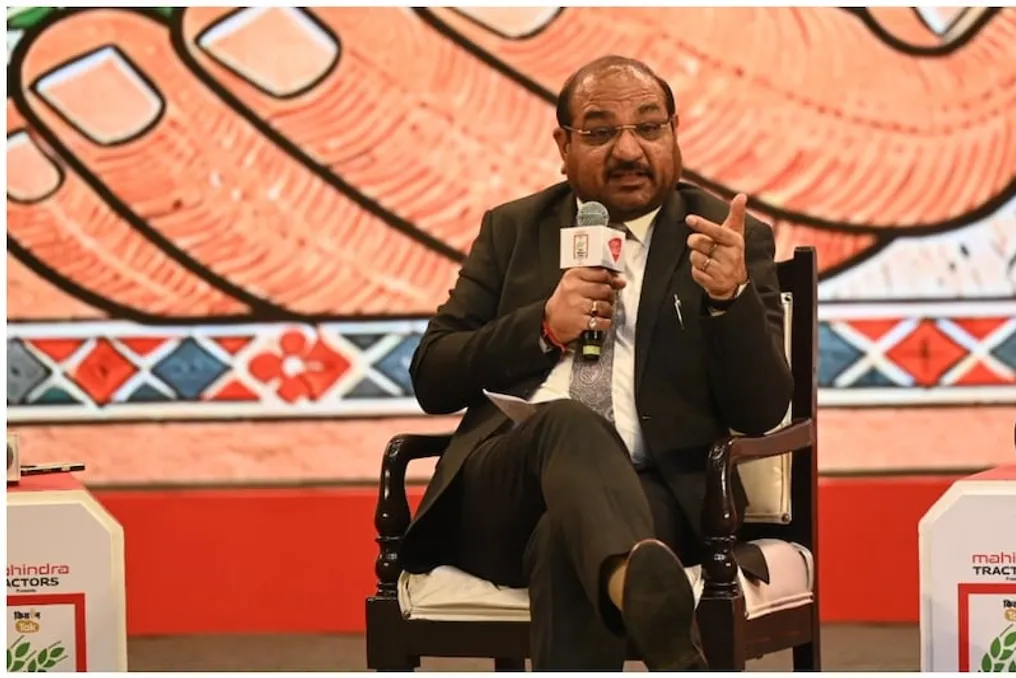
At the 'Kisan Tak Bharat Agriculture Conference 2026' in Delhi, organized by India Today Group, SC Mehta, Managing Director (CMD) of Deepak Fertilizers and Petrochemicals Corporation Limited, raised several issues concerning fertilizer use in agriculture that require serious consideration from farmers.

During the session 'Good Fertilizer, Correct Dosage, Smart Farmer' on November 12, Mehta noted that despite the use of fertilizers in India, the expected increase in crop yield has not been observed. The reason for this is unbalanced application of fertilizers and insufficient matching of nutrients to soil requirements.

SC Mehta stated that over the last fifty years, from the 1970s to 2020, the ratio of yield growth due to fertilizer use has decreased by approximately 7%. This means that the benefit derived from fertilizer application, which was previously higher, is now achieved to a lesser extent. He also mentioned that farmers might notice changes in the taste of grains, bread, and fruits, indicating the need not just to increase the quantity of fertilizers, but to provide the soil and crops with the necessary nutrients.

Comparing agricultural productivity in India and China, SC Mehta highlighted India's significant lag in per-acre yield. He cited an example that wheat yield in India is about 40% lower than in China. Despite the use of land and fertilizers, the expected increase in productivity is not occurring, which necessitates a review of both traditional farming methods and fertilizer application approaches.

Mehta also expressed concern over the environmental damage caused by unbalanced fertilizer use. He stated that only about 30% of urea and DAP (diammonium phosphate) applied to fields is absorbed by plants. The remaining approximately 70% of nutrients do not reach the plants and can harm the soil, water, and environment in various ways. Therefore, it is crucial to apply fertilizers according to needs and in the correct dosage; excess fertilizer will not bring full benefits.

He also touched upon government spending on fertilizer subsidies. SC Mehta noted that the government spends about 2 to 2.5 lakh crore rupees annually on fertilizers, yet farmers are not reaping the expected benefits in agriculture. He questioned: why does all this money invested by farmers, the land, and the government not yield complete results? In his opinion, both the fertilizer subsidy system and current application methods need to be reviewed.

SC Mehta gave farmers important advice: fertilizers should be viewed as medicine for the field. Just as a person takes medicine as prescribed by a doctor and in the correct dose to maintain health, fertilizers must be applied in the field according to needs. He emphasized: 'It doesn't matter how cheap the medicine is; it cannot be taken in excess. The same applies to fertilizers; they are cheap, so applying them in large quantities incorrectly is wrong.' According to Mehta, agricultural scientists should convey their scientific research and technical information directly to farmers so that the successes of science are reflected in the income and yield of farmers.

SC Mehta explained that not all crops require the same fertilizers. The nutrient requirements of diverse crops such as sugarcane, cotton, and onion differ. Consequently, fertilizers must be developed considering the specific crop. He mentioned that his company has developed specialized fertilizers for various crops in Maharashtra, taking into account their needs. These fertilizers include micronutrients and biostimulants along with nitrogen, phosphorus, and potassium (NPK).

The goal of this approach is to ensure the crop receives the necessary nutrients in a balanced amount so that it can maximize the benefits of fertilizers. Based on his experience, he noted that growing sugarcane resulted in improvements not only in yield but also in sugar content. Cotton showed improved fiber quality, and onions showed better bulb size and shelf life.

The company conducted 100,000 demonstration plots over five years.

ICAR Director Mangi Lal Jhaat explains new agricultural model: every farmer's field is a laboratory
Read more
www.aajtak.in

ICAR Director Mangi Lal Jhaat explains new agricultural model: every farmer's field is a laboratory

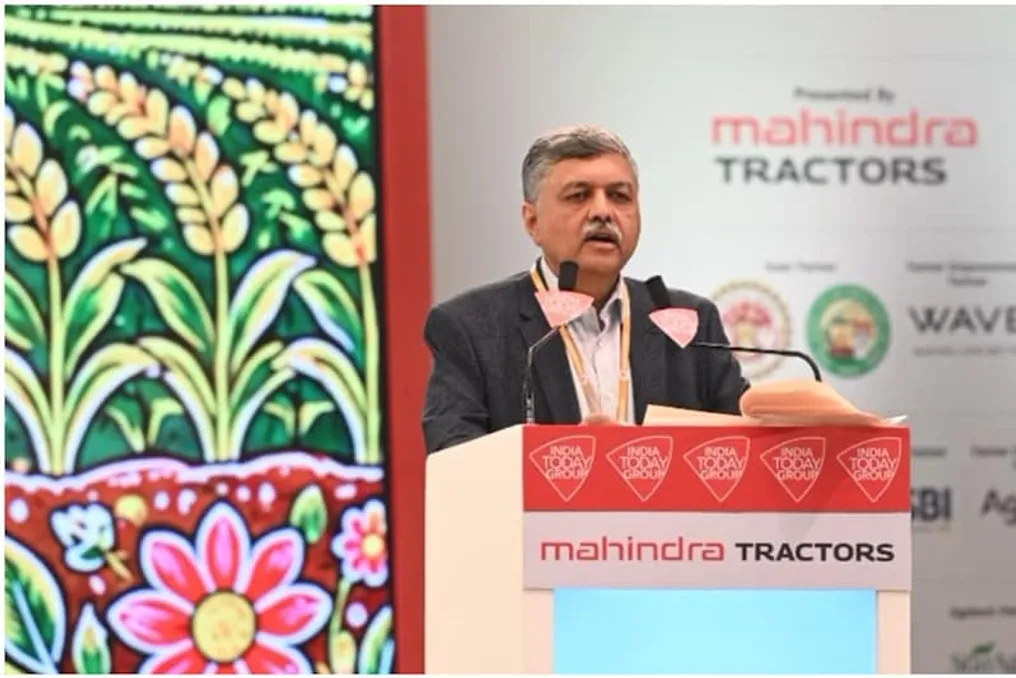
At the 'Kisan Tak Bharat Agriculture Conference 2026,' Director of the Indian Council of Agricultural Research (ICAR), Dr. Mangi Lal Jhaat, emphasized that scientific developments and new methods in agriculture will only bring real benefit when they reach the farmers' fields directly. He noted that simply conducting research in laboratories is insufficient for transferring technology to farmers.

During the session 'Laboratory Reaching the Fields' at the event organized by India Today group in Bharat Mandapam, the Dean of Agricultural Research and Education (DARE) and ICAR Director, Dr. Mangi Lal Jhaat, stated the critical importance of dialogue between science and farmers. He stressed that solutions developed in laboratories should not be imposed on farmers; instead, their needs and the actual conditions on the fields must be taken into account.

Dr. Mangi Lal Jhaat proposed shifting the focus: instead of bringing laboratories to the fields, the fields themselves should be transformed into laboratories. He believes that every farmer's field should function as a 'Living Laboratory' and a 'Learning Laboratory.' This implies creating a system of continuous learning based on experiments, farmers' experience, and real-world conditions present on the ground.

He acknowledged that changes have occurred in the process of disseminating agricultural research and technology among farmers, but he noted the need for further improvement. The method of implementing new agrarian technologies should not be one-sided.

In his speech, Dr. Mangi Lal Jhaat particularly highlighted the concept of 'Double Loop Learning.' In his view, a single, unidirectional learning process in agriculture is not enough. Typically, there is a process where scientists conduct research, and then the results are transferred to farmers, but the understanding of the farmer's true needs and the specifics of their field is often ignored.

With double loop learning, a continuous exchange of experience and dialogue is established between scientists and farmers. Scientists study the farmers' problems, and farmers share their experience gained from new experiments and technologies. Thus, a two-way learning process occurs between research and practical farming. According to Dr. Jhaat, this dialogue and participation are the crucial link between the laboratory and the land, helping to adapt agricultural research to real needs.

Dr. Mangi Lal Jhaat also emphasized the significance of involving the farming community. He noted that agricultural platforms provide an opportunity for farmers and experts to share their experiences. Such events promote an understanding of real challenges in agriculture and the search for solutions. He thanked the India Today group for organizing the event, noting that the gathering of experts and farmers from different countries is an important step for the agricultural sector.

Popular