How Soil Health Contributes to the Creation of Sustainable Farms
Read more
Food For Mzansi
foodformzansi.co.za

How Soil Health Contributes to the Creation of Sustainable Farms

Bare and compacted soil loses valuable moisture and topsoil due to surface runoff. Agricultural experts, including Dr. Lehlogonolo Mathelele, Nompumelelo Ngejane, Samukelisive Ndlovu, and Asife Nzamu, explain how conservation agriculture methods and integrated crop and livestock systems help farmers in South Africa retain moisture, reduce resource costs, and protect crops before dry spells.

Healthy soil performs functions beyond just being a source of nutrients; it helps farmers capture precipitation, support crop growth, recycle resources, and increase farm resilience under adverse weather conditions.

A good rainy season does not always guarantee a good harvest. When soil is bare, compacted, or poorly structured, a significant portion of rainfall runs off the surface, carrying away valuable topsoil and nutrients. Consequently, if dry conditions set in, crops can struggle due to insufficient water reserves for their roots.

For farmers facing increasing weather variability and rising production costs, healthy soil is one of the farm's most valuable assets. While farmers cannot control the amount or timing of rainfall, they can influence how effectively their soils absorb, retain, and supply water to agricultural crops.

Soil health depends not only on the available quantity of nutrients but also on soil structure, organic matter, water movement, root development, and the organisms living in the soil. By protecting the soil, diversifying crops, and carefully managing crop and livestock residues, farmers can create more resilient production systems that efficiently utilize available resources.

Conservation agriculture and integrated farming principles offer practical approaches to achieving these goals. By adapting these practices to local soil conditions, climate, available resources, and farming objectives, they promote sustainable production and a more efficient agricultural economy.

Conservation agriculture is a sustainable method of farming aimed at improving soil condition, conserving water resources, reducing erosion, and maintaining or increasing agricultural productivity by minimizing soil disturbance and protecting it.

This approach is based on three core principles that work together to protect the soil and support sustainable crop production.

Intensive repeated tillage can destroy soil aggregates, expose organic matter to decomposition, and make the soil more vulnerable to erosion. Where possible, farmers can consider minimal or reduced tillage as part of an overall soil management strategy.

However, conservation agriculture does not mean that soil should never be disturbed. Some areas may require corrective measures to address specific limitations, such as severe compaction. The appropriate response depends on the cause and scale of the problem, soil moisture, and the needs of the growing system.

Farmers should also consider weed pressure, equipment availability, planting requirements, and drainage before changing tillage methods. Reducing disturbance is most beneficial when combined with effective weed management, suitable crop rotations, and adequate soil cover.

Bare soil is vulnerable. Heavy rains can dislodge soil particles, causing erosion, and high temperatures increase moisture loss through evaporation. Crop residues, mulch, and cover crops protect the soil surface, reducing the direct impact of raindrops and sunlight.

Where safe and practical, farmers should avoid burning or unnecessarily removing crop residues. These materials can help protect the soil and return organic matter as they decompose.

Nevertheless, in mixed cropping and livestock systems, residues can also serve as an important feed source for animals, especially during dry periods. Therefore, farmers must find a balance between the livestock's feed needs and the need to protect the soil.

If residues are scarce, farmers can focus on the most vulnerable parts of their fields, retaining as much protective cover as possible, and consider other local materials for mulch or suitable cover crops. The best approach will depend on rainfall, livestock numbers, crop production, and available resources.

The goal is not necessarily to save every piece of plant material in every situation, but to maintain sufficient protective cover to reduce erosion and support soil functions while meeting other necessary farm tasks.

Monocropping can exacerbate pest and disease problems and annually create similar nutrient demands for the soil. Crop rotation helps diversify root systems, improve nutrient cycling, support biological activity, and reduce dependence on a single crop.

Including suitable legumes, such as beans, peas, peanuts, or soy, can contribute nitrogen to the farm system through biological nitrogen fixation. The benefit depends on factors like crop growth, effective nodulation, and the amount of nitrogen-containing plant material left in the field. Therefore, legumes should be part of a broader soil fertility enhancement strategy, not viewed as a complete replacement for all fertilizer needs.

Cover crops are primarily planted for protection and soil improvement, especially during periods when the soil would otherwise be bare. Depending on the species and management style, cover crops can help reduce erosion, suppress weeds, support soil organisms, and provide organic matter. Some can also serve as animal feed.

However, cover crops must be chosen carefully, especially in arid regions. They consume water during growth, and improper timing of planting or termination can leave insufficient moisture for the next cash crop. Farmers must consider local rainfall patterns, soil water availability, planting dates, dormancy period length, and the needs of the subsequent crop.

Thus, selecting appropriate crops and managing them at the right time is crucial to achieving the intended benefits.

One can imagine the soil as a bank account that supports the farm. Every harvest removes nutrients, and some plant material is carried away from the field. If the soil is constantly cultivated, left open, and depleted without proper replenishment, its productive capacity can decline over time.

Farmers can protect this resource by returning appropriate organic materials, maintaining soil cover, minimizing unnecessary disturbance, and replenishing nutrients according to crop needs and soil test results. These practices help maintain soil structure, support biological activity, and improve the soil's ability to function as a productive resource.

These benefits are interconnected. For example, good soil structure allows roots to explore a larger volume of soil, while adequate soil cover protects the surface from erosion. However, the degree of these benefits depends on the soil type, climate, management, and field condition.

Crop production and livestock do not have to function as separate systems. Where animals are part of the farm, crop residues and suitable cover crops can serve as feed, and animal manure can return nutrients and organic matter to the soil. Improved soil conditions can then support the growth of crops and cover crops, creating opportunities for resource recycling within the farm system.

Instead of viewing residues, cover crops, and manure as separate resources, farmers can manage them together within a broader farming strategy.

However, the resource cycle is not a completely closed system. Nutrients are removed in harvested crops and livestock products, and some can be lost during storage, processing, and application. Therefore, manure must be managed and applied properly to maximize its value and minimize nutrient loss and potential water pollution.

Livestock integration also requires careful grazing management. Continuous or excessive grazing can remove protective vegetation, compact the soil, and increase erosion. Controlled grazing and appropriate stocking rates can help maintain soil cover, allowing vegetation to recover.

Integrated cropping and livestock does not mean every farmer must keep animals. Farmers without livestock can still improve soil health through crop diversification, suitable cover crops, residue retention, and properly managed organic amendments.

A key principle is the efficient use of available resources without compromising long-term soil health.

Soil health becomes particularly important as the climate gets hotter and drier, or when rainfall is below average. Farmers cannot control how much rain they receive, but they can influence what happens to the rain after it reaches the field.

Imagine two fields receiving the same amount of rainfall. On a bare, compacted field, more water may run off the surface, carrying away soil particles and nutrients. On a field with good soil structure and protective cover, crop residues can reduce the impact of raindrops and slow surface runoff, allowing more water to infiltrate the soil.

The amount of water ultimately retained and made available to crops depends on soil texture, structure, compaction, rainfall intensity, root depth, and drainage. Nevertheless, protecting the soil surface and improving its structure can help farmers better utilize the precipitation received, especially after wet periods.

Farmers can learn a lot by observing their fields after heavy rain. Visible runoff, small erosion channels, sediment deposits, waterlogging, and exposed roots can indicate areas where soil protection, drainage management, or other corrective measures are needed.

These observations can guide practical decisions, such as improving soil cover, managing field traffic, addressing compaction where confirmed, and protecting vulnerable slopes. Field observations should be considered alongside soil analysis and local technical advice, if available.

The goal is not simply to capture as much water as possible, but to improve infiltration and retain water in the root zone without creating drainage or waterlogging issues.

Practices such as maintaining soil cover, minimizing unnecessary disturbance, increasing organic amendments where appropriate, and maintaining good soil structure can help reduce erosion, improve rainfall infiltration, and support crop root development.

These benefits do not appear overnight. Building healthy soil takes time, and results vary depending on initial soil conditions, rainfall, management, and other factors. For this reason, soil resilience measures are most beneficial when implemented and maintained before serious drought conditions occur, rather than only after the drought has already affected the crop.

Farmers can start with practical actions before the next planting season:
Similar stories

Experts warn: seedling distribution is insufficient to combat drought under climate change conditions
Read more
foodformzansi.co.za

Experts warn: seedling distribution is insufficient to combat drought under climate change conditions

The distribution of seedlings and tools is not a sufficient measure to counteract future droughts caused by hotter and drier conditions brought by El Niño in South Africa. In the context of COP31, dedicated to climate-resilient food systems, Simile Mikze from Tshikululu Social Investments explains why social investors should cease funding short-term results and begin investing in water security, reserve funds, and post-harvest support.

The thirty-first United Nations Climate Change Conference (COP31), which began in Turkey on November 9, includes food security as a priority topic in its Agenda for Action. This topic covers climate-resilient agriculture and strengthening the links between food and water management. Discussions at COP should prompt social investors to reconsider their approach.

This includes posing important questions such as: 'Will the food security programs we fund today help households eat well after the next drought, flood, or price shock?' The conference serves as a reminder and a call to action to consider household resilience to shocks as part of project design and to fund necessary support.

Food security means consistent access to sufficient and nutritious food over the long term. A successful harvest or food parcel meets an immediate need, but sustainable food security depends on what happens when rainfall stops, incomes disappear, or food prices rise.

According to the UN report on the state of food security and nutrition in the world for 2026, 645 million people faced hunger in 2025. Although this is almost 14 million fewer than in 2024, the figure remains alarmingly high.

Data from South African households show a worsening situation in the previous period: moderate and severe food insecurity increased from 15.8% of households in 2019 to 19.7% in 2023. These figures reflect different conditions and periods, but the trend in South Africa underscores the need for sustainable local action.

The issue of accessibility remains a central problem. In September 2026, the Group for Economic Justice and Dignity Pietermaritzburg set the cost of a food basket for seven people at approximately 5,488 rand, compared to 6,655 rand for a basic nutritious basket of the same size household. This gap reflects the discrepancy between what households buy and the cost of a complete diet. Growing vegetables helps, but it does not eliminate the need for sufficient income to purchase other foods.

As reflected in the priority items of the COP31 agenda, climate risks exacerbate existing pressures. On September 3, the World Meteorological Organization warned of intensifying El Niño, increasing the risks of drought, flooding, and extreme heat. The South African Weather Service's September forecast indicated hotter and drier conditions in many parts of the country in the coming months. These forecasts reinforce the arguments for more resilient food systems and better preparation for poor harvests.

This is where the focus of COP31 on sustainability must influence social investment decisions. Trialogue estimated South Africa's total corporate social responsibility spending at 13.1 billion rand in 2025. Their study showed that food security and agriculture accounted for an average of 13% of participating companies' CSR spending.

Funding organizations must ask what long-term protection this investment provides. Household gardening programs illustrate this problem. For a household that relies on a backyard garden for food and income, a crop failure creates a double burden: reduced food availability while simultaneously eliminating a source of income. Irrigation, savings, insurance, and credit provide protection where households have access to them. Without these resources, a weather shock quickly turns into a food and income crisis.

Seedlings, shade nets, shovels, rakes, and training can better prepare households for food production. Funding organizations provide these resources and track the number of gardens created, inputs distributed, and training sessions conducted. These results demonstrate delivery. They do not confirm that households will sustain production, improve diet, or recover from poor harvests after program support ends.

When funding stops at the creation stage, programs leave households to cope with risks threatening their progress. A garden without reliable water supply, input replacement, or practical follow-up support offers limited protection against a prolonged dry spell. Funding organizations must consider the costs of maintaining project outcomes when making investment decisions.

Work begins with planning. Program teams must assess households' access to water, income sources, available labor, care responsibilities, and vulnerability to local climate risks before intervention. They must agree with participants on what support is realistic and who will sustain it. Where households lack land, water, or time, a garden alone will not solve their food insecurity problem.

Agricultural support must be tailored to local conditions. Crop diversity, mulching, and water harvesting help households cope with dry conditions. Drainage, raised beds, and flood preparedness address other risks. Training must explain when and how to apply these methods, followed by support that helps households troubleshoot as conditions change.

Climate instability means that program implementation must be flexible and adaptable. Funding organizations must provide contingency budgets, allow flexibility in implementation timelines, and pre-agree on how beneficiaries will react to crop loss or household failures. Local support networks, savings groups, nutrition education, market access, and linkages to social assistance that complement agricultural inputs can help manage uncertainty.

Monitoring and evaluation must start with program planning and continue after the first harvest. Trialogue's 2025 study showed that 68% of surveyed companies had M&E policies, but only 36% allocated a specific budget for this work. Most of these allocations were 5% or less of CSR budgets. This puts funding organizations at a disadvantage for assessing outcomes and making informed decisions in the future.

In this context, a good M&E system involves establishing a baseline, tracking results across seasons, and studying what happens after shocks. Are households eating a wider range of nutritious foods? Has home production led to reduced food expenses? Does surplus produce generate income after deducting costs?

How quickly does production recover after a shock? Answers should guide changes in support, alongside manual activity reporting. These questions reflect the four dimensions of food security: availability, access, utilization, and stability. Food must exist, households must be able to obtain it, and diets, cooking practices, and health status must support good nutrition. These conditions must also be maintained over the long term.

The number of gardens created is only a partial measure of food security and cannot, by itself, demonstrate whether households are fed.

COP31 provides governments, businesses, and social investors with an opportunity to link climate commitments to household realities. The answer for funding organizations must include longer funding periods when necessary, budgets supporting adaptation and recovery, and metrics that track households after project completion.

The real test is whether households still have reliable access to nutritious food after the next unforeseen cost, flood, price spike, or drought. Investments in food security must pay for the conditions that make these achievements sustainable and viable in the long run. This is the standard that South African social investors must bring to the COP31 discussion.

Collaboration in the value chain is key to creating climate-resilient agriculture
Read more
foodformzansi.co.za

Collaboration in the value chain is key to creating climate-resilient agriculture

Weather intensification is being observed in South Africa and across the continent. Extreme weather events, such as El Niño, should no longer be viewed as isolated incidents but as recurring risks that demand a more adaptive and resilient agricultural sector.

In a statement, the company Omnia emphasized that the future of sustainable agriculture depends on the ability of countries to support the most climate-vulnerable producers so they can operate successfully in an increasingly uncertain environment.

Omnia notes that a sustainable agricultural sector is one where producers have access to the necessary information, expertise, and support to forecast weather shocks, respond effectively to them, and recover quickly afterward. The company added that building this resilience begins long before a crisis occurs, making access to agricultural knowledge and practical insights critical for long-term growth and sustainability.

According to Omnia, as weather volatility increases, resilience must become an integral part of agricultural success. Providing producers with adequate knowledge, methods, and technologies will be vital for managing risks, maintaining productivity, and strengthening food security in the long term.

Stefan Serfontein, CEO of Omnia, stated that extreme weather represents one of the most pressing environmental challenges facing the world, and it will always be relevant to Omnia. Serfontein clarified that sustainability in agriculture is too often viewed as a question of what producers should do differently. A more important question is what the broader agricultural value chain must provide to make those choices possible. Resilience cannot depend solely on producers coping with climatic instability themselves.

According to Serfontein, no single organization can solve this problem alone. Bridging the resilience gap will require coordinated action across the entire value chain:

  • Producers need detailed data analysis to make informed production decisions. This includes using historical data, seasonal forecasts, field-specific risk profiles, agronomic advice, and participation in knowledge-sharing initiatives that foster dialogue and best practices.
  • Agribusiness should increase the availability of climate information, advisory services, and agricultural technologies while investing in producer development and capacity building.
  • Governments must support agribusiness resilience by developing and expanding market access and strengthening local infrastructure. Climate change adaptation programs must also transform into practical support for producers. Partnerships between government, agribusiness, and producers are most effective when significant progress is made before crises strike.

Building resilience is fundamentally different from merely reacting to natural disasters.

Experts present new agricultural methods concerning soil health and crop quality
Read more
www.aajtak.in

Experts present new agricultural methods concerning soil health and crop quality

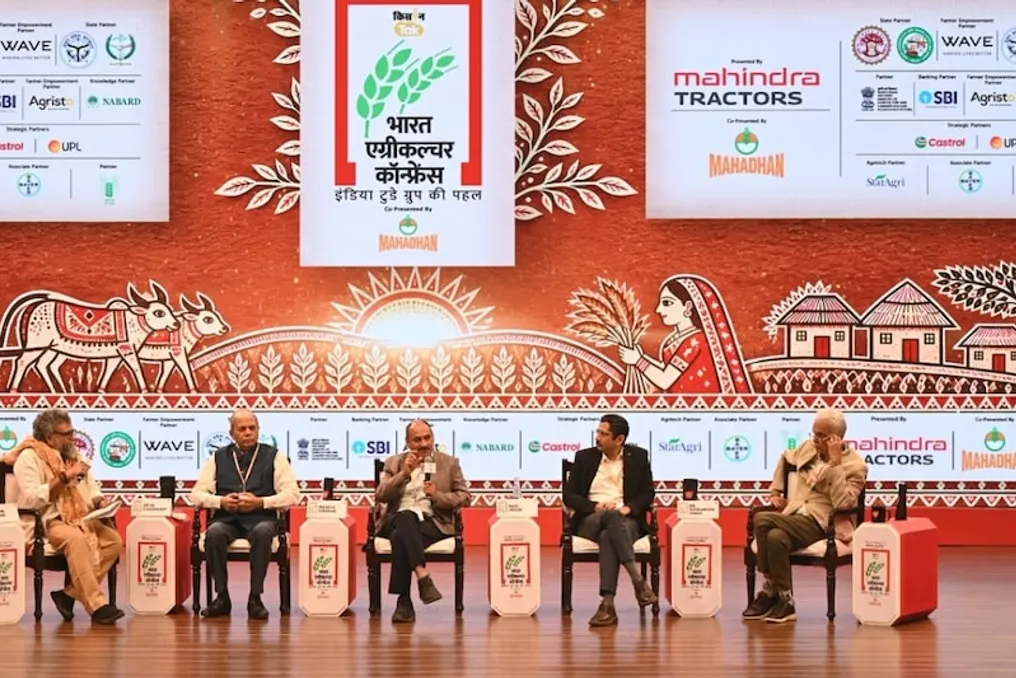
Modern agriculture in India faces serious issues such as deteriorating soil conditions, unbalanced fertilizer use, and pesticide residues in crops. Amid growing pressure on farmers to increase production, questions arise regarding farming costs, soil quality, and crop safety. These issues were discussed at the 'Bharat Agriculture Conference 2026,' organized by India Today Group.

Experts who spoke at the conference included Dr. SK Choudhary, Director of General Affairs for the Fertilizers Association of India; Mahesh Ghirdhar, Chairman of Agriculture Solution, MAL; Ravi Hegde, Head of Global Regulatory Affairs for UPL; and Dr. Sudhanshu Singh, Regional Director for Southeast Asia at CIP.

The experts emphasized that fertilizers themselves are not inherently harmful to the soil; rather, the problem lies in their improper application. They noted that more productive and safer farming is possible through soil analysis, ensuring nutrition according to crop needs, and using pesticides in appropriate doses.

Dr. SK Choudhary, Director of General Affairs for the Fertilizers Association of India, stated that fertilizers cannot be directly blamed for poor soil condition. He recalled that the Indian Council of Agricultural Research has been studying the long-term impact of fertilizers on soil for years. According to research data, if nitrogen, phosphorus, and potassium are used in a balanced manner and supplemented with secondary nutrients, micronutrients, and organic fertilizers, fertilizers can become a blessing rather than a curse for the soil.

He added that maintaining balanced nutrition preserves organic carbon content in the soil, which improves both yield and product quality. Problems arise when farmers overuse one nutrient while ignoring other necessary components. Therefore, instead of blaming fertilizers, the focus should be on their correct ratio and application methods.

Dr. Choudhary also pointed out that fertilizer subsidies and low prices for urea contribute to unbalanced usage. He noted that farmers receive urea at a price of about 5.5 rupees per kilogram, and the rapid greening of plants after application encourages excessive use. He suggested considering including urea in a nutrient-based subsidy system. Furthermore, reducing fertilizer losses can be achieved through the integrated use of new and more effective products, biofertilizers, biostimulants, water-soluble, and nano-fertilizers.

Mahesh Ghirdhar, Chairman of Agriculture Solution, MAL, stressed the critical importance of selecting the right fertilizer, its precise quantity, timing, and location of application. He believes that a farmer must understand not only how to apply fertilizer but also at what stage of crop development and in what quantity the crop requires a specific nutrient.

Ghirdhar compared this to human nutrition: just as a balanced diet is necessary to maintain bodily health, soil and crops also require balanced nutrition. He explained that a diet consisting only of rice while ignoring legumes, vegetables, and other nutrients will negatively affect human health; the same applies to crops. Excess of one element and deficiency of another affects the health and productivity of the harvest.

Citing the example of rice crops, he explained that good yields require healthy shoots, large panicles, and heavy grains, and nutrient requirements vary at different growth stages. Ghirdhar advised conducting soil analysis before applying fertilizers to understand the present nutrients, organic carbon content, pH level, and electrical conductivity, and only then creating a fertilization schedule. He emphasized that the farmer's task is not just to apply a product but to provide the crop with nutrition that meets its needs.

He also reported that experiments conducted by Mahadhan to improve nutrient use efficiency showed good results when using biological microorganisms. According to him, in some trials, yield increased by 10–20% using the same amount of fertilizer. Additionally, work is underway to create a single product containing eight nutrients adapted to crop needs.

Dr. Sudhanshu Singh, Regional Director for Southeast Asia at CIP, noted that India holds an important position globally in the production of rice and potatoes; however, the current challenge is not only increasing volume but also achieving better and higher-quality production with fewer resources. He pointed out that a huge amount of fertilizer is used in the country annually, part of which has to be imported.

Popular