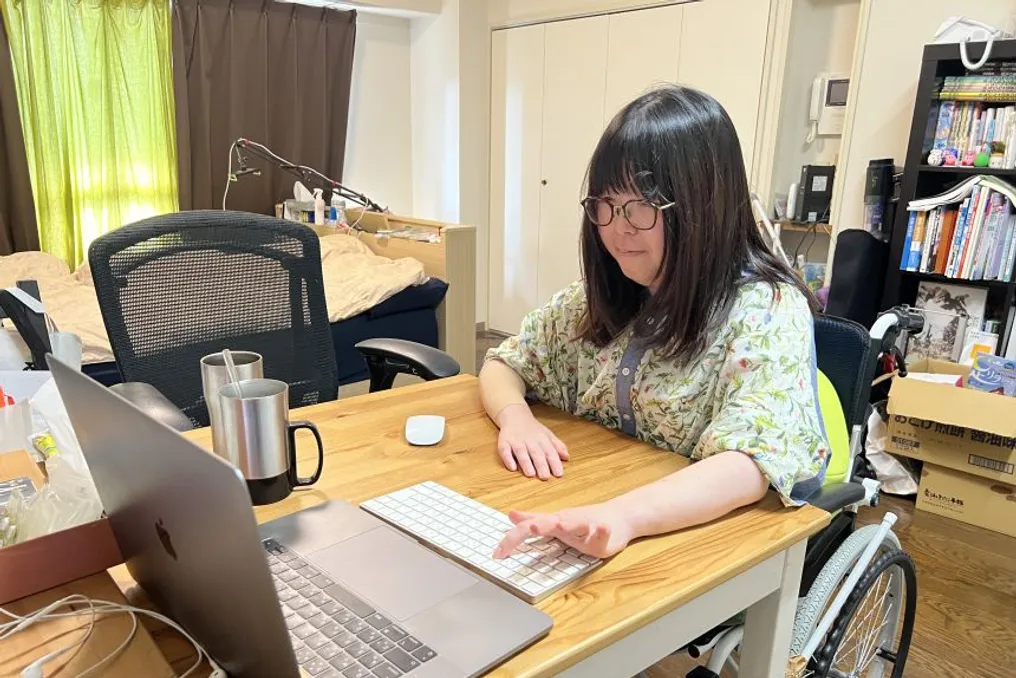
A small, 9-inch tall robot guide, operated by people with disabilities, assists foreign tourists in the Nihonbashi historic district of Tokyo. This robot allows individuals like 39-year-old Aya Kadzi to conduct tours, teaching tourists prayer customs at Fukutoku Temple and showcasing the area's rich artisanal traditions to locals—something she previously thought impossible as she can do it without leaving home.
Kadzi told CNN that for her, as a wheelchair user, moving around Japan presents a significant obstacle. She was diagnosed with multiple sclerosis (MS) in 2011. She lived with this chronic autoimmune neurodegenerative disease for years, but in 2022, her motor impairments sharply worsened, causing her to completely lose the ability to walk.
After this, her life began to narrow. Her job as a researcher in the energy sector became unsustainable, forcing her to resign. Without income, she relied on savings and disability support from the Japanese government, which proved insufficient to cover medical expenses and maintain her livelihood.
In 2024, she learned about OryLab, a Japanese technology development company that enables people with limited mobility to participate in life outside their homes. For Kadzi, this became an opportunity to earn money, be part of society, and satisfy her curiosity.
“I enjoy interacting with new people; I really enjoy socializing,” she shared. “When I learned about this company and its cute robots, I realized it was the perfect job for me.”
OryLab is the brainchild of Kentaro “Ori” Yoshifuji, who spent over three years of his childhood confined to his home. He told CNN that he “had a weak body as a child.” Severe social anxiety caused physical symptoms that led to months in the hospital, experiencing deep loneliness and dreaming of a “second body to use while mine was undergoing maintenance.” Later, while attending university, he decided that attending classes via Skype was not enough: his classmates and professors could not interact with him through a screen.
Thus, in 2010, Yoshifuji created a small, robotic version of himself—a “bunshin” or clone, as he calls it—which allowed him to participate in social life. He noted: “My friends carried me, seated me in the front row. I could nod and listen in class, raise my hand, leave the classroom with them, and spend time together. Initially, my professors were hostile, but eventually, they counted my attendance because they recognized me as a genuine participant.”
The concept of “recognition in the physical world” through the bunshin forms the basis of OryLab’s philosophy, founded by Yoshifuji, Aki Yuki, and Yoshifumi Shiiba in 2012. The company's first robot, OriHime, was an advanced version of the robot Yoshifuji had created for himself at university.
OriHime is a cute upper robot weighing 1.4 pounds and measuring 9 inches, equipped with an HD camera, speaker, microphone, movable arms, and head, allowing users to project their presence wherever the robot goes. The company later developed OriHime-D, a 47-inch wheeled robot that allows people to remotely perform physically demanding tasks such as customer service, visitor escorting, and serving food.
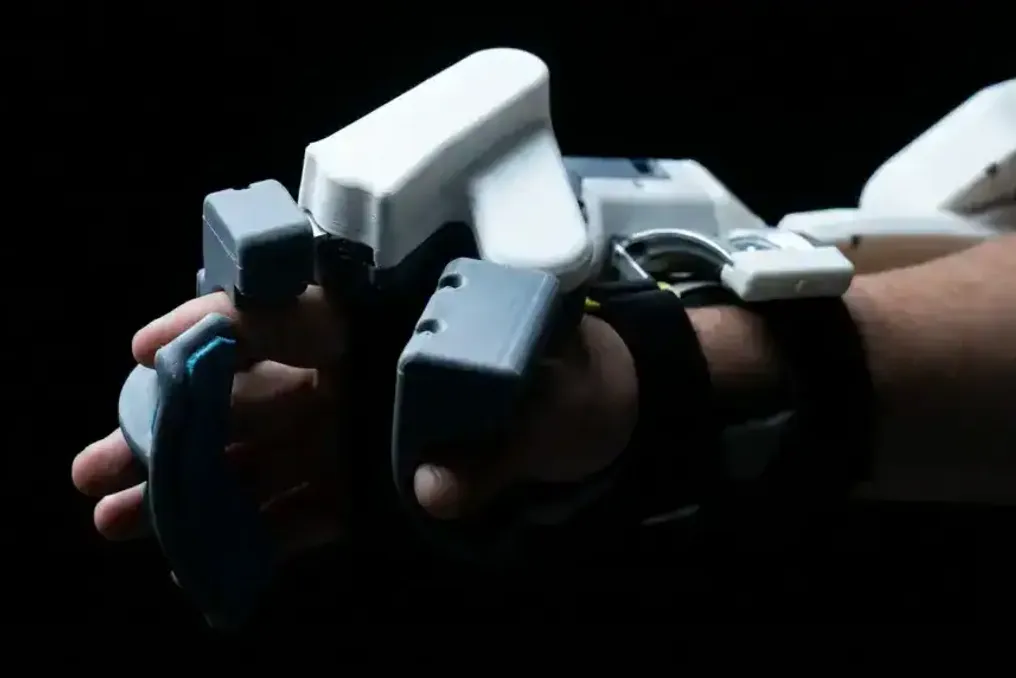
Both robots can be controlled via a simple interface accessible on tablets, computers, and smartphones. However, these devices require a hand capable of touching and swiping. To assist those who cannot use them, the company created OriHime eye—a communication device for people with limited mobility who rely on sight and fingertips. It allows them to communicate, draw, and control other OriHime robots.
Initially, the robots were sold to families and schools, enabling children who were homebound or hospitalized to attend lessons and maintain a social life. The company reports selling several hundred units: smaller models cost around $4,500, and larger ones cost about €20,000 (approximately $26,770) before tax. But Yoshifuji decided that the best way to demonstrate the robots' capabilities was to create environments where they could be used.
The first step was opening the OryLab cafe, “Avatar Robot Café DAWN ver.β.,” as a permanent experimental or demonstration space. Starting as a temporary cafe in 2018, offering sandwiches, curry, coffee, and tea, it transformed into a 70-seat restaurant in Chuo in 2021 after raising over $400,000 through a crowdfunding campaign.
Today, about 80 people work at the cafe as OriHime pilots, remotely controlling the robots. Wages start at the minimum Tokyo wage and increase based on the workers' skills and duties. Yoshifuji stated: “We don't like to boast, but it has become the best-rated cafe in the area on Tripadvisor.”
Kadzi joined in 2024 after five months of training, progressing from waiter to hostess. Now the cafe operates independently and is profitable, with plans to open a second branch. Yoshifuji added that the space also serves as a research and testing ground.
The company's latest initiative is tourism, utilizing OriHime robots attached to a backpack rig weighing less than 9 pounds. Tourists carry OriHime on a small platform mounted on the shoulder. From this vantage point, pilots can survey and comment on the places they visit. When the company expanded into tours, Kadzi was one of the first to sign up. She is now one of 10 qualified guides.
“I enjoy taking this walk with people, even virtually, and interacting with everyone in real life, both in Japanese and English,” she said, adding that some foreign tourists mentioned it was the longest time they had interacted with a local Japanese person during their trip. “But it is also a way to prove to others that I can work and develop within the company while acquiring new skills.”
In the age of AI and convenience, Yoshifuji believes that human connection and hospitality must be placed at the center of technology, and he hopes society will follow suit. According to Japanese government estimates, approximately 9.2% of Japan's population had a disability as of 2023, and this figure is expected to rise by the end of the decade.
However, Yoshifuji's robots mean that people like Kadzi gain financial independence. She reported: “I only work about 20 hours a week. I am not yet financially independent; I still need disability support. But it allows me to earn extra money, buy gifts for friends and family, and, selfishly, go to sumo matches. I love watching sumo matches.”
}, 2.