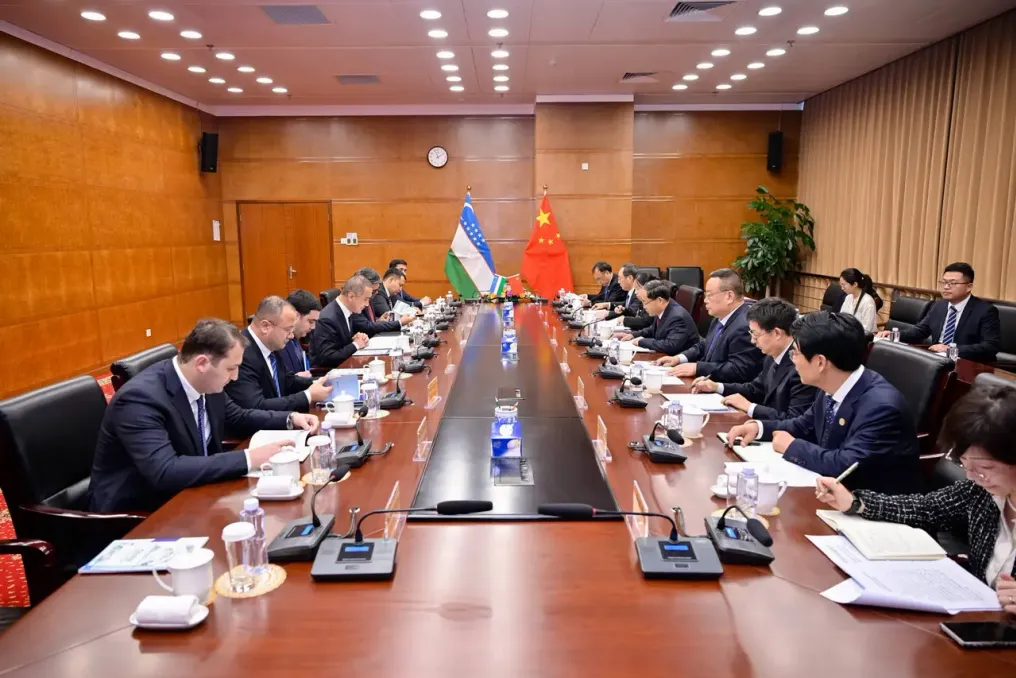
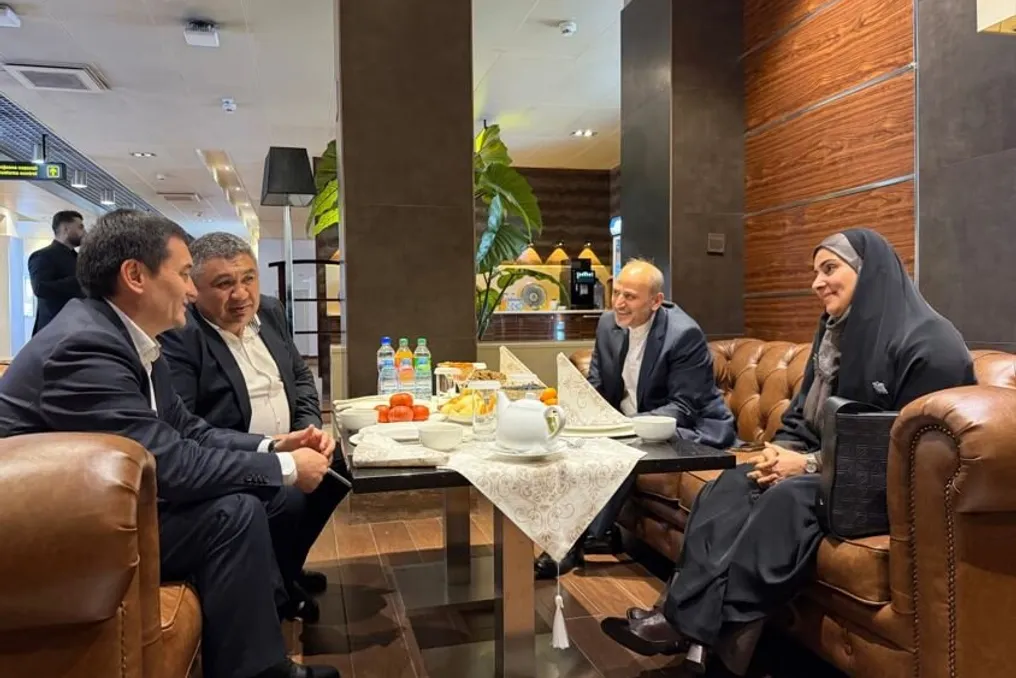
During an official visit to Tashkent, Iran's Minister of Transport and Urban Development, Farzaneh Sadeghi, held a key meeting with Uzbekistan's Minister of Transport, Ilhom Makhmurov. The high-level talks focused on the need to facilitate transit operations, develop comprehensive railway and road cooperation, and strengthen commercial and logistical ties between the two countries within regional corridors.
The goal of this meeting was to study solutions for expanding transport and transit interaction. Both sides emphasized the significant potential for bilateral cooperation while stressing the critical importance of removing existing obstacles to ensure unimpeded trade and transit exchanges along regional routes.
Minister Sadeghi noted that her trip to Tashkent and meetings with Uzbek officials demonstrate the strategic significance of political, economic, transport, and transit relations between the countries. She mentioned previous discussions with Minister Makhmurov during the 14th meeting of the Economic Cooperation Organization (ECO) Ministers in Astana, Kazakhstan, and stressed the need for continuous monitoring and implementation of reached agreements.
The Iranian minister positively assessed the process of cooperation between Iran and Uzbekistan in the road, air, and railway sectors and proposed holding a trilateral railway meeting involving Iran, Uzbekistan, and Turkmenistan. This initiative aims to enhance coordination and accelerate the development of railway partnership among the three countries, as regional connectivity requires multilateral approaches that consider common interests and mutual benefit.
Iranian port capacities and regional connectivity
Minister Sadeghi, referring to the significant capabilities of both countries in logistics and transit, described Iran's northern and southern ports as a valuable resource for developing regional interaction. She announced the imminent connection of Chabahar Port to the national railway network, which, according to her, will pave the way for increasing transit potential, expanding logistical cooperation, and facilitating access for regional countries to open waters.
This announcement is particularly significant given Chabahar's strategic location in the Gulf of Oman, making it a vital gateway for landlocked Central Asian countries seeking reliable access to international sea routes. Sadeghi welcomed the development of corridor relations and multilateral cooperation, insisting on utilizing the complementary capabilities of the two countries to strengthen the positions of Iran and Uzbekistan in the regional transport and transit network.
Furthermore, at the meeting, Ilhom Makhmurov, Uzbekistan's Minister of Transport, emphasized the importance of comprehensive development of transport cooperation with Iran and expressed his country's readiness to expand interaction and implement joint programs. He noted the necessity of continuing consultations, fulfilling agreements, and creating conditions for further development of bilateral cooperation in road and rail transport. The Uzbek minister's statements reflected Uzbekistan's recognition of Iran's strategic role as a transit partner and its willingness to deepen interaction across various modes of transport.
Cooperation between Iran and Uzbekistan extends beyond the national level, as evidenced by diplomacy at the provincial level and economic diplomacy. According to a report from Khabar Online in Mazandaran, Fariddin Nasриев, Ambassador of the Republic of Uzbekistan to Iran, met with Mehdi Younesi Rostami, Governor of Mazandaran Province, on October 22. While thanking local authorities for their hospitality, Nasриев highlighted the vast potential for economic and trade cooperation between Mazandaran and Uzbekistan.
At the meeting in the Mazandaran Chamber of Commerce, Ambassador Nasриев stated that a very productive meeting took place with the participation of economic entities, indicating the high interest of Iranian traders in cooperating with Uzbekistan, as well as the desire of Uzbek traders to take advantage of Mazandaran's opportunities and products. This mutual interest in commercial interaction points to a growing demand among the private sectors of both countries for finding new markets and business opportunities, driven by the understanding that regional trade integration can bring significant economic dividends.
The ambassador also expressed satisfaction with the presence of a representative from Mazandaran in the co-chairmanship of the Iran-Uzbek Chamber of Commerce, calling it an opportunity to strengthen economic ties and promote cooperation between the private sectors of the two countries. Referring to the visit of the Mazandaran delegation to Uzbekistan last year, Nasриев assessed it as positive and constructive, noting that the trend of trade cooperation between the parties is expanding, and there are suitable prerequisites for further development of these relations. He announced intensive planning of official visits in the next two or three months, including a planned visit to Uzbekistan and an invitation for the Governor of Mazandaran to visit the country to lay the groundwork for strengthening economic and trade cooperation.
The ambassador also mentioned the interaction between Mazandaran Province and Fergana Region of Uzbekistan, viewing the exchange of trade delegations between the two regions as an effective step towards developing economic relations. These relations between neighboring provinces create a foundation for sustainable cooperation and mutual understanding at the sub-national level, contributing to the identification of investment opportunities and expansion of trade exchanges in ways that complement national initiatives.
Growing trade and future prospects
The broader context of economic relations between Iran and Uzbekistan is characterized by significant growth potential. At the end of September, Mehr News agency reported that Uzbekistan's food market, valued at $1.4 billion, is open to Iranian exporters, and trade between the two countries reached $305 million in the first half of 2026, with three cooperation agreements recently signed.
These figures show both achieved progress and substantial opportunities yet to be realized in bilateral trade relations. According to this report, Uzbekistan is becoming one of Central Asia's growing markets, as food imports into Uzbekistan increased by almost 46% in the first quarter of 2026, reaching $1.4 billion. However, Iran's share in this market remains limited, and economic actors believe that expanding Iran's food industry exports to Tashkent requires solving financial and transport problems, as well as a more precise understanding of market dynamics.
The recognition of these difficulties indicates a pragmatic approach to trade expansion that acknowledges the need for targeted measures to overcome existing barriers. In recent years, Uzbekistan has been actively developing its foreign trade; the growth in imports, increase in foreign investment, and expansion of ties with regional markets have made the country one of Central Asia's notable markets.
According to the latest statistics from the National Statistical Committee of Uzbekistan, the country's imports in the first quarter of 2026 amounted to $12.2 billion, with food and live animals accounting for about $1.4 billion, an increase of 45.9% compared to the same period last year. These figures demonstrate that Uzbekistan's food market is not just a domestic consumer market but, considering the country's population of over 37 million people and its position as one of Central Asia's trade hubs, could become increasingly important for regional food producers.
Iran's Commercial Attaché in Uzbekistan, Rahmatullah Hormali, citing turnover of over $280 million between the two countries in the first five months of the current year, named agricultural exports, technological cooperation, and joint investments as key pillars for expanding trade between Iran and Uzbekistan. He noted that subsequent actions by the agriculture ministries of both countries allowed for the dispatch of a 120-person delegation to Uzbekistan, led by the Minister of Agriculture and a group of activists and experts in agriculture, aquaculture, mechanical engineering, and processing industries.
Uzbekistan ranks second among Iran's export destinations in CIS countries and possesses significant potential for expanding trade relations, with agriculture being one of the priority areas in developing trade between the two countries. Hormali also pointed to food security as an important area of cooperation, noting that the structure of the Uzbek government includes a Food Security Agency to ensure and improve food security in areas such as livestock, poultry, quarantine, and food products, which could serve as a basis for developing specialized and commercial cooperation.
He also touched upon the potential for technological cooperation, stating that Iranian companies are implementing about 30 projects worth $770 million in various fields, including agriculture in Uzbekistan, indicating the significant potential of Iran's private sector to enter the Uzbek market. These events collectively suggest that relations between Iran and Uzbekistan are entering a new phase of expanded interaction in various sectors, driven by common economic interests and complementary capabilities.
In conclusion, the meetings of high-ranking officials and provincial representatives reflect a comprehensive approach to strengthening relations between Iran and Uzbekistan. From strategic discussions in Tashkent regarding transport corridors and port connectivity to practical economic diplomacy in Mazandaran focused on trade and investment, both countries are actively seeking ways for deeper cooperation. Growing trade indicators and planned delegations signal a positive trajectory, although challenges remain in fully realizing the potential of these bilateral relations. With the commitment of both governments and active participation of the private sectors, Iran and Uzbekistan appear well-prepared to strengthen their economic partnership and promote regional integration in Central Asia.