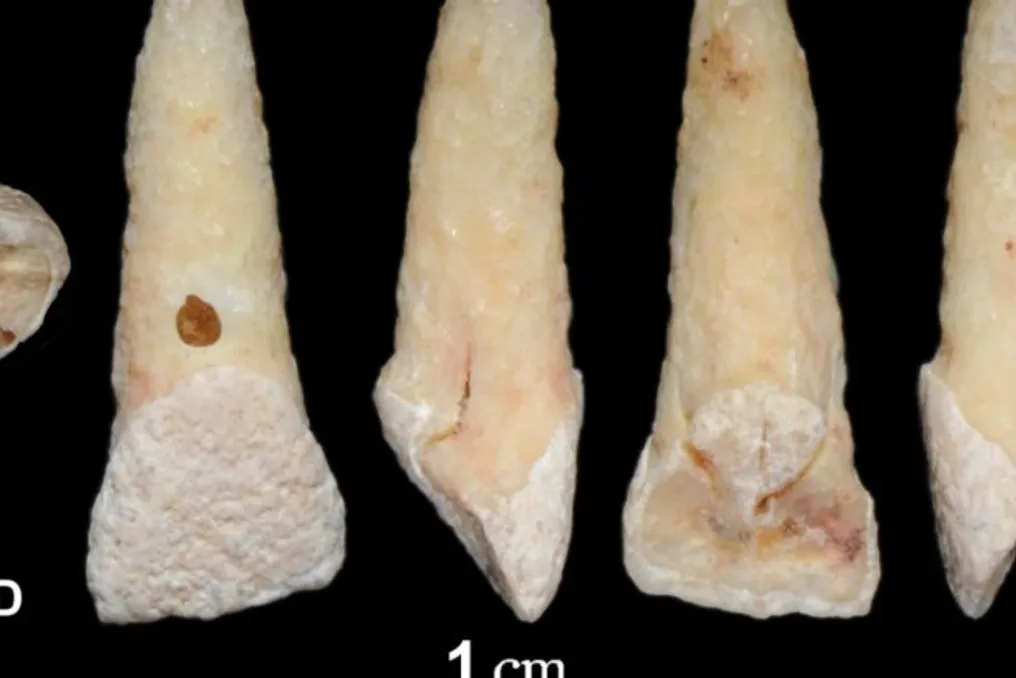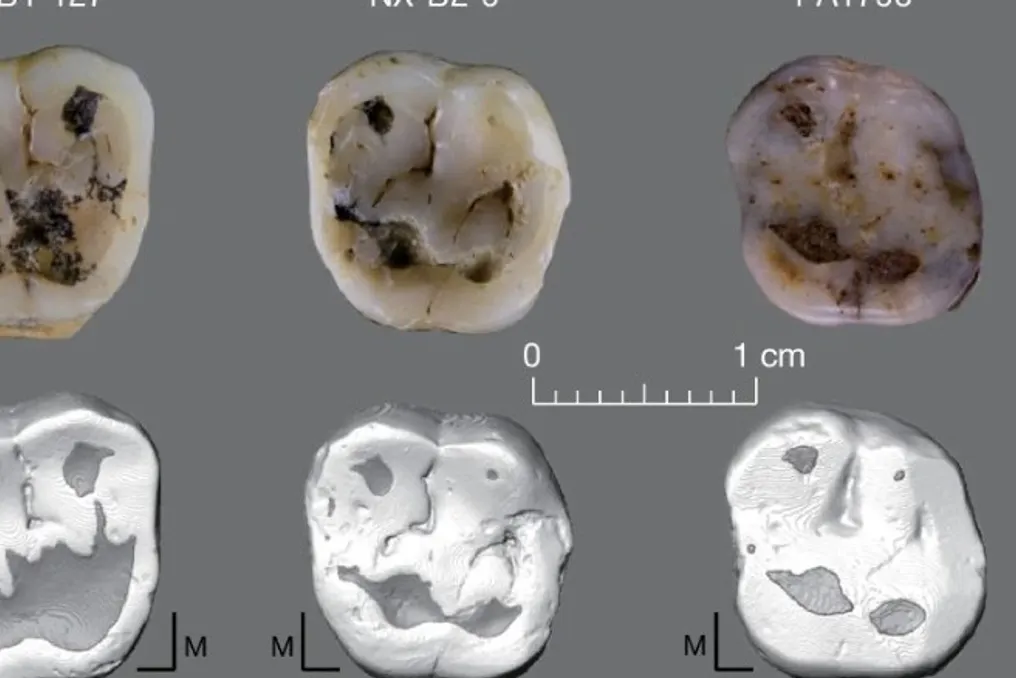
Fossil teeth discovered in two caves in Guangxi province are changing scientists' understanding of how Homo erectus lived in China. These findings have allowed researchers to reconstruct a picture of dense tropical forest and the early humans who inhabited the area.
Researchers found nine teeth belonging to relatives of early humans in the Naxian and Baxian caves in southern China. Eight of them were classified as Homo erectus based on the shape and structure of the teeth, as well as proteins preserved in the enamel where possible. The ninth tooth belongs to another relative of early humans whose identity has not yet been established.
These finds date back to the period between 324,000 and 184,000 years ago. Until now, the most convincingly identified fossil Homo erectus in this region dated to approximately 400,000 years ago. The teeth from Guangxi indicate that the species continued to exist on the mainland of East Asia about 200,000 years later than previously assumed.
The caves contained about 20,000 animal teeth, including remains of orangutans, elephants, and rhinoceroses. It is hypothesized that hedgehogs contributed to the accumulation of these collections by dragging bones into the caves to gnaw on them. After hundreds of thousands of years, the remaining material allowed researchers to study the landscape outside the cave entrances.
The team studied chemical traces in the dental enamel that reflect the types of plants in the food chain. These traces point to a tropical forest with a dense canopy. For Homo erectus, a species often associated with grasslands and open forests, the fossils from Guangxi demonstrate how diverse the habitats of this species could be.
This discovery also complicates the understanding of the species' extinction. One theory for the decline of the species in Asia was that it faced difficulties as forests spread. However, the fossils from Guangxi show that at least some populations could successfully live in dense tropical forests.
The youngest known fossil Homo erectus still comes from Java, where the species lived until recently, around 108,000 years ago. The teeth from Guangxi leave the reason for its extinction open, but they provide a more complete picture of the places these early humans called home. The forest, once considered an obstacle, turned out to be part of their world.