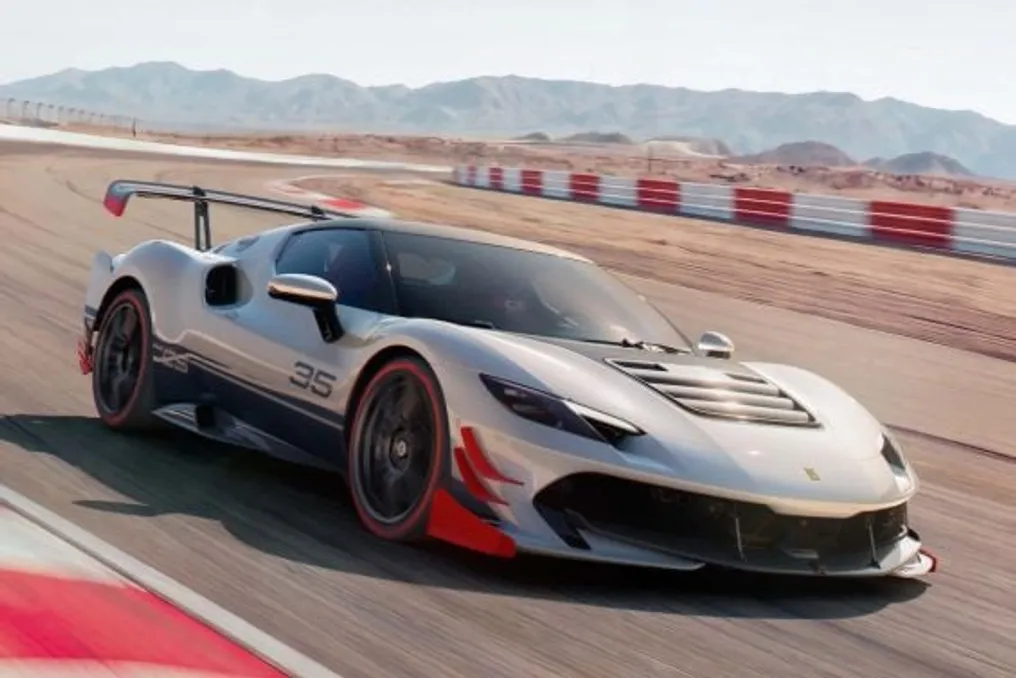
Ferrari launches 296 Challenge Stradale, a 100% combustion street version after removing the hybrid system from the 296
Read more
AutoPapo
autopapo.com.br

Ferrari launches 296 Challenge Stradale, a 100% combustion street version after removing the hybrid system from the 296

Ferrari has met the demands of more traditional enthusiasts by disabling the electric propulsion of one of its hybrid supercars. The result of this adjustment is the 296 Challenge Stradale, a street edition that operates exclusively with an internal combustion engine and was unveiled this weekend.

This new model references the 360 Challenge Stradale, launched in 2003. Its development occurred simultaneously with the 296 Challenge Evo race car, which is scheduled to debut in 2027 in the Ferrari single-make championship. Despite incorporating track-developed technologies, the 296 Challenge Stradale is permitted to circulate on public roads.

To optimize lightness and ensure an instantaneous throttle response, Ferrari removed both the batteries and the electric motor from the 296 GTB, which originally featured an 830 horsepower hybrid system.

At the rear, a standalone 3.0-liter twin-turbo V6 engine operates, generating 670 hp and 75.5 kgfm, with both turbines installed internally in the V block. This engine reaches speeds of up to 8,500 rpm. The eight-speed dual-clutch gearbox performs shifts in just 170 milliseconds in sport mode.

In terms of performance, the vehicle accelerates from 0 to 100 km/h in 2.8 seconds and reaches 200 km/h in 7.9 seconds, exceeding the 300 km/h mark at top speed.

By eliminating the hybrid system and integrating carbon fiber into the seats, doors, and bodywork, the dry weight of the car decreased to 1,330 kg, representing a reduction of 140 kg compared to the 296 GTB. The vehicle's fine-tuning includes doubled stiffness springs, readjusted semi-active dampers, and predictive slip control calibrated for the track, something unprecedented in a Ferrari street model. According to the manufacturer itself, the body roll in corners was reduced by 68%.

Since it does not use regenerative braking, the carbon-ceramic brakes are responsible for all deceleration, allowing it to stop from 200 km/h in only 101 meters. The fixed rear wing is mounted underneath, unlike the race car, to meet homologation requirements.

With the wing and underbody fairing, the 296 Challenge Stradale generates 617 kg of aerodynamic downforce at 250 km/h, representing a 72% increase compared to the 296 GTB. The starting price begins at the equivalent of US$ 307 thousand (R$ 1.83 million) in the United States. In Brazil, Via Itália, the official Ferrari distributor, has been selling the 296 GTB since 2022.
Similar stories

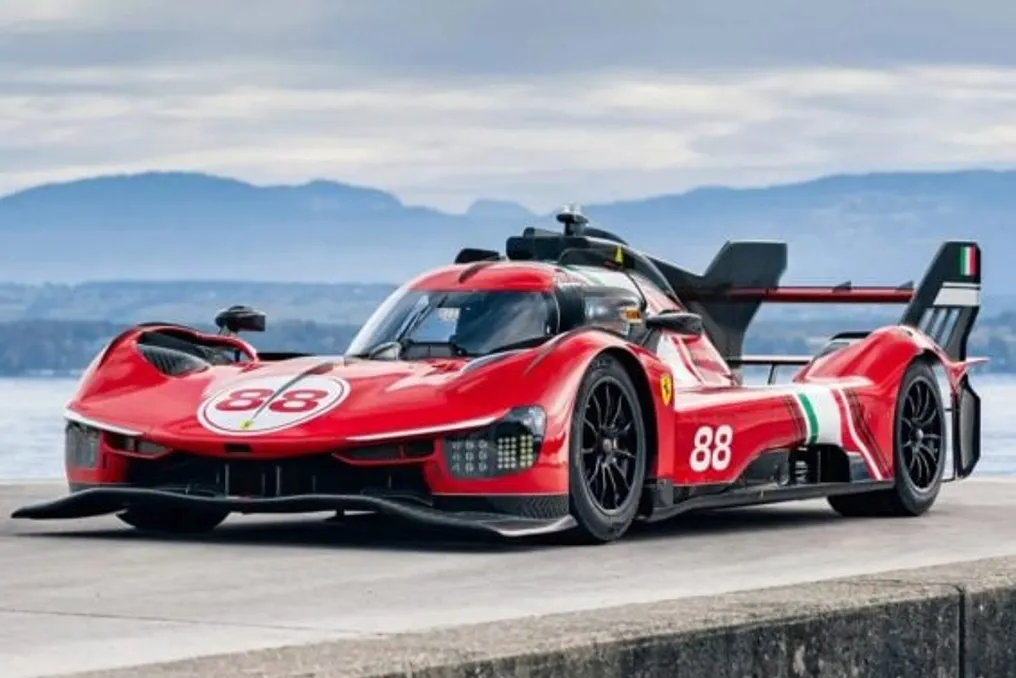
Modified Ferrari 499P, used at Le Mans, sold for about R$ 55 million and remains at the factory
Read more
autopapo.com.br

Modified Ferrari 499P, used at Le Mans, sold for about R$ 55 million and remains at the factory

A Modified Ferrari 499P, which is an adapted version of the hypercar used by the manufacturer in the World Endurance Championship (WEC), was auctioned for 8,217,500 Swiss francs, equivalent to approximately R$ 55 million. The transaction took place during an auction held by the house Gooding Christie’s, where the model had an initial minimum valuation of 7.5 million Swiss francs.

The specific unit negotiated has chassis number 21 and, according to auction data, was never used outside of initial operational tests. Although the exact mileage has not been confirmed, it is estimated that the vehicle traveled less than 160 kilometers.

This 499P Modified was produced in a limited run of only 30 units. Unlike the racing car, this version does not have the technical restrictions imposed on the race model; it was created to offer clients the possibility of experiencing exclusive track experiences, not to compete in official events.

The original hypercar, the 499P, achieved a remarkable feat by winning three consecutive victories at the 24 Hours of Le Mans, covering the years from 2023 to 2025. Furthermore, in 2025, Ferrari also secured the titles of driver and constructor champions in the WEC Hypercar category.

Despite being acquired, the new owner will not have immediate access to the vehicle. This is because the 499P Modified does not have homologation for public road use, and all units are stored in Maranello, Italy. Ferrari itself keeps these cars and makes them available to owners upon request through the Sport Prototipi Clienti program.

Two identical Ferrari Daytona SP3s sold with a difference of 42 million reais due to differences in mileage, color, and history.
Read more
autopapo.com.br

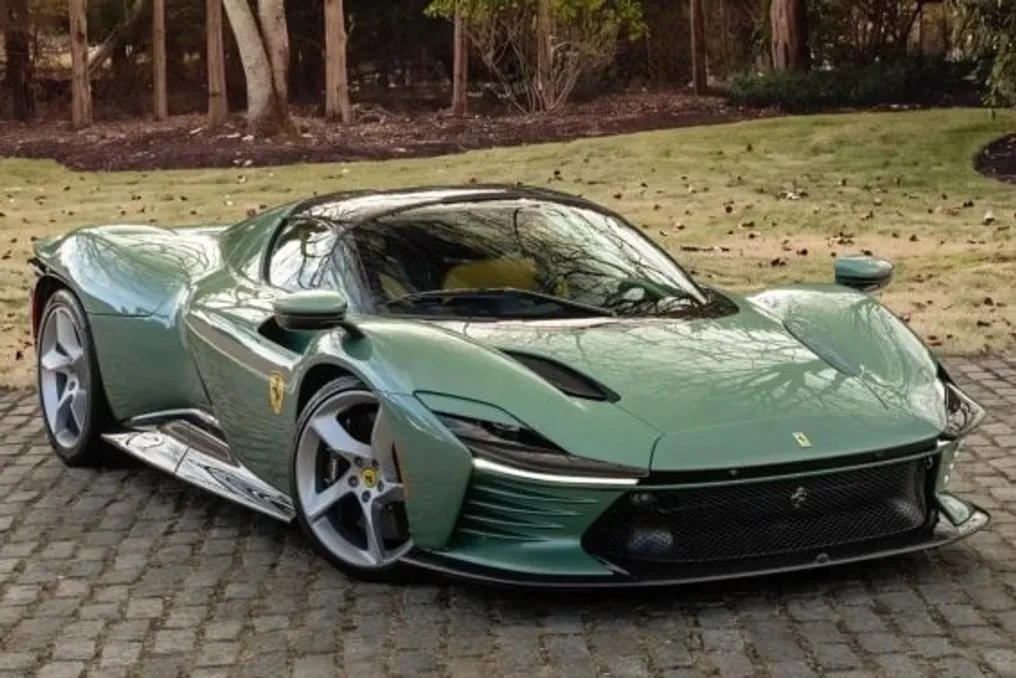
Two identical Ferrari Daytona SP3s sold with a difference of 42 million reais due to differences in mileage, color, and history.

Two nearly identical Ferrari Daytona SP3 models were put up for auction on the same day, with one selling for almost twice the price of the other.

On October 31, the house Broad Arrow conducted a sale in Las Vegas (USA), where the green example was sold for 102.2 million reais ($18.54 million USD). On the same day, RM Sotheby’s in London sold the yellow variant for approximately 60 million reais (£8.16 million GBP). Both figures include auctioneer's commission.

The price of the green car is a record for this model outside of charity auctions. The new value of this car amounted to the equivalent of 12.9 million reais ($2.33 million USD).

The price difference of about 42 million reais between the two cars is explained by four factors: mileage, color, ownership history, and the location of the sale.

The most obvious difference was the odometer reading. The green car had only traveled 130 kilometers, while the yellow one accumulated 4,744 kilometers, which is considered a high figure for a supercar sought after by collectors.

The body color also influenced the price. The green shade, named Verde Francesca, was chosen by the first owner as part of the Tailor Made personalization program and cost an additional $42,185 USD, which is roughly equivalent to the cost of an average new SUV in Brazil.

The yellow car, conversely, has a Giallo Triplo Strato (three-layer paint) finish, which is bright but common among SP3 models.

The car's history played an important role. The example sold in London served as a demonstration and press car for Ferrari and was available to journalists from Car and Driver magazine and the Top Gear program. The brand only sold it to the final buyer in March 2025.

The green car belonged to one owner since purchase—a collector from New York—and was sold with original accessories, such as a 1:8 scale miniature and red leather bags.

According to Hagerty, the company that owns Broad Arrow, US collectors are willing to pay more than British buyers for rare colors and low mileage.

The Daytona SP3, limited to 599 units, commemorates Ferrari's triple victory at the 1967 24 Hours of Daytona race, is equipped with a 6.5-liter naturally aspirated V12 engine producing 840 horsepower and 71.1 kgm of torque.

Popular