53% of Brazilians use artificial intelligence in online purchases during Black Friday
Read more
Olhar Digital
olhardigital.com.br

53% of Brazilians use artificial intelligence in online purchases during Black Friday

With Black Friday approaching, scheduled for November 27th, the retail sector faces the challenge of adapting to the demands of consumers who are already incorporating artificial intelligence (AI) into their purchasing processes.

According to the Global Digital Shopping Index, released by PYMNTS Intelligence, it was found that 53% of Brazilian buyers making online purchases used AI in their most recent acquisition. Virtual assistants, such as ChatGPT and Gemini, already influence the buying trajectory; however, merchant preparation remains limited: only 15% of retailers have structured their product data so that AI agents can interpret it, and only 21% can identify sales generated by these platforms.

Problems such as incomplete descriptions, price variations, and outdated information on stock and delivery times complicate the comparison between different available offers.

Kenneth Corrêa, a professor at Fundação Getulio Vargas (FGV) and strategist of emerging technologies and AI, author of the book Cognitive Organizations, emphasizes that brands must harmonize how they present their products with their internal technological architecture. This is crucial for converting visibility gained from assistant recommendations into effective sales.

For AI systems to correctly understand commercial proposals, stores need to ensure that pricing data, delivery times, availability, and discounts are always updated across all sales channels. Furthermore, using structured data, such as product feeds, and including detailed descriptions helps assistants compare alternatives. It is equally important to specify what type of consumer each product is suitable for and what needs it satisfies.

Policies regarding exchanges, returns, and cancellations also require special attention. The survey indicates that 28% of consumers would be willing to make automated purchases if there was a possibility of cancellation within 24 hours, while 23% would consider this modality if it included free and guaranteed returns.

The quality of the shopping experience is intrinsically linked to commercial conditions and available infrastructure. Eduardo de Barros, CEO of IDK Brasil and GEO specialist, suggests conducting complete (end-to-end) tests to prevent operational failures, such as non-functional coupons, unclear discount rules, or discrepancies between what was advertised and the final amount paid by the customer.

Artificial intelligence has the potential to personalize offers and optimize customer support, provided that consumer consent, contact frequency, and the General Data Protection Law (LGPD) are strictly observed. Another application is agentic AI, which has the capacity to execute complex tasks and coordinate workflows, such as detecting stock shortages or reacting to demand changes. However, to implement this, companies must define clear scopes of action, in addition to monitoring and human supervision mechanisms.

For Queiroz Filho, CEO and founder of JBQ.Global, the 2026 Black Friday will serve as a decisive test to evaluate the retail sector's ability to translate artificial intelligence into tangible results. He stresses that efficient integration between data, systems, and operations will be the determining factor in capitalizing on the benefits of this technology.

This preparation phase must be complemented by a thorough evaluation after the campaign. The financial balance should not focus only on revenue but also on metrics such as promotion margin, customer acquisition cost, conversion rate per channel, and frequency of recurring purchases. Problems such as cart abandonment, payment processing failures, and delivery delays are also important indicators of operational failures.

The period following Black Friday goes beyond simple results analysis. Returned items, stagnant inventory, samples, and unused equipment can be sold through digital platforms, generating opportunities to recover part of the value of these assets. Thiago da Mata, an online sales specialist and CEO of Kwara, an online auction platform, highlights this alternative as an effective way to reduce losses and generate new revenue streams.

The indicators collected during the campaign and the opportunities identified afterward can serve as a basis for planning post-sale actions, defining strategies for Christmas, and structuring commercial planning for 2027.


Similar stories

Tips for Safe Shopping and Saving During Black Friday Sales
Read more
olhardigital.com.br

Tips for Safe Shopping and Saving During Black Friday Sales

To take advantage of discounts during Black Friday, financial planning, prior price comparison, and attention to digital security are necessary. In addition to searching for offers, artificial intelligence tools and various payment methods can simplify the purchasing process, provided that the consumer carefully evaluates the terms of each transaction.

Planning in advance has become a habit for many shoppers. According to the 'Post Black Friday 2025 – Much Beyond Price' study by MindMiners, 82% of Brazilians reported organizing their purchases in advance in 2025.

To prevent exceeding planned expenses, it is important to set a limit for each item and calculate the total cost of purchase, including shipping, interest, and additional fees. Tracking price fluctuations from previous weeks using specialized platforms and comparators also helps identify real discounts, rather than relying solely on stated percentages.

Artificial intelligence can facilitate this search by filtering products, comparing alternatives, and suggesting options according to consumer preferences. Thiago da Mata, CEO of Kwara and an expert in shopping experience and digital retail, explains that product curation already functions similarly to social media algorithms, which use navigation patterns to provide recommendations.

AI assistants can also search for offers based on predefined criteria, such as brands and price ranges. Eduardo de Barros, CEO of IDK Brasil and a digital retail specialist, notes that some tools allow comparing alternatives and even completing purchases automatically. Both experts advise checking information directly on store channels before placing an order.

The rise of online shopping during Black Friday requires increased attention to fraud. Links received in messages, prices significantly below market rates, and pages with errors or incomplete information are signs that require distrust. It is also important to ensure that the address corresponds to the official website and to avoid making purchases through public Wi-Fi networks.

Kenneth Correia, a technology specialist and MBA professor at Fundação Getulio Vargas (FGV), recommends activating two-factor authentication (2FA) and using strong passwords to reduce fraud risks.

When paying, the terms can change the benefit of the promotion. It is necessary to check the differences between cash payment and installment plans, interest rates, and cancellation or refund policies. Pix provides instant transactions, while Open Finance solutions can expand personalized financial service capabilities with customer consent.

For Murilo Rabuski, a fintech specialist and business director at the fintech company Lina Open X, convenience, speed, and security are key factors in the payment process.

Countdown timers, low stock notifications, and messages about the imminent end of the promotion can push the consumer toward a quick decision. Even when receiving personalized recommendations, it is important to assess whether the offer meets the needs and established budget.

Rodrigo Cruz, an AI specialist and Vice President of Growth Strategy and Innovation Portfolio at Keyrus in Brazil, notes that the ability of brands to appear among artificial intelligence system recommendations is becoming important in the battle for consumer attention.

This transformation must continue with agentic AI—technology that allows the creation of systems capable of performing tasks and coordinating processes, from personalizing offers to servicing and managing orders.

According to Keiros Filho, an IT specialist, CEO, and founder of JBQ.Global, Black Friday 2026 will be a test of companies' ability to turn these resources into tangible results. He states that the key difference will be the integration of data, systems, and operations with security, management, and human oversight.

Searches for trips during Black Consciousness holiday increase by over 70% on Airbnb
Read more
viagemeturismo.abril.com.br

Searches for trips during Black Consciousness holiday increase by over 70% on Airbnb

Searches for accommodations for the extended Black Consciousness holiday, celebrated on November 20th, registered an increase of over 70% on the Airbnb platform compared to the previous year.

According to platform data, interest is concentrated in group travel, with coastal cities in the Southeast region being pointed out as destinations with the largest increase in demand.

Among the locations that showed the greatest combined advance in searches and bookings for this period, Ubatuba, Rio de Janeiro, Guarujá, São Sebastião, Arraial do Cabo, and Cabo Frio stand out. It is important to note that this survey covers Brazilian guests and compares the 2026 holiday with the corresponding weekend of 2025.

Group trips constitute almost 40% of stays booked on the platform during the holiday. Furthermore, more than 80% of these reservations were made by members of Generation Z and Millennials, encompassing both groups of friends and families traveling with children.

This inclination towards group travel also shapes accommodation selection. A survey conducted by Airbnb in partnership with MindMiners indicates that travelers prioritize factors such as cost-benefit, comfort, quality of spaces, ease of booking, and privacy.

In this scenario, entire properties are gaining relevance, as they allow guests to use common areas and enjoy greater autonomy throughout their stay. The search and booking data was compiled by Airbnb based on the movements of Brazilian guests, considering reservations made between January and June 2026.

Apple's 11.11 Offers: iPhone 15 for R$ 4,399 and Apple Watch with 40% Discount
Read more
olhardigital.com.br

Apple's 11.11 Offers: iPhone 15 for R$ 4,399 and Apple Watch with 40% Discount

With the arrival of the 11.11 date, Amazon has made several significant promotions on Apple products in Brazilian e-commerce. Four notable offers from the brand were highlighted, presenting discounts of up to 40%. These offers cover models such as iPhone 17e, iPhone 16, and iPhone 15 in 256GB and 128GB capacities, as well as the new Apple Watch SE 3 GPS 40mm. There are options for various Apple user profiles, with prices starting at R$ 1,979.

Below, the best Apple deals for 11.11 on Amazon are detailed, including values, discount percentages, and main features of each device.

The iPhone 17e represents the entry model of the new iPhone 17 line, expected in 2025. It incorporates the A19 Bionic chip and Apple Intelligence from the standard iPhone 17, but maintains a more accessible cost by omitting secondary features like ProMotion and a second camera.

The iPhone 16 is the previous version of Apple's mid-range model. This device was the first in the regular line to receive the Camera Control Button and full Apple Intelligence, making it a well-balanced alternative between premium features and price.

The iPhone 15 is the first model in the regular line to feature Dynamic Island and USB-C. Still available for purchase from Apple, it provides much of the premium iPhone experience for a considerably lower price than current models.

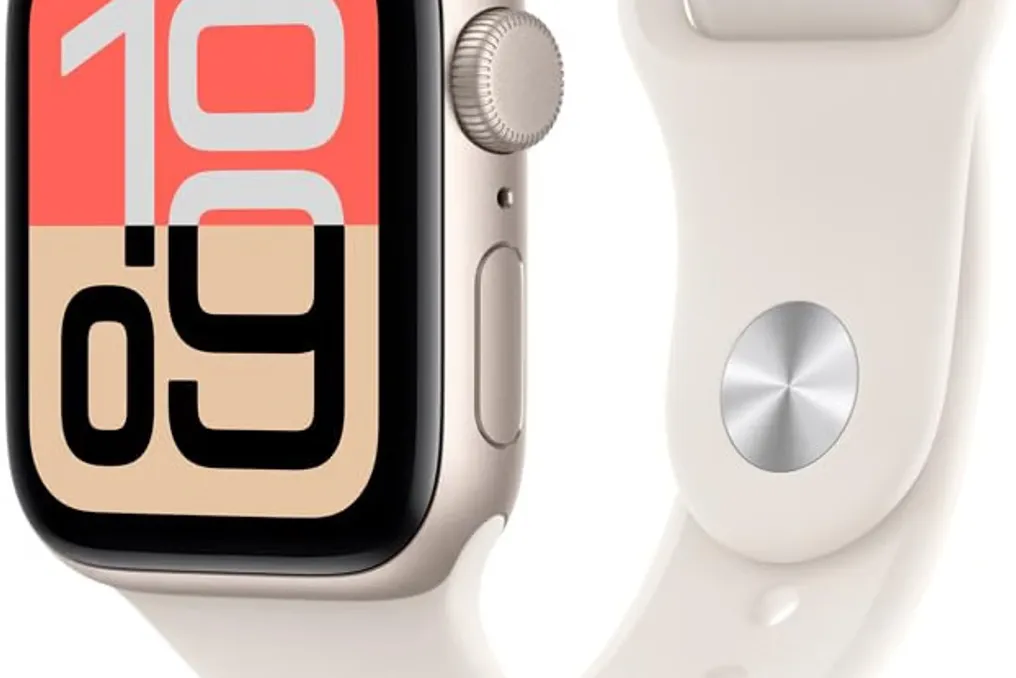
Finally, the Apple Watch SE 3 is the new generation of Apple's affordable smartwatch, launched in 2025. It features improvements over the previous SE 2, introducing the Always-On display to the SE line, the S10 chip from Series 10, and the first certification for hypertension detection in the SE line.

The four offers address very different consumption profiles, and the ideal choice depends on the buyer's needs. For those seeking a more recent iPhone with the A19 Bionic chip and full Apple Intelligence for less than R$ 4,300, the iPhone 17e 256GB (with a 26% discount) is the gateway to the 2025 generation.

As a balanced option from the previous generation, the iPhone 16 128GB (with a 32% discount, saving R$ 2,200) costs less than R$ 4,600 and includes a Dual Fusion camera, Camera Control Button, and Apple Intelligence.

The iPhone 15 256GB stands out as the best gigabytes per real ratio on the list, under R$ 4,400, thanks to Dynamic Island, USB-C, and a 48MP dual camera, representing the largest percentage reduction among iPhones (35% discount), although it does not have Apple Intelligence.

The major Apple highlight of 11.11 is the Apple Watch SE 3 GPS 40mm, a 2025 launch smartwatch with the S10 chip, unprecedented Always-On display in the SE line, hypertension detection capability, and watchOS 26, available for under R$ 2,000, showing the largest percentage drop on the list (40% discount).

The purchasing decision may depend on the budget. The iPhone 17e 256GB (in this offer, R$ 4,298) has the A19 Bionic chip, a 6.1-inch OLED screen with a 60Hz refresh rate, a 48MP Fusion camera, and Apple Intelligence, serving as the entry point to the new generation. In contrast, the standard iPhone 17 (starting from R$ 5,593) adds 120Hz ProMotion, 3,000 nits brightness, and an extra ultrawide camera.

If the focus is on the iPhone 16 128GB (starting from R$ 4,599), it features the A18 chip, a 60Hz OLED screen, and a Dual Fusion plus Ultrawide camera, representing the previous generation. For those who prioritize the newest chip, the 17e is superior; however, the 16 compensates for the additional R$ 300 cost with the Camera Control Button.

Regarding Apple Intelligence, the iPhone 16 128GB (in this offer, R$ 4,599) offers the A18 chip, Apple Intelligence, Camera Control Button, Wi-Fi 7, and MagSafe 25W. The iPhone 15 256GB (in this offer, R$ 4,399) comes with the A16 chip, 256GB (double storage), Dynamic Island, USB-C, and Wi-Fi 6, but does not support Apple Intelligence. If Apple Intelligence and a more modern chip are crucial, the iPhone 16 128GB is advantageous for only R$ 200 more; however, for those who need double storage (256GB vs 128GB) with a similar iOS 26 experience, the iPhone 15 256GB is the best choice.

Considering usage, the iPhone 15 256GB (in this offer, R$ 4,399) has the A16 chip, which is still powerful for most tasks, in addition to Dynamic Island, USB-C, 48MP Fusion camera, and compatibility with iOS 26 (ensuring future updates). Its main limitation is the lack of support for Apple Intelligence, which prevents the operation of generative AI features such as Writing Tools, Genmoji, Image Playground, and Siri integrated with ChatGPT. Thus, for those who do not require generative AI and seek the most storage for the lowest price, the iPhone 15 256GB offers the best cost-benefit.

In terms of health, the Apple Watch SE 3 GPS 40mm (in this offer, R$ 1,979) is unbeatable for those seeking essential health functions for under R$ 2,000, as it includes the S10 chip, Always-On display (new to the SE line), hypertension detection, Apnea Monitoring, Apple Intelligence, and GPS. In comparison, the Apple Watch Series 11 (starting from R$ 4,500) adds ECG, clinically certified SpO2, a dedicated temperature sensor, and a thinner body in the 42/46mm models, making it the premium model. The Apple Watch SE 2 (previous generation, starting from R$ 1,800) has the S8 chip but lacks Always-On and hypertension detection. For those who need ECG and SpO2, the Series 11 is the most suitable option.

It is important to note that product prices and availability are subject to constant changes, so it is advisable to access the links and compare the models to take advantage of the 11.11 discounts while stocks last.

Popular