American Woman Develops Glaucoma After Pickleball Ball Injury to Left Eye
Read more
N+1
nplus1.ru

American Woman Develops Glaucoma After Pickleball Ball Injury to Left Eye

American medical specialists documented a case of post-traumatic glaucoma in a woman who was about fifty years old. The patient received a direct blow from a pickleball intended for the game into her left eye.

This traumatic incident caused blood accumulation in the anterior part of the eye and a sharp increase in intraocular pressure, which reached 50 millimeters of mercury. Examination revealed significant narrowing of the anterior chamber angle, covering approximately seventy-five percent of this angle.

Thanks to surgical interventions performed, the patient's condition was stabilized and cured.

Similar stories

Ball tampering allegations resurface in cricket world: claims suggest vaseline was used; will the BCB react?
Read more
www.aajtak.in

Ball tampering allegations resurface in cricket world: claims suggest vaseline was used; will the BCB react?

A serious allegation of ball tampering has emerged in domestic cricket in Bangladesh. During the National Cricket League (NCL) tournament, it was claimed that some players on the second team altered the condition of the ball using vaseline. It is suggested that this helped achieve reverse spin on the ball.

This incident came to light after the conclusion of the tournament final on Friday, November 13. In the match held in Purabachal, Dhaka Division Second Eleven defeated Khulna Division by one innings and 35 runs. Following this, an official from the Dhaka team leveled accusations against the Khulna players regarding the use of vaseline.

In an interview with Cricbuzz, the official from Dhaka Division Second Eleven stated that players applied vaseline between their fingers so it would transfer to the ball during the grip. He also accused some players of rubbing the ball with vaseline applied to their hair.

According to the official, this increases the weight of the ball and affects its speed in the air, contributing to reverse spin and swing. He also noted that the use of unscented vaseline makes this method difficult to detect.

The official from Dhaka Division Second Eleven asserted that he had repeatedly informed the umpires about this issue, but no action was taken. However, according to reports, the Bangladesh Cricket Board (BCB) has not yet received an official complaint on this matter.

At present, the allegations related to the use of vaseline have not been confirmed. It now remains to be seen whether the Bangladesh Cricket Board will conduct an investigation into this case and if it will affect the ongoing First Class National Cricket League of the country.

Risk of Vision Loss from Weight Loss Drugs: Doctors Advise Against Stopping Treatment Due to Fear
Read more
www.aajtak.in

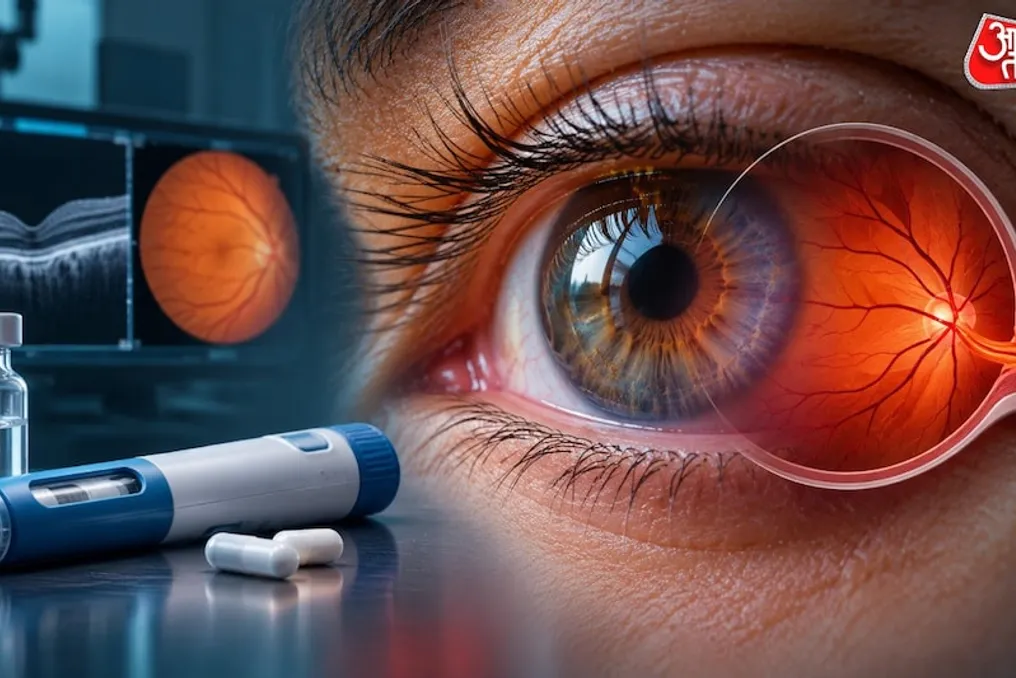
Risk of Vision Loss from Weight Loss Drugs: Doctors Advise Against Stopping Treatment Due to Fear

The U.S. Food and Drug Administration (FDA) has issued a warning regarding the use of popular drugs for treating diabetes and obesity, such as semaglutide (GLP-1). The FDA pointed out the possibility of developing eye diseases (NAION) when taking these medications.

In NAION, blood supply to the optic nerve is disrupted, which can lead to sudden vision loss in one eye without pain. Following this warning from the FDA, people have raised questions about the real danger of taking GLP-1 drugs.

In NAION, there is insufficient blood supply to the optic nerve, causing sudden vision deterioration or blurring. This condition is quite rare.

GLP-1 analogs have revolutionized the treatment of diabetes and obesity; for some patients, they have improved blood sugar control, promoted weight loss, and reduced the risk of heart disease. Dr. Monica Sharma, Senior Endocrinology Consultant at Akash Healthcare, notes that, like any medication, they have side effects, but the risk of vision loss is extremely small. Therefore, patients taking these drugs should not stop treatment on their own due to fears. Nevertheless, if a person suddenly notices changes in vision, such as vision loss in one eye without pain or blurring, they must undergo an examination immediately.

Dr. Monica Sharma emphasizes that GLP-1 drugs are intended for the treatment of diabetes and weight loss. In recent years, many people have started taking drugs like semaglutide without a doctor's prescription. However, starting treatment independently is not recommended. These medications are prescribed only after assessing the patient's weight, medical history, and diabetic status, and the dosage is determined exclusively by a doctor.

Before starting GLP-1 medications, be sure to inform your doctor about your history of eye diseases. If you have diabetes, do not skip regular vision checks. If you experience sudden vision loss or blurring, consult a doctor or ophthalmologist immediately. It is also important not to change the dosage or regimen without consulting a doctor.


FDA issues warning about potential eye risks associated with weight loss drugs
Read more
www.aajtak.in

FDA issues warning about potential eye risks associated with weight loss drugs

The U.S. Food and Drug Administration (FDA) has issued a new warning regarding certain medications used to manage diabetes and obesity. Under this warning, the FDA has directed revisions to the safety labeling of GLP-1 drugs such as semaglutide and tirzepatide.

According to the FDA, consuming these drugs may carry a risk of developing a serious eye condition known medically as non-arteritic anterior ischemic optic neuropathy, which is also understood as an eye stroke.

An eye stroke is a condition where the optic nerve of the eye is damaged. The most concerning aspect is that patients often do not feel any pain, and sometimes upon waking up in the morning, there can be slight vision loss in one eye, causing blurred vision.

This research analyzed data from over 134,000 people across 126 clinical trials. The study found that approximately seven out of every hundred thousand individuals taking GLP-1 drugs are at risk of having an eye stroke. This research indicates that long-term use of these weight loss medications affects eye health, especially in individuals who take them without medical advice and at high doses.

A 2024 study published in JAMA Ophthalmology reported a significantly higher risk of non-arteritic anterior ischemic optic neuropathy among users of semaglutide. Based on this research, legal cases have been filed against Novo Nordisk and Eli Lilly in the United States.

Experts state that the FDA's warning does not mean that every patient will develop an eye disease from these drugs. A direct causal link between the use of these drugs and eye stroke has not yet been established. However, caution is necessary given the potential risks. Individuals taking semaglutide or tirzepatide should never stop the medication without consulting a doctor. If symptoms such as sudden decreased vision in one eye, blurred vision, or seeing darkness in front of the eyes appear, it is mandatory to consult an ophthalmologist immediately.

Popular