Volkswagen Group earns little profit per vehicle sold; Porsche contributes to profit reduction
Read more
AutoPapo
autopapo.com.br

Volkswagen Group earns little profit per vehicle sold; Porsche contributes to profit reduction

The Volkswagen Group, considered the largest car manufacturer in Europe, reported modest financial results for vehicles sold in 2026. In the period from January to September, the conglomerate, which owns brands such as Audi, Porsche, Škoda, and Volkswagen itself, recorded an operating profit of only 12 euros, equivalent to approximately R$ 78 per vehicle sold.

This calculation was performed by the Center of Automotive Management (CAM), a German research institute focused on the automotive sector, which analyzed the financial performance of 21 manufacturers. Operating profit represents the surplus generated by the main activity before considering taxes and interest.

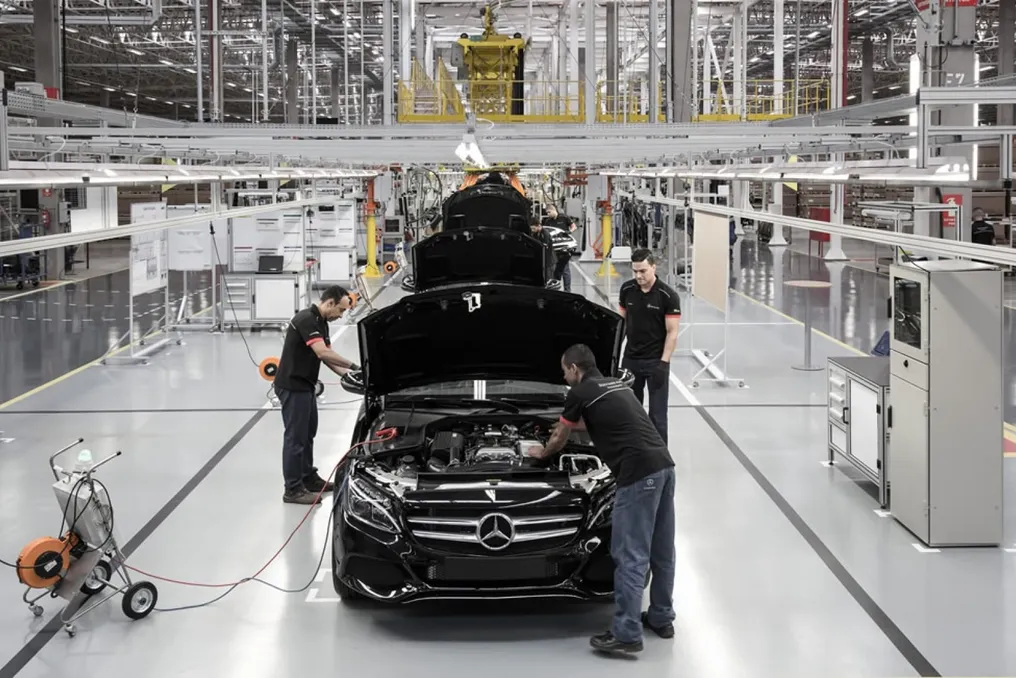
In contrast, Mercedes-Benz ranks at the top of the list with an operating profit of 4,198 euros (about R$ 27.2 thousand) per car. For the VW group to achieve the same revenue as a single competitor's vehicle, it would need to sell 350 units.

Volkswagen's performance was significantly hampered by extraordinary charges totaling 8.7 billion euros, which are non-recurring expenses of the operation. A substantial portion of this impact, corresponding to 6.4 billion euros, resulted from an accounting reassessment at Porsche, where VW decreased the registered value of the sports brand without any cash outflow.

Additionally, losses of about 1 billion euros related to assets in China were accounted for, along with costs associated with the planned closure of the factory located in Osnabrück, Germany.

If these factors had not occurred, Volkswagen's operating profit would have reached 8.8 billion euros, representing a margin of 3.8%. Using the same methodology as the study, this would correspond to approximately 1,500 euros (R$ 9.7 thousand) per car, exceeding the industry average.

Those responsible for the survey point out that the current zeroed margin may exaggerate the severity of VW's situation, although the adjusted margin indicates that the company still needs to implement cost cuts.

The automaker itself acknowledges the challenge. According to Chief Financial Officer Arno Antlitz, the group still earns less profit from electric vehicles compared to combustion engine vehicles, and is planning a cost reduction estimated at 31 billion euros.

CAM calculates the group's operating profit by dividing the total profit by the volume of cars sold. Much of Mercedes-Benz's success also comes from its vans and its financial arm, which provides leasing and financing options to customers. Despite this, the Mercedes car division alone suffered an approximate 56% drop in operating profit, suggesting that the group's overall margin masks difficulties in the automotive segment.

German companies, according to CAM, are simultaneously facing three challenges: intense competition in the Chinese market, high fixed costs that are difficult to reduce when production decreases, and the impacts of American tariffs combined with the exchange rate.

On the other hand, Chinese manufacturers such as Chery, Geely, and BYD present higher margins, benefiting from exports and the devaluation of their currency. However, price competition in China restricts the gain per unit sold.

Stellantis, owner of Fiat, Jeep, Peugeot, and Citroën, achieved a profit of only 250 euros (R$ 1.6 thousand) per unit. CAM points out that discounts and an unfavorable composition of the models sold indicate that the company's recovery has not yet consolidated.

Globally, the operating profit of the 21 manufacturers fell by 11%, totaling 60.4 billion euros, while revenue registered a smaller drop of only 1.9%. For Stefan Bratzel, director of CAM, a profit reduction almost six times greater than revenue signals a serious warning for the entire industry.
Similar stories

Toyota discontinues the most affordable Urban Cruiser Hyryder variant
Read more
www.aajtak.in

Toyota discontinues the most affordable Urban Cruiser Hyryder variant

Toyota has made changes to its lineup of the most budget-friendly hybrid SUVs. This concerns the mid-sized SUV, the Urban Cruiser Hyryder, whose cheapest option, the base model, has been removed from the company's official website.

Previously, the base E variant of this model cost 11.31 lakh rupees including all charges. This version was equipped with a petrol engine. The Urban Cruiser Hyryder is equipped with a 1.5-liter four-cylinder naturally aspirated petrol engine that generates 102 hp and 137 Nm of torque. In addition to petrol, the car is available in Compressed Natural Gas (CNG) and hybrid versions.

In total, the company's portfolio includes 14 petrol and 11 hybrid versions, as well as two CNG versions.

Key Features and Equipment

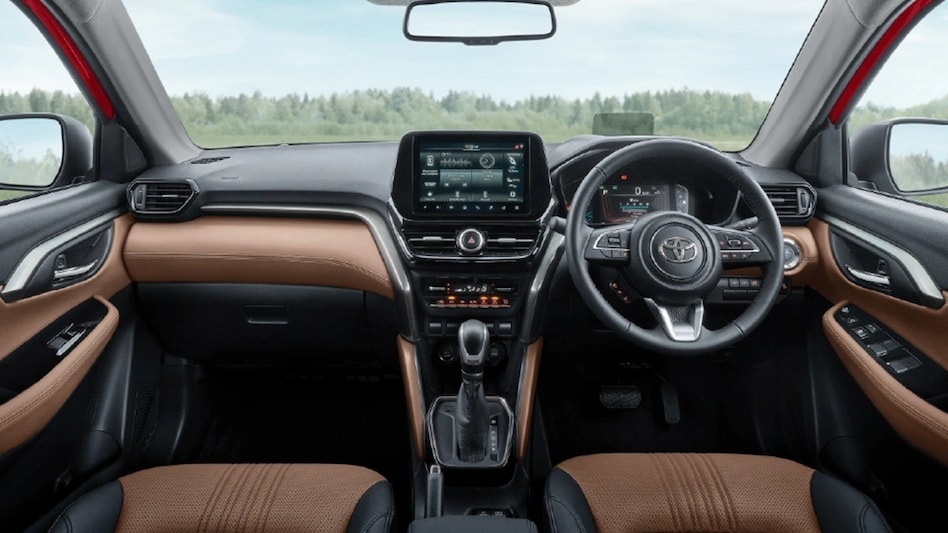
The base E variant of the Urban Cruiser Hyryder originally offered features such as two airbags, ABS with EBD, VSC, HHC, adjustable front seatbelts, rear parking sensor, manual IRVM, and an overall black interior theme. It also included two speakers and front retractable armrests.

Furthermore, the car featured tilt and telescopic steering, automatic climate control, rear air vents for air conditioning, and an adjustable driver's seat height. Exterior elements included halogen projector headlights, LED taillights, an integrated spoiler, a shark fin antenna, and side mirrors with turn signals.

Now, the starting point for purchasing the Toyota Urban Cruiser Hyryder has shifted to the S variant, which costs 12.82 lakh rupees including all charges for the manual transmission. The automatic version of the same car will cost the buyer 14.17 lakh rupees including all charges.

Thus, purchasing this SUV will now require an additional expenditure of 1.51 lakh rupees compared to previous prices. The S variant includes additional options such as a rearview camera, a 7-inch multimedia system, a USB charging port, cruise control, Toyota i-Connect, floor lighting, and glove box lighting.

Volkswagen Polo Track 2027 has price reduction and financing offer
Read more
autopapo.com.br

Volkswagen Polo Track 2027 has price reduction and financing offer

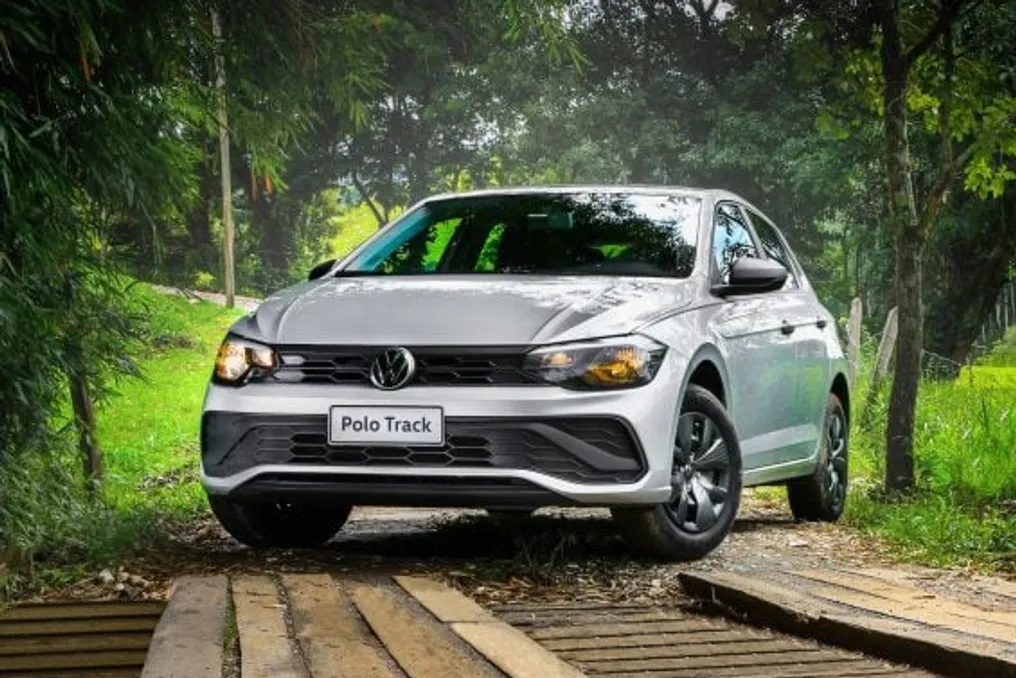
The 2027 Volkswagen Polo Track has been reduced by R$ 6,300 until the end of November. This entry-level version of the hatchback, whose suggested price was R$ 97,990, can now be purchased in cash for R$ 91,690 until the 30th. This promotional condition is valid only for purchases made in retail at the manufacturer's dealerships and does not cover corporate sales.

This offer comes after a month considered weak for the Polo. In October, the model registered sales of 8,125 units, representing a drop of 26.8% compared to September. Furthermore, it dropped from second to fourth place in the sales ranking, according to data provided by the National Federation of Automotive Vehicle Distribution (Fenabrave).

An available alternative is to finance the vehicle through Banco Volkswagen. In this modality, the customer can make a down payment of R$ 56,846.92, corresponding to 62% of the total value, and pay 48 installments of R$ 999. The applied rate is 0.99% per month, which equals 12.55% per year, provided that credit is approved.

When opting for financing, the total amount disbursed reaches R$ 104,798.92, presenting an Effective Total Cost (CET) of 16.34% per year. This amount is R$ 13,108.92 higher than the cash price and R$ 6,808.92 above the suggested price. It is important to note that contract registration fees vary depending on the Detran of each state and may be incorporated into the CET if included in the financing.

The Polo Track is equipped with a 1.0 naturally aspirated flex engine, which generates 84 hp and 10.3 kgfm when using ethanol (producing 77 hp and 9.6 kgfm with gasoline). It is coupled with a five-speed manual transmission. Among the standard items are air conditioning, electric steering, power windows and locks, multifunction steering wheel, Media Plus II sound system, and, as a new feature in the 2027 line, a reverse sensor.

In terms of safety, the vehicle features four airbags (both frontal and front side), stability and traction control systems, electronic differential lock, ABS brakes with EBD, post-collision automatic braking function, hill start assist, seatbelt reminder for all seats, and Isofix mounting.

In terms of external design, the hatchback has halogen headlights accompanied by daytime running lights and 15-inch steel wheels with hubcaps, using tires sized 185/65 R15.

Volkswagen T-Roc R launched with 333 hp and electric compressor similar to the Golf R
Read more
autopapo.com.br

Volkswagen T-Roc R launched with 333 hp and electric compressor similar to the Golf R

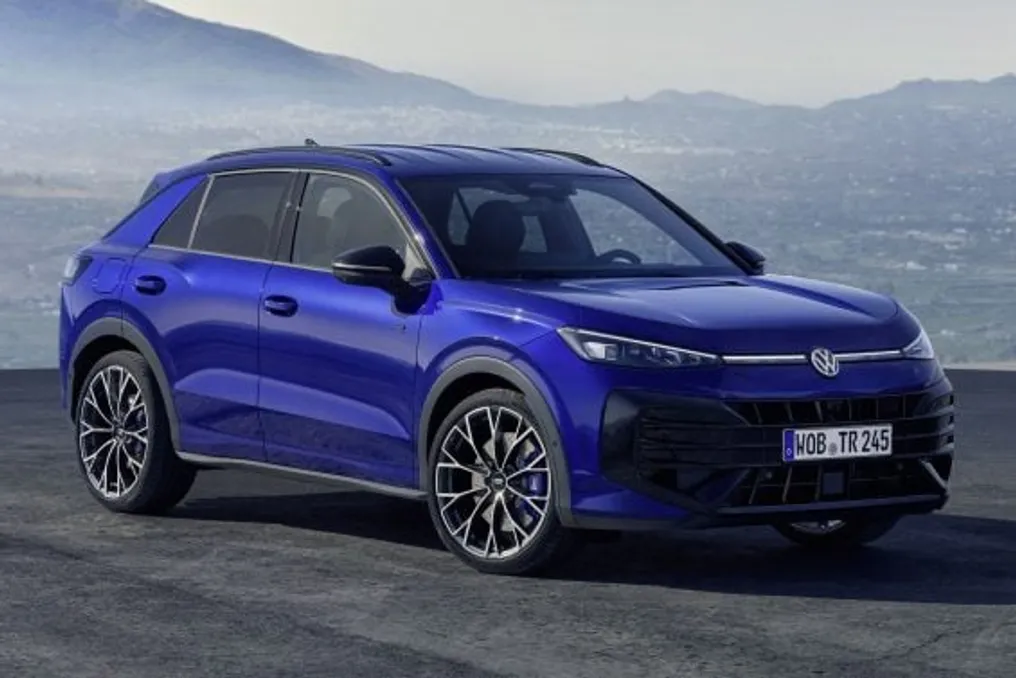
The Volkswagen T-Roc R has been relaunched, bringing a feature absent in the Golf R. This new sporty version of the second-generation compact SUV was revealed this Wednesday (18th) and represents the first vehicle from the R division to feature an electrified engine.

Pre-sales for this model began in Germany this Thursday (19th), with an initial price of 59,995 euros, which is equivalent to approximately R$ 381 thousand.

The propulsion is provided by the 2.0 turbo EA888 evo5 engine, which incorporates a 48-volt mild hybrid system. This system powers an electric compressor responsible for injecting air into the engine before the turbine reaches its operating speed.

Unlike the Golf R, which uses the evo4 version of the engine, the T-Roc R possesses this equipment. Within the Volkswagen conglomerate, this technology had already been applied by Audi in V6 and V8 diesel engines, such as the one found in the SQ7 SUV.

The maximum performance indicators are identical to those of the Golf R, reaching 333 hp and 42.8 kgfm. However, there is a distinction in how this torque is delivered: in the T-Roc R, maximum torque becomes accessible starting from 1,900 rpm, whereas in the hatchback, this point is only reached from 2,100 rpm.

The vehicle features a seven-speed dual-clutch automatic transmission and 4Motion all-wheel drive. This system utilizes the rear differential from the Golf R, which has the capacity to direct up to 100% of the force to the outer wheel during turns.

This configuration allows for the activation of Drift modes, intended for controlled slides on closed tracks, and Special mode, specifically optimized for the German Nürburgring circuit.

In terms of acceleration, the SUV manages to go from 0 to 100 km/h in 5 seconds, making it 0.4 seconds faster than its competitor, the European version of the Mini John Cooper Works Countryman. It is worth noting that the Mini is sold in Brazil for R$ 370,990, but the new T-Roc R has an acceleration time 0.2 seconds faster than the previous model.

Maintaining the tradition of the R division, the external design of the T-Roc R remains discreet. Visual details include blue brake calipers, 19-inch wheels (with the option of 20-inch forged wheels), and four exhaust outlets, which can be complemented by an Akrapovič titanium system.

Inside, a button labeled 'R' on the steering wheel allows the driver to activate Race mode. It is important to mention that the T-Roc is not available for sale in Brazil, a country where VW offers other SUVs such as T-Cross, Nivus, and Tera.

Popular