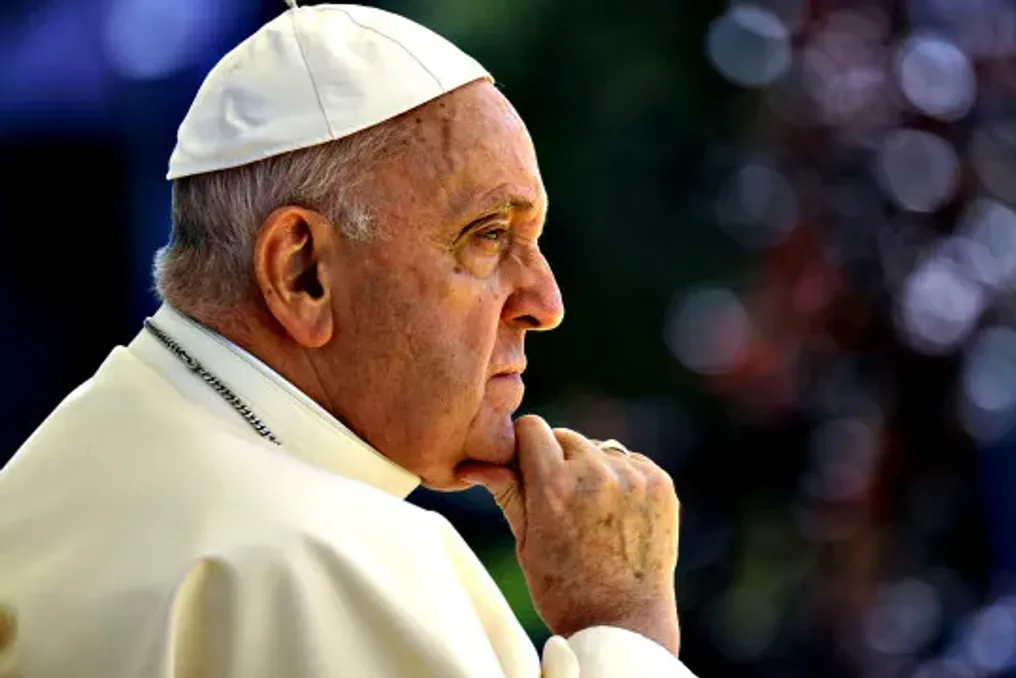
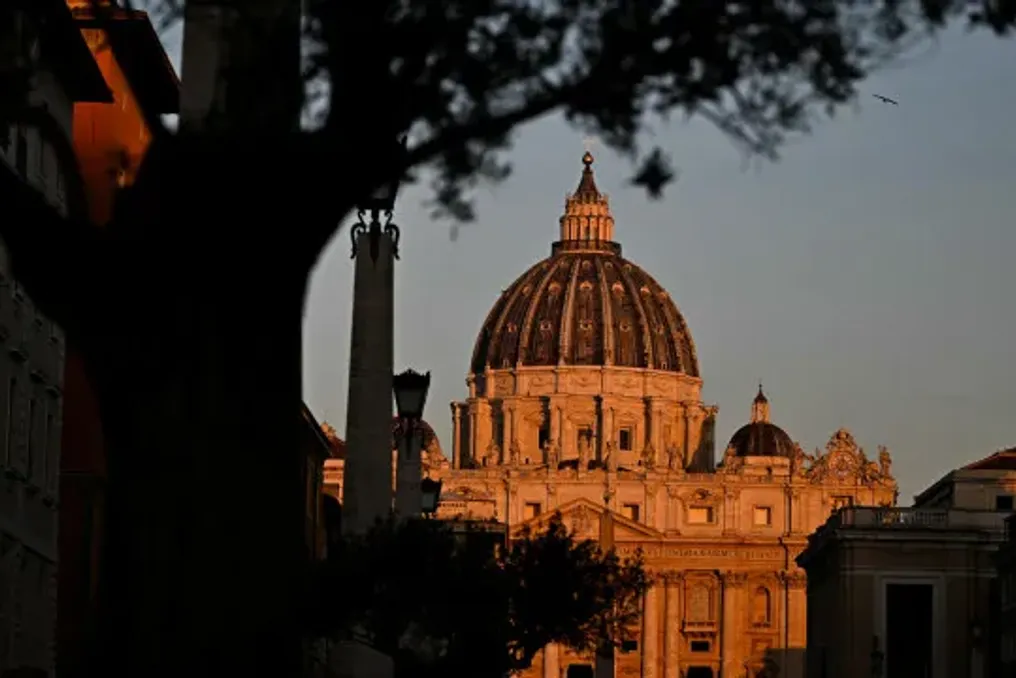
St. Peter's Basilica, the spiritual heart of Roman Catholicism, whose majestic dome defines the silhouette of Rome, celebrated its 400th anniversary on Thursday. Pope Leo XIV noted that visiting this monument 'always evokes emotions.'
Leo XIV celebrated mass 'at one of the world's most famous monuments,' emphasizing to those gathered under the basilica's high vaults that 'visiting this magnificent church always evokes emotions.'
He also shared his thoughts, noting: 'We are amazed, inspired by the holiness of faith, the strength of history, and the beauty of art,' according to the Associated Press (AP).
The Patriarch also reflected on the scale of the structure, which spans approximately the length of two football fields. He stressed that 'the vastness of St. Peter's Basilica reflects the constant desire to welcome as many people as possible into the Church.'
The construction of St. Peter's lasted 120 years, spanned 20 papacies, and was realized through the work of a sequence of 12 architects. This masterpiece survived the Protestant Reformation, which began in 1517, and the Sack of Rome in 1527, before being consecrated by Pope Urban VIII on November 18, 1626.
The basilica, which annually serves as the site of papal ceremonies and a destination for millions of pilgrims, was built on the traditional burial site of the Apostle Peter, replacing a church that had existed there for over a millennium.
Pope Julius II laid the first stone on April 18, 1506, initiating a project involving architects such as Donato Bramante, Renaissance master Michelangelo, and Carlo Maderno, who designed the facade.
Even on the day of consecration, the familiar appearance of the basilica was still under development. As explained by Elizabeth Lev, an American art historian living in Rome, 'the church's facade was completed, but the impressive piazza, which is an integral part of the church as we know it today, did not yet exist.'
The vast oval piazza, designed by Italian sculptor and architect Gian Lorenzo Bernini, was completed in 1667. Its curved colonnades were conceived as the embracing arms of the church. Its 284 columns, arranged in four rows, frame the oval space connected to the basilica by a trapezoidal atrium.
Inside, the basilica's architecture directs the gaze toward its spiritual center: Peter's tomb beneath the main altar, Bernini's monumental bronze baldachin, and the soaring dome of Michelangelo.
Generations of popes have been buried in the basilica and in the Vatican Catacombs located on the lower level. Lev emphasized: 'The interior of St. Peter's Basilica is characterized by unity and grandeur. Therefore, given that the church's construction took 120 years, it is remarkable how every element integrates into a whole.'
The basilica and its piazza became the site of the opening of the Second Vatican Council, papal funerals, and the first appearances of newly elected bishops. Crowds gather in the square for Sunday blessings.
On Christmas and Easter, the Pope traditionally delivers his message and blessing 'Urbi et Orbi,' a Latin expression meaning 'to the city and the world,' from the basilica's central balcony.
One of the most striking images of the COVID-19 pandemic was Pope Francis appearing before the rain-soaked empty square on March 27, 2020, to give an extraordinary blessing.