According to an investigation published on Monday (23) by the newspaper Süddeutsche Zeitung and German broadcasters NDR and WDR, Russia could potentially prepare a nuclear bomb launch into space as early as this year.
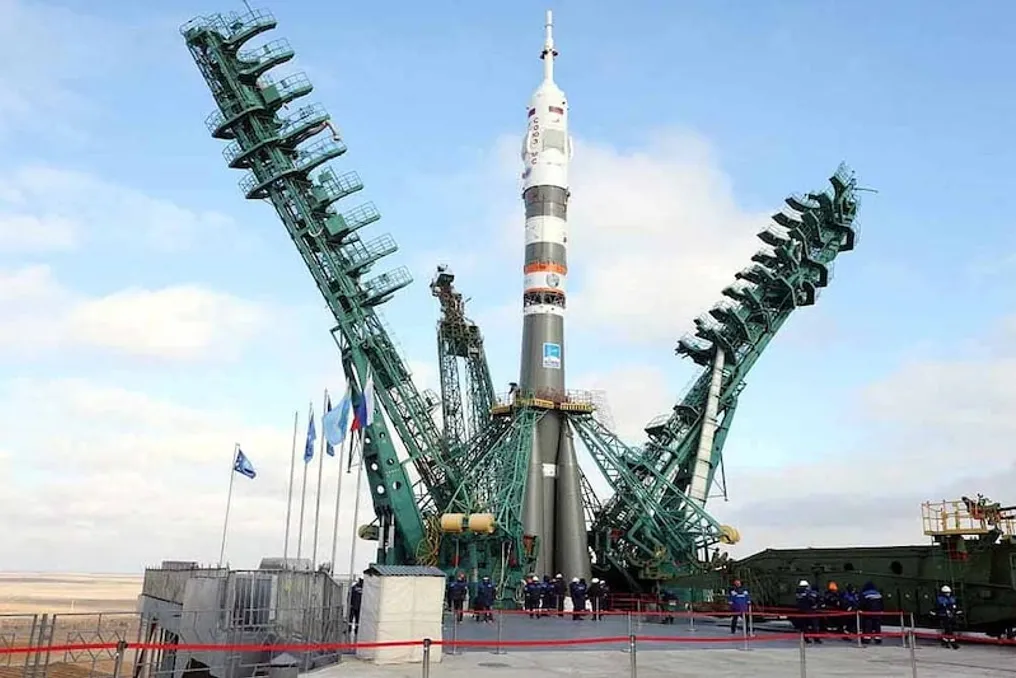
Sources in Western intelligence services claim that the warhead will be transported by the Sputnik-S satellite. However, there is currently no public evidence of such an imminent launch.
The alarming report underlying these concerns was issued in early November. According to the German broadcaster ARD, secret services indicated the possibility of a launch within the next sixty days. This information was passed to NATO, and military experts from the Bundeswehr (German armed forces) warned the German government, including Defense Minister Boris Pistorius. It is assumed that the satellite is located in Moscow.
The German Ministry of Defence stated that it monitors the space activities of other countries but did not directly comment on these claims. The Russian Embassy in Berlin called the information 'propaganda' and stated that it was unaware of these events.
As early as October, the U.S. Defense Intelligence Agency (DIA) warned about the development of a Russian satellite system for transporting nuclear weapons. This issue was also covered in a report by Olhar Digital regarding suspicions related to a Russian project.
According to U.S. military intelligence, after the weapon is deployed, it is unlikely that effective countermeasures can be taken. Detonation could lead to debris formation and an electromagnetic pulse capable of disrupting satellites, electronic systems, GPS, the internet, communications, weather forecasting, and financial operations.
Steven Whiting, head of U.S. Space Command, estimated that about one-third of low-orbit satellites would fail in the first hours or days, with the rest experiencing failures in subsequent months.
NATO relies on satellites for surveillance and communication. Nevertheless, the Russian fleet could operate in the Baltic Sea without this support thanks to millimeter mapping conducted under the guise of research vessels.
If the project is implemented, it would violate the 1967 Outer Space Treaty, which prohibits the placement of nuclear weapons and other weapons of mass destruction in orbit. In December 2024, the UN General Assembly voted to maintain this agreement, but Russia voted against it.
The Kosmos-2553 satellite, launched in 2022 shortly before the invasion of Ukraine, is under surveillance by intelligence services. Moscow asserts that the satellite has a scientific purpose, but Western authorities suspect it is being used to test the impact of radiation on space systems and satellites.
These suspicions regarding the equipment are part of a broader scenario of space militarization. In 2021, Russia destroyed its own satellite using a missile, and the debris posed a risk to astronauts on the International Space Station (ISS). In 2025, the U.S. acknowledged having orbital systems with potential offensive capabilities. Since the start of the war in Ukraine, the French company Aldoria has also registered nearly 30 suspicious close approaches between Russian and European satellites.
Nevertheless, the risk of a nuclear explosion in orbit is not purely theoretical. In 1962, during the Starfish Prime test, the U.S. detonated a nuclear bomb at an altitude of 400 kilometers over the Pacific Ocean. The electromagnetic pulse caused failures in streetlights in Hawaii and communication systems, and destroyed several satellites, including the first British and first American civilian ones.