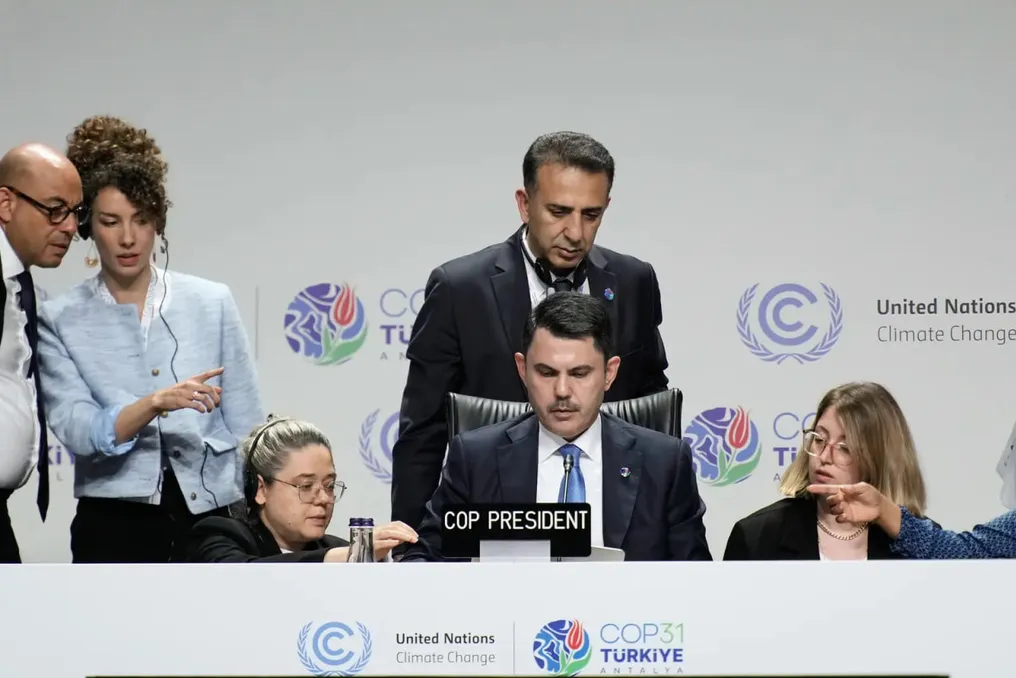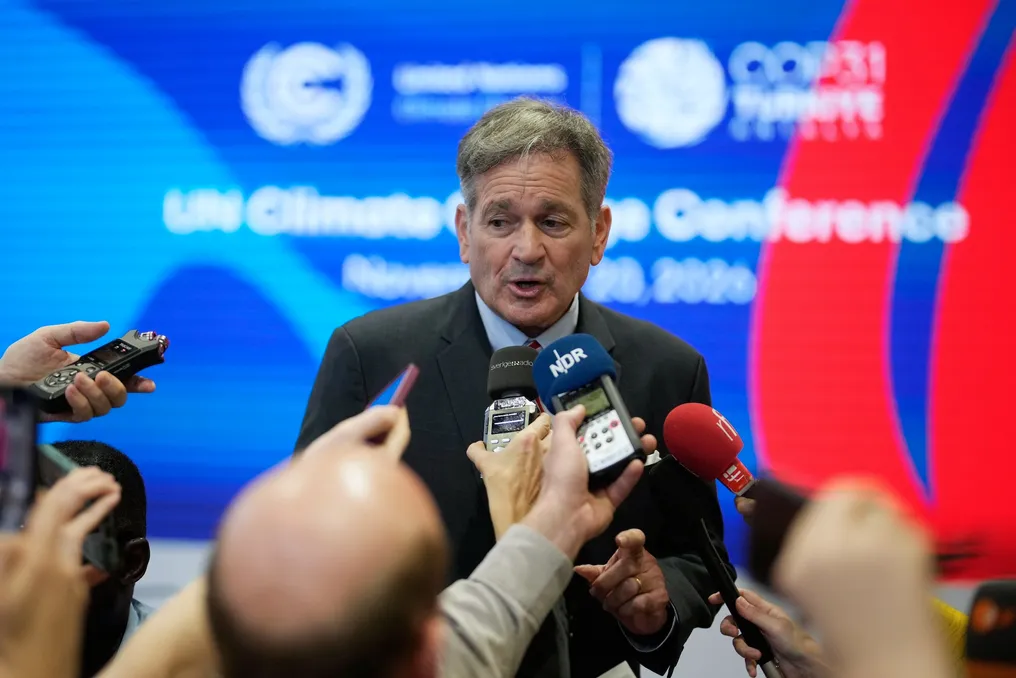
In the middle of the second week of the UN Climate Conference COP31, held in Turkey, environment ministers presented plans to phase out coal, oil, and gas usage. Denmark presented the plans, with Spain, Portugal, and Luxembourg stating they would follow suit. Vanuatu and Tuvalu reported on the preparation of the world's first regional roadmap.
However, none of these plans required a consensus text. Yet, the main outcome of the summit showed a different picture: the final document, which contained no mention of fossil fuels, was decisively rejected by the European Union, the Marshall Islands, and at least thirty other countries. The summit concluded two days later than planned because parties could not reach an agreement on a comprehensive political declaration. This marked the largest setback at COP since Copenhagen in 2009. Furthermore, states disagreed on financing for adaptation, carbon capture, and electrification.
These disagreements arose at a particularly critical time for climate action, as global warming is set to exceed the 1.5°C threshold set by the Paris Agreement, which scientists believe will lead to much more severe climatic consequences. Countries spent two weeks negotiating amid growing calls from activists for more ambitious actions in the conference center corridors.
Nevertheless, while UN climate agreements require consensus, cooperation is possible if participants are willing. In Antalya, one side fractured, but the other demonstrated its strength. The most obvious example is the energy transition roadmaps published or pledged by 27 governments.
COPs are the largest environmental gatherings on the planet, with about 92,000 people registered for one. Although they may resemble a trade fair more than a negotiation center, thanks to pavilions and hundreds of events, COP brings together NGOs, Pacific Island states, and European governments in one place on one day. These meetings do not make it into the final text, but a significant part of climate work begins there.
The reactions in Antalya demonstrated a determination to move forward. Anna Toni, CEO of the COP30 presidency, stated: 'This movement will not stop.' Tuvalu's Climate Minister, Maina Talia, emphasized that countries ready to act faster should 'move forward where we can, with those who are ready to show up.' Ghana's Environment Minister, Zanetor Gabriel Rawlings, noted that Africa arrived at COP aiming for results and left 'ready to move forward and still fighting.'
The possibility of another COP collapse has been predicted in recent years. At past summits, countries announced intentions to withdraw from the process, objecting to the final text at the plenary session, but then accepted it because maintaining the process itself was paramount. This time, the situation was different: a group of countries refused to join the consensus after three rounds of changes to the final text and stuck to their decision. Panama's Environment Minister, Juan Carlos Navarro, reflected the general mood several days earlier. At a press conference, he stated that the world had been 'held hostage by the oil mafia' and was 'in love with its kidnappers.' He questioned how many more COPs it would take for countries to fulfill their legal obligations, adding: '31 COPs, for heaven's sake,' which drew applause.
The final COP text, although not agreed upon, acknowledged the exceeding of the 1.5°C threshold and called for a more decisive response. This document, named the 'Antalya Pact,' included the global goal of '35x35'—to increase the share of electricity in global final energy consumption to 35% by 2035, without specifying renewable sources. It completely bypassed the topic of fossil fuels. The Pact confirmed the goal of tripling adaptation finance but did not provide a baseline or a specific monetary amount.
The Pact reflected the composition of the conference participants. According to the Centre for International Environmental Law (CIEL), a record 700 carbon capture lobbyists were registered at COP31. Over 100 groups related to the interests of fossil fuels and agriculture also sent delegations. Lobbyists significantly outnumbered some of the world's most vulnerable countries in terms of delegations.
Since there is no agreed mechanism for resolving deadlocks through voting in climate negotiations, the process lacks a set Plan B. Panama and Peru requested a review of voting rules at the final plenary session and proposed using a simple majority, but no progress was made. Meanwhile, those wishing to act faster are seeking alternative paths.
Former Minister of Environment of Colombia, Irene Vélez, stated at a press conference: 'Consensus was a barrier to agreements, to ambition, and it is a barrier to action.' She added: 'Today we know that we can go beyond consensus and create working ambitious alliances.' In April, Vélez co-chaired the First Conference on Fossil Fuel Transition—an initiative by various countries to jointly work on their transitions outside the UN framework. Thirty countries also announced at COP the development of a proposal for an international treaty on fossil fuels.
The COP30 Presidency of Brazil presented two international roadmaps in Antalya's crowded halls: one concerning the transition away from fossil fuels, and the other concerning halting and reversing deforestation by 2030. These documents are voluntary, and the idea is that countries will turn them into national roadmaps. Brazilian President Lula da Silva attended COP to present them and received a standing ovation.
Turkey, Brazil, and South Korea launched the Integrated Fire Management Action Plan in Antalya, supported by 23 countries. Its goal is to improve cooperation in prevention, early warning, and response. Countries such as Bolivia, Ecuador, and Honduras presented examples at COP events on how to combine national forest fire policies, scientific monitoring, and community involvement.
The issue of action against superpollutants, such as methane, which causes short-term warming, also gained momentum at COP. Governments considered rapid reduction of non-CO2 emissions as one of the best ways to limit warming overshoot. In addition to the ministerial declaration, the Clean Air and Climate Coalition announced new funding to help countries integrate clean air into their climate plans.
Electrification became a buzzword at COP, and it is one of the few areas the leadership emphasized in the final address. Following the negotiations, over 80 countries endorsed the 35x35 goal, according to the final plenary speech by COP31 President Murat Kurum.
The climate calendar is already looking beyond COP31. Pacific countries stated that their regional roadmap will be ready by July, when Tuvalu and Ireland host the second fossil fuel transition conference. Then Ethiopia will take charge of preparing for COP32 in Addis Ababa. There, governments will have to return to many unresolved issues left by Antalya, from fossil fuels to financing.
UN Secretary-General António Guterres visited Antalya for his tenth and last climate summit. He stated: 'The climate crisis will not wait for governments to find common ground. We cannot do that either.' He urged: 'Keep spreading facts, keep demanding action.'